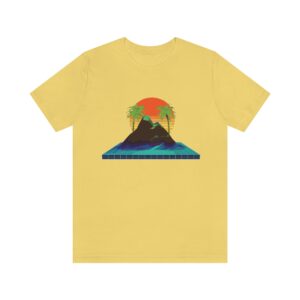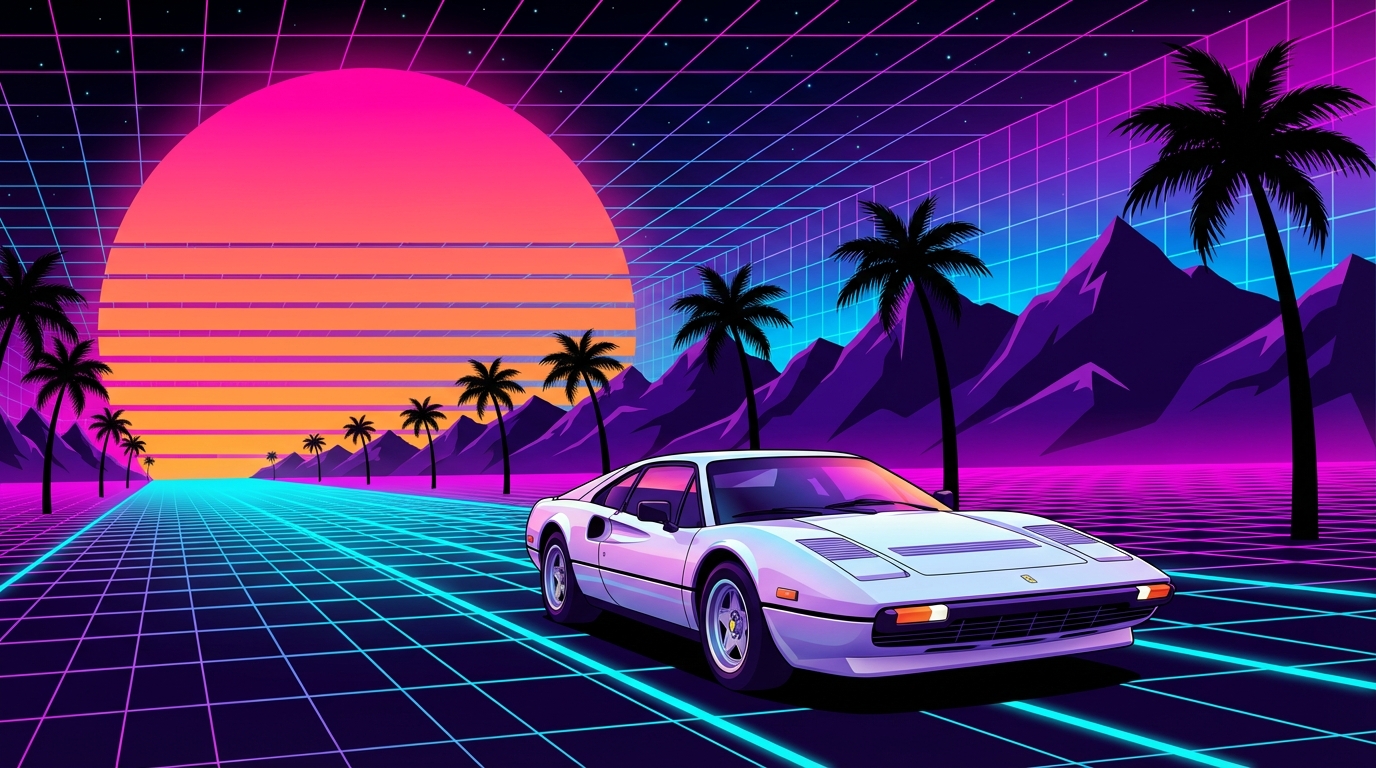
Hop into your virtual Testarossa and crank up the synthwave because it is time to turn your designs into a retro-futuristic dream. You have seen those glowing grids and neon sunsets taking over the internet, but nailing that authentic outrun color palette is harder than beating a Contra level without the Konami code. Instead of accidentally creating a muddy mess, you need the specific shades that scream 1980s nostalgia.
Stop squinting at your screen trying to guess if that pink is “Hot Magenta” or just a sad salmon color. We are handing over the essential hex codes and gradient secrets you need to create a Miami sunset that actually looks good. Get ready to balance those high-contrast brights against deep, dark voids for an aesthetic that hits harder than a VHS tracking error.
Building the ultimate synthwave masterpiece starts with ditching the guesswork and grabbing the right numbers. You cannot just pick any random color and expect it to look like a scene from your favorite arcade racer. To get that authentic retro-futuristic look, you need shades that sear into the retina against a pitch-black void. Kick things off with a solid foundation like Midnight Blue (#191970) or a pure Void Black (#000000) to make everything else pop. These dark tones act as the perfect stage for the laser-bright neon lights you are about to unleash.
Now it is time to bring the heat with the most iconic duo in the history of digital art. For that scorching sun or grid line, you absolutely need Hot Magenta (#FF00FF) in your toolkit. Pair that intensity with a blinding Electric Cyan (#00FFFF) to create the high-contrast vibration that defines the genre. This specific combination screams 1984 louder than a guy with a mullet driving a convertible. Using these exact values ensures your design glows with the proper radioactive energy instead of looking dull.
No outrun palette is complete without a bridge between the darkness and the neon lights. Deep Purple (#9400D3) serves as the perfect middle ground to add depth to your wireframe mountains or distant skylines. It adds a moody atmosphere that feels like a worn-out VHS tape in the best possible way. When you layer these specific codes together, you transform a flat image into a glowing portal to the past. Keep these hex codes handy whenever you need to inject some instant cool into your next creative project.
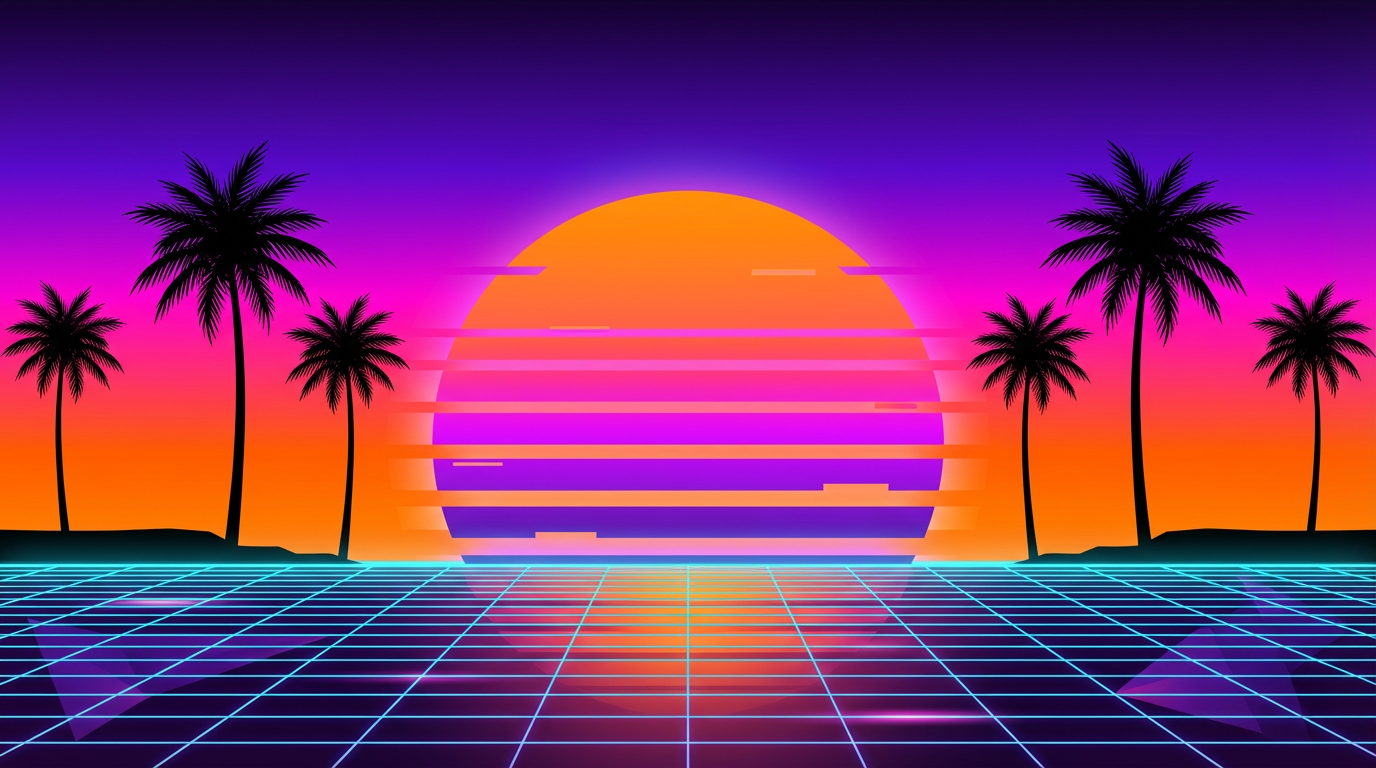
Nothing ruins a retro vibe faster than a sky that looks like a dirty puddle instead of a neon dream. If you try to smash a bright orange directly into a deep blue, you are going to end up with a gross brownish gray that definitely does not scream cool. The secret to that smooth aesthetic is bridging the gap with a vibrant magenta or deep purple to keep things saturated. You want your gradient to look like it belongs on a VHS cover, not in a swamp. Think of it as a trip from the burning horizon up to the starry void of space.
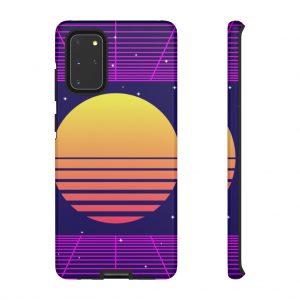
To get that crisp transition, you need the right hex codes in your inventory to stop guessing. Start your horizon line with a scorching Laser Lemon (#FEF65B) or a Heavy Orange (#FD8A26) to bring the heat. As you move upward, blend that into a shocking Hot Pink (#FF5ACD) or a rich Deep Magenta (#C600FF) to act as your safety buffer. Finally, top it all off with a cool Midnight Blue (#02066F) or a dark Cyber Grape (#580e91) to set the mood. These specific values ensure your colors vibrate against each other rather than cancelling out.
Once you have your colors picked out, slap a linear gradient on your canvas and watch the magic happen. For extra style points, you can slice the bottom of your sun with transparent horizontal lines to mimic those classic scanlines. This trick helps break up the solid color and gives your art that authentic low-fidelity texture we all love. Now your background is ready for a wireframe grid and a fast car driving toward infinity. You have officially captured the spirit of 1984 without needing a time machine.
You can’t have a blinding laser show without turning off the lights first. If you slap bright pinks onto a white canvas, you just end up with a headache instead of a cool retro vibe. To get that infinite digital void look, you need to start with a base of deep, rich darkness that absorbs everything else. Try using a heavy midnight blue like #0c0c1e or a pure void black like #000000 to set the stage for your masterpiece. These dark foundations act like a vacuum that forces your glowing elements to jump right off the screen and into your eyeballs.
Once your background is darker than a villain’s heart, it is time to lay down that iconic perspective grid. You want to pick a color that vibrates against the black, like a sharp electric blue or a toxic purple. The trick is keeping the background elements subtle enough that they don’t fight with your main sunset, but distinct enough to create depth. Think of this contrast as the bass line in a synthwave track since it holds everything together without stealing the show. When you nail this balance, your digital scene will look like a simulation running on a supercomputer from 1984.
Now that you have the hex codes and the design secrets, there are no more excuses to leave your canvas blank. Fire up Photoshop or whatever free design software you downloaded and start pushing pixels until they glow. Don’t worry about making it perfect on the first try because even the glitches look cool in this aesthetic. Your goal is to create something that looks like it belongs on a dusty VHS cover found in the back of a rental store. So crank up the synth music, grab your mouse, and design a world that is too rad to be real.
Now that you have the cheat codes, it is time to put those specific hex values to work on your next masterpiece. You no longer have to guess if that shade of purple is radical enough because you have the exact digital DNA to make it sing. Whether you are designing a Twitch overlay or just making a meme for your group chat, these neon hues are your best friends. Remember that the magic lies in the contrast between those blinding brights and the deep, moody darks. Go forth and blast some synthwave while you fill your canvas with the glow of a simpler time.
Nailing that perfect Miami sunset gradient is easier than beating the water level in a retro platformer when you stick to the plan. Don’t be afraid to experiment with the wireframe grids and laser mountains we talked about earlier to really sell the look. The outrun aesthetic is all about chasing a future that never actually happened, so there are no real rules to break here. Just keep your saturation high and your background dark enough to make everything else pop off the screen. Your art is ready to cruise down that endless digital highway at top speed.