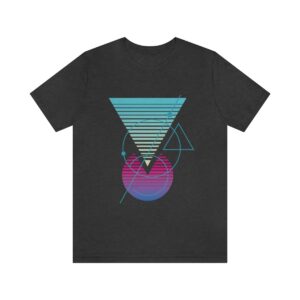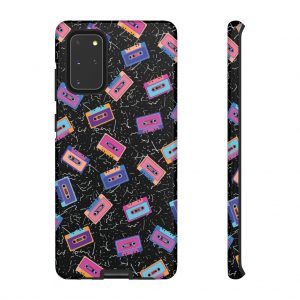
Close your eyes and imagine a world where the internet never happened, but we still got cool space stations and giant robots. You’re surrounded by glowing amber screens, chunky beige keyboards that go clack, and enough magnetic tape to wrap around the moon. This is the vibe of cassette futurism art, a neon-soaked dream where the future looks exactly like a 1980s sci-fi movie. It’s all about that sweet spot between old-school hardware and high-tech imagination.
Forget sleek, invisible touchscreens that break if you look at them funny. In this universe, technology feels real because you have to flip a heavy metal switch or shove a floppy disk into a drive to make things happen. It’s the ultimate playground for anyone who misses the satisfying thud of a VHS tape or the fuzzy hum of a CRT monitor. You’re here because you want to escape into a world of lo-fi grit and high-speed synthwave beats. Everything is bulky, colorful, and gloriously analog.
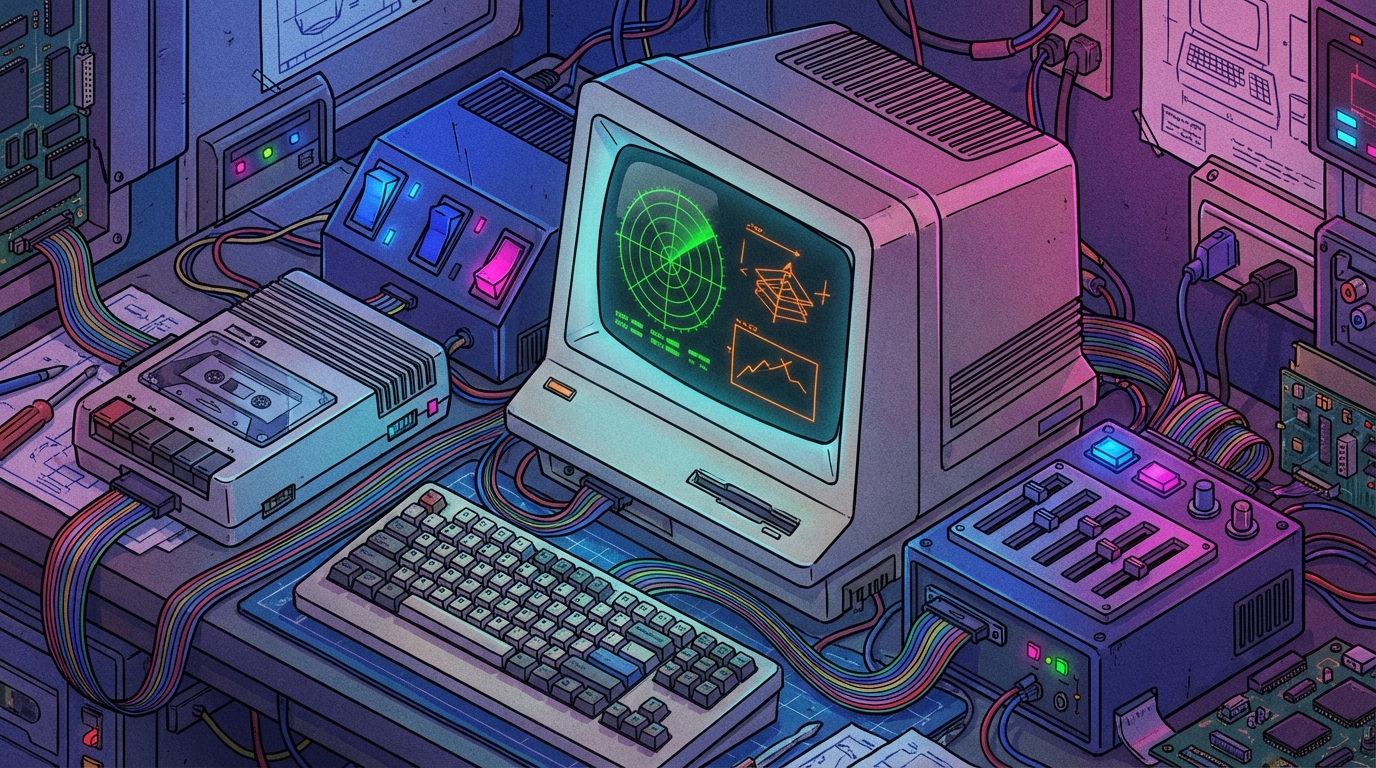
Cassette futurism is all about that chunky, lived-in look that makes you feel like you are piloting a spaceship designed in 1982. We are talking about heavy CRT monitors with beautiful curved glass and those mesmerizing green scanlines that just do not exist on your modern smartphone. There is something incredibly comforting about a piece of tech that looks like it could survive a nuclear blast or at least a very aggressive kick. While modern gadgets are thin and fragile, this aesthetic celebrates the glorious beige box and the sheer weight of hardware that feels permanent. You can almost smell the warm plastic and ozone coming off those glowing screens as they hum with analog energy.
The real magic happens when you reach out and actually touch these buttons because everything in this world is wonderfully tactile. You get to experience the deafening, clicky chaos of a mechanical keyboard or the heavy thunk of a floppy disk sliding into its drive. There are no smooth touchscreens here, only satisfying toggle switches and sliders that make you feel like a high-tech secret agent. It is a playground of magnetic tape reels and physical interfaces that react with a real sense of purpose. Every interaction provides a sensory reward that makes our current swipe culture feel a little bit boring by comparison.
This style perfectly captures the vibe of classic sci-fi movies where the future was powered by cassette tapes and dot matrix printers. It is the visual equivalent of a lo-fi synthwave track, blending high-tech dreams with the dusty reality of the late Cold War era. You do not need sleek glass panels when you have red LED readouts and chunky cables snaking across the floor. It is a world where the hardware is loud, the colors are muted, and the technology feels like something you can actually wrap your head around. Embracing the bulk is not just a design choice, it is a lifestyle that celebrates the beautiful clunkiness of a future that never quite happened.
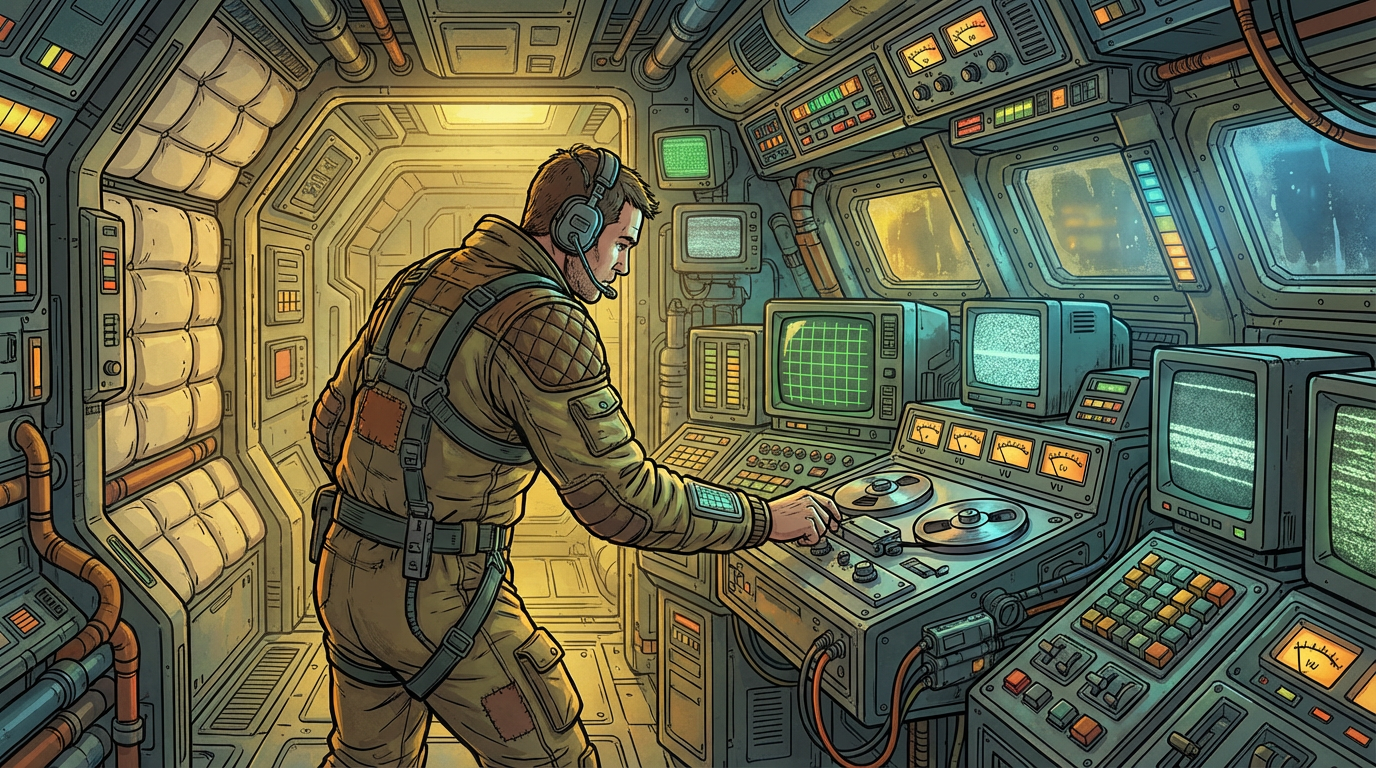
If you look at the rugged interiors of the Nostromo in Alien, you will see exactly where cassette futurism found its soul. This style tosses aside the sleek, glowing glass of modern sci-fi in favor of chunky hardware that looks like it could survive a direct hit from a meteor. You can almost feel the weight of those heavy metal panels and the satisfying click of a physical toggle switch. Instead of magic holograms, you get angular spaceships filled with greebling, which is just a fancy way of saying a bunch of random mechanical bits glued on to make things look complex. It is a world where high-tech means a CRT monitor with a curved screen and a flickering green glow.
Japan during the bubble economy era also played a massive role in shaping this bulky, beautiful aesthetic. Designers back then were obsessed with making every gadget look like a piece of heavy machinery, leading to the iconic beige boxes and mechanical keyboards we still love. You will notice that everything in this art style feels incredibly lived-in and practical, like a space-faring semi-truck rather than a luxury sports car. These machines were built to survive a space marathon, held together by thick cables and magnetic tape. There is something undeniably cool about a future that still relies on floppy disks and dot-matrix printers to get the job done.
You can see this influence everywhere in modern gaming and art, from the clunky terminals in Alien: Isolation to the lo-fi tech of Starfield. It celebrates a time when technology was something you could actually grab onto and fix with a screwdriver. This vibe is all about the transition from analog to digital, where the hardware is massive but the potential is infinite. Every button has a purpose, every screen has scanlines, and every piece of tech feels like it has a story to tell. It is the ultimate nostalgic trip for anyone who thinks the future should look a little more like a high-end 1980s tech boom stereo system.
Forget about those fingerprint-smeared glass slabs we carry in our pockets today because the future used to have way more personality. Cassette futurism is all about that glorious, clunky hardware where every command feels like you are launching a nuclear submarine. You get to play with heavy toggle switches that make a satisfying click and chunky sliders that require actual muscle to move. These interfaces are built to last, trading sleek minimalism for a dashboard that looks like it belongs in the cockpit of the Nostromo. It is a world where you feel like a real pilot or a high-stakes engineer just by flicking a power switch.
The color palette of this aesthetic is a moody dream of amber, emerald green, and creamy beige plastics. Instead of high-definition retina displays, you are staring into the warm glow of a curved CRT monitor filled with flickering scanlines. Those iconic green or orange monochrome readouts do not just tell you the time, they make every line of text feel like a top-secret transmission. There is something incredibly cozy about a dimly lit room powered by the hum of a heavy computer and the soft light of a glowing LED display. It is the perfect mix of lo-fi charm and high-tech ambition that makes modern tech feel a bit boring by comparison.
Everything in this retro future has a physical weight to it, from the magnetic tape spinning in its housing to the mechanical thud of a floppy disk drive. You are not just tapping on a flat surface, you are interacting with a machine that actually pushes back. This style celebrates the era of Japan’s bubble economy and the cool, industrial-looking trappings of late eighties sci-fi movies. It is the ultimate playground for anyone who misses the tactile click of an IBM Model M keyboard or the aesthetic of a chunky VHS player. Embracing this look means trading your sleek smartphone for a world that is wonderfully bulky, mechanical, and unapologetically loud.
Cassette futurism reminds us that the future does not have to be a cold, untouchable sheet of glass. There is something deeply satisfying about a world where high-tech gear requires a satisfying click, a chunky toggle switch, or a firm shove to get moving. Unlike the sleek and fragile devices we carry today, this aesthetic celebrates hardware that feels like it could survive a deep-space voyage or a tumble down the stairs. It is a vision of tomorrow that feels lived-in, greasy, and most importantly, repairable with a simple screwdriver. You can almost smell the warm plastic and ozone wafting off a glowing CRT monitor as it hums to life.
Embracing this art style means trading in your thin touchscreens for the glorious weight of beige boxes and magnetic tape. Whether you are inspired by the claustrophobic hallways of the Nostromo or the neon-soaked streets of a retro Tokyo, this look captures a unique brand of analog soul. It is about the tactile joy of slamming a tape into a Walkman and watching those green LED levels dance to a synthwave beat. These visuals prove that the most exciting version of the future is the one that actually feels real in your hands. So go ahead and keep that retro dream alive by filling your canvas with floppy disks and glowing scanlines.
It is a neon-soaked dream where the future looks exactly like a sci-fi movie from 1982. You get a world filled with chunky beige hardware, glowing amber screens, and massive space stations without a single thin touchscreen in sight.
In this universe, technology is built to last and feels like it could survive a nuclear blast. We celebrate the glorious beige box and the satisfying weight of hardware that hums with analog energy and warm plastic smells.
Think of it as a world where the internet never happened but we still got giant robots. You are trading invisible wireless signals for magnetic tape, floppy disks, and heavy metal switches that actually go thud when you flip them.
Forget your 4K smartphone because we are all about those heavy CRT monitors with curved glass. You get to enjoy mesmerizing green scanlines and a fuzzy hum that makes every piece of data feel like a lo-fi masterpiece.
Everything in this world is wonderfully tactile and loud. You get to experience the deafening, clicky chaos of a mechanical keyboard and the heavy thunk of a VHS tape sliding into a drive.
You are looking at a mix of lo-fi grit and high-speed synthwave beats. It is the ultimate playground for anyone who wants to escape into a world that is colorful, gloriously analog, and permanent.