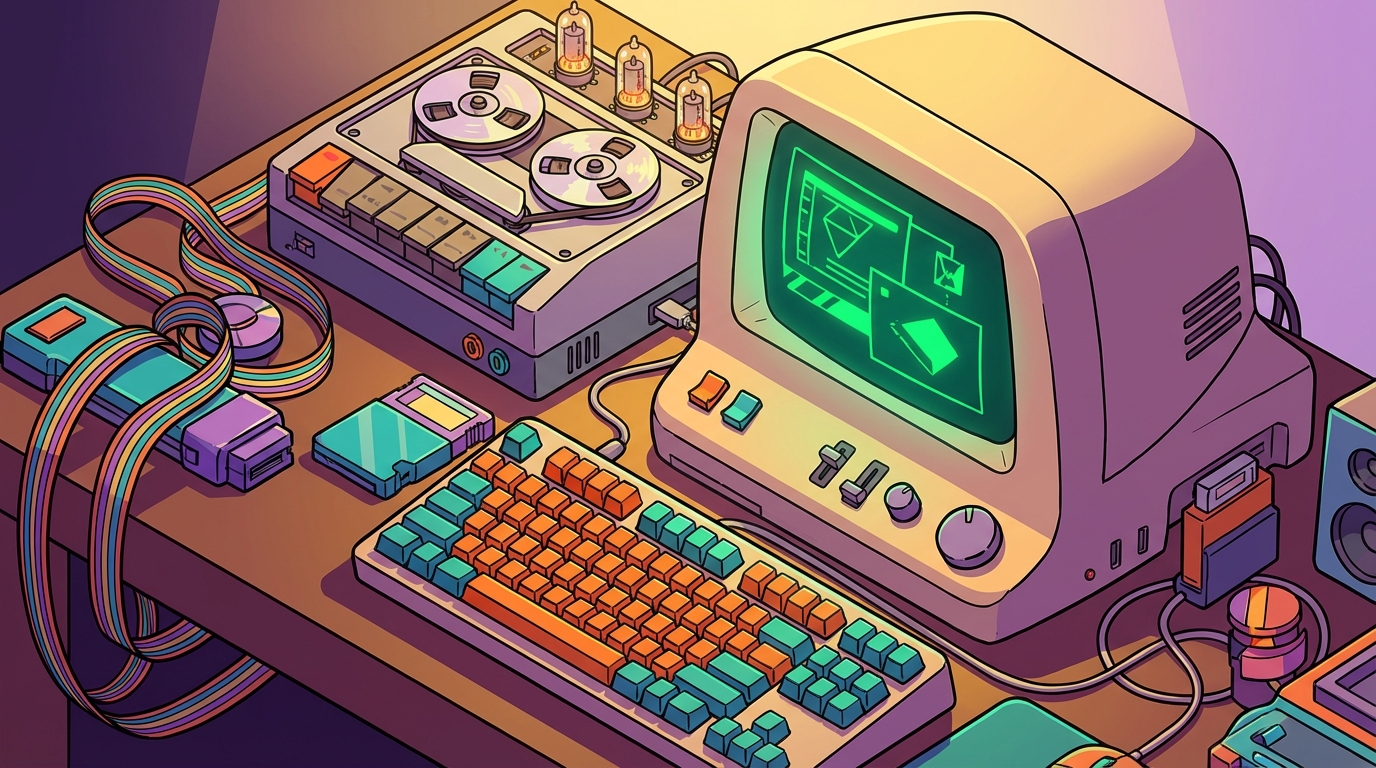
Picture a world where you can pilot a starship across the galaxy, but you still have to blow on a dusty plastic cartridge just to get the engine started. The cassette futurism aesthetic is that glorious sweet spot where high-tech dreams meet low-fi reality, trading sleek glass screens for clunky CRT monitors and glowing amber text. It is all about that chunky, beige-plastic vibe where data lives on magnetic tape and every button you press gives a satisfying, mechanical thunk.
You are here because you crave that tactile, Formicapunk energy that makes modern smartphones look like boring glass slabs. Whether you are a synthwave addict or a gamer who misses the hum of a flickering tube TV, this look captures a future that feels lived-in and wonderfully clunky. It is a neon-soaked trip back to an alternate 1984 where the robots are boxy, the wood-grain paneling is mandatory, and the floppy disks are actually floppy.
Forget about those boring, paper-thin tablets and sleek glass surfaces that dominate our lives today. In the world of cassette futurism, you get to slam down on mechanical keys that sound like a volley of gunfire every time you type a simple command. There is something deeply satisfying about flipping a heavy metal toggle switch that feels like it could launch a nuclear missile or at least turn on the coffee pot. This aesthetic celebrates the tactile glory of chunky hardware, where every button press gives you a meaty click and every dial has a stubborn, heavy resistance. You are not just a user tapping on a screen, you are an operator handling serious machinery that was built to survive a trip to a distant moon.
Stepping into a room filled with boxy CRT monitors and beige plastic housing makes you feel less like a bored cubicle worker and more like a rugged space trucker. Those glowing green phosphorus screens do not just display data, they flicker with a low-fi energy that feels alive and slightly dangerous. Instead of cloud storage and invisible signals, you deal with the glorious clatter of floppy disks and the whirring of magnetic tape reels. This is the world of Formicapunk, where high-tech interstellar travel is somehow powered by the same wood-grain paneling and cream-colored plastic found in a 1970s basement. It is a beautiful paradox of advanced science and clunky analog parts that makes the future feel lived-in, greasy, and wonderfully grounded.
The magic of this look comes from its refusal to be dainty or minimalist in any way. Everything is oversized, angular, and designed to look like it could be industrial and repairable with a heavy wrench and some duct tape. You get to enjoy a color palette of office neutrals and primary colors that screams retro-cool without trying too hard to be pretty. Whether you are navigating a starship or just trying to load a basic program, the experience is all about that heavy, industrial vibe. It is a nostalgic trip to a future that never quite happened, where the technology is loud, the screens are curved, and every piece of gear has a personality as big as its footprint.
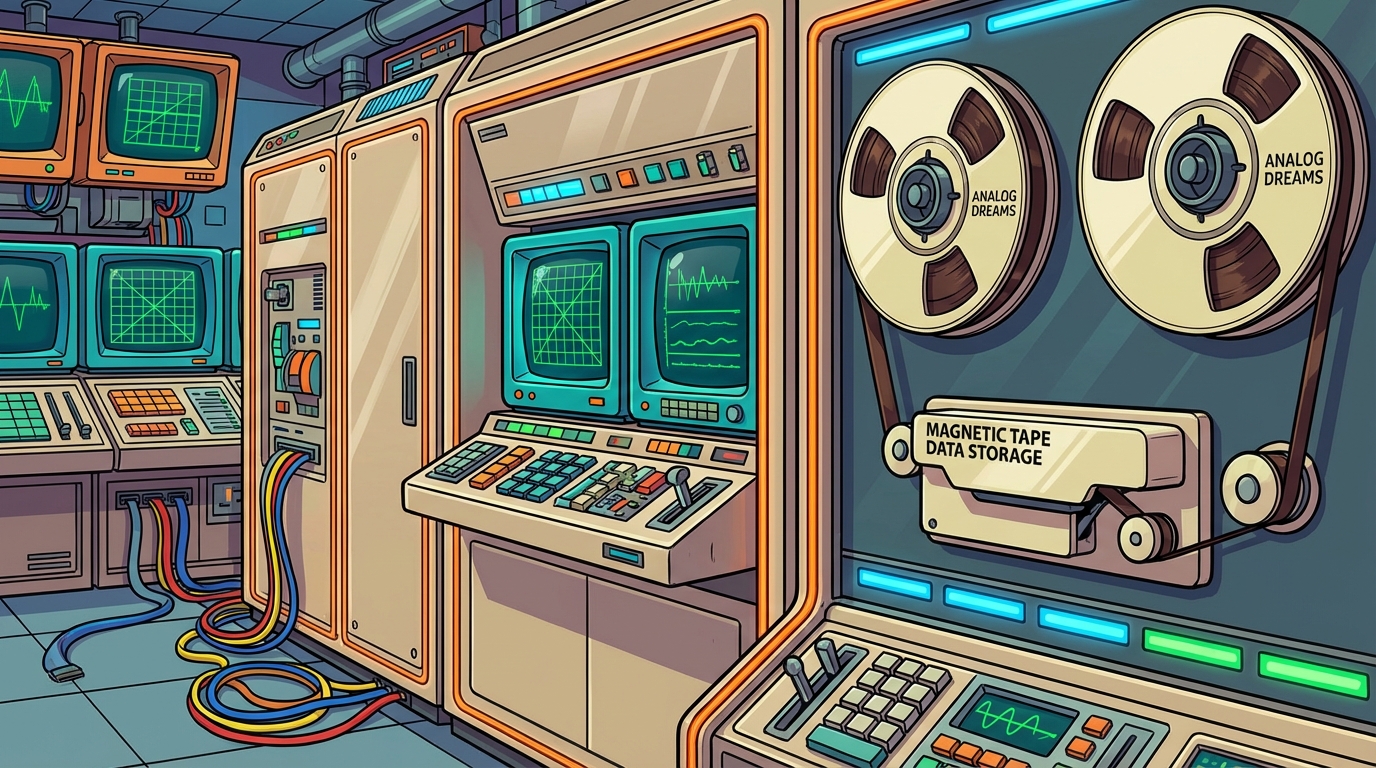
Imagine you are hurtling through the deep reaches of space in a trillion dollar starship, yet you still have to blow on a dusty plastic cartridge just to get the navigation system to boot up. This is the heart of cassette futurism, where the dream of the cosmos is powered by the clunky, beige hardware of a 1970s office park. You will find yourself surrounded by flickering clunky CRT monitors glowing with eerie green text and chunky mechanical keyboards that clack loud enough to wake the neighbors. It is a world where high tech means having more buttons to press and more magnetic tape to rewind. There is something hilariously charming about seeing a robot with advanced artificial intelligence that still relies on a floppy disk drive to remember its own name.
You can practically smell the warm scent of overheating plastic and ozone as you navigate these retro cockpits. Instead of sleek glass touchscreens, you get the tactile satisfaction of flipping heavy toggle switches and watching analog needles jump on a dial. Everything feels heavy, used, and delightfully boxy, as if the future was designed by someone who really loved wood grain paneling and earth tones. It is a used future vibe where the gear is held together by grit, grease, and the sheer willpower of a magnetic strip. You are living in a low-fi masterpiece where the interstellar internet probably sounds like a dial-up modem screaming into the void.
Embracing this aesthetic means trading your sleek smartphone for a device that looks like a heavy brick and requires a physical manual to operate. It is all about that satisfying click-clack of a physical interface that you just do not get with modern tech. You might be fighting off space monsters or exploring distant moons, but you are doing it with the same tech your parents used to file their taxes. This paradox of interstellar travel meeting magnetic storage creates a unique atmosphere that feels grounded and strangely relatable. It is a glorious, grainy trip down a memory lane that never actually happened, and it is perfect for anyone who thinks the future should have more knobs.
When you step onto the deck of the Nostromo in Ridley Scott’s Alien, you are not met with sleek glass tablets or holographic displays, but with the glorious clunk of the analog age. You can almost smell the ozone and stale coffee as you watch green phosphorus text flicker across bulky CRT monitors that look like they weigh a hundred pounds. This is the gold standard of cassette futurism, where saving the universe requires slamming physical buttons and waiting for a magnetic tape drive to whir into action. It is a world where high-tech space travel feels wonderfully blue-collar, held together by beige plastic, heavy toggle switches, and cables that actually tangle. There is something deeply satisfying about seeing a spaceship run on the same hardware that powers a vintage office, proving that the future is way cooler when it is built with chunky mechanical keyboards.
Blade Runner takes this low-fi, high-tech vibe and drags it through the neon-soaked gutters of a rainy Los Angeles. You will see Rick Deckard analyzing photos on a machine that looks like a glorified microwave, complete with dials you have to physically turn to zoom in. The tech is gritty, lived-in, and delightfully boxy, making every piece of hardware feel like it has a soul and a few loose screws. Instead of invisible wireless signals, this world is powered by thick bundles of wires and glowing vacuum tubes that probably get hot enough to fry an egg. It is a beautiful mess of retro-tech where even the most advanced androids are tracked using scanners that look like they were cobbled together from spare parts in a garage. This aesthetic reminds us that the coolest version of the future is one where you can actually hear the machinery working under the hood.
Stepping away from the cold perfection of your smartphone is the first step toward a much more satisfying reality. You do not need a liquid crystal display when you can have the warm, fuzzy glow of amber phosphorus text burning into a curved glass monitor. It is time to embrace the heavy thud of a floppy disk drive and the glorious whir of a magnetic tape spooling your data. There is something deeply comforting about a spaceship that looks like a high-tech office from 1979, complete with wood-grain panels and beige plastic. You are the commander of a low-fi future where every command requires a deliberate, mechanical click.
Forget about sleek glass surfaces and invisible sensors that never seem to work when your hands are full. This aesthetic is all about the tactile joy of chunky buttons that actually push back and toggle switches that snap with authority. You can level up your desk with hardware that feels substantial and smells like ozone and old plastic as you navigate a world of boxy hardware and primary-colored cables. It is a high-tech paradox where you can travel between stars but still need to blow on a cartridge to make it work. Trading your touchscreens for this clunky masterpiece is the ultimate upgrade for anyone who misses the era of physical media.
Living in a cassette futurism world means trading boring minimalism for a mess of wires and heavy machinery. You get to be the protagonist of your own lo-fi sci-fi movie, surrounded by flickering screens and mechanical keyboards that sound like gunfire. Whether you are hacking into a mainframe with a monochrome monitor or just enjoying the retro sci-fi vibe of a chunky walkie-talkie, the vibe is unmatched. It is a nostalgic trip to a future that never quite happened, but definitely should have. Grab your favorite cassette, slot it into the deck, and get ready to enjoy why retro cassette players are the most stylishly analog version of tomorrow.
It is a glorious alternate reality where the future looks exactly like a high-tech version of 1984. Think chunky beige computers, magnetic tape storage, and starships that still require a physical key to start.
That is the whole point of the aesthetic. We trade boring glass slabs for heavy plastic housing and mechanical buttons that make a satisfying thunk when you press them.
Not quite, because while Cyberpunk is all about high-tech and low-life, cassette futurism is about that specific analog-to-digital transition period. It is less about glowing neon implants and more about wood-grain paneling on your spaceship dashboard.
Forget 4K resolution and say hello to flickering CRT monitors with glowing green or amber text. These screens have that iconic hum and warm phosphorus glow that makes you feel like a rugged space trucker.
There is a deep magic in tactile hardware that actually fights back a little. Flipping a heavy metal toggle switch makes you feel like an operator handling serious machinery instead of just an aimless screen-swiper.
Only if that technology is wrapped in beige plastic and uses floppy disks. It is all about celebrating a future that feels lived-in, mechanical, and wonderfully tactile, perhaps even by building your own custom rig that hides modern power inside a vintage chassis.