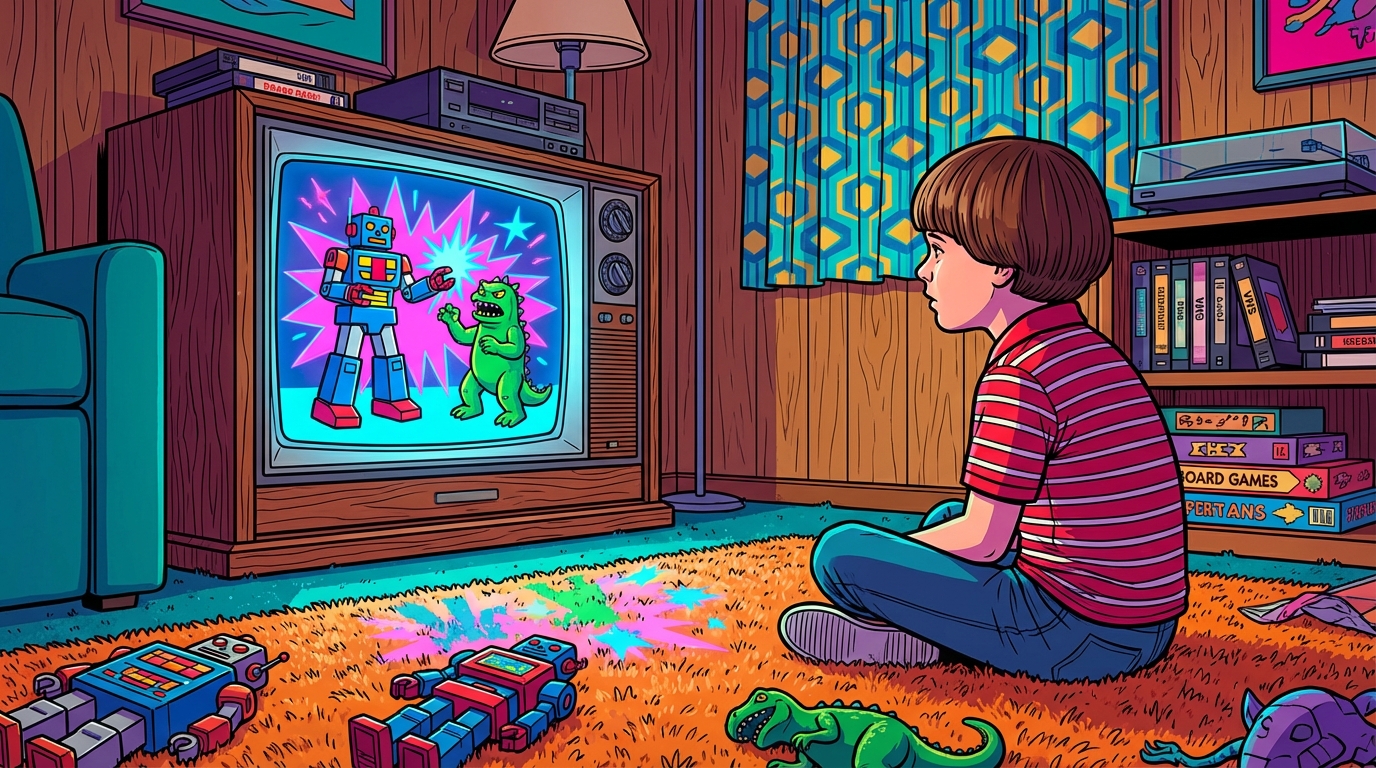
Picture yourself sitting cross-legged on a shag carpet, bowl of sugary cereal in hand, as a neon-soaked explosion hits your TV screen. These weren’t just ads; 1980s toy commercials were high-octane mini-movies designed to make you believe your life was incomplete without a plastic sword or a transforming robot. Thanks to a sudden “anything goes” vibe from the government, toy companies stopped playing nice and started crafting epic cinematic universes just to get you into the toy aisle.
You weren’t just watching a show; you were witnessing a thirty-minute tactical strike on your parents’ wallets disguised as radical entertainment. The line between your favorite Saturday morning cartoon and a sales pitch became thinner than the spandex on a glam rock star. It was a glorious era of synthwave soundtracks and over-the-top pyrotechnics where every piece of plastic had its own tragic backstory and a destiny to fulfill.
If you ever wondered why your Saturday mornings felt like a neon-soaked fever dream of plastic swords and combat boots, you can thank the massive wave of government deregulation in the early eighties. Before this era, the government kept a strict eye on how companies talked to kids, making sure shows and ads stayed in their own lanes. Once those rules were tossed out the window, the floodgates opened for toy companies to turn their product catalogs into full blown television epics. Suddenly, your favorite characters weren’t just icons of heroism, they were cleverly disguised sales pitches designed to make you beg for a trip to the local mall.
These shows became known as program length commercials because they blurred the lines between storytelling and pure marketing. You weren’t just watching a battle for Eternia or a mission to save the world, you were watching a thirty minute demonstration of the latest action figures and playsets. Every time a new vehicle or sidekick appeared on screen, it was a signal that a new box would be hitting the shelves by the weekend. It was a brilliant strategy that transformed the living room into a high energy showroom where the heroes always won and the toys always looked radical.
Living through this era meant being part of a massive cultural experiment fueled by synthwave vibes and bright primary colors. You probably remember the intense excitement of seeing a jet streak across the screen and immediately needing that exact hunk of plastic in your hands. This shift created a legendary bond between entertainment and collecting that still drives the nostalgia market for gamers and retro fans today. It was the ultimate win for toy manufacturers who realized that if you give a kid a great story, they will definitely want to own the physical piece of that adventure.
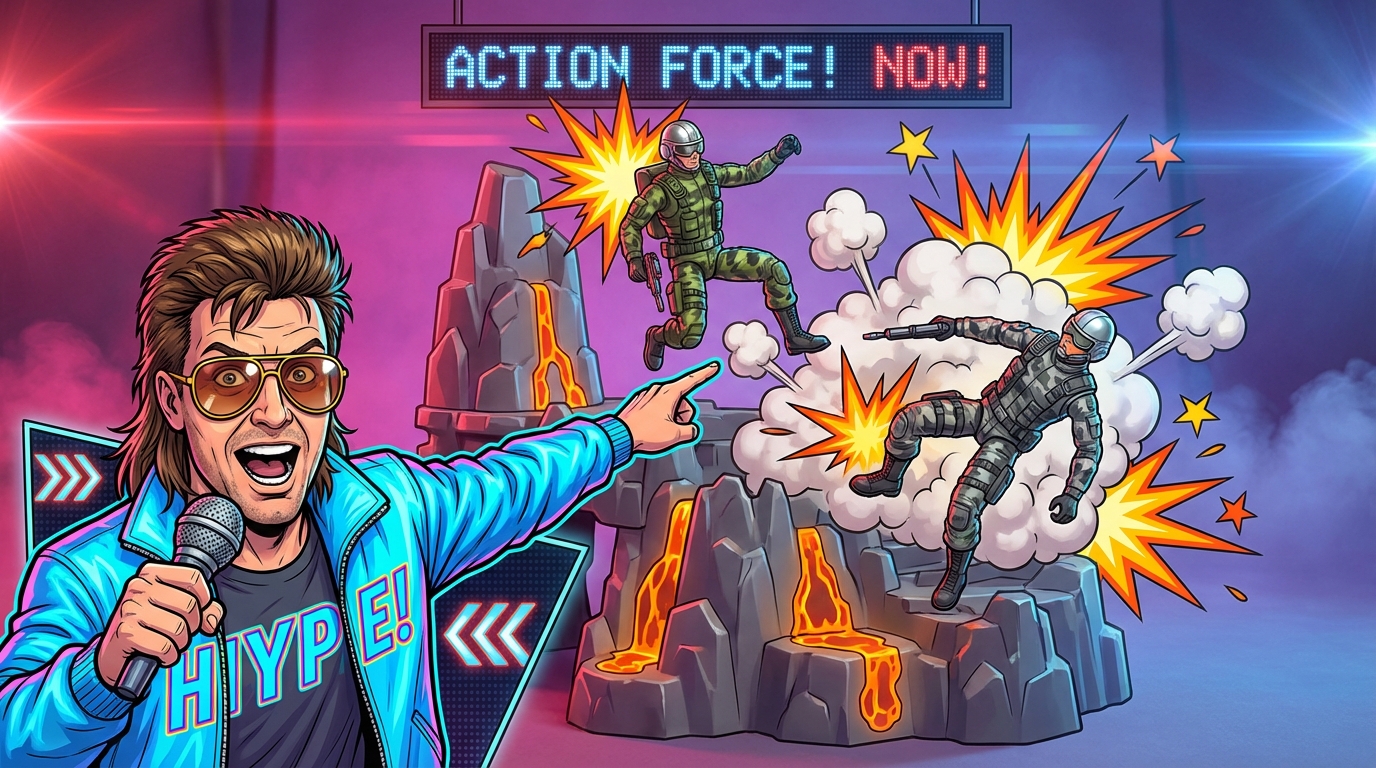
Imagine you are sitting cross-legged on a shag carpet, staring at a cathode-ray tube television that is practically vibrating with neon energy. Suddenly, a gravelly voice that sounds like it was forged in a volcano starts screaming about the fate of the galaxy while pyrotechnics explode behind a plastic action figure. These commercials were not just ads, they were high-octane cinematic masterpieces that used heavy smoke machines and dramatic low-angle shots to make a four-inch piece of plastic look like a god. You were not just buying a toy, you were being recruited into an intergalactic war where the stakes were impossibly high and the synth-heavy soundtrack never stopped pumping.
The true magic happened when that legendary hype man narrator stepped into the booth to deliver lines with more intensity than a summer blockbuster trailer. Every “batteries not included” sounded like a secret government code, and every “each sold separately” was a challenge to your allowance-saving skills. These voice actors could make a simple backyard sandbox look like a desolate alien planet through the power of cinematic techniques and their vocal cords. You probably remember begging your parents for that new playset because the commercial promised you the power to save the universe before dinner time. It was a glorious era of marketing where the hype was real, the colors were loud, and everything was totally radical.
If you close your eyes and think of 1980s toy aisles, you can practically feel the static electricity from those heavy tube televisions. The marketing split was as sharp as a laser beam, dividing the world into two distinct color palettes that defined our childhoods. On one side, you had girls’ commercials drenched in enough pink glitter and soft-focus lighting to make a synthwave producer weep with joy. Some ads felt like a fever dream of rainbows and pastel clouds, using a dreamy aesthetic that promised every playset was a magical escape. It was all about soft textures and brushable hair, wrapped in a neon glow that felt like a hug from a unicorn.
Switch the channel and you were suddenly hit with a blast of chrome-plated grit and high-octane explosions. Boys’ commercials for transforming robots or military figures traded the glitter for metallic textures and dark, moody backgrounds that made every plastic figure look like a serious war hero. These ads used fast-paced editing and deep-voiced narrators to sell a world of heavy machinery and tactical combat. Everything was covered in a layer of simulated grime or futuristic steel, making sure you knew these toys were built for backyard battles. The contrast was hilarious, yet it created a visual language that remains the ultimate nostalgia trip for anyone who grew up during that era.
The 1980s toy commercial was a beautiful, neon-soaked fever dream that turned every Saturday morning into a high-stakes mission for your allowance. You probably still have those aggressive voiceovers and synth-heavy jingles living rent-free in your head after all these years. These ads werent just trying to show you a plastic figure, they were inviting you into a cinematic universe filled with fog machines and dramatic explosions. From the glowing grids of futuristic battlefields to the radical shredding of backyard skate sessions, the sensory overload was designed to make every toy feel like the most important thing in the galaxy.
Looking back, it is easy to see how those high-energy clips became the blueprint for our modern obsession with retro aesthetics and synthwave vibes. You were basically watching miniature action movies that blurred the lines between a thirty-minute cartoon and a product pitch. This era of marketing mastered the art of the hype train by using quick cuts and bright colors to create a permanent sense of excitement. Even if the actual toy didnt come with real laser beams or a smoke machine, the memory of those radical commercials keeps the nostalgia alive in our collector hearts. Many of these properties even crossed over into the world of 80s cult movies, cementing their place in pop culture history forever.
You can thank the massive wave of government deregulation for that neon fever dream. Once the old rules were tossed out, toy companies were free to turn their product catalogs into full blown television epics where every hero was actually a sales pitch.
It is a tactical strike on your parents’ wallet disguised as radical entertainment. These shows blurred the lines so perfectly that you could not tell where the storytelling ended and the demonstration of the latest action figures began.
Commercials used over the top pyrotechnics and cinematic camera angles to make a piece of plastic look like a high octane movie star. They crafted epic backstories and used synthwave soundtracks to convince you that your life was incomplete without that specific robot or sword.
The line between your Saturday morning cartoon and the sales pitch was thinner than the spandex on a glam rock star. Every episode was essentially a thirty minute demonstration designed to get you hyped for a trip to the local mall.
Toy companies stopped playing nice and started creating entire cinematic universes to sell plastic. Giving a character a destiny made the toy feel like a legendary icon of heroism rather than just another item in the toy aisle.
Before the early eighties, the government kept a strict eye on how companies talked to kids to ensure ads stayed in their own lanes. Once those floodgates opened, the anything goes vibe allowed companies to turn radical entertainment into a massive marketing machine.