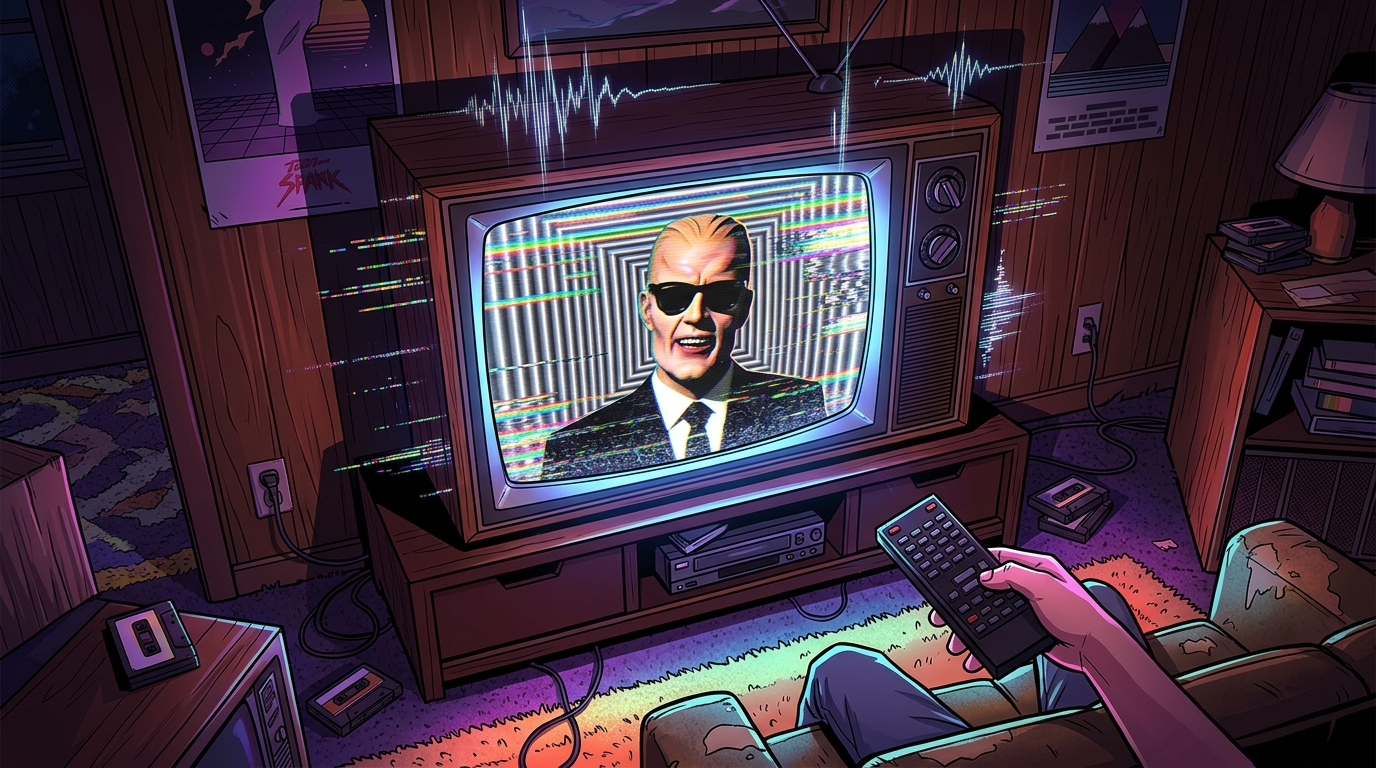
Imagine you’re chilling in your beanbag chair, snacking on some neon-colored cereal while watching the nightly news, when suddenly your screen glitches into a digital nightmare. Out of nowhere, a dude in a creepy rubber mask starts swatting at the camera and rambling nonsense against a spinning metal backdrop. This wasn’t a glitch in the Matrix or a weird promo for a synthwave concert; it was the max headroom incident, a legendary broadcast hack that turned Chicago’s airwaves into a real-life creepypasta.
It’s been decades since those grainy visuals hijacked the signal, yet the mystery is still more iconic than a high-score on a vintage arcade cabinet. Even with federal investigators on the case and every internet sleuth on Reddit digging for clues, nobody knows who the masked prankster actually was. If you love a good unsolved mystery wrapped in a 1980s aesthetic, this tale of rogue signals and corrugated metal is the ultimate rabbit hole.
Imagine you are chilling on your couch in 1987, munching on some snacks while watching the nightly sports highlights. Suddenly, the screen flickers into a static filled nightmare as a guy in a creepy rubber mask pops up out of nowhere. This figure is swaying back and forth in front of a spinning sheet of metal, looking like a low budget glitch in the real world. There is no sound at all, just a haunting buzzing noise that feels like your television is having a digital heart attack. Within seventeen seconds, the signal cuts back to a very confused news anchor, leaving you wondering if you accidentally stepped into a sci-fi movie.
This first intrusion was the ultimate vibe check for the city of Chicago and the birth of a legendary internet mystery. Even though it was short and silent, the visual of that distorted Max Headroom mask perfectly captured the weird, neon soaked energy of the eighties. It felt like a hacker from a cyberpunk novel had finally broken through the fourth wall to mess with the mainstream media. You can almost see the scan lines and feel the VHS tracking issues as this masked prankster claimed his first victory over the airwaves. This brief moment of static and rubber was just the beginning of a night that would live on in meme history forever.
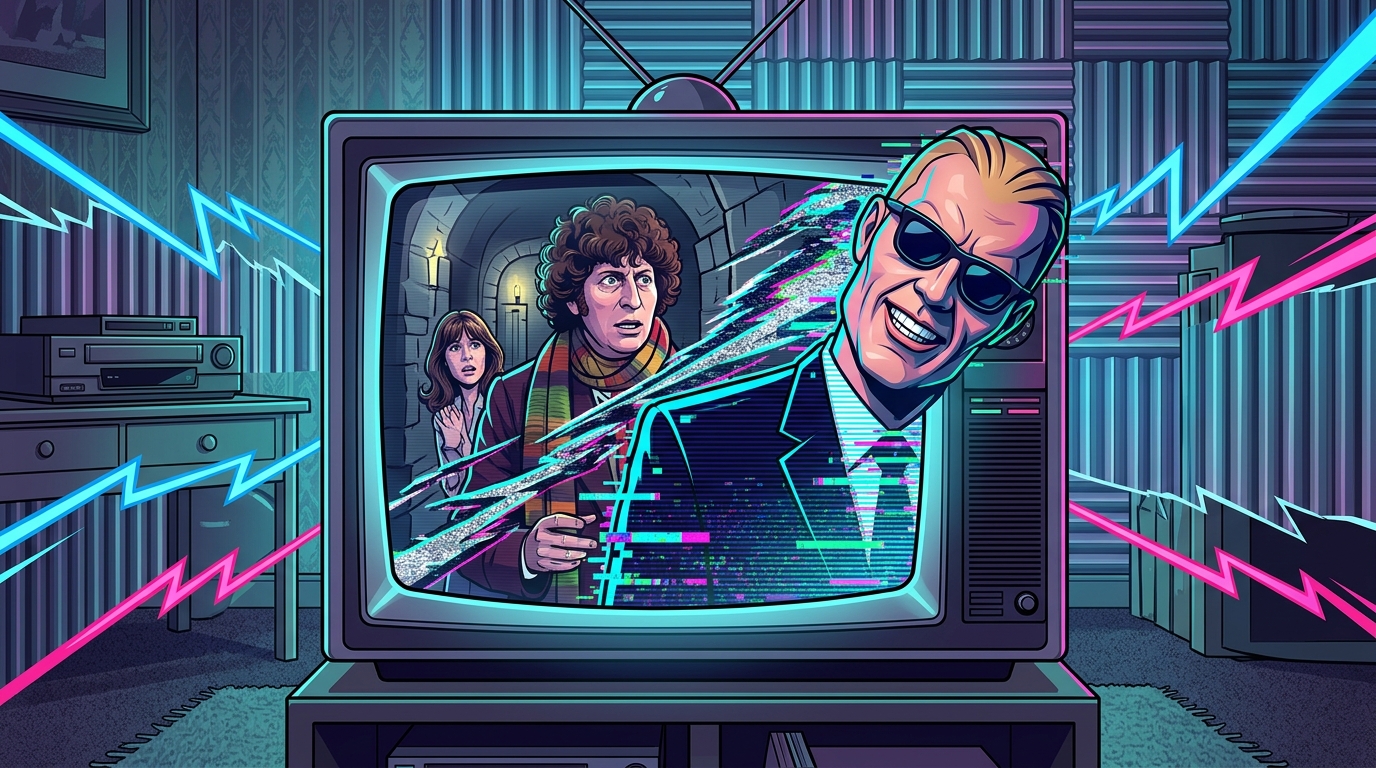
Imagine you are curled up on your couch in 1987, ready to enjoy a late night episode of Doctor Who, when your screen suddenly flickers into a neon nightmare. Instead of the Doctor, you are staring at a jittery figure in a rubber Max Headroom mask swaying against a backdrop of rotating corrugated metal. The audio is a distorted mess of hums and screams that sounds like a VHS tape being chewed up by a hungry VCR. This was not a glitch or a scripted bit, but a full scale signal hijacking that left thousands of Chicago viewers wondering if their television sets had finally gained a mind of their own. It is the ultimate piece of analog horror that feels like it stepped straight out of a cyberpunk novel.
The masked intruder did not just stand there looking creepy, but instead launched into a bizarre performance full of 80s pop culture deep cuts. You might hear him mocking the New Coke advertising campaign or humming the theme song to Clutch Cargo while tossing around random insults. The chaos peaks when the figure pulls out a flyswatter and gets paddled by a mysterious accomplice in a French maid outfit. It is a fever dream of low budget practical effects and high tech rebellion that feels perfectly at home in today’s meme culture. This ninety second clip remains the holy grail of broadcast signal intrusion because of its sheer, unadulterated weirdness.
Decades later, the mystery of who pulled off this digital heist remains unsolved, adding a layer of legendary status to the prank. You can almost smell the ozone and feel the static electricity radiating from the screen as you watch the grainy footage today. It bridges the gap between the clunky tech of the past and the anonymous hacker culture of the internet age. Whether it was a disgruntled engineer or a genius prankster with a satellite dish, they created a masterpiece of glitch art that still haunts the corners of the web. This phantom broadcast is a reminder that even in a world of controlled media, someone can always find a way to break the signal.
The federal government did not find the prank nearly as funny as the rest of us did. After the signal hijackings, the FCC launched a massive investigation to track down the rogue signals who managed to overpower two major TV towers. They combed through Chicago looking for the specific equipment needed to pull off such a stunt, but they hit a total end. Despite the threat of heavy fines and jail time, the masked culprit behind the corrugated metal background remained a ghost in the machine. It is the ultimate cold case that feels like it was ripped straight out of a low budget techno thriller.
Over the decades, this bizarre moment has evolved from a local news glitch into the holy grail of internet mystery culture. You can find its fingerprints all over the synthwave and cyberpunk scenes, where that grainy VHS aesthetic and distorted audio are worshipped as peak art. The image of the Max Headroom mask flickering against a neon grid has become a foundational meme for anyone who loves a bit of digital anarchy. It represents a time when the airwaves felt wild and unpredictable, long before everything was locked down by modern security. This incident is the reason we still look at static on an old TV screen and half expect a weirdo in a suit to start talking back to us.
The Max Headroom incident stands as the ultimate analog ghost story, perfectly capturing that grainy VHS aesthetic we all still love. Even after decades of internet sleuthing and federal investigations, the identity of the masked prankster remains a total mystery. You have to appreciate the sheer audacity of someone breaking into a broadcast signal just to swank around in front of a piece of corrugated metal. It is the kind of low-fi chaos that feels like it was ripped straight out of a cyberpunk novel or a glitchy synthwave music video. This lack of a resolution is exactly what keeps the legend alive in our collective digital memory.
There is something undeniably cool about a hack that relied on physical antennas and clever timing rather than modern lines of code. While today we deal with boring data leaks and password resets, this hijacking gave us a surreal moment of pure performance art. The grainy footage and distorted audio have become foundational pieces of meme lore for anyone who appreciates the retro sci-fi vibe of the eighties. It serves as a reminder that even in a world of high-tech security, a little bit of creativity and a rubber mask can still baffle the experts. You can almost hear the neon lights humming every time that distorted video starts to play.
Ultimately, we celebrate this bizarre night because it represents the wild west of early television technology. It is a story about a faceless rebel who took over the airwaves just because they could, leaving us with more questions than answers. Whether you are a fan of retro hacker movies or just love a good unsolved mystery, the Max Headroom incident hits all the right nostalgic notes. We might never find out who was behind that mask, but the legend of the Chicago signal pirate is far more entertaining than any truth could ever be. Keep those tracking buttons ready because this piece of history is never going to fade to black.
It was a legendary broadcast hijack that happened in 1987 when a prankster in a creepy rubber mask took over Chicago airwaves. This digital pirate interrupted two different TV stations with weird visuals and nonsensical rambling. It is basically the ultimate real life glitch in the Matrix from the synthwave era.
No, the mystery remains unsolved even after decades of investigation by the FCC and internet sleuths. Despite the feds being on the case, the identity of the masked man is still a total mystery. He managed to pull off the ultimate high score in the world of signal hijacking and vanish into thin air.
The prankster struck twice in a single evening, first hitting a local news station and then making a longer appearance on a public broadcast channel. The first attempt was a short, silent clip that left news anchors totally confused. The second intrusion was much longer and included the infamous corrugated metal backdrop and strange audio.
The masked figure spent his screen time swaying in front of a spinning metal sheet and rambling about random pop culture. He even had an accomplice swat him with a flyswatter while he made fun of local TV personalities. It was a bizarre, low budget performance that felt like a fever dream for anyone watching at home.
Max Headroom was a huge pop culture icon in the eighties known for being a glitchy, computer generated TV host. By wearing that specific mask, the hacker leaned into a cyberpunk aesthetic that perfectly matched the high tech prank. It turned a mainstream character into something much more eerie and underground.
Modern digital signals are way more secure and encrypted than the old school analog waves of the eighties. Back then, you just needed a powerful transmitter to overpower the station signal. Today, trying to hijack a broadcast would be like trying to beat a final boss on the hardest difficulty level without any power ups.