In a world where AI is trying to make every photo look like a hyper-realistic simulation, it is time to unplug from the Matrix and embrace the glitch. You are likely tired of high-def perfection and craving that fuzzy, neon-soaked nostalgia that feels like a lost VHS tape from 1986. These lo-fi photography tips are your cheat code for breaking the rules of “good” lighting to find the beauty in the blur. It is all about trading those crisp pixels for mood, soul, and a vibe that is more synthwave than software.
Forget the technical manuals and just lean into the beautiful mess of grain, light leaks, and fisheye distortions. Whether you are chasing that dreamy retro glow or just want your digital shots to feel like a tangible memory, the goal is to make things look intentionally “bad” in the best way possible. Crank up the ISO, let the shadows get moody, and stop worrying about being pixel-perfect. Your camera is a time machine, and it is finally time to set the dial to a much funkier decade.
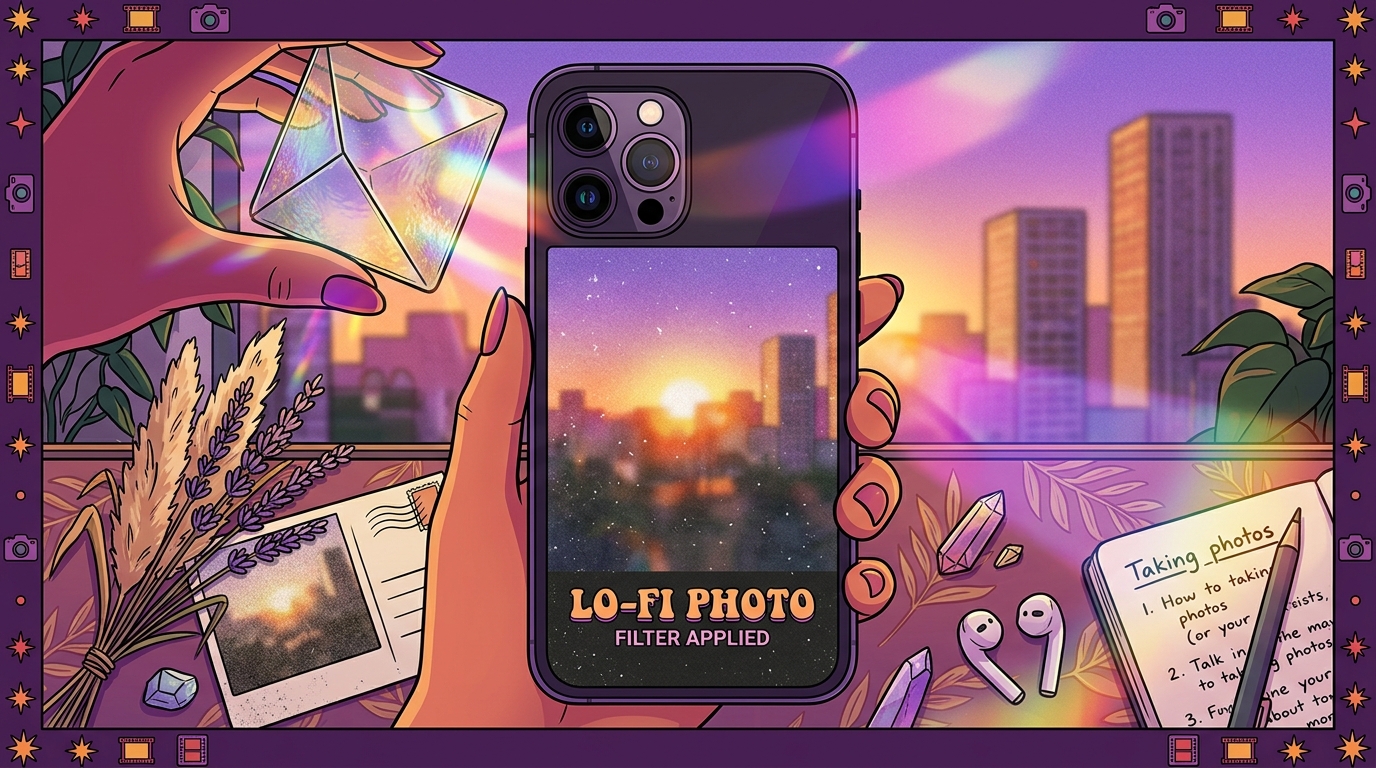
Forget about those crisp, ultra-high-definition settings that make your photos look like a boring medical textbook. To achieve that sweet 1970s retro glow, you need to lean into the chaos and make your phone sensor work for its dinner. Grab a cheap plastic prism or even a clear sandwich baggie from the kitchen to hold over your lens. These low-tech tools scatter the light in beautiful ways, creating those iconic amber streaks and soft-focus haziness that scream vintage cool. It is all about breaking the rules of physics to find the soul hidden inside your digital device.
Timing is everything when you are hunting for that perfect, grainy synthwave aesthetic. You want to head outside during the golden hour when the sun is low and ready to blast your lens with warm, horizontal rays. Instead of hiding from the glare, point your camera right at the light source to force some intentional distortion. This creates a dreamy flare that washes out the contrast, making your modern smartphone feel like a dusty film camera found in a thrift store. It is the ultimate rebellion against the polished, AI-perfected images that flood your feed every single day.
Embrace the beautiful mess of light leaks by experimenting with different angles and DIY filters. You can even use a bit of translucent tape or a smudge of petroleum jelly on a spare clear case to add that fuzzy, nostalgic texture. These imperfections are not mistakes, they are the secret sauce that gives your shots a moody, analog heartbeat. Your goal is to make the viewer feel like they are looking at a lost memory from a neon-soaked arcade or a late-night drive. Keep it messy, keep it colorful, and never let a perfectly clear shot ruin your lo-fi vibe.
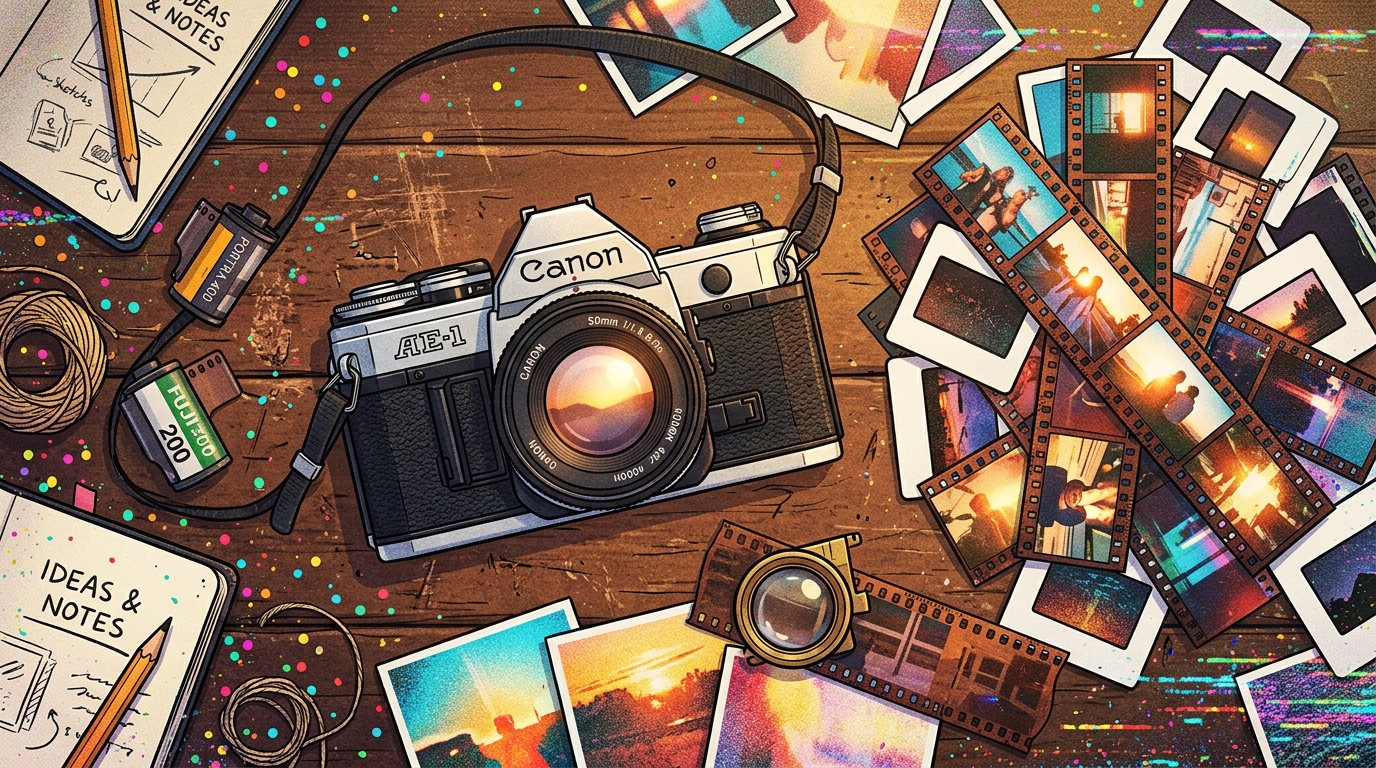
In a world obsessed with 4K clarity, your first step toward true lo-fi greatness is to stop fearing the digital noise and start embracing the crunch. Think of those grainy VHS tapes from the eighties that had more soul in one flickering frame than a modern blockbuster has in its entire runtime. You can easily mimic this vibe on your smartphone by cranking your ISO setting way up, even if you are shooting in broad daylight. This forces your camera to create beautiful, fuzzy artifacts that look like cosmic dust scattered across your screen. It is time to let go of that clinical, hyper-processed look and let the pixels get a little messy for a change.
Ditch your tripod at the door because the last thing we want is a perfectly steady, boring shot that looks like it was taken by a lifeless robot. To capture that authentic retro energy, you need to lean into motion blur by moving your phone intentionally while you snap the shutter. This technique adds a dreamy, streaky texture to neon signs and streetlights, making your photos feel like a still frame from a synthwave music video. You are not looking for a crisp documentary style, so let your hands shake and your subjects wander out of focus. It is all about capturing the mood and the movement rather than the tiny details.
Think of your screen as a canvas where “bad” technical choices actually become your best artistic tools. When you intentionally lower the quality, you are rebelling against the boring perfection of AI filters and high-definition screens. You want your photos to look like they were discovered in an old shoebox or pulled from a glitchy arcade cabinet in 1986. By prioritizing these gritty textures and soft edges, you give your memories a sense of mystery and nostalgia that a sharp photo just cannot provide. Grab your phone, find some moody lighting, and start making some beautifully imperfect art that actually has a pulse.
If you are tired of your phone camera making everything look like a sterile medical exam, it is time to embrace the beautiful chaos of the fisheye lens. These bubbly, ultra-wide lenses warp your reality into a spherical dreamscape that feels like a 90s skate video or a classic hip-hop album cover. You do not need a fancy setup to achieve this look since cheap clip-on lenses or even a well-placed peephole from the hardware store can do the trick. This intentional distortion ignores the rules of straight lines and technical accuracy in favor of a fun, warped perspective that makes every sidewalk feel like a neon-soaked level in a retro video game. It is the ultimate antidote to the boring, hyper-processed perfection of modern AI photography.
Adding a heavy vignette is the secret sauce for turning a random snapshot into a moody masterpiece with a touch of mystery. By darkening the corners of your frame, you naturally pull the viewer’s eye toward the center while hiding messy backgrounds in soft, shadowy edges. You can easily DIY this effect by holding a dark ring of cardboard over your lens or even dabbing a tiny bit of dark petroleum jelly around the rim of a clear filter. This technique creates a tunnel-vision effect that feels like peering through a time portal back to the days of analog film and grainy arcade screens. It adds an instant layer of soul and character to your daily snaps, making even a trip to the grocery store look like a cinematic synthwave adventure.
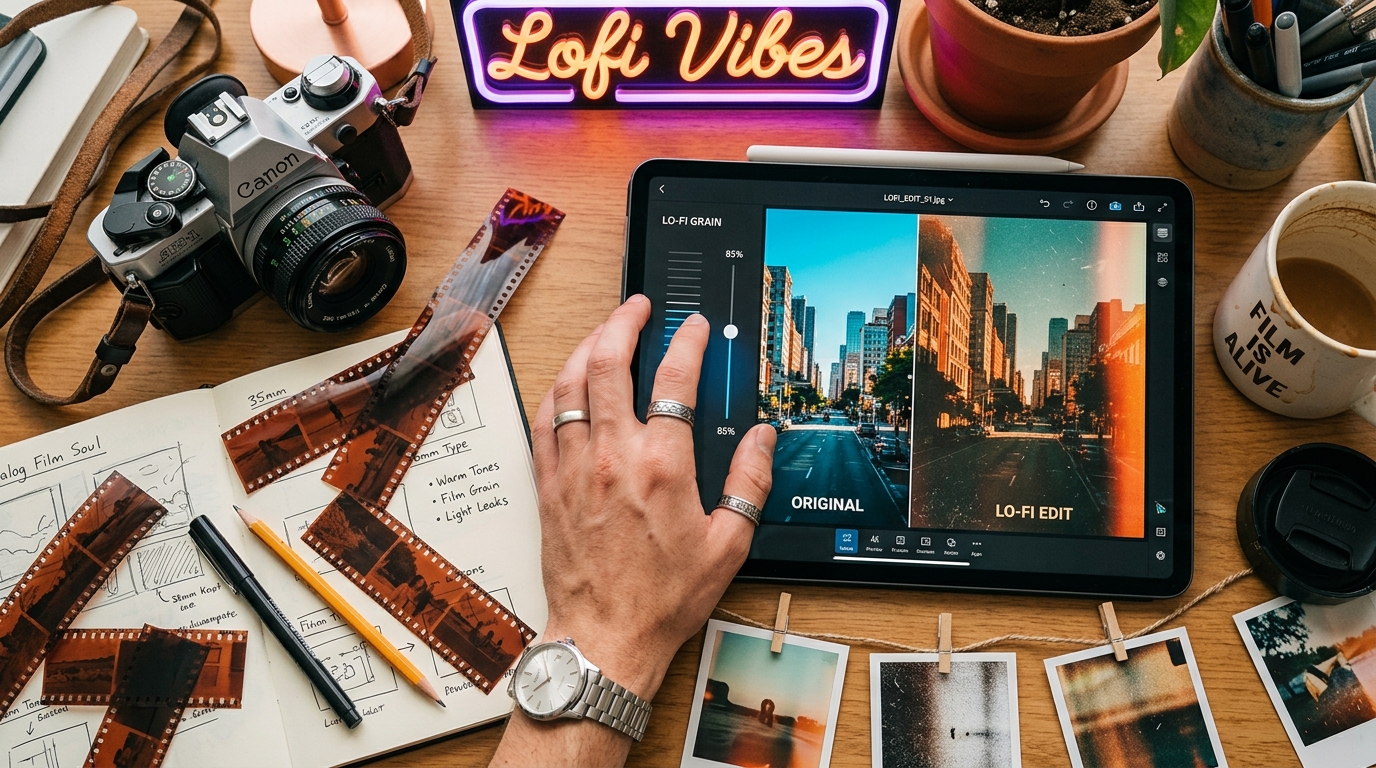
You do not need a clunky vintage camera from a garage sale to capture that sweet, nostalgic vibe when your smartphone is already a literal time machine in your pocket. To start your journey into the neon-soaked past, look for editing apps that specialize in light leaks and expired film presets. You want to hunt for those high-saturation synthwave colors that make every sunset look like a scene from a 1980s sci-fi flick. Do not be afraid to crank up the grain until your photo looks like it was rescued from a dusty VHS tape found in your basement. The goal is to ditch that crisp, boring digital perfection in favor of something that actually has a pulse and a bit of a rebellious streak.
Texture is your best friend when you are trying to give your digital files some real street cred and analog soul. Go ahead and layer on some artificial scratches, dust particles, and maybe even a few coffee stains to make the image feel lived-in. You can also experiment with double exposures by overlaying two different shots to create a dreamy, trippy masterpiece that defies logic. This is not about being technically correct, it is about capturing a mood that feels like a lo-fi hip-hop beat looks. If your photo looks like it survived a glitch in the matrix or a journey through a wormhole, you are definitely doing it right.
Adding a heavy vignette or a subtle fisheye warp can help pull your viewer into the center of the frame while hiding those pesky modern details. You should also play around with chromatic aberration to get those fuzzy, rainbow-colored edges that scream retro gaming aesthetics. Remember that in the world of lo-fi photography, a “mistake” is actually just a creative choice that adds character. Forget about the rules of high-definition photography and embrace the beautiful mess of distorted colors and soft focus. Your final edit should feel less like a clinical data file and more like a warm, fuzzy memory from a decade you might not even have been alive for.
Ultimately, the best part of lo-fi photography is that you can stop worrying about being a technical wizard and start acting like a creative rebel. In a world obsessed with hyper-polished AI images and boring high-definition reality, choosing grain and blur is basically a superpower. You do not need a thousand-dollar setup when your smartphone is already a portal to those dreamy, neon-soaked vibes. Just lean into the chaos, embrace the light leaks, and let your inner artist run wild through the digital static. Perfection is honestly pretty mid, but a photo that feels like a core memory from a 1980s summer is forever.
Grab your phone and go capture some beautiful messes because chasing that crisp look is totally overrated anyway. Think of every intentional distortion or fuzzy vignette as a glitch in the matrix that makes your world look way more interesting. Whether you are rocking a fisheye lens for that bubble-view aesthetic or cranking up the ISO for some crunchy texture, you are building a vibe that feels alive. This is your chance to play with those synthwave colors and soft-focus moods that make every snapshot feel like a scene from a retro movie. The goal is to capture the soul of the moment, even if it looks like it was found on a dusty VHS tape in your parents’ attic.
It is the art of ditching pixel-perfect boringness for a mood that feels like a fuzzy VHS tape from 1986. You are intentionally using grain, light leaks, and blur to give your shots some actual soul and a retro synthwave vibe. It is all about making things look bad in the best way possible.
Absolutely not because your fancy gear is actually the enemy of a good glitchy aesthetic. You can use your phone and a few lo-fi photography tips like using a plastic sandwich bag or a prism to scatter light and create those sweet amber streaks. The goal is to break the rules of physics using low-tech tools you probably already have in your kitchen.
You want to hunt for that golden hour glow when the sun is low and ready to blast your lens with warm, horizontal rays. Instead of hiding from the glare like a normal person, point your camera right at the sun to force some beautiful distortion. This is your prime time for catching that dreamy neon-soaked nostalgia.
You need to crank up your ISO settings until the digital noise starts looking like beautiful grit. Think of grain as the seasoning that turns a bland high-def simulation into a tangible memory. Stop worrying about being crisp and embrace the beautiful mess of a moody, high-noise image.
Smudge your lens with a little bit of natural oil from your skin or hold a piece of translucent tape over the edge of the glass. These simple hacks create a soft-focus haziness that makes your digital sensor work for its dinner. You are trying to unplug from the Matrix, so do not be afraid to get a little messy.
Blur is not a mistake, it is a feature that adds movement and mystery to your shots. Lean into the motion and let the shadows get moody instead of chasing a sharp image. Your camera is a time machine, and a little bit of blur helps transport your viewers back to a much funkier decade, much like the glorious potato quality of early digital tech.