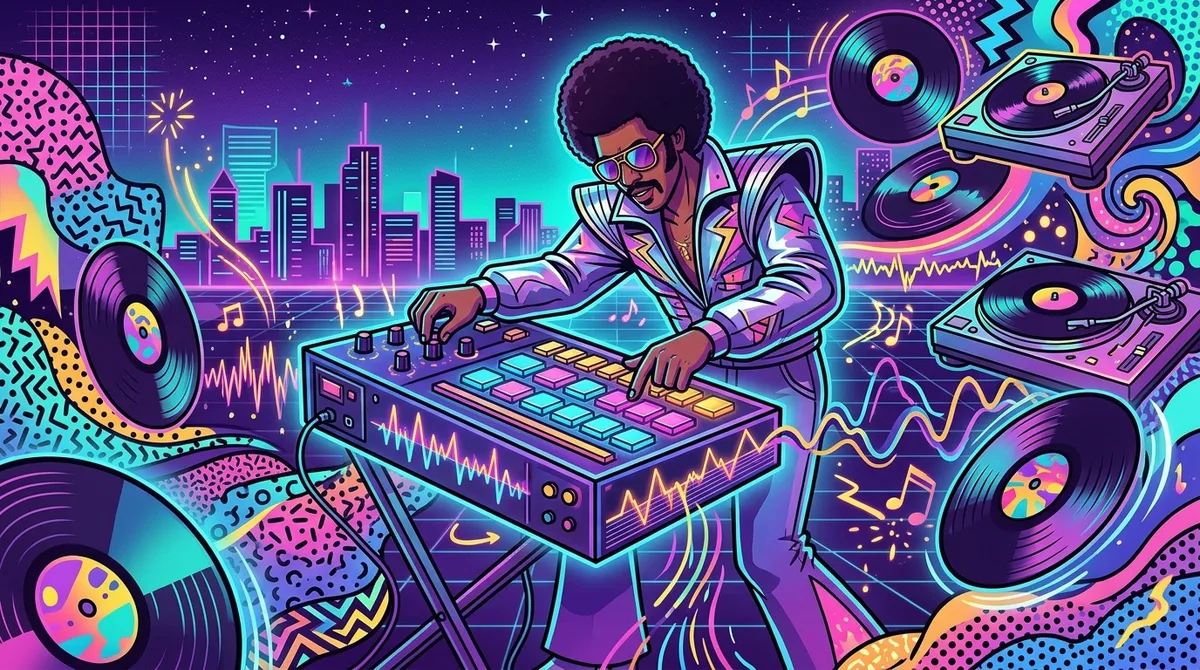
Electro-funk history begins in the early 1980s with a style also called electro-boogie, which mixed drum machines, synthesizers, funky bass lines, hip-hop vocals and vocoder-treated voices into one wildly catchy package. If you’ve ever nodded along to a beat that sounds like a robot doing the funky chicken, you’ve already met the sound. Its big calling card was Afrika Bambaataa and the Soul Sonic Force’s “Planet Rock” in 1982, which climbed to No. 48 on the Billboard charts and still sounds fresh today.
The machine at the heart of it all was the Roland TR-808, a drum box that originally cost about $1,200. Roland built roughly 12,000 of them between 1980 and 1982, and by the mid-1980s used units were selling for $100 or less. Suddenly, a bedroom producer with a bit of cash and a lot of nerve could program their own beats. Grab your neon shades, because the funk groove was about to get a serious upgrade.
Electro-funk is an early-1980s style, also called electro-boogie, that stitched together electronic drum-machine sounds, synthesizers, repetitive funk bass lines, hip-hop vocals and vocoder-treated voices. Think of it as funk that got a robot makeover and kept its dancing shoes on. Its roots grow out of Black music-making in American cities, where DJs and producers were hungry for new sounds and willing to experiment with whatever gear they could get their hands on.
A 2013 Concordia University dissertation describes the style as a slower, funkier form of electronic funk and rap. Early examples include Planet Patrol’s “Play at Your Own Risk” from 1982 and Cybotron’s “Clear” from 1983, two tracks that helped define the sound before everyone copied it.
The genre’s calling card was “Planet Rock,” and it wore its influences proudly. The Museum of Modern Art notes that the track borrowed its melody from Kraftwerk’s “Trans-Europe Express.” Arthur Baker produced it, and the result sounded like a Kraftwerk record that had crashed a block party in the Bronx.
That European connection ran in both directions. Scholars have traced electro, Chicago house and Detroit techno partly to Black artists who engaged with Kraftwerk’s programmed, funk-oriented music, which proves the robots had plenty of fans on this side of the ocean too.
Why did it sound so different? The key was the Roland TR-808, which had a 16-button sequencer. Instead of picking from preset rhythms, you could program and store your own beats, and that freedom let a whole new kind of groove take shape.
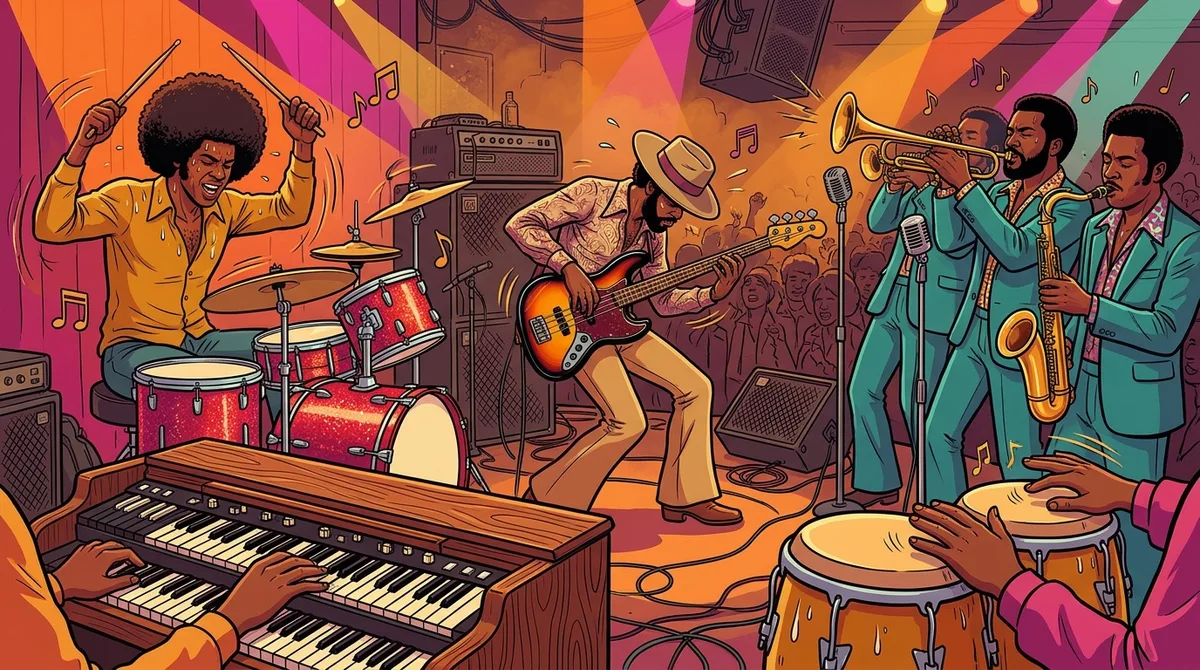
Funk grew out of Black American music in the 1960s, and its groove was built by live bands long before any robot showed up. Think of it as the original dance party, where every musician was a human drum machine with a lot more soul.
New Orleans gave funk much of its rhythmic DNA. Its parade-street beats, tangled horn lines and rolling piano patterns bounced around the city for generations, and musicians carried that bounce with them when they moved to other cities.
James Brown turned that bounce into a science. He wanted the first beat of each bar, which funk fans call “The One,” to land like a punch, so everything else in the band had to snap into place around it. Once you hear it, you can’t unhear it.
The rhythm section did the heavy lifting. The drummer’s kick drum and the bass guitar locked together on the important beats, while the bassist played short, punchy notes that sounded like a heartbeat with a wah pedal. That tight partnership is what made people’s hips move before their brains caught up.
On top of that foundation, guitarists chopped out scratchy, percussive chords and played off-beat patterns that stacked into polyrhythms. It was like a dozen tiny drummers refusing to agree on the beat, yet somehow every rhythm still bowed down to The One.
Then the horns swooped in with call-and-response. The band blasted a phrase, the horns answered, and the crowd shouted back. Maceo Parker, who played with James Brown, became one of the most recognizable funk horn players, and his saxophone lines were sharp, bouncy and cheeky enough to make the whole room grin.
Keep that groove in mind, because electro would later strip away the sweaty live horns and pack the bones of it into a box.
Electro borrowed its blueprint from a handful of funk bands, producers and one purple-clad genius. Sly and the Family Stone, George Clinton’s Parliament-Funkadelic, Earth, Wind & Fire, Bootsy Collins and Prince did most of the heavy lifting. Grab your neon shades, because this lineup reads like a boss rush for groove lovers.
Sly and the Family Stone mixed soul, rock and psychedelia into one loose, buzzing party. Their records showed that a funk band could sound messy, joyful and totally in charge at the same time, and plenty of later producers took notes.
George Clinton took things somewhere else entirely. Parliament-Funkadelic dressed like cartoon villains from outer space, built sci-fi concept albums and let synthesizers and wild studio tricks creep into the groove. If you’ve ever pictured funk on a spaceship, Clinton drew the map.
Earth, Wind & Fire brought polish and big horn sections to the party. Maurice White, who founded the band and played drums, steered them toward a glossy sound that could fill a stadium. Their shimmering, cosmic production proved that funk could be elegant too.
Bootsy Collins gave the bass the spotlight. His slap bass lines were thick, bouncy and impossible to ignore, and they showed that a bass line could carry an entire track. Electro’s repeating bass patterns owe a lot to that lesson.
Disco also raided the funk stash. Producers borrowed the tight, looping rhythms and snappy guitar chops, then buffed them up for the dance floor. Once funk was disco-fied, its grooves were everywhere, which made them easy for the next generation to grab and reshape.
Prince became the bridge. He blended funky guitar and vocal swagger with synthesizers and drum machine beats, so his synth-funk tracks sounded like the future had arrived in a purple suit. That mix of human soul and electronic gloss pointed straight toward electro.
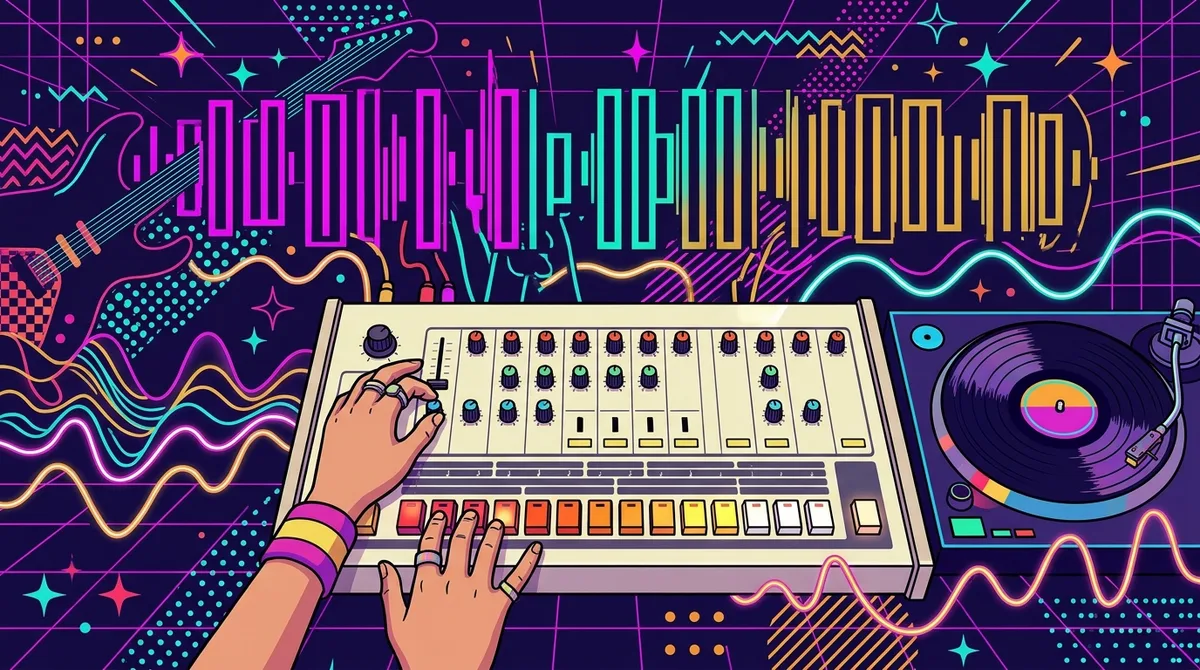
The TR-808 changed the funk groove by replacing the live drummer with a programmable box that anyone could teach a beat to. Its 16-button sequencer split each bar into sixteen steps, so you pressed a button to switch a sound on at that step, and the machine looped your pattern until you got bored. Roland’s TR-808 page explains that you could store these custom beats instead of picking from preset rhythms, so the groove was yours alone.
Roland built the machine from 1980 to 1982, and around 12,000 units left the factory. That’s a short run, but it was enough to put the box in the hands of producers who would reshape dance music. Most early buyers were just trying to finish a demo before the studio clock ran out.
Price is where the story gets wild. The machine launched around $1,200, which was serious money for a box that only made drum sounds. By the mid-1980s, used units were going for $100 or less, so a teenager with a paper route could suddenly afford a groove machine. Cheap gear is how a sound escapes the studio and lands in somebody’s bedroom.
The 808 never tried to sound like a real drum kit, and that’s exactly why electro loved it. Its sounds came from circuits rather than microphones, and you can hear them all over the genre:
Those robotic textures gave electro-funk its neon edge. Human swing got traded for perfect repetition, and dancers didn’t mind one bit.
Genre labels were never fixed, though. Scholars still argue about where electro ends and nearby styles begin, so treat “electro” as a handy sticker rather than a law carved in stone. Plenty of tracks wear more than one label, and that’s half the fun.
Yes, electro-funk had a big transatlantic side. German and Japanese electronic acts sent sounds across the ocean, and American producers grabbed them, bent them and sent them back with a bass line attached.
Kraftwerk were the robots who started the conversation. Their tight, programmed rhythms sounded like a factory that had learned to dance, and that stiff, machine-made pulse was exactly what Black American producers found irresistible. When “Planet Rock” borrowed the melody of “Trans-Europe Express,” it proved that a Kraftwerk tune could headline a block party in the Bronx.
Yellow Magic Orchestra, the Japanese trio, were another key reference point. They mixed synthesizers, sequenced patterns and catchy pop hooks, and their records showed listeners that electronic music could be playful, sleek and built for dancing. Their sound crossed the Pacific and landed with fans who were already building their own machine-driven grooves.
The influence went deeper than a few borrowed melodies. A Cambridge University Press chapter traces electro, Chicago house and Detroit techno partly to Black artists and communities who engaged with Kraftwerk’s programmed, funk-oriented music. Kraftwerk’s beats were not just admired from a distance. They were picked up, remixed and turned into local scenes.
Detroit shows the idea best. Cybotron, the Detroit duo behind “Clear” from 1983, pushed electro into colder, futuristic territory, and that sound helped point the way toward Detroit techno. Planet Patrol’s “Play at Your Own Risk” from 1982 showed how robot funk could start a party. Chicago house then took the same kind of drum machine and kept it pounding on the club floor until sunrise.
So if you hear a Kraftwerk pulse in a Detroit track, you’re hearing a conversation that started on two continents and never really ended.
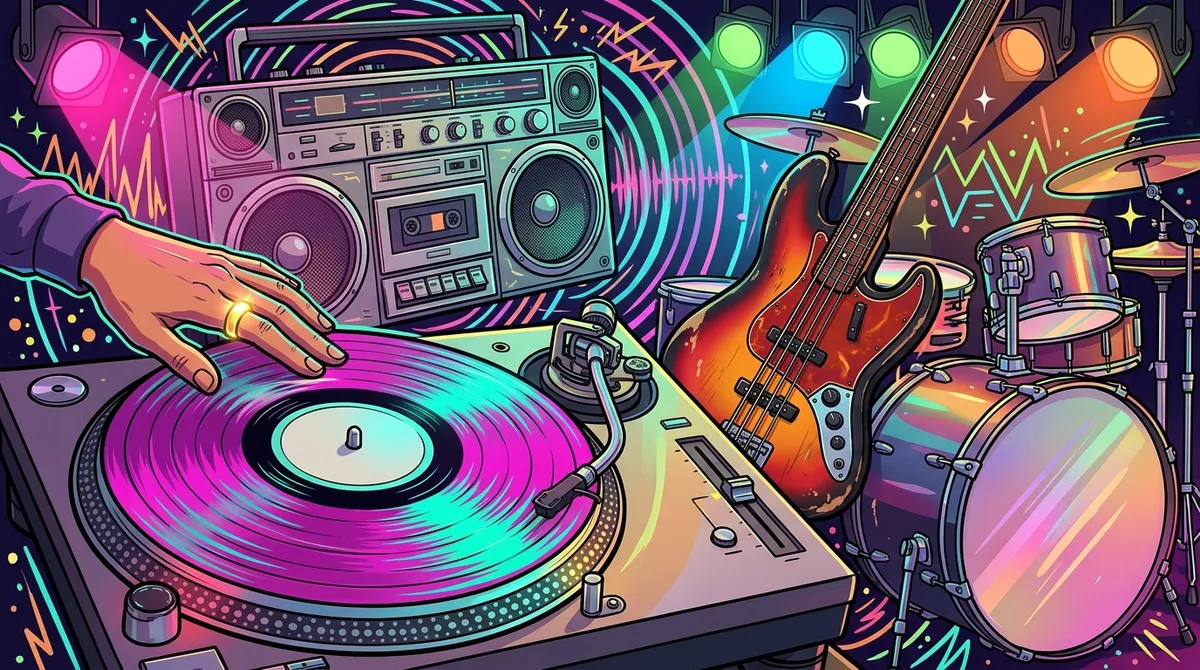
Hip-hop keeps returning to funk breaks because a break is the part of a record where the drums carry the song alone, and that’s exactly what a dancer or rapper needs. Early DJs noticed that the drums in the middle of a funk record could keep a crowd moving for minutes. So they would play the break, switch to a second copy of the same record and play that break again, looping it into a nonstop groove.
Funk drummers had already built those loops. A few bars of tight snare, a rolling kick and a busy hi-hat could hold a room together without a single horn part. James Brown records were a favorite hunting ground, and Clyde Stubblefield’s drumming on “Funky Drummer” became one of the most sampled breaks in hip-hop history.
Sampling took the idea further. Producers pulled breaks off vinyl, looped them on early samplers and laid rapping on top. Suddenly a drummer who had cut a session years earlier was keeping time under a brand-new verse, and nobody had to book a studio band.
That’s where electro-hop comes in. Electro brought drum machines and synthesizers into the mix, so the live drum break could be swapped for a robotic one without losing the bounce. Hip-hop’s rhymes and DJ culture met electro’s machines halfway, and the result was a sound that belonged to both camps.
“Planet Rock” shows the meeting point better than anything else. Afrika Bambaataa and the Soul Sonic Force rapped over a beat that felt like a funk anthem, yet the track was packed with electronic sounds, so it played like hip-hop, funk and electro all at once. Its success gave DJs a clear example of how far a funk-rooted groove could travel when a machine was driving it.
Yes, the TR sound is still alive, and Roland is still building machines that sound like they belong in a neon-lit bedroom studio. The company marked the TR-808’s 45th anniversary on August 7, 2025, with an announced eight-part animated series, plus other collaborations and events. Picture the 808 getting its own cartoon, complete with glowing grids and a synth-pop theme song.
The bigger headline came on October 1, 2025, when Roland announced the TR-1000 Rhythm Creator. Roland calls it the company’s first drum machine in over 40 years with true analog voices, which is a big deal for anyone who has spent years hunting for vintage gear.
Under the hood, the TR-1000 packs three main parts:
The U.S. price at publication was $2,699.99, a long way from the mid-1980s bargain bin. This announcement is news about Roland’s product line, not a recommendation to buy anything. Whether a box like this belongs on your gear list is your call, but the announcements show the TR lineage is still rolling forward.
Start your trail with “Planet Rock,” because it packs the whole recipe into one track: the Kraftwerk-inspired melody, the robotic drums and the rapping. Next, play Planet Patrol’s “Play at Your Own Risk” and listen for how much space the drum machine leaves for the vocals.
Then move on to Cybotron’s “Clear.” Notice how the mood turns colder and more futuristic, as if the city outside has been replaced by a chrome skyline. After that, track down Kraftwerk’s “Trans-Europe Express” to hear the melody that “Planet Rock” borrowed. Yellow Magic Orchestra fits right in after that for a sunnier, sequenced contrast.
For a little old-school comparison, pair a James Brown record with Clyde Stubblefield’s “Funky Drummer” break, then play a TR-808 pattern right after it. You’ll hear the difference between a human drummer who sweats and a box that never blinks.
Finally, grab your headphones, set a timer and listen for three sounds: the 808 kick, the handclap and the cowbell. Bonus points if you can pick out Bootsy Collins’s bass line hiding in the mix. Once those sounds are locked in your head, the neon glow of the genre will make a lot more sense.