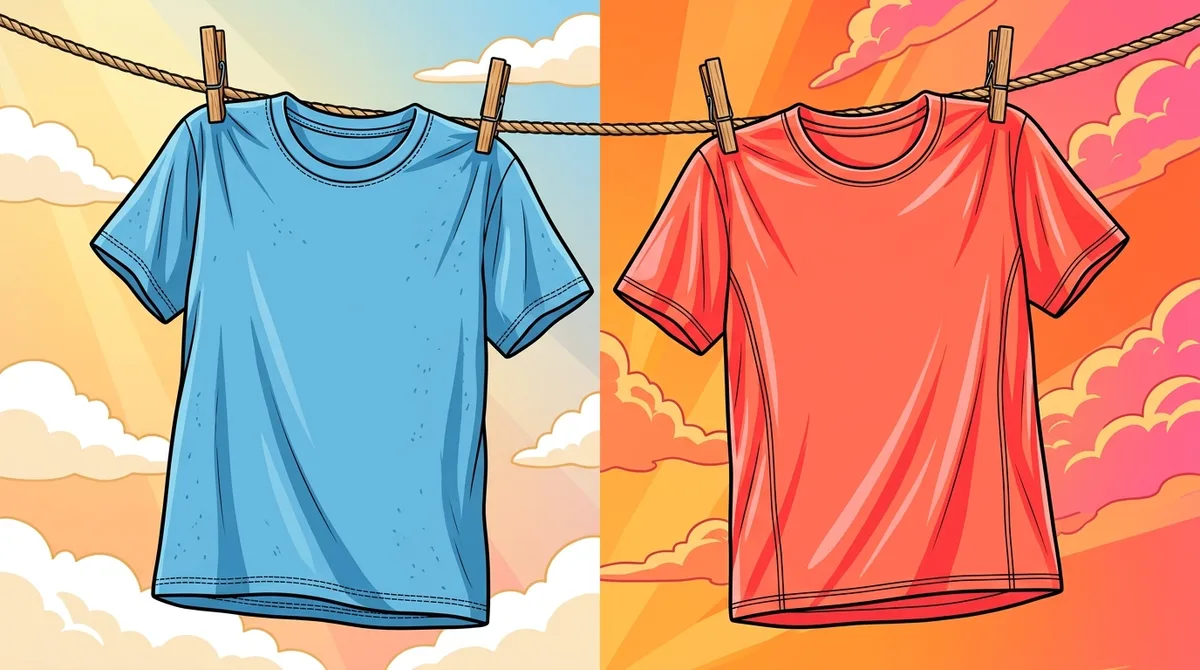
Cotton vs polyester tees isn’t a simple fiber showdown. The knit, fabric weight and finish often change how a shirt feels and performs as much as the fiber does. Think of it like a neon sign: the glow comes from the whole build, not just the tube. In a 2023 study of three sports tees, the tested cotton shirt took 17.1 minutes to dry, compared with 7.5 and 7.3 minutes for the two polyester shirts. It also soaked up an average of 6.49 g of sweat, versus 3.53 g and 4.52 g. Those results come from those specific shirts, so use them as a starting point for your own pick, not a final verdict on every tee in your drawer.
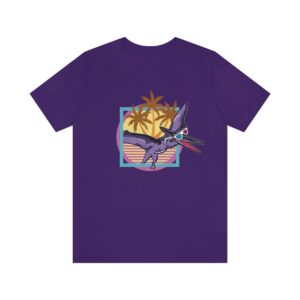
Your fabric choice shapes how a shirt feels on your skin, how it dries after a long session and how it holds up after a few trips through the wash. Our standard unisex graphic tees are 100% Airlume combed and ringspun cotton at 4.2 oz/yd², a light fabric with a retail fit that runs true to size. Our Blue Rays AOP tee is 100% polyester with a regular fit, also running true to size. Care matters too. The U.S. Care Labeling Rule requires apparel to carry regular-care instructions, so the tag in your tee is your best guide. Grab your favorite retro graphic and let’s find the fabric that matches your vibe, whether you’re grinding through a co-op marathon on the couch or sweating out a workout.
Cotton is a natural fiber that grows on a plant, while polyester is a synthetic fiber made from petroleum-based materials. That difference matters, but the knit, fabric weight and finish decide how a tee actually feels on your back. The fiber name alone won’t tell you the whole story.
Knit structure is how the yarns are looped together, and it changes both the texture and how air moves through the fabric. Fabric weight, measured in ounces per square yard, is another big lever. A 4.0 oz polyester tee and a 6.0 oz polyester tee are made from the same fiber, yet they’ll feel noticeably different in your hands and on your shoulders. Our Blue Rays AOP tee comes in both weights, so you can pick the one that suits your style.
Our standard unisex graphic tees use 100% Airlume combed and ringspun cotton at 4.2 oz/yd² (142 g/m²). That makes them a light fabric with a retail fit. Combing and ringspinning produce finer, smoother yarns, which is part of why this cotton feels so easygoing. Fiber content can vary for different colors, so check the product page before you assume.
Finishes, such as softeners or coatings applied after the fabric is made, also change how a shirt feels and handles sweat. Two tees with identical fiber and weight can behave differently because of the finish alone.
Build matters for performance too. A 2023 exercise wear-trial study tested five T-shirt garments and found that a polyester-mesh sample kept microclimate humidity lower in three measured body regions than most of the comparison samples. That result highlights garment structure as well as fiber type. An open, breathable construction can matter as much as the material it’s made from.
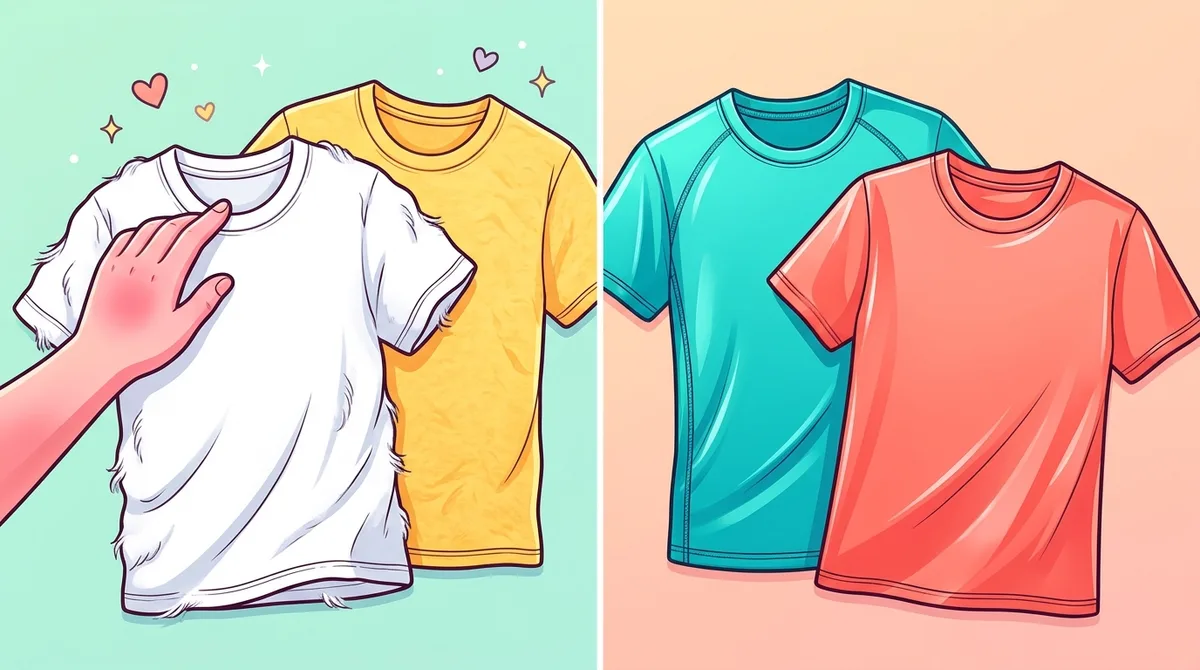
Cotton is usually the softer, more familiar pick, while smooth polyester can feel slick to some wearers. The finish and wash history can shift that feel as much as the fiber does.
To see how the two fibers compare on comfort, twenty female participants wore one 100% cotton tee and two 100% recycled-polyester sports tees in a setting of 22 °C and 50% relative humidity. They then rated how each shirt felt.
In at least two evaluation conditions, the tested cotton tee was rated significantly the roughest, warmest, heaviest, stickiest and least comfortable of the three. Those ratings apply to those particular shirts and those participants, not to every cotton tee on the market.
The cotton tee also differed from the polyester tees in knit and weight, so the result reflects the whole build rather than the fiber name alone. Finish matters too. A softener can make cotton feel plush, while a stiff finish can make it feel scratchy, and everyday wear gradually changes how any tee feels.
If your skin reacts easily, start with the label. In the United States, the U.S. Textile Fiber Rule requires covered labels to list fiber names and percentages, so the tag or product page tells you what’s in the shirt. Some people react to dyes or finishes rather than the fiber itself, so switching fabrics may not solve the problem.
Tag irritation is another common complaint. Our Blue Rays AOP tee is tagless, so there’s no label to scratch at the back of your neck. Our standard unisex tees have a tear-away label you can remove in seconds, and the size chart on each product page helps you pick the right fit.
Polyester usually keeps you drier during hard sweating, while cotton can feel fine for lighter sweat. How much you sweat matters more than the fiber name alone.
Start with absorption. In the 2023 sports-tee study, the cotton tee soaked up an average of 6.49 g of sweat, compared with 3.53 g and 4.52 g for the two polyester tees. A shirt that holds more sweat can feel heavier and clammier against your back, which fits the cotton tee’s lower comfort ratings in that study.
Drying time tells a similar story. The cotton tee needed 17.1 minutes to dry, while the polyester tees took 7.5 and 7.3 minutes. Those shirts also differed in knit and weight, so the fiber isn’t the only reason for the gap.
Sweat level changes the picture. A 2011 Ergonomics study of shirt fabrics used simulated sweat amounts of 0.5 ml and 1.5 ml. Cotton gave better moisture comfort at the low level, and high-performance polyester did better at the high level. A lazy Sunday of retro gaming is cotton territory, while a sweaty spin class is polyester territory.
Breathability depends on construction too. A 2023 exercise wear-trial study found that a polyester-mesh sample kept humidity lower in three measured body regions than most comparison samples. An open mesh structure can help a shirt stay drier, even when the material is polyester.
Odor is the trade-off many people notice first. Polyester tends to hold onto body odor more than cotton does, so a sweaty tee shouldn’t sit in the hamper for days. Toss it in the wash soon after a hard session, especially if the shirt is polyester.
If you want a polyester option, our Blue Rays AOP tee is 100% polyester with a regular fit, and it comes in 4.0 oz and 6.0 oz fabrics. The lighter weight generally feels airier on warm days. Our standard unisex graphic tees are 100% cotton at a light 4.2 oz/yd², so they suit everyday wear and low-sweat days better than a long workout.
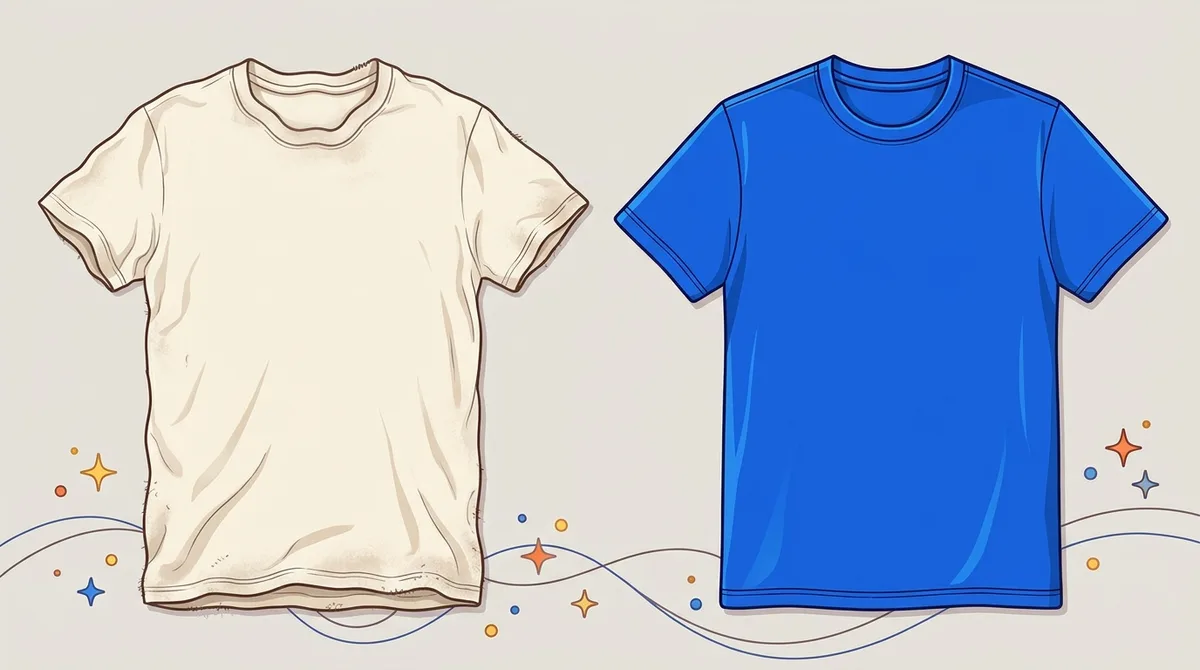
Both fibers can last a long time, but durability depends on the knit, weight and construction more than the fiber name. A heavier tee generally holds up better to repeated washing than a lighter one. Our Blue Rays AOP tee comes in 4.0 oz and 6.0 oz, so the heavier version is the sturdier pick for years of wear.
Shrinkage is the sneaky one that catches people off guard. If you’re comparing claims about a tee keeping its fit after washing, AATCC TM150 is the test method for dimensional change after home laundering. Our standard unisex tees run true to size, and cooler washes with air drying give any shirt its best shot at keeping its shape.
Wrinkles are where polyester usually wins. It generally resists wrinkles better than cotton, which often needs a quick iron or steam after drying. Pull a cotton tee straight from the dryer and it may look like it slept in a sleeping bag all night.
Cotton can pill and fade over time, especially with heavy, frequent washing. That neon sunset can slowly turn into a pale pink blur. Polyester keeps its shape well, but it can still pill when the fabric is rough or worn. Turning the tee inside out before washing slows both pilling and fading.
When a care label gives no water temperature, regular hot water up to 145 °F (63 °C) need not be ruled out if it won’t harm the garment. Cooler water is still the kinder choice for bright prints, so when in doubt, go cold.
Print quality depends on the tee under the ink. Our Blue Rays AOP tee is 100% polyester, which suits bold, full-coverage neon designs that wrap around the whole shirt. Our standard cotton graphic tees carry prints well too. Wash them inside out in cool water, and your retro graphic will keep its glow for many synth-filled nights.
In the United States, the Textile Fiber Rule from the Federal Trade Commission requires covered labels to list generic fiber names and percentages by weight, the manufacturer or marketer, and the country where the product was processed or made. The Care Labeling Rule requires apparel to carry regular-care instructions, and it generally requires a washing or dry-cleaning instruction. These are U.S. rules, so other countries may label clothing differently.
When a washing instruction gives no water temperature, the Care Labeling Rule says regular hot water up to 145 °F (63 °C) need not be ruled out, as long as it won’t harm the garment. Your tee’s own instructions and construction still come first, so treat hot water as a fallback rather than a default.
Once you’ve read the tag, follow this routine to keep both fibers looking fresh:
Cotton tees often need ironing after drying, especially after a hot cycle has left them creased. Iron the cotton tee on the reverse side, and keep the iron off the print. Polyester usually comes out of the dryer closer to ready to wear, so a quick smoothing of the collar and sleeves may be all it needs.
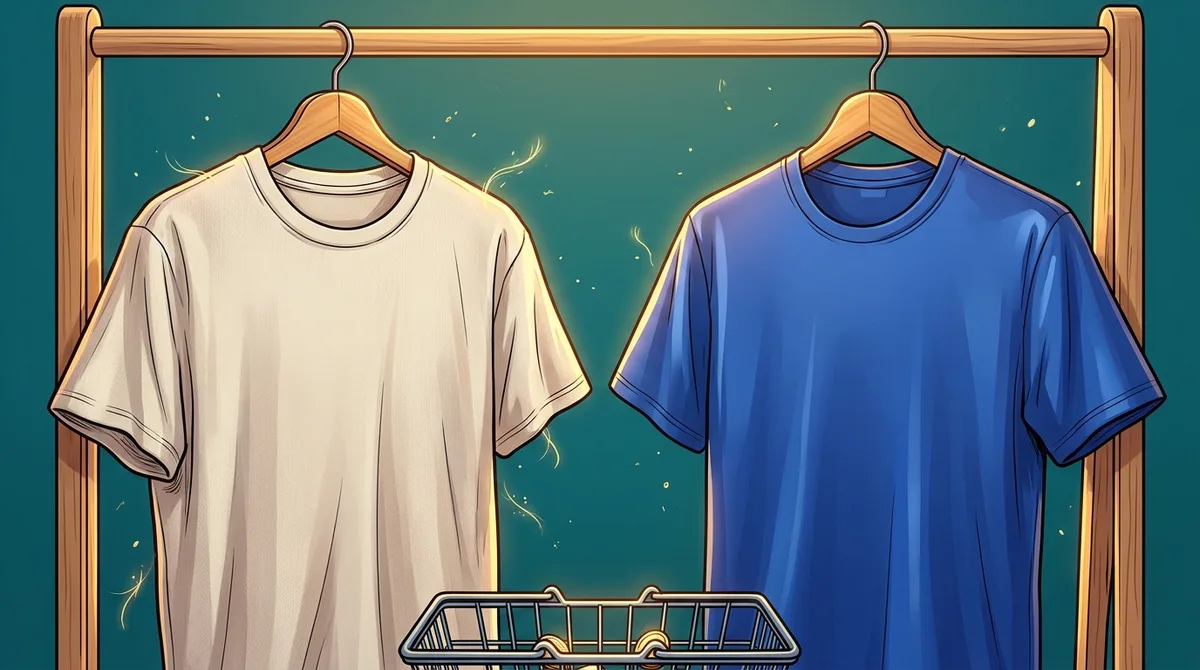
A cheap tee that pills and loses its print after a few months costs more in the long run than a pricier one that lasts. Value depends on how often you wear the tee, how often you wash it, and how well it keeps its shape and print along the way.
Our standard unisex graphic tees are listed at $27.00 and often go on sale at $22.95. You get a soft cotton base and a retro graphic that can handle regular wear. Some of our tees are listed at $11.99, with a sale price of $10.19, which suits a one-night costume or a quick gift. Our AOP tees are listed at $32.00 and often go on sale at $27.20. The all-over print covers the whole shirt, so you’re paying for more neon real estate.
Both fibers have environmental trade-offs. Cotton needs farmland and water to grow, while polyester is made from petroleum and sheds tiny microfibers when it’s washed. The greener pick depends on how long the tee lasts and how you care for it. A shirt you wear for years and wash cool will usually do better than a cheap one that ends up in the bin after one season.
Fair labor matters too. This brand states that it sources products from suppliers who adhere to fair labor standards, so the tee you choose also reflects how it was made, not just what it’s made from.
To stretch your dollar, wash only when a tee is actually dirty and hang it to dry when you can. Nobody wants a shirt that looks like it lost a boss fight with the dryer.
A cotton-poly blend mixes both fibers in one shirt, such as a tee with a cotton and polyester mix. The goal is to keep cotton’s soft, familiar feel while borrowing some of polyester’s shape retention and quicker drying. Think of it as a split-screen arcade cabinet, with two games sharing one glowing box.
Blends usually land somewhere between pure cotton and pure polyester. You can expect them to dry faster than an all-cotton tee, wrinkle less and hold their shape better, but they won’t match a full polyester tee on speed or wrinkle resistance. Exactly where a blend falls depends on the percentages, the knit and the fabric weight, so two blends with different splits can still feel quite different.
Our standard unisex graphic tees are 100% cotton, and our Blue Rays AOP tee is 100% polyester. Fiber content can vary by color, so check the fiber content on the product page before you buy.
Blends can suit warm-weather everyday wear in general, where you want softness without the long drying time of pure cotton. The clear-cut results from the pure-fiber studies don’t carry over neatly to blends, though, so treat a blend as a practical middle ground rather than a guaranteed performer. Read the tag before it goes in the wash.
Picking a fabric gets easier when you start with what the day holds. Here’s a quick cheat sheet for four common moments.
Gift buying has a few extra wrinkles. Shipping costs and delivery times depend on the destination, so order early, especially for custom designs, which can take longer to ship than standard orders. Changes and cancellations are only possible within a short window and must go through customer service, so double-check the size and address as soon as your confirmation email arrives.
If the fit misses, most items in new condition can be returned within 30 days of receipt. That gives the recipient a safety net, and it saves you one less thing to worry about while the gift makes its way across the map.
Start with your next session. If your week is mostly couch co-op and late-night synth playlists, a standard unisex graphic tee in 100% Airlume combed and ringspun cotton is a comfortable pick. If you’re lacing up for a spin class or a sweaty summer festival, our Blue Rays AOP tee is the polyester option to grab.
Before you check out, open the size chart on that product page and compare it with a tee you already love. Both our standard tees and the Blue Rays AOP tee run true to size, so your usual size is a solid starting point.
Pay with Visa, MasterCard, American Express, PayPal or another digital payment platform. Then look for your confirmation email. If you notice a wrong size or address, contact customer service right away. Changes and cancellations are only possible within a short window and may not be possible once the order is processed.
Want a deal? Our newsletter announces occasional promotions and new arrivals, so it’s worth signing up before you buy. And once your tee arrives, leave a review on the product page to help the next shopper pick their fabric. Questions? Reach out to our team through the Contact Us page.