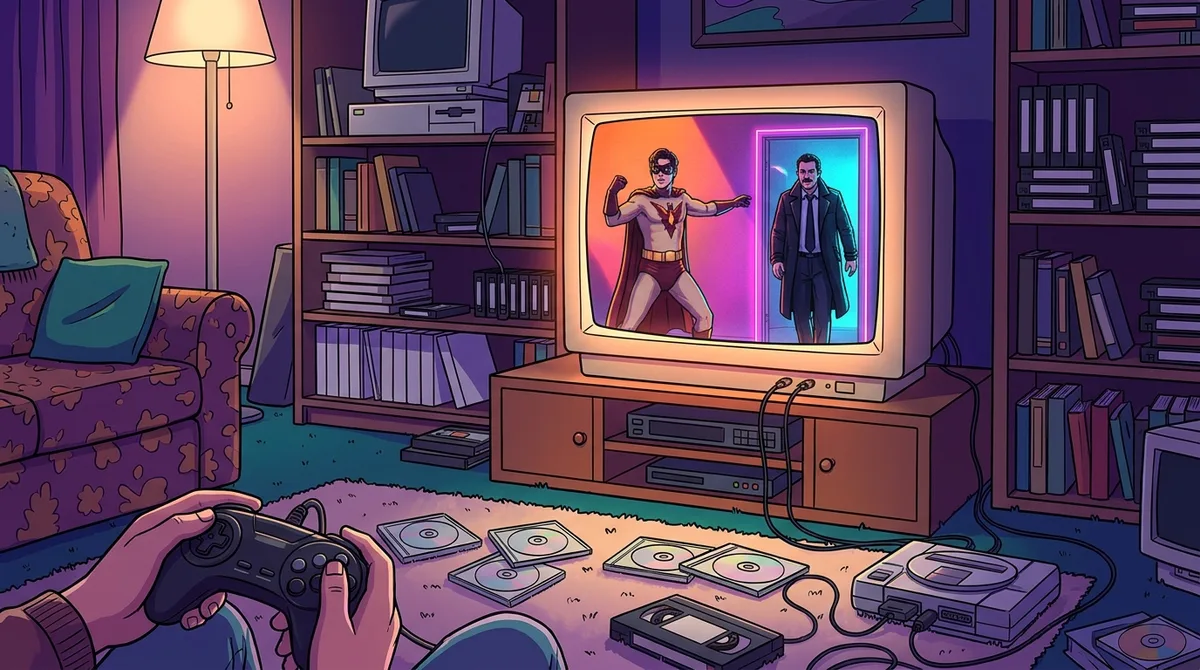
FMV game history is the wild story of games that swapped pixel sprites for real, prerecorded footage, and it really got rolling in 1983 with Dragon’s Lair. Picture a glowing arcade cabinet with a LaserDisc spinning inside, where a brave knight moves only when you nail the right joystick move at the exact split second. Miss your cue and you get a goofy death scene, followed by the sweet sound of another coin dropping into the slot. Players lined up to try their luck, and onlookers crowded around to cheer or groan. The cabinet itself cost around $5,000, according to a University of Minnesota thesis, and distributors had to pay up front before anyone pocketed a single quarter.
Behind the scenes, the production was just as eye-popping. Animator Don Bluth told Computer Games magazine in 1984 that the project took about six months and $1.3 million, with 22 minutes of animation packed onto the disc. Yet a flawless player saw only six minutes of it, which is a delightful twist for anyone who wondered why the game was so stingy with its story. That mix of cinematic ambition, hefty price tags, and cheerfully silly deaths set the template for everything that followed, from grainy CD-ROM mysteries to haunted mansions. Grab your neon headphones, because this ride gets stranger from here.
Full-motion video, or FMV, is a fancy way of saying the game plays real, prerecorded footage instead of drawn or rendered graphics. You don’t just sit back like it’s movie night, though. The clip rolls along, and at key moments you have to hit a button or flick the joystick inside a tight window of time. Nail the cue and the story keeps going. Blow it and the footage cuts to whatever goofy fate awaits your hero.
Dragon’s Lair was the game that made the format famous. Released in 1983, it was the first laser-disc arcade game, according to the Strong National Museum of Play, and that title came down to timing. Bally had shown off its own laser-disc game, Astron Belt, at a 1982 trade show, but technical delays kept it off arcade floors. Dragon’s Lair got there first, and the rest is neon history.
The machine was also built with your wallet in mind. The Australian Centre for the Moving Image notes that the game was deliberately designed to eat coins, even though it already cost about twice as much as a typical arcade game to install and produce. It’s a bold business plan, like a slot machine that also wants a hug. Players kept feeding it anyway. By the beginning of 1984, the Strong museum reports, more than 16,000 units had sold, which adds up to a whole lot of quarters spinning down the chute.
The laser-disc era didn’t last forever. Later FMV games moved to CD-based systems, where video had to be squeezed onto much smaller discs. The rules for that squeezing came from a standard called MPEG-1, formally ISO/IEC 11172, which was built for digital storage at up to about 1.5 Mbit/s. Those numbers sound tiny today, but they were a big deal back then, and they opened the door for the grainy, late-night FMV adventures that came next.

Night Trap arrived on the Sega CD in 1992, and it’s a big reason people still remember the format. You play as a security system operator in a house full of teenage girls, flipping between camera feeds to set traps before the bad guys get to them. The live actors, grainy footage, and cheesy charm made it a hit, but the game also drew heat. The National Film and Sound Archive of Australia notes that it became controversial in both Australia and the United States, which is a double feature nobody ordered.
Things got serious in Washington. The U.S. Senate Judiciary Committee lists a hearing called “Rating Video Games: A Parent’s Guide to Games” as taking place on December 9, 1993. Picture a room full of suits trying to decide what a sprite is allowed to do on a Saturday morning.
Congress never ended up passing a law. The Federal Trade Commission later reported that no legislation was enacted in response, and the game industry decided to clean up its own act. Publishers formed the Interactive Digital Software Association, and in 1994 that effort produced the Entertainment Software Rating Board, or ESRB.
The ESRB’s history page says the group was founded in 1994 and announced its first system with five rating categories and 17 content descriptors. Those little letters on the box are the grown-up version of a parent saying, “Trust me, you’re not ready for that yet.”
The system is voluntary in the United States, but that doesn’t mean you can skip it. Console makers, many retailers, and digital stores require ESRB ratings before they’ll sell a game, so Night Trap started a fight that still shows up on store shelves today.
Phantasmagoria is Sierra’s 1995 live-action horror adventure, and it’s the FMV title people still bring up when they want to give a friend the creeps. You play Adrienne, who arrives at a mansion packed with nightmares and a sinister history. Before long, you’re digging into the house’s secrets while your husband may be part of the danger, too.
The game plays more like a point-and-click adventure than a branching story-path game. You explore rooms, collect and use objects, and solve puzzles, while filmed scenes move the plot along between your sessions of poking around. The haunted-house feel comes from subtle changes to the home, so small wrongness creeps into rooms you’ve already visited, and the spooky vibe builds without constant choices.
The game was a showcase of scale. Its cinematic material filled seven CDs, a huge amount for its time, and it mixed filmed actors with pre-rendered backgrounds. It’s also credited as one of the first games with gruesome scenes, which earned it a reputation as a gorefest. GameSpot pointed out that the built-in hint system can make the adventure easier.
It arrived on July 31, 1995, and it’s a classic of Sierra’s adventure style that still rewards anyone who likes their horror slow, moody, and a little gross.
At a glance
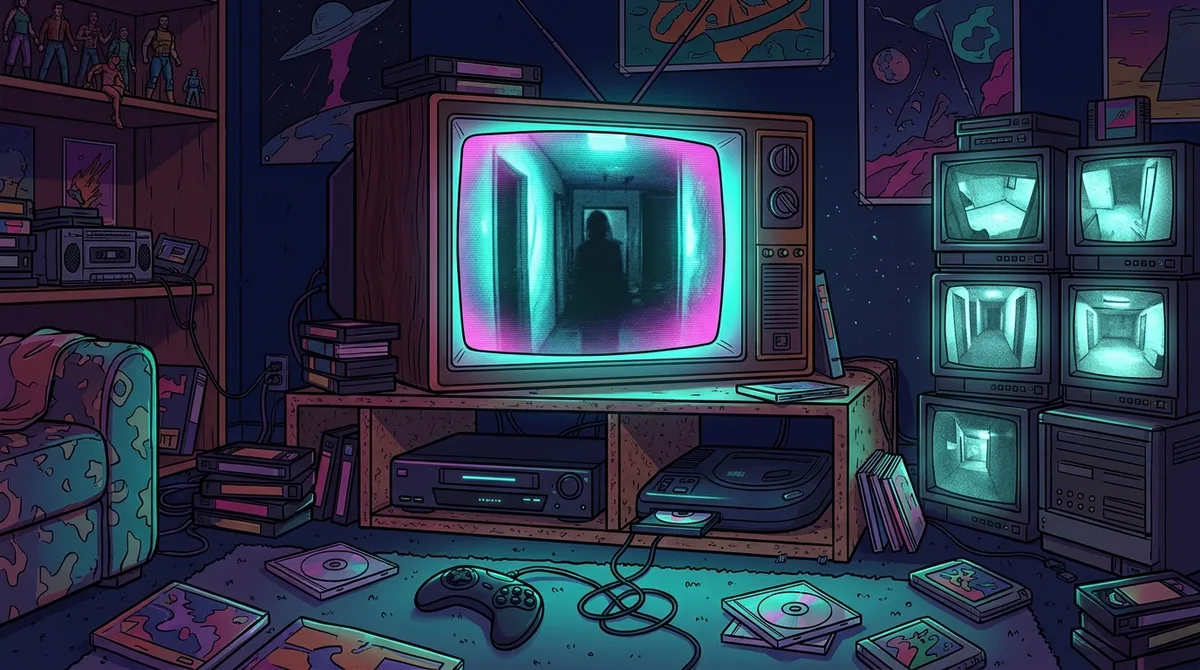
Night Trap: 25th Anniversary Edition is a remastered version of a 1992 live-action horror game that knows exactly how silly it is. You play an agent watching a house full of teenagers through hidden cameras, and the intruders are vampire-like creeps who want to make a snack of them. Your job is to trigger traps at the right moment while piecing together the mystery. The whole thing plays like a B-movie that found a fog machine and refused to give it back.
Camera switching is the real hook. You flick between eight rooms like you’re channel surfing a haunted house, hoping one flicker of grainy footage shows a guest in trouble before a villain sneaks up on them. The game moves in a fixed order, so a perfect run takes around half an hour. The real replay fun comes from memorizing the sequence and sharpening your timing.
The Screaming Villains release adds deleted scenes, two documentaries, a theater mode, Survivor mode, production images, and Scene Of The Crime, a playable prototype. Those extras are a treat for anyone curious about how the footage was made. The original game was developed in 1987 but didn’t reach shelves until 1992, and it’s a must-know for FMV fans because it was the first CD title with continuous full-motion video and audio. Its old controversy is part of the charm, too, since the same cheesy scenes that got it into trouble are now the reason people adore it.
At a glance
The 7th Guest is a 1993 horror-mystery puzzle adventure set in the creepy mansion of toymaker Henry Stauf. Picture a party where six invited guests vanish without a trace. The twist is that the identity of a seventh guest is part of the mystery, so you’ll spend the whole game wondering who really showed up that night. You play as Ego, an unexplained presence drifting through the halls, and the slow-build atmosphere makes every creaky door feel personal.
Gameplay mixes point-and-click exploration with logic puzzles. You poke around rooms, crack brain teasers, and each solved puzzle triggers a live-action video clip that moves the story forward. There are 19 puzzles in all. Some are satisfying, while others will have you muttering at the screen like a grumpy cartoon villain. That frustration is part of the charm, so keep a snack handy and a patient mood ready for this single-player trip.
The standout feature is the mix of live-action footage and a rendered 3D mansion, which felt futuristic in the early nineties. The Centre for Computing History calls it a CD-ROM “killer app” where full-motion video was central to the gameplay, and it helped make CD-ROM drives a must-have part of home computers. Replay value is pretty thin once the puzzles are solved, but finishing the game unlocks an Open House mode where you can revisit them.
At a glance
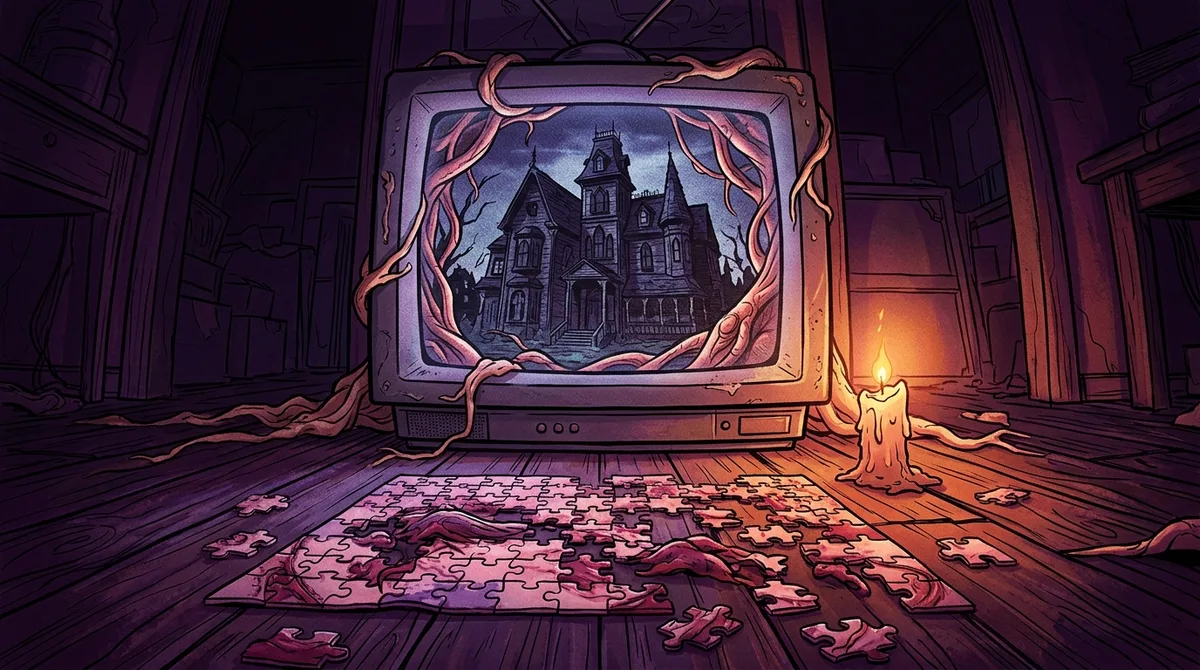
Sierra’s Phantasmagoria: A Puzzle of Flesh brings you back for a darker round in 1996. You play Curtis Craig, a man with a troubled past who starts investigating murders among his coworkers. Strange apparitions keep showing up, and Curtis begins to wonder whether he’s the one losing his grip on reality. Digging deeper leads to a company project called Threshold, and the whole thing mixes psychological horror with a sci-fi mystery.
The game plays like a point-and-click adventure with a movie strapped to the front. You wander between locations using a map, pick up items, and use them in the right spots, while live-action scenes push the story forward.
The acting and atmosphere are where the game shines. A contemporary review praised the ambient music and the above-average performances. It’s also a bloody, grown-up trip, with graphic violence, sexual content, nudity, and bondage, so it’s not a cozy Saturday afternoon game. Expect about 15 to 20 hours and two endings, though the reviewer felt there wasn’t much reason to replay. It’s a mid-1990s FMV title rather than an early pioneer, but it makes a fun double feature with the original Phantasmagoria.
At a glance
Ripper throws you into a grim, cyberpunk New York in 2040, where crime reporter Jake Quinlan is hunting a serial killer who calls himself Ripper. Picture the classic Jack the Ripper mystery dropped into a future of neon glare and grimy streets, and you’ve got the mood: part detective story, part nightmare. The Ripper manual lays out the premise, and it’s a fun read before you jump in.
Gameplay is a mix of styles. You roam a 3D world, chat with characters, hunt for clues, and crack puzzles, with some fights in cyberspace to keep your pulse up. Live-action scenes play out between your investigating, and the dialogue choices you make steer the story. It’s like being a reporter, a detective, and a nervous amateur all at once.
The payoff is the ending. The four possible endings reveal four different killers, which gives you a good reason to run the case again. Replays are built in, with a different suspect as the Ripper each time. The production was shot on a soundstage like a real Hollywood film.
Ripper arrived in 1996 for DOS and Macintosh, right in the middle of the 1990s rush to make games feel like movies. It’s a legacy title rather than a modern revival, so think of it as a time capsule from when studios dreamed big about interactive films.
At a glance
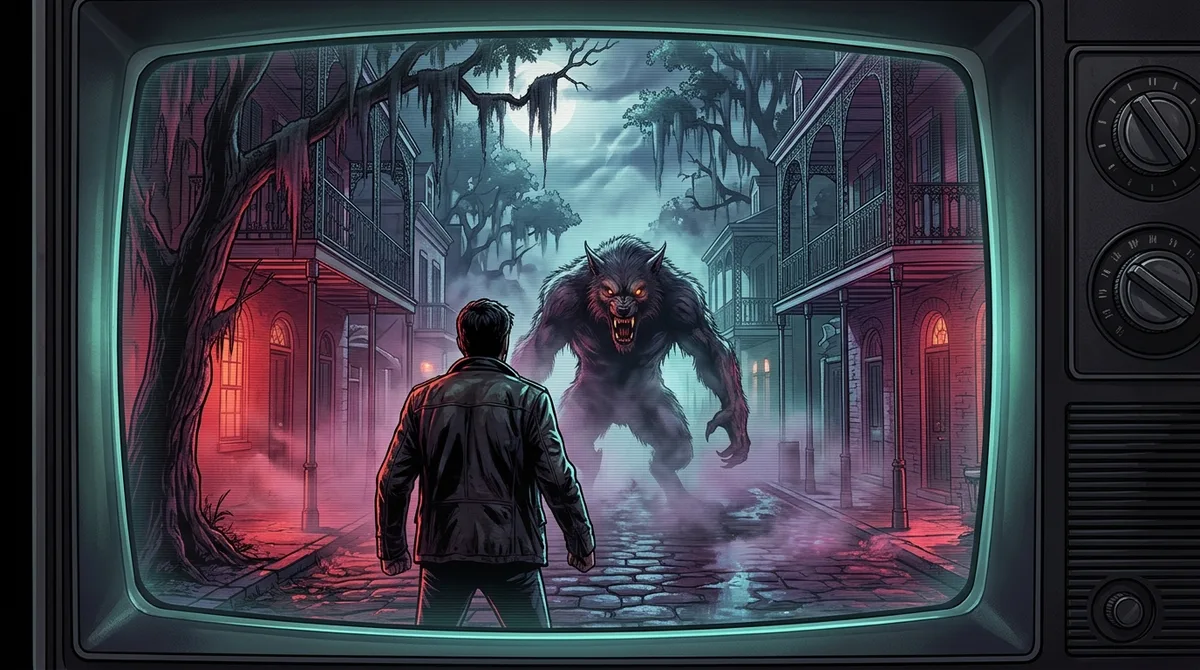
Picture Bavaria, where murder victims turn up mutilated and the whispers blame a werewolf. Gabriel Knight and Grace Nakimura are on the case, and the whole game leans into suspense, creepy folklore, and that delicious feeling that something with fangs is lurking just off-screen.
You switch between Gabriel and Grace as they chase their own leads. You explore locations, follow clues, question people, and solve puzzles, while Grace also digs into a historical mystery tied to Mad King Ludwig II. It’s like a detective novel that occasionally asks you to put on your thinking cap.
The production is where the game really shows off. The Sierra catalogue lists more than 80 locations, 1,000 screens, an original opera composed by Robert Holmes, and five CDs. Its story is split into a prologue and six chapters, so you always know how far into the nightmare you’ve crawled.
Among mid-1990s FMV adventures,
Under a Killing Moon arrived in 1994 as an early entry in the Tex Murphy series. You play detective Tex Murphy, who starts with a pawn-shop burglary and a stolen crystal statuette case. That small job soon pulls you into the Brotherhood of Purity and a plot that threatens the world. The mood is hard-boiled detective fiction set in a post-apocalyptic San Francisco, with plenty of jokes, though the game also includes a stabbing and a scheme to commit genocide against mutants.
Gameplay runs across seven days or chapters. You move through environments, talk to people, examine objects, and make branching dialogue choices while solving puzzles along the way. The big hook is the mix of fluid live-action video and fully explorable real-time 3D environments. The official game page calls it the first Tex Murphy title to combine those two things.
The cast is a big part of the appeal. The live-action roles include Brian Keith, Margot Kidder, and Russell Means, with James Earl Jones providing a voice performance. A contemporary review found the game unusually long compared with similar titles, so it asks for more of your evenings than many 1990s adventures did.
It stands as a notable interactive-movie adventure of the decade, and it’s a natural first stop if you want to meet Tex.
At a glance
The Pandora Directive is the fourth Tex Murphy title, released in 1996. You play a wisecracking private investigator hunting missing scientist Dr. Thomas Malloy, and that search runs straight into the 1947 Roswell UFO crash, the NSA, and Malloy’s daughter. Picture a rain-soaked noir detective story that accidentally wanders into a flying-saucer conspiracy.
You roam a freely explorable 3D environment, inspect and collect objects, chat with people, and crack puzzles. Live-action cinematic sequences move the plot forward, and your choices shape how Tex behaves and where the story goes. If you switch on the harder play mode, the hints disappear, and you get extra puzzles and scenes to chew on.
The big draw is replay value. Your choices create three narrative paths and seven endings, so one run through the case is never the whole story. Reviewers praised the interface and the puzzles, though they noted that the acting quality varies from scene to scene.
It’s a classic 1990s interactive movie that fits neatly into a series watch. Start with Under a Killing Moon, then move on to this one when you’re ready for more Tex.
At a glance

Picture a rain-soaked, post-apocalyptic San Francisco where every shadow looks like trouble. Tex Murphy: Overseer is the fifth Tex Murphy adventure, and it retells Tex’s first case, Mean Streets. A client swears her father’s apparent suicide was murder, and it’s up to you to dig through the mess and find out who’s lying.
The game mixes live-action video with first-person exploration of 3D environments. You search rooms for clues, question suspects in interactive interrogations, and crack puzzles like decoding messages. It’s part detective work, part brain teaser, and all noir.
The production is where Overseer shines. The official Big Finish Games page highlights the DVD edition’s full-screen, 30-frames-per-second footage and performances by Michael York, Henry Darrow, and Rebecca Broussard. Those crisp scenes make the cast feel like they wandered in from a real movie set.
Here’s the twist for fans who like choices: unlike The Pandora Directive, this one has no multiple endings or branching paths. You get one story and one route. It arrived in 1998 as a late-1990s FMV classic rather than an early pioneer, and one reviewer estimated 15 to 20 hours of play even for quick puzzle solvers.
At a glance
Picture a San Francisco where Tex Murphy wakes up with no memory of the last seven years. According to Big Finish Games, his case digs through unsolved murders, hidden agendas, and Nikola Tesla’s lost technologies. The mood is hard-boiled future noir with plenty of broad slapstick, so one minute you’re brooding in a rain-soaked alley and the next you’re dodging a pratfall.
You roam first-person 3D environments, hunt for clues, and crack logic puzzles. Live-action scenes put you face to face with suspicious characters, and your dialogue choices send the story down different branches. The game has five possible endings, which gives you a good excuse to run the case again. Expert Reviews puts a full intensive playthrough at about 16 hours.
The big draw is the mix of 2K live-action footage and modeled 3D environments, which gives the game a sharp, modern look. It’s also a revival rather than an early pioneer. Adventure Classic Gaming calls it the sixth Tex Murphy game and the series’ return after a 16-year break, bringing back the 1990s interactive-movie style with a fresh coat of paint.
At a glance

Erica is a live-action thriller about a young woman who wakes up from nightmares of her father’s murder and starts digging into clues tied to her childhood and family history. The mood is tense and creepy, like a late-night mystery where every shadow might be hiding a secret. It’s a modern pick from the official Erica site, and it wears its atmosphere well.
You make story and dialogue choices while filmed scenes play out in front of you. The fun part is the touch controls. You wipe a mirror, move a record needle, and open doors with gestures on a controller touchpad or a phone screen, so your fingers do the poking and prodding. Lead actor Holly Earl carries most of the emotional weight, and one reviewer calls the whole cast strong.
A single playthrough runs about 90 minutes, which makes it easy to binge in one sitting. Different paths lead to different endings, so you’ll want to run it back and see what you missed.
Erica is no 1990s pioneer. The PlayStation 4 version launched on August 19, 2019, and the Windows version hit Steam on May 25, 2021. It’s a sign that live-action games, which peaked in the 1990s, were making a comeback with better tech and a lot more polish.
At a glance
Her Story drops you into a dusty police video database, and the case is a missing husband. Sam Barlow’s 2015 game, which you can explore on the official Her Story site, is built around seven police interviews from 1994 with the woman at the center of it all. The mood is uneasy and quietly tense, like late-night detective work where every answer feels slightly off.
You type words from the interview transcripts into a search box, and the database coughs up matching clips. Watch enough of them and you start piecing together what really happened, like a detective with a very small corkboard and a very large coffee habit. You don’t have to see every clip to reach the credits, and each playthrough can assemble the footage in a different sequence.
The lead actor carries the whole thing with a subtle, grounded performance. Small gestures and mannerisms become clues in their own right, and the gaps between clips leave plenty of room for doubt. The British Film Institute describes it as a revival of FMV at a time when the form had fallen out of favor.
At a glance

Telling Lies is a modern live-action investigative thriller where you dig through secretly recorded video conversations. Four people talk, argue, and keep their secrets, and a shocking incident ties all of their clips together. The mood is slow-burning, intimate, and sometimes neo-noir, like a late-night detective movie you’re not supposed to be watching.
This is where it gets good. You search a stolen NSA video database by typing in words you hear, and the game plays back the clips that contain them. You watch, connect the dots, and build your own version of what happened. One clever keyword can unlock a whole new scene, so your typing skills matter more than you’d expect.
PC Gamer described the atmosphere as moody and almost neo-noir, with naturalistic performances that make the characters feel like real people with something to hide. Push Square reports that a playthrough can take about four hours, with more than 150 videos and multiple endings to find. Expect to rewatch clips with fresh eyes.
Telling Lies is a modern revival title, not an early pioneer or a 1990s classic. MUBI’s history of the format places it in Sam Barlow’s trilogy, which helped bring FMV back to the mainstream. It pairs naturally with Her Story, Barlow’s other search-driven puzzle, so take them on as a double feature.
At a glance
Immortality is a 2022 live-action mystery about Marissa Marcel, a film star whose three movies were never released and who disappeared. The story is a film-industry puzzle with a creepy edge, and the mood shifts as you go. The investigation can feel like a mystery, a horror story, or a crime drama, depending on which layer you’re digging into.
You scrub through live-action footage and production clips, clicking faces or objects to jump to related scenes. Little by little, you piece together the three films and other recordings. Nothing hinges on picking dialogue lines or branching story paths. You simply explore, and you move through the layers at your own pace. One GameSpot reviewer spent nine hours with the footage, so there’s plenty to dig through.
GameSpot praised the performances and the period detail, and said the game is scarier than it first appears. The recreations of different movie eras are a big part of the fun, because each clip feels like it was pulled from a different decade of cinema.
Immortality is a modern take on the format, not an early pioneer or a 1990s classic. It arrived on August 30, 2022, for Android, iOS, Mac, PC, PlayStation 5, and Xbox Series X, and you can find the latest details on the official site.
At a glance

Picture a sleepy English village where every alibi wobbles. In Contradiction: Spot The Liar!, you play Detective Inspector Jenks, who is looking into a student found drowned in the quiet village of Edenton. Nobody in town seems eager to tell you the whole truth. The mood is classic mystery with a creeping chill that gets darker as the case goes on.
You wander Edenton, collecting objects and notes, then sit down with residents and ask them pointed questions. The real trick is pairing contradictory replies. When two answers clash, you’ve caught someone fibbing, and each exposed lie opens new places, events, and interviews. It’s like assembling a jigsaw in a dusty attic, one awkward answer at a time.
The acting is a big part of the fun. Wireframe Magazine singled out Rupert Booth’s emphatic performance as Inspector Jenks as a highlight, and the rest of the cast plays their parts with a wonderfully stiff, off-kilter energy. The story also goes to heavy places, with previous suicides, psychological manipulation, occult practices, and physical abuse in the mix.
Contradiction arrived in 2015, first on iOS in January and then on Windows in July, which places it in the modern FMV revival rather than among the 1990s pioneers. A review drawing on Steam player feedback puts playtimes at roughly seven to nine hours, so it’s a satisfying weekend case rather than a marathon.
At a glance
Picture five strangers whose lives collide during a kidnapping in Shibuya, where a small street crime turns out to be part of a much bigger conspiracy. That’s the setup of 428: Shibuya Scramble, and its mood keeps changing gears. One minute you’re chasing a mystery, the next you’re sweating through a police thriller, and then a goofy character episode shows up to lighten things up.
You read through the parallel stories of all five protagonists, jumping between their timelines and making choices along the way. A decision in one story can change what happens to someone else, so after a bad ending you’ll likely rewind and try a different path. The presentation leans on thousands of live-action photographs, expressive text, and sound, with only occasional video clips. It feels more like a crime drama flipbook than a movie you sit back and watch.
Nintendo pitched the story as a 10-hour drama when the game first arrived on Wii on December 4, 2008. Spike Chunsoft brought it to PlayStation 4 and PC in 2018, including Steam and DMM. Rated Teen by the ESRB for blood, language, and violence, it’s a 2000s Japanese visual novel rather than a Western-style FMV pioneer, which makes it a handy example of how live-action storytelling spread beyond the West.
At a glance

Picture a dim, buzzing clinic where you listen to the strangest patients in town, and one of them might be a killer. The Infectious Madness of Doctor Dekker is a 2017 live-action murder mystery that casts you as the psychiatrist who takes over the patients of Dr. Dekker after his murder. Lovecraftian weirdness hangs over every session, and the mood is uneasy, somewhere between a whodunit and a psychological horror show. You can peek at the official site for the full pitch.
Gameplay is all talk. You question patients by typing your own questions or picking from suggested prompts, and filmed actors answer right on screen. Then you inspect evidence and decide how to respond, and those choices pile up fast. There are no point-and-click puzzles to solve, so the conversation is the whole adventure.
The murderer is chosen at the start of each game, and multiple endings give you plenty of reasons to run the case again. The filmed performances do a lot of the heavy lifting, since a flat line delivered in a dimly lit room can feel deliciously wrong. Fair warning, though: the developers flag mature content, including sexual themes, violence, and suicide.
Historically, this is a modern revival rather than a 1990s pioneer. A 2024 Games and Culture study treats it as a 2017 example of contemporary FMV, which puts it in the wave that followed the old CD-ROM days. Think of it as retro FMV wearing a fresh neon jacket.
At a glance
Picture yourself as Stefan, a young programmer trying to turn a dark fantasy novel into a video game. Simple enough, right? The deeper he digs, the more he questions whether reality is even his to control. Black Mirror: Bandersnatch wraps that mind-bending premise in the gloomy, uneasy mood the series is known for, so every flicker of the screen feels a little bit wrong.
You don’t explore a game world or solve puzzles here. Instead, the live-action story pauses, and you pick what Stefan does next. Earlier decisions can echo in later scenes, so a choice you barely noticed might come back to bite him. The experience has five main endings, each with variations, and WIRED estimated most viewers would get roughly 60 to 120 minutes out of it. That short runtime is exactly why people keep hitting replay to chase the paths they missed.
Netflix called it its first interactive movie for adults and said it offered thousands of pathways, which is a lot of Stefan to juggle. The title was built to run on web browsers, phones, game consoles, and smart TVs at launch. It’s a high-profile streaming-era experiment rather than an early FMV pioneer, but it introduced plenty of newcomers to branching stories. Netflix removed the interactive version from its service on May 12, 2025.
At a glance

Still stuck? Start with your mood. If you want goosebumps, load up Phantasmagoria and let the haunted house do the rest. Craving a sharp-eyed puzzle night? Her Story has you searching clips instead of wandering around. Love making the big calls? Black Mirror: Bandersnatch hands you the steering wheel, but Netflix removed the interactive version on May 12, 2025, so confirm it’s still available before you settle in.
For a one-night binge, try Erica, which runs about 90 minutes per playthrough. History buffs should go for The 7th Guest, a 1993 CD-ROM classic where the live-action clips show off what the format could do back then.
Finding these games is mostly about checking the store page. Look for your system in the platform list, read the ESRB rating, and check the runtime so you don’t commit to a weekend marathon when you wanted an evening. Headphones help, and so does a comfy chair.
The format is having a real moment. FMVgo counted qualifying Steam FMV releases, meaning live-action central, a full game, and at least 25 reviews, at 15 in 2023, 45 in 2024, 70 in 2025, and 38 through mid-September 2026. PC Gamer reported on October 21, 2025 that a wave of Asian FMV releases from China, Japan, Korea, and Singapore had arrived, including Heartbeat, Such a Guy, Road to Empress, and Love Begins With Goodbye. Pick your mood, press play, and enjoy the neon-soaked ride.
Start with the clock, not the genre. If you have about half an hour, load up Night Trap: 25th Anniversary Edition on PC, PlayStation 4, Nintendo Switch, or PlayStation Vita. A perfect run takes around half an hour, and the rating is Teen, so it’s a low-stakes way to meet the format.
Got a whole evening? Ripper is a good pick because its four possible endings reveal four different killers. Once you’ve solved the case, you’ll want to run it back and see who else could have been the Ripper.
Free for a weekend? Contradiction: Spot The Liar! runs roughly seven to nine hours, so it’s a satisfying case you can finish over a couple of nights. Keep a notepad nearby, because catching fibbers is the whole game.
Before you press play, do three quick checks. Look up the platform on the store page so you know your system can run the game. Read the ESRB rating, since Contradiction carries a warning for heavy themes. Then compare the runtime with your plans, so you don’t start a marathon when you only wanted a quick scare.