Picture yourself stepping through a door and being slapped in the face by a wall of neon light, the smell of stale popcorn, and a glorious symphony of 8-bit bleeps. Back in the day, vintage arcade cabinet art wasn’t just decoration; it was a siren song designed to trick you into feeding your last rolls of quarters to a hungry machine. From the glowing marquees to those rad side-panel decals, these cabinets were basically the heavy metal album covers of the gaming world.
Now, those radical graphics have leveled up from dusty basement relics to high-end collectibles that would make any synthwave fan weep with joy. Whether you’re a pixels-and-plastic purist or just someone who misses the glow of a CRT monitor, preserving these masterpieces is a serious vibe. You don’t need a flux capacitor to appreciate the craft behind every bezel and kickplate that defined our childhoods.
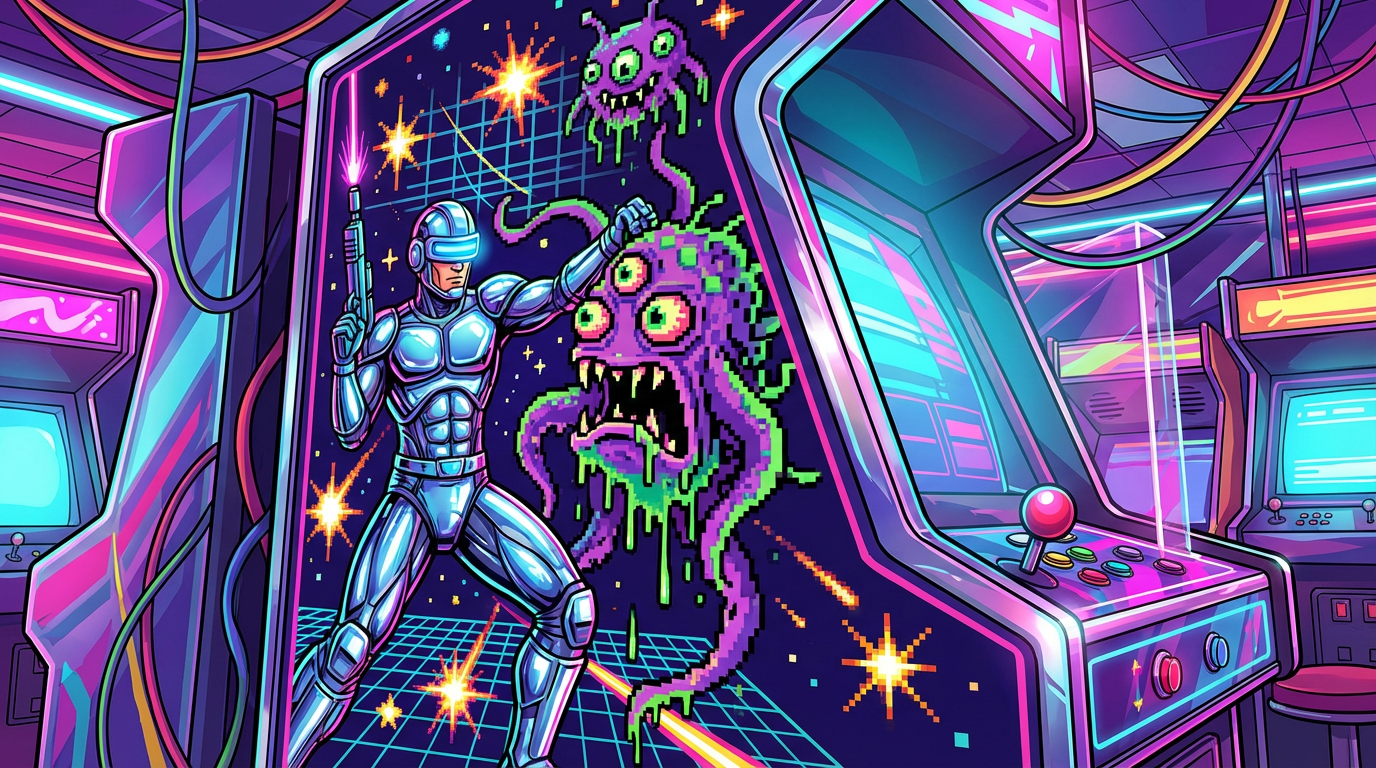
Back in the day, walking into an arcade was like stepping into a neon-soaked fever dream where every machine was screaming for your attention. You weren’t just looking for a game, you were being hunted by massive vinyl decals and glowing glass marquees that promised intergalactic glory for the low price of a single quarter. These cabinets were the ultimate clickbait of the eighties, using bold colors and radical illustrations to pull you away from the air hockey table. The side art acted as a giant, silent hype man, showcasing muscular space marines or pixelated monsters in glorious, high-fidelity detail. It was an era where the cabinet looked ten times more realistic than the actual 8-bit blocks moving on the screen, but you totally didn’t care.
The backlit marquee at the top of the machine was the crown jewel of the entire experience, acting as a glowing siren song in a dark, smoky room. These acrylic masterpieces used vibrant gradients and retro futuristic fonts that would make any modern synthwave fan weep with joy. Surrounding the screen, the bezel provided a decorative border that kept your eyes glued to the action while hiding the clunky hardware underneath. Even the control panel was decked out in durable, flashy overlays designed to withstand your frantic button-mashing during a high-score run. Every inch of that wood and metal was a canvas, turning a heavy box of electronics into a legendary piece of pop culture history.
Today, these vintage designs have moved from damp basements into the world of high-end digital preservation and archival art books. Collectors and designers are obsessed with recreating those specific neon hues and jagged lightning bolts that defined the decade’s aesthetic. Whether it is a perfectly restored kickplate or a crisp digital scan of a rare side decal, the goal is to keep that radical energy alive for a new generation. You don’t need a time machine to appreciate the craftsmanship that went into making a wooden box look like a portal to another dimension. It is all about celebrating the bold, loud, and slightly ridiculous art that defined the golden age of gaming.
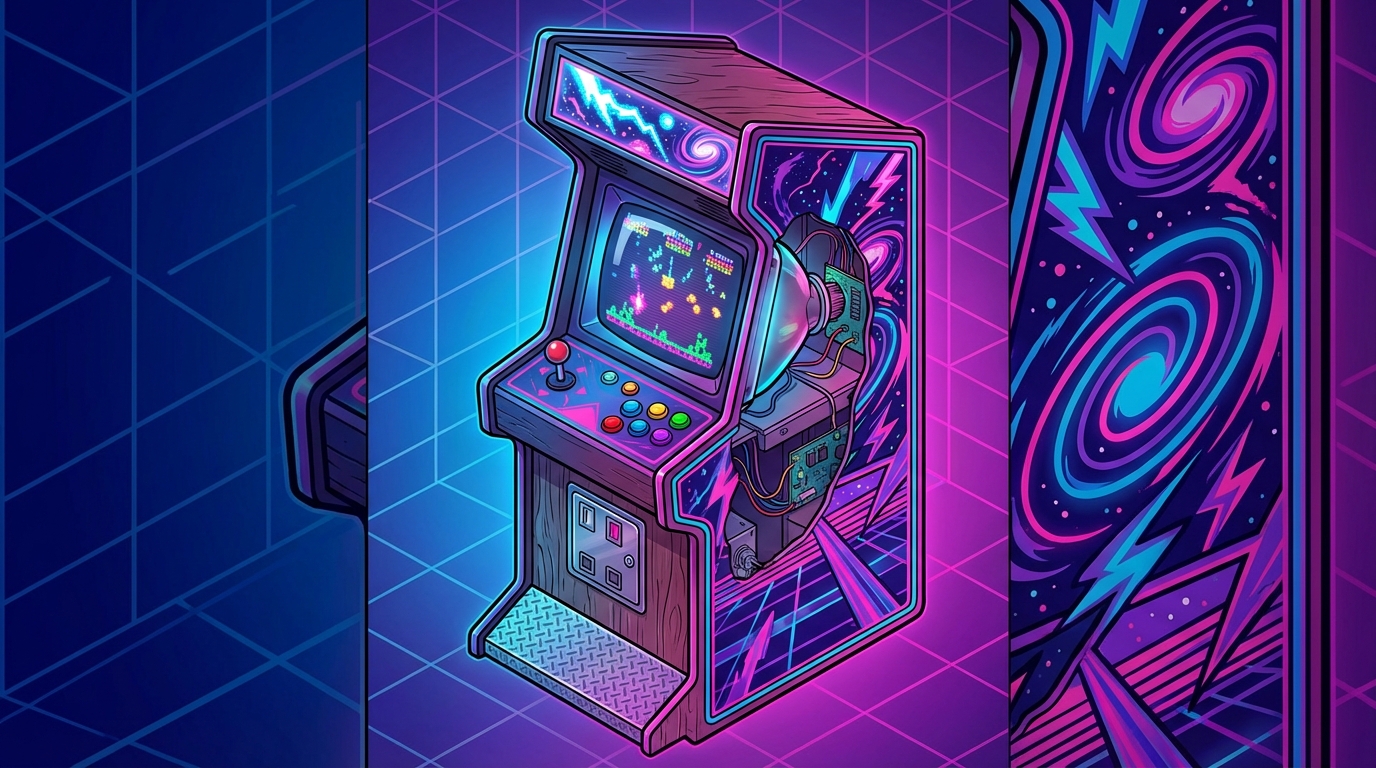
Step inside a neon-soaked time machine and look past the pixelated aliens to see why these plywood boxes were actually masterpieces of graphic design. You probably remember the glowing marquee at the top, which acted like a siren song for your quarters in a dark, noisy room. Just below that, the monitor bezel turned a boring glass screen into a portal to another dimension with its wild space vistas and neon borders. These pieces of art were designed to hide the bulky hardware while making you feel like a futuristic pilot. Even the kickplate at the bottom was there to catch your scuffed sneakers while looking effortlessly cool.
Look down at your hands and you will find the control panel overlay, a high-traffic zone of durable beauty that had to survive thousands of frantic button mashes. This wasn’t just a place for joysticks, because the bold lines and synthwave colors turned every movement into a cinematic experience. The side art was the real heavy hitter, using massive vinyl decals to tell a story that the limited 8-bit graphics simply couldn’t handle. Every inch of the cabinet worked together to build a world where you were the hero of a high-score legend. It is no wonder these machines are now treated like holy relics by collectors who crave that authentic eighties vibe.
Preservationists are the unsung heroes of the neon-soaked era, working tirelessly to rescue fading side art from the clutches of time and humid basements. You might think a few scratches on a Pac-Man cabinet add character, but without high-fidelity scans, those iconic designs would eventually vanish into a pixelated void. These digital archivists use industrial-grade scanners to capture every vibrant line and halftone dot from original marquees and control panel overlays. It is a race against physical decay to ensure that the radical aesthetic of the eighties stays as crisp as a fresh pair of high-tops. By turning physical wood and vinyl into indestructible digital files, these fans are building a permanent library for the retro-obsessed.
You can now witness the glorious resurrection of these machines thanks to massive archival repositories that house thousands of archival-quality images. Whether it is the intricate space battles on a Defender bezel or the glowing grid of a Tron kickplate, these assets allow restorers to print perfect replicas for modern projects. This movement bridges the gap between dusty arcade history and the sleek world of modern graphic design, proving that good art never truly goes out of style. You do not need a time machine to appreciate the legendary work of those original commercial artists when you have a community dedicated to pixel-perfect accuracy. These archives serve as a neon lighthouse for anyone looking to recapture that specific arcade magic in their own creative space.
The golden era of coin-op aesthetics proves that you do not need 4K resolution to blow someone’s mind. From the neon glow of a backlit marquee to the radical side art that made every cabinet look like a spaceship, these machines were the ultimate vibe. They were designed to grab your attention in a dark, noisy room and never let go of your imagination. Even decades later, that specific blend of airbrushed sci-fi and bold typography still hits harder than a high score on a Friday night. You are not just looking at old wood and glass, because you are staring at the blueprint for the entire synthwave aesthetic we love today.
Keeping these vibrant designs alive is about more than just dusty nostalgia for your basement man-cave. Digital preservation and high-fidelity restorations ensure that the bold colors of the bezel and the grit of the kickplate do not fade into history. Collectors and designers are working hard to archive every pixel and paint stroke so future generations can appreciate this commercial art form. Whether you are flipping through an archival-quality book or restoring and collecting a physical machine, you are unlocking the nostalgic world of 1980s arcade gaming for yourself. These cabinets are the heavy metal champions of the design world, and they still rule our nostalgic hearts with a permanent high score.
Side art was the ultimate silent hype man designed to grab your eyeballs and your quarters in a crowded room. These massive vinyl decals featured badass space marines and monsters that looked way more realistic than the actual 8-bit pixels on the screen. It was basically the 1980s version of clickbait, promising you an epic adventure before you even touched the joystick.
The marquee was the crown jewel of the cabinet, acting as a glowing siren song in a dark and smoky arcade. These backlit acrylic masterpieces used vibrant gradients and futuristic fonts to make sure you could find your favorite game from across the room. They set the entire vibe for the machine and made the game feel like a high-end cinematic experience.
You bet your high score it is, because these graphics have leveled up from dusty basement relics to high-end collectibles. Whether you are hunting for original panels or high-quality reproductions, preserving these masterpieces is a serious vibe for any retro fan. You do not need a time machine to appreciate the craft behind every bezel and kickplate that defined our childhoods.
The art was meant to fire up your imagination and fill in the gaps that the 8-bit blocks could not handle. Even if the game was just a few moving squares, the radical illustrations on the cabinet made you feel like you were actually piloting a starship. It was all about creating a mood that made you want to feed the machine every last roll of quarters you had.
The neon colors, bold gradients, and sci-fi themes are the literal blueprint for the modern synthwave and outrun aesthetic. Stepping into an arcade was like entering a neon-soaked fever dream that feels like a heavy metal album cover come to life. These cabinets represent the peak of 80s pop culture and continue to influence the evolution of synthwave through video games and the look of everything cool and retro today.
The main spots for radical graphics are the marquee at the top, the side panels, the bezel around the monitor, and the kickplate at the bottom. Each piece worked together to wrap the player in a totally immersive world of illustrations. From the glowing glass at the top to the scuffed-up decals at your feet, every inch was designed to be a visual masterpiece.