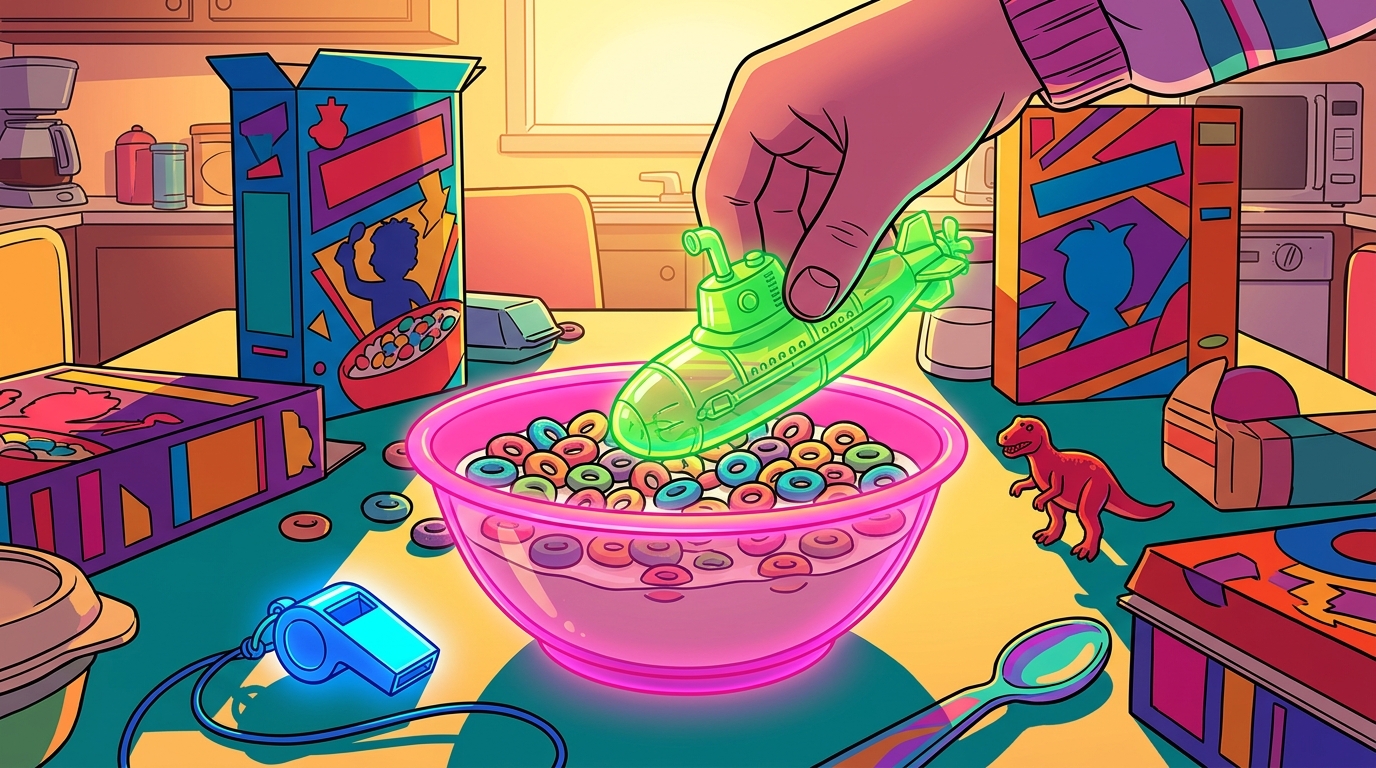
Picture yourself in 1988, sitting in your neon-soaked kitchen while the morning sun hits your radical bowl of sugar-blasted goodness. You aren’t just eating for the crunch; you’re on a high-stakes excavation mission to find those legendary retro cereal prizes buried at the bottom. Whether it was a glow-in-the-dark creature or a baking-powder submarine that actually “dived” in the bathtub, these plastic treasures were the ultimate loot boxes before microtransactions ruined the fun.
Now, your favorite breakfast boxes usually just offer a lame QR code or a “digital experience” that feels about as exciting as a glitchy save file. The physical thrill of digging your unwashed hand through a mountain of corn flakes to find a miniature license plate is a core memory for every retro gamer and synthwave fan. We’re traveling back to a time when the toy was the main event and the nutritional value was just a side quest.
You probably remember the pure adrenaline rush of digging through a mountain of sugary corn flakes just to find that small plastic baggie buried at the bottom. Long before everything went digital, the breakfast table was a high stakes excavation site where you could find anything from a miniature license plate to a baking powder submarine. These tiny gadgets were the ultimate low tech marvels, turning your morning cereal bowl into a makeshift laboratory or a deep sea exploration zone. There was something magical about a toy that actually did something, even if its only purpose was to create a mess or defy the laws of gravity. It was the golden era of plastic premiums, where the prize inside was often more important than the actual breakfast.
Nothing captured the neon soaked energy of the eighties quite like the Wacky WallWalker, that legendary sticky octopus that would slowly crawl down your kitchen walls. You would hurl that neon glob at the drywall and watch in awe as its gooey tentacles mimicked a slow motion descent into madness. It was a simple piece of elastomer, but to a kid in a synthwave world, it was peak entertainment that eventually collected enough pet hair and dust to become a household biohazard. These toys did not need batteries or high speed internet to keep you occupied during Saturday morning cartoons. They were tactile, weird, and perfectly suited for a generation that appreciated the simple joy of a plastic gadget that could survive a drop from a treehouse.
As the years rolled by, these physical treasures slowly faded away in favor of QR codes and forgotten digital downloads. The shift toward safety and cost cutting means your current cereal boxes are tragically empty, lacking that satisfying rattle of a hidden plastic treasure. We used to trade these items like playground currency, swapping a glow in the dark monster for a whistle or a spinning top. While the industry has moved toward high value collectibles and nostalgia driven reboots, nothing quite beats the memory of that first plastic prize. Those small toys were more than just junk, as they were the physical artifacts of a childhood spent chasing the next big thrill between bites of neon colored marshmallows.
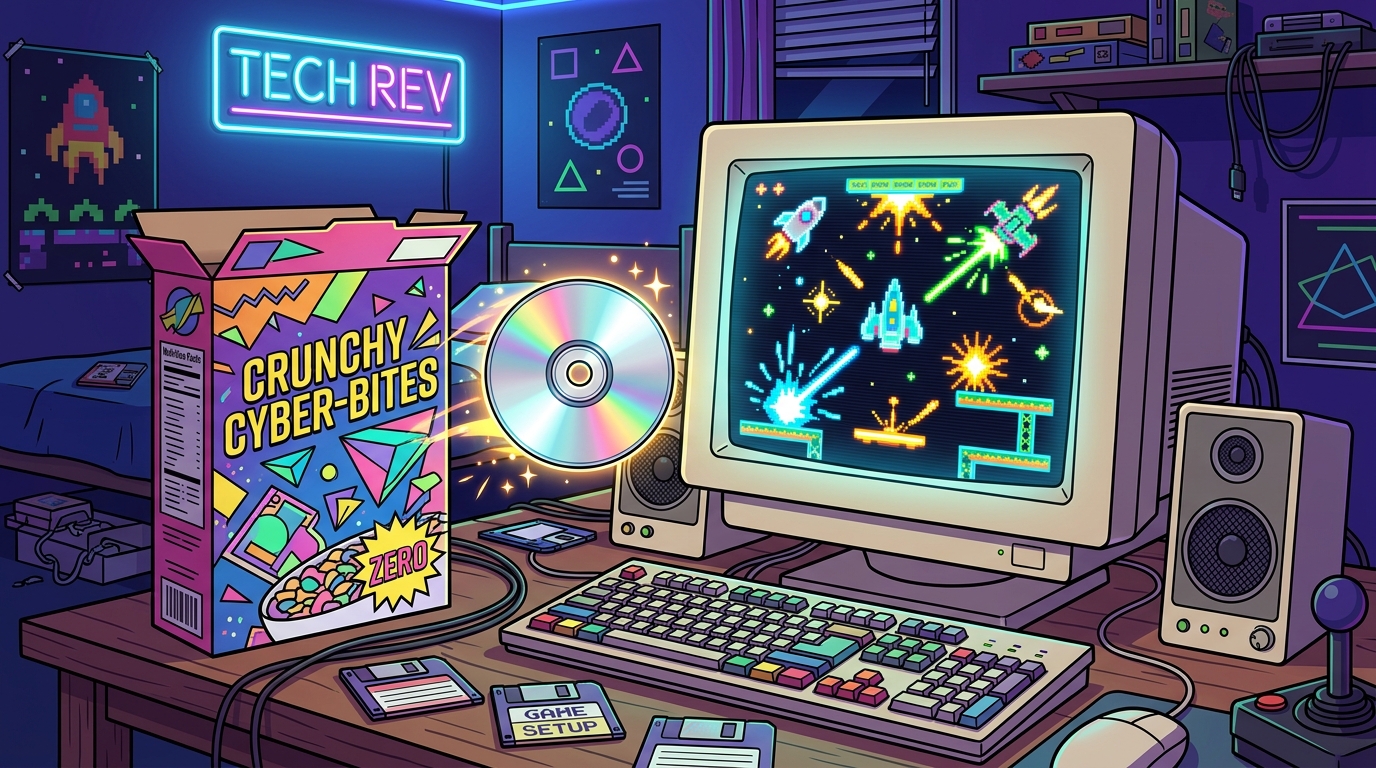
Imagine sitting at your kitchen table in a neon-drenched haze, digging past the colorful sugar rings to find the ultimate treasure, a shiny CD-ROM. There was nothing quite like the thrill of discovering full PC games tucked between the cardboard and the plastic liner. While your parents just wanted you to finish your breakfast, you were busy preparing to install a digital masterpiece that would probably make your family computer make some very loud whirring noises. These weren’t just cheap throwaways, they were your first portal into a world of pixels and polygons. From intergalactic battles to funky mini-records that actually played music, these prizes turned every Tuesday morning into a high-stakes tech launch.
The undisputed king of this era was a certain green-themed space quest that had everyone shooting oatmeal at digital aliens. It felt like a total glitch in the matrix to get a legitimate first-person shooter for the price of a box of corn flakes. You would rush to the bulky monitor, wait through the agonizingly slow loading screens, and suddenly find yourself in a 14-inch universe of pure 80s and 90s magic. These games were the original “free-to-play” experience, long before the internet became a series of microtransactions and DLC packs. It was a golden age of digital loot where the only requirement for entry was a bowl of milk and a bit of patience. Reliving the neon glory of 80s snacks and their high-tech counterparts reminds us how much the morning routine has changed.
Looking back, those plastic discs and funky gadgets represented a wild frontier where breakfast met the digital revolution. You weren’t just eating cereal, you were collecting the building blocks of a high-tech lifestyle one box at a time. While today’s promotions are often just QR codes or digital downloads, nothing beats the physical weight of a new piece of software falling out of the packaging. It was a glorious time when a simple trip to the grocery store could upgrade your gaming library and your morning routine simultaneously. Those 8-bit battlegrounds might be dusty now, but the memories of that lo-fi aesthetic will live on in our nostalgic hearts forever.
The downfall of the cereal prize empire began when the fun police decided that digging through a mountain of sugary corn puffs for a tiny plastic submarine was a high-stakes safety hazard. Suddenly, those glorious neon gadgets we lived for were labeled as choking hazards, and the thrill of the hunt was replaced by a wall of fine print and warning labels. Manufacturers started playing it safe to avoid any mishaps, which meant the days of finding a working periscope or a miniature license plate at the bottom of the bag were numbered. You could practically hear the synthwave music fade into a sad, slow hum as the plastic gold disappeared from the breakfast table. Instead of a tangible treasure you could show off to your friends, you were left with a box full of nothing but shattered dreams and retro trappy snacks that lacked the physical prizes of old.
Nowadays, the vibe has shifted from physical loot to the ultimate buzzkill known as the digital reward. There is absolutely nothing radical about scanning a QR code with your phone just to unlock a mediocre wallpaper or a temporary skin for a mobile game. You cannot hold a digital code in your hand, you cannot trade it on the playground, and it certainly does not have that satisfying plastic clink against your cereal bowl. The transition to the digital era took the soul out of the Saturday morning ritual, leaving us with boring links instead of the high-tech gadgets that defined the 80s aesthetic. We went from unboxing legendary toys to clicking on terms and conditions, and honestly, it just does not hit the same way.
The sun is setting on our journey through the neon-soaked aisles of the past, but the spirit of the 80s lives on in every plastic gadget we unearthed. You might not find a glowing submarine or a sticky wall-crawler at the bottom of your grocery bag today, but the thrill of that hunt is etched into our collective memory. Whether you were the sibling who mastered the “reach-in” technique or the one who shook the box until the prize hit the bowl, those small plastic treasures were our first introduction to the world of cool gear. Today, dedicated collectors keep that synthwave aesthetic alive by hunting down these relics on digital marketplaces and displaying them like fine art. It is a reminder that even the simplest piece of molded plastic could make a Tuesday morning feel like a total win.
Now that you have revisited the era of peak cereal engineering, it is time to pour yourself a bowl of pure nostalgia and celebrate those radical vibes. While the industry has shifted toward safety regulations and digital codes, the legacy of the physical prize remains a cornerstone of our childhood. You can still channel that energy by surrounding yourself with the bright colors and bold shapes that defined the decade of excess. Grab your favorite spoon, fire up a lo-fi playlist, and give a nod to the collectors who preserve these tiny pieces of history. After all, the best part of waking up was never the breakfast itself, but the secret treasure waiting to be discovered beneath the flakes. Much like the retro arcade snacks that fueled our gaming marathons, these prizes were the fuel for our imagination.
These were low tech engineering marvels that turned your bathtub into a deep sea zone. You simply loaded the plastic sub with baking powder and watched it dive and surface like a tiny, fizzing miracle. It was the ultimate science experiment for kids who preferred sugar over textbooks.
These neon sticky octopuses were the undisputed kings of the kitchen wall. You would hurl the glob at a flat surface and watch it slowly crawl down like a gravity defying alien. Just try not to get too much dog hair on them or your wall climbing days were over.
Most modern boxes have traded the plastic loot for lame QR codes and digital experiences that feel like a glitchy side quest. The era of digging your hand through a mountain of flakes for a physical prize has been replaced by pixels and disappointment. It is a total vibe kill for anyone who misses the tactile thrill of a real toy.
These tiny metal or plastic plates were the ultimate collectibles for your bike or bedroom door. They made you feel like you had a legit permit to speed through the neighborhood on your BMX. Collecting every state was a high stakes mission that required eating a legendary amount of corn flakes.
In the eighties, the prize was the main event and the cereal was just the obstacle standing in your way. You had to dive deep into the box to find the plastic baggie before your siblings did. It was a race against time and breakfast etiquette to claim the ultimate loot at the bottom.
They were glorious pieces of plastic that occasionally defied the laws of physics and common sense. While they might not pass modern safety inspections, they provided hours of neon soaked entertainment for an entire generation. These treasures were built for fun, not for being sensible or boring.