Cotton Heritage’s M2500 Lightweight Pullover Hoodie, for example, lists a 22-inch chest width and 28.75-inch body length for size M. Those are real numbers you can hold up against a favorite hoodie already in your closet, like checking the high score before you grab the controller.
Sizing standards add another layer. The International Organization for Standardization (ISO) builds its clothing size system on body measurements, and its 2025 update sets out those body indicators. Product specs describe the garment itself, so always check which chart you are reading before you compare numbers.
A retro hoodie’s letter size is only a rough guide. The measurements on the product page are what really count. An S, M, L or XL label isn’t a universal standard for hoodies, so a medium from one maker can fit like a large from another. Think of letters as arcade difficulty settings: the same word can mean something different on every cabinet.
Every Retrowave product page includes a size chart, so check it before you add anything to your cart. Compare three numbers: chest width, body length and sleeve length. Chest width tells you how roomy the torso is, body length shows where the hem lands, and sleeve length decides whether your cuffs cover your wrists or wave at your elbows.
Charts can also show different kinds of numbers. A size chart may list the body chest a medium is meant to fit, while the garment itself measures much less across the chest. Always confirm which measurement you are reading before you compare it with your favorite hoodie.
Fabric changes the fit too. Cotton Heritage’s M2500 is listed at 7.0 oz, and its Charcoal Heather version uses a 55/45 cotton-polyester blend instead of 65/35, so the same size can feel different from one color to the next.
Fit preference matters as much as the number. A snug cut hugs your frame, a classic cut sits in the middle, and an oversized cut gives you that slouchy 80s sweatshirt energy that looks right next to neon grids and cassette art. Decide which vibe you want first, then pick the size whose chest and length match it. If you like layering a tee underneath, going one size up is a safe bet.
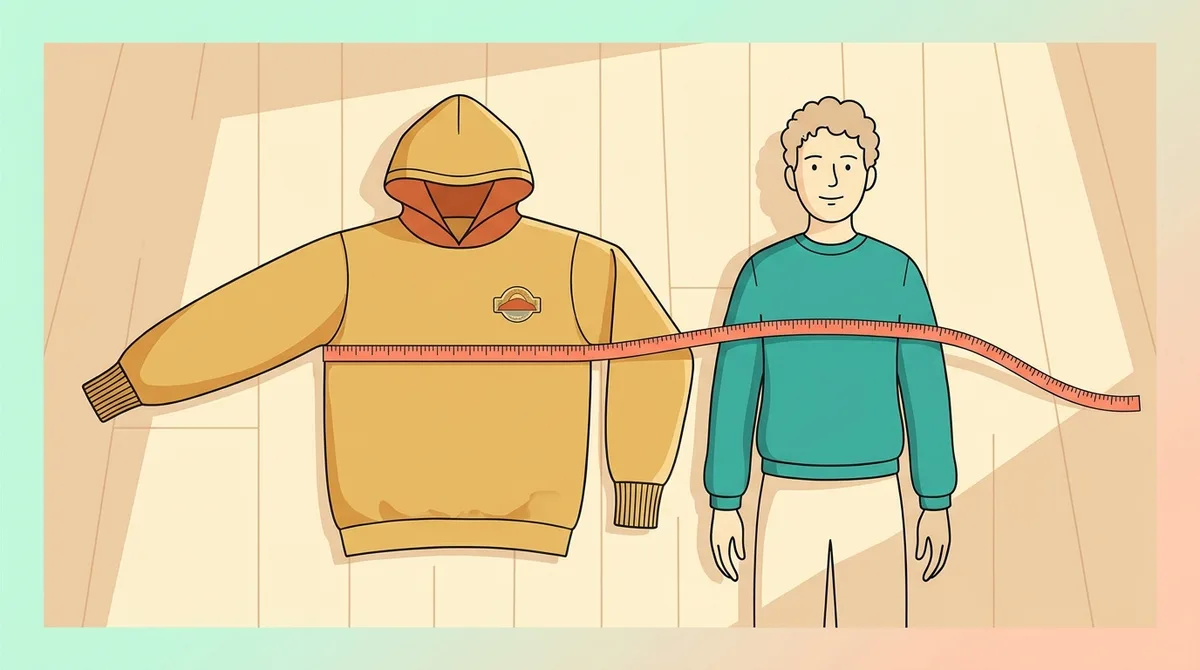
Measure the hoodie itself, not just yourself. Your body measurements tell you where to start, but the garment’s flat measurements decide how it will actually fit.
International sizing is built on body measurements. ISO 8559-1:2017 defines the body measurements used as a basis for clothing-size profiles and explains how to take them, and the standard was reviewed and confirmed in 2026. The newer ISO 8559-2:2025 arrived in September 2025 and specifies body-measurement indicators for clothing sizes, so a size label is meant to describe a body, not a hoodie.
Garment measurements work differently. They describe the hoodie on its own, and ISO 18890:2018 is the accepted method for measuring it. The hoodie is laid flat, and the chest is measured straight across, usually about an inch below the armhole.
That flat chest number can look tiny next to your body measurement. A medium body chest range of 38 to 40 inches can pair with a garment chest of just 22 inches, because a flat measurement only captures one side of the hoodie. Seeing 22 inches on a product page doesn’t mean the hoodie is too small. It means you’re reading the garment chart, not the body chart.
So always check the heading above the numbers before you compare. If the chart says body measurements, match it against your own chest and height. If it says garment measurements, lay your favorite hoodie flat and compare chest width, body length and sleeve length directly. Every Retrowave product page includes a size chart, so you can check which one you’re reading before you add anything to your cart.
Measure a hoodie you already love by laying it flat and recording three numbers: chest width, body length and sleeve length. You only need a soft measuring tape, a clear table and a few minutes, which is less time than a boss fight takes.
Before you start, set the hoodie on a flat surface and smooth out the wrinkles so the numbers are accurate. Then work through these steps:
Now look at the garment chart on the product page. Cotton Heritage’s M2500 Lightweight Pullover Hoodie in size M lists a 22-inch chest width and a 28.75-inch body length, so you can see what a flat garment measurement looks like next to your own notes.
Next, measure your favorite hoodie the same way, then compare the two in your head. If the chest width and body length land close to your favorite’s numbers, the new hoodie will probably feel familiar on your frame. If the sleeve length runs shorter, the cuffs may ride up when you reach for a controller.
Don’t forget the fabric. A heavier hoodie can feel bulkier than a lighter one even when the numbers match, so note the weight if the product page lists it. Retrowave also accepts returns within 30 days of receipt for most items in new condition, which gives you a safety net if the fit still feels off.
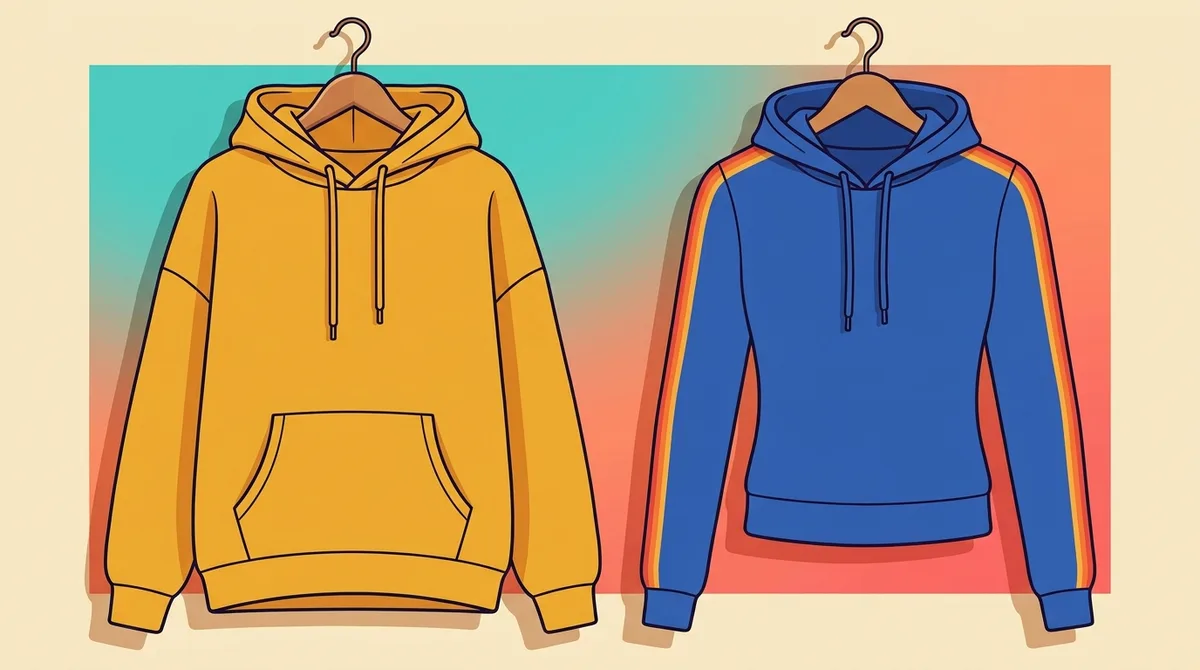
The Gildan Heavy Blend 18500 shows how far one letter size can stretch. Its listed back body length runs from 26 inches in XS to 34 inches in 5XL, and its listed chest measurement climbs from 18 to 34 inches across the same range. Each step adds room, but the steps don’t match from one model to the next, so a medium here may not measure like a medium anywhere else.
Fabric adds another twist. Cotton Heritage’s M2500 Lightweight Pullover Hoodie is listed at 7.0 oz and uses a 65/35 cotton-polyester blend. Its Charcoal Heather version switches to 55/45, so the same size can hang and feel a little different from one color to the next.
Weight and blend change the way a hoodie behaves on your body:
If you’re comparing two charcoal hoodies, check the blend and weight on the product page before you assume the sizes will match. Lay each one flat, then picture how the fabric will fall over your shoulders. A hoodie that looks identical on screen can play very differently once it’s on your frame.
There is no fixed conversion between a men’s medium and a women’s medium hoodie, so the letter on the tag can’t tell you how it will fit. Brands cut men’s and women’s patterns to different proportions, and each one sets its own measurements. Skip the conversion chart and compare the numbers on each product page instead.
Open the size chart for the hoodie you want and line up chest width, body length and sleeve length against a hoodie you already wear. Ignore whether the label says men’s, women’s or medium. A women’s medium that matches your favorite hoodie’s numbers will feel familiar, even if a men’s medium from another maker runs bigger.
Shoppers search for men’s retro hoodies, women’s synthwave hoodies and 80s-style hoodies in every size, but the method stays the same. Unisex styles follow a single chart for all shoppers, so the measurements on the product page apply whether you’re browsing the men’s or women’s section. Read the chart, not the category name.
Start with the fit you want, then let the numbers back it up. A snug cut hugs your frame, a classic cut sits in the middle, and an oversized cut delivers that slouchy arcade-night look. If you want a roomier feel, look for the size whose chest width and body length match your goal, even if that means choosing a bigger letter than you usually wear.

Not always. Your tee size is only a starting point, because a hoodie has its own cut, body length, sleeve length and extra layers of fabric that a t-shirt doesn’t.
Retrowave’s standard unisex graphic tees run true to size and have a retail fit, so your usual tee size is a fair reference point. Those tees are made from 100% Airlume combed and ringspun cotton at 4.2 oz/yd² (142 g/m²), a light fabric that drapes differently from a heavier hoodie knit.
A hoodie adds a hood, a front pocket and often a thicker body, so the same chest number can feel roomier once you pile on a layer or zip up. Sleeves are the trickier part. A tee sleeve stops at the upper arm, but a hoodie sleeve has to reach your wrist, so a size that fits your shoulders can still leave your cuffs short.
Don’t rely on the tee chart alone. Open the hoodie’s own size chart, compare its chest width, body length and sleeve length with a hoodie you already love, and only then add it to your cart.
Your perfect retro hoodie fit comes down to matching the product-page chart against a hoodie you already love, then ordering with a few safety nets in place.
Work through these steps before you reach checkout. They take less time than rewinding a cassette.
Then press play on your favorite synthwave track and wear that neon-grid hoodie with pride.
Yes, you’re ready. Compare the size chart on the product page with a hoodie you already love, then choose your size, color and fabric before you check out.
Shipping is the next thing to plan for. Retrowave ships to most countries, but shipping costs and delivery times vary by destination, so look at the total before you commit. Custom orders can also take longer to ship than standard orders, so order early if you need your hoodie for a birthday or a convention weekend.
Watch for sales too. Discounts and promotions appear from time to time, and the newsletter announces special offers and new arrivals. Retrowave states that it sources its products from suppliers who adhere to fair labor standards.
Once your hoodie arrives, consider leaving a review on the product page. Customers receive an invitation by email after purchase, and a short note about fit helps the next shopper pick the right size.
If a measurement still confuses you, contact Retrowave by email or through the Contact Us page.