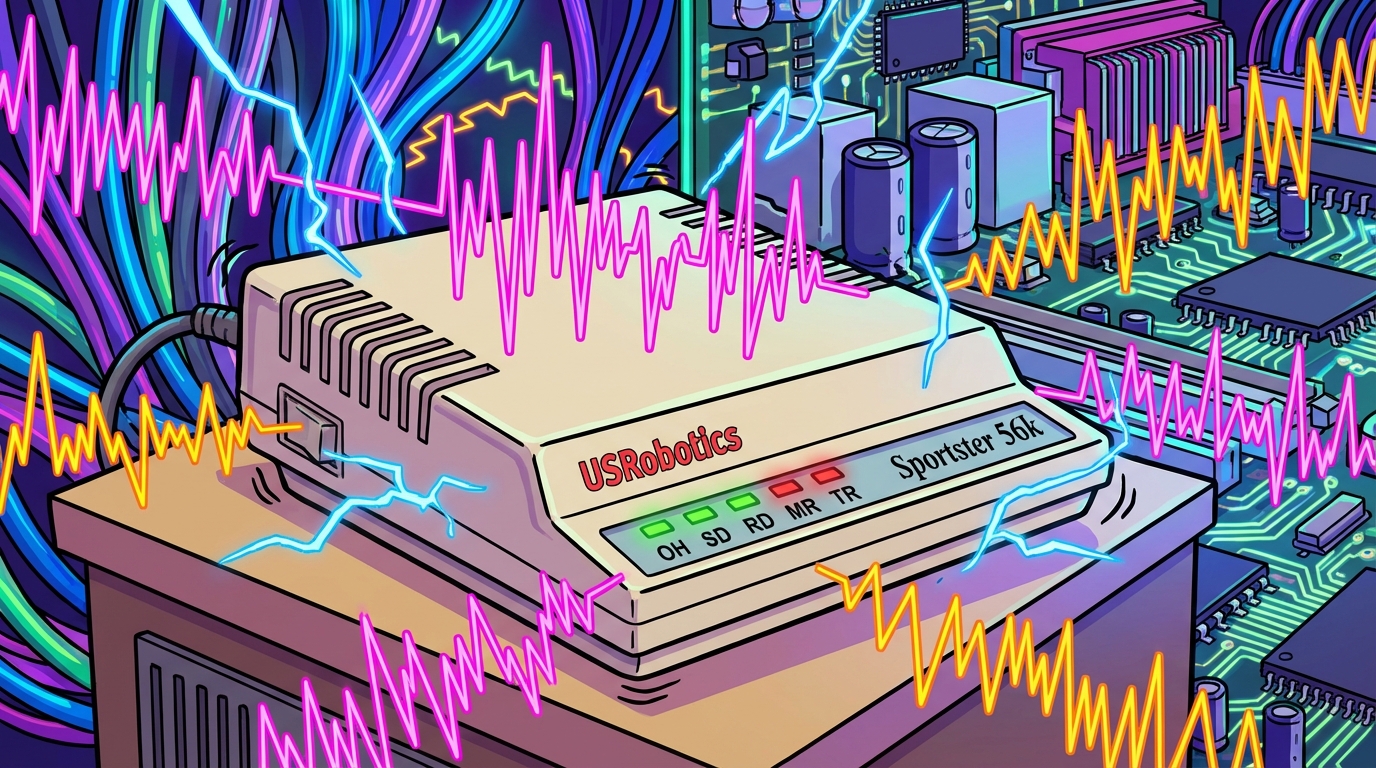
Picture yourself bathed in the neon glow of a chunky CRT monitor, waiting to crush some noobs in a retro multiplayer lobby. Before you could surf the cyber-highway, you had to survive the ultimate digital boss fight: connecting to the internet. Those iconic dial-up modem sounds weren’t just random robot screaming, though it definitely sounded like a glitching cyborg summoning an ancient demon. It was the glorious, ear-bleeding soundtrack of your childhood that meant you were finally about to log on.
That screeching electronic dubstep was actually a highly structured digital secret handshake between two computers figuring out how to talk over a dusty phone line. Every beep, hiss, and static crunch was just your hardware negotiating the connection speed so you could spend three hours downloading a single pixelated meme. Today, this beautiful mechanical symphony belongs in a museum of digital archaeology right next to your stash of floppy disks and neon windbreakers.
You probably remember that chaotic symphony of robotic noise as pure magic, but it was really just two digital machines aggressively screaming at each other over copper wires. This iconic sequence is officially called a handshake, though it sounds more like a cybernetic street fight straight out of a retro arcade game. When your bulky beige tower called out to the internet, the modem on the other end had to scream back to figure out exactly how fast you could browse. They were basically yelling across the digital highway to see if your connection could handle those sweet neon graphics or if it was going to crawl like a glitchy turtle. It was the ultimate test of digital strength before you could finally log on and surf the web.
The whole chaotic track starts with those normal phone dial tones before plunging into a high-pitched squeal that lets the receiving computer know a data call is coming in hot. Next comes that harsh, static-like scritching noise that sounds like someone throwing a synthesizer into a blender. That terrible static is actually the two modems testing the phone line to see how much data they can shove through it without crashing. Finally, you get those legendary double chimes that signal a successful agreement on the connection speed. Once that final robotic beat drops, the digital gates swing open, and you are officially jacked into the mainframe.
Of course, all that aggressive robotic negotiation meant absolutely nothing if someone in your house decided to make a phone call. You would be sitting in the glowing light of your monitor, ninety-nine percent done with a three-hour song download, feeling like an absolute hacker legend. Then your mom would casually pick up the kitchen landline to call your aunt, completely nuking your precious connection with a single click. That simple mistake would instantly sever the handshake, kick you offline, and leave you staring at a tragic error screen. It was the ultimate game-over screen for every kid trying to build their digital music empire.
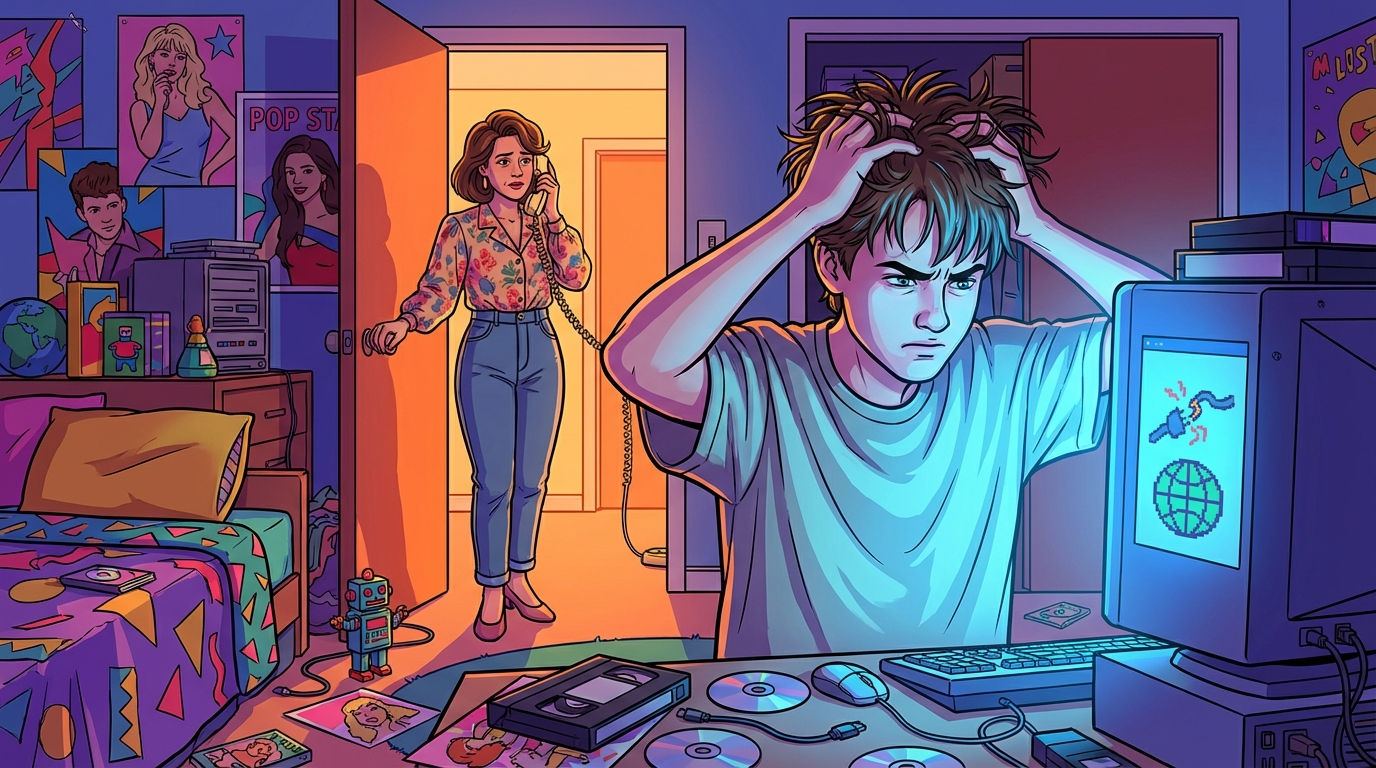
Imagine sitting in the dark, illuminated only by the harsh glare of your bulky CRT monitor while riding the digital highway of the early internet. You just spent ten solid minutes listening to your dial-up modem perform its robotic screeching symphony to get you online. That glorious static noise meant you were finally connected to the cyber matrix and ready to snag the latest synthpop track. The download bar crawled at a painful pace, promising your chosen song would be ready in a mere three hours. You guarded that progress bar with the fierce dedication of a hardcore gamer defending their final life.
Just as you hit ninety-nine percent, disaster struck from the kitchen in the form of a lifted receiver. Your mom decided this exact moment was the perfect time to call your aunt, completely shattering your delicate cyber dreams. The screeching modem sound abruptly died, replaced by a hollow click and the devastating silence of a lost connection. Your three-hour mission vanished into the digital void, leaving you staring at a fatal error message. It was a universal retro trauma that instantly turned any chill late-night surfing session into an absolute nightmare.
Today, that specific flavor of heartbreak lives on purely as top-tier internet meme material. We can all laugh about it now while streaming massive files over invisible waves, but back then, a picked-up landline was the ultimate boss fight you could never win. You had to wait for the phone call to end, reboot your entire mental state, and pray the connection would hold on the second attempt. Surviving the Wild West of early internet dial-up built character, even if it cost you hours of your precious youth. The next time you hear that iconic robotic screech, take a moment to honor the fallen downloads that never quite made it to your hard drive.
You probably remember exactly where you were when that screeching digital symphony first burned itself into your brain. Today, that chaotic techno screaming has evolved from a daily headache into top-tier internet meme material. Hearing those robotic screeches instantly triggers a primal fight-or-flight response for anyone who survived the early internet era. Your heart rate immediately spikes with flashbacks of your mom picking up the landline right at the end of a massive song download. Now, this legendary audio nightmare serves as a hilarious badge of honor for veteran web surfers.
Modern meme creators have completely flipped the script on this ear-bleeding noise by remixing it into pure vaporwave gold. You can find that iconic static handshake layered over neon grids, glitching anime clips, and retro synthwave beats across the web. It is no longer just a functional noise of the past, but a total aesthetic vibe that screams radical retro energy. Gamers and nostalgia junkies regularly use the sound effect as a punchline to describe a brain freeze or a slow mental loading screen. It takes a truly special kind of internet magic to turn a connection error into a timeless piece of pop culture art.
Content creators constantly drop this screeching audio relic into viral videos to show complete and absolute confusion. The harsh static perfectly captures the feeling of your brain buffering while trying to process a totally ridiculous situation. It is incredibly funny how an ancient piece of tech hardware managed to secure a permanent spot in our digital culture. While you definitely don’t miss waiting ten minutes to load a single pixelated image, you have to respect the cultural staying power of that robotic scream. The next time you hear that familiar screech online, you can just sit back and laugh at the glorious retro chaos.
You’ve officially survived our neon-soaked trip down memory lane through the screeching symphony of the dial-up era. Those chaotic robot noises were the ultimate soundtrack to your early internet adventures, acting as a magical gateway to chat rooms and pixelated games. Of course, that magical connection was incredibly fragile, especially when someone else in the house decided to make a phone call. Nothing triggers pure gamer panic quite like remembering the exact moment your mom picked up the landline and instantly nuked a three-hour song download. The sheer agony of hearing a confused voice over the receiver meant your digital quest was instantly game over.
We absolutely take our gloriously silent and lightning-fast Wi-Fi for granted today. You no longer have to pray to the tech gods or sit through a noisy electronic handshake just to load a single funny meme. Modern internet connections beam data straight to your glowing screens without making a single peep, completely removing the suspense of logging on. However, those screeching digital relics of the past deserve a massive high score in our hearts for paving the way. Next time you instantly stream a movie, take a brief moment to respect the loud and proud modems that started the digital revolution.
That robotic dubstep was just your computer and the internet provider figuring out how to talk to each other. It was a digital secret handshake sent over dusty copper phone lines. Every beep and hiss helped negotiate your connection speed so you could finally surf the cyber-highway.
Your bulky beige tower had to literally call another computer on the phone and yell at it to see how fast your connection could go. This cybernetic street fight took time to test your digital strength. You had to wait for the whole mechanical symphony to finish before you could crush noobs in your retro multiplayer lobby.
You couldn’t skip this ultimate digital boss fight, no matter how hard you mashed your keyboard. Both computers needed that exact sequence of chaotic static to lock in a stable connection. You just had to sit back, soak in the neon glow of your CRT monitor, and let the magic happen.
Your internet connection literally used the exact same phone line your mom used to call your family. The modem had to dial a real phone number to reach the internet provider. Once the other side picked up, the normal rings turned into a high-pitched squeal to let them know a data call was coming in hot.
Your epic gaming session was instantly ruined. Picking up the receiver interrupted the screeching digital handshake and dropped your connection entirely. You would have to hang up, redial, and listen to the whole glitching cyborg scream all over again just to get back online.
That glitchy robot screaming was the glorious soundtrack of your childhood. Hearing it meant you were seconds away from downloading pixelated memes and chatting in neon-soaked cyber rooms. It was a badge of honor that proved you survived the cybernetic street fight and made it to the World Wide Web.
Your sleek modern Wi-Fi router still does a digital handshake, but it happens completely in silence. Technology evolved to handle these connections instantly without needing an audible cybernetic street fight. Today, that beautiful screeching dubstep belongs safely in a museum right next to your neon windbreakers.