Close your eyes and let the neon glow of a synthwave sunset wash over you as you recall the greatest sound of the 1980s: the thunderous rrip of a Velcro flap. Long before you were organizing digital loot boxes, you were managing your legendary gear inside vintage trapper keepers. These weren’t just binders; they were high-tech tactical units designed to keep your homework from escaping into the void.
Back in the day, rocking a masterpiece with a radical space-grid or a majestic unicorn design made you the main character of the hallway. You didn’t just carry folders; you carried these binders with vertical pockets that defied the laws of physics and gravity. It was the ultimate flex for any kid trying to survive the school grind with maximum style points. Now, these relics of the analog age are back to reclaim their throne as the kings of retro cool.
In 1978, a visionary named E. Bryant Crutchfield decided that your messy pile of loose leaf paper was a total buzzkill and launched a revolution. He realized that standard horizontal pockets were a recipe for disaster, so he engineered a patented vertical design that kept your homework locked down like a high-security vault. This wasn’t just a binder, it was a piece of tactical gear designed to survive the chaos of middle school hallways. When professional stationery brands unleashed this neon-tinted masterpiece, they weren’t just selling organization, they were selling a lifestyle. You suddenly had a portable command center that signaled to everyone in the cafeteria that you were living in the future.
The real magic happened when you flipped that heavy-duty flap and unleashed the legendary Velcro crunch that echoed through the classroom. That sound was basically the 80s equivalent of a startup chime, announcing to the world that you were ready to get down to business. It provided a tactile experience that felt more like handling a piece of sci-fi tech than a simple school supply. Between the primary color palettes and the satisfying snap of the three-ring binder, it was the ultimate flex for any kid with a taste for synthwave aesthetics. You weren’t just carrying a notebook, you were hauling a legendary artifact of early graphic design.
As the years rolled on, these binders transformed from simple plastic tools into vibrant canvases for the wildest art your young mind could imagine. The design shifted from solid reds and blues into a psychedelic explosion of airbrushed landscapes and geometric shapes. They captured a specific bridge between old-school stationery and the digital art revolution that was just beginning to peak. Today, hunting down a vintage model feels like finding a lost relic from a glitchy arcade game. It is a portal back to a time when your biggest worry was keeping your math notes from falling out during recess.
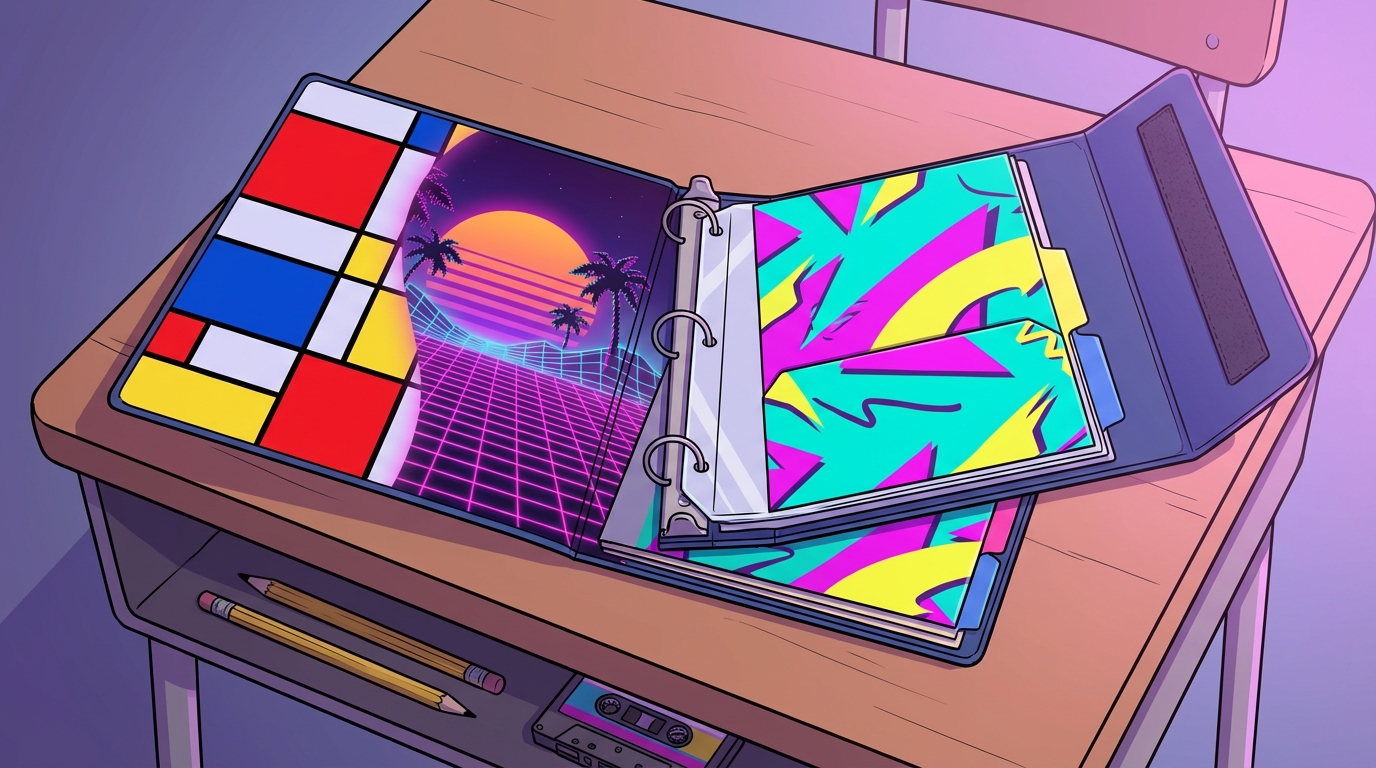
The earliest versions were surprisingly humble, sporting solid primary colors like red, blue, and yellow that screamed functional classroom utility. You probably remember those early days when the most exciting thing about your binder was the satisfying rip of the Velcro closure echoing through a quiet hallway. These initial versions were designed to keep your loose papers from flying away, but they lacked the visual flair that would eventually define an entire decade. It was a simpler time before designers decided to turn every student’s backpack into a portable art gallery. These solid-colored relics were just the calm before the neon storm that was about to hit school supply aisles everywhere.
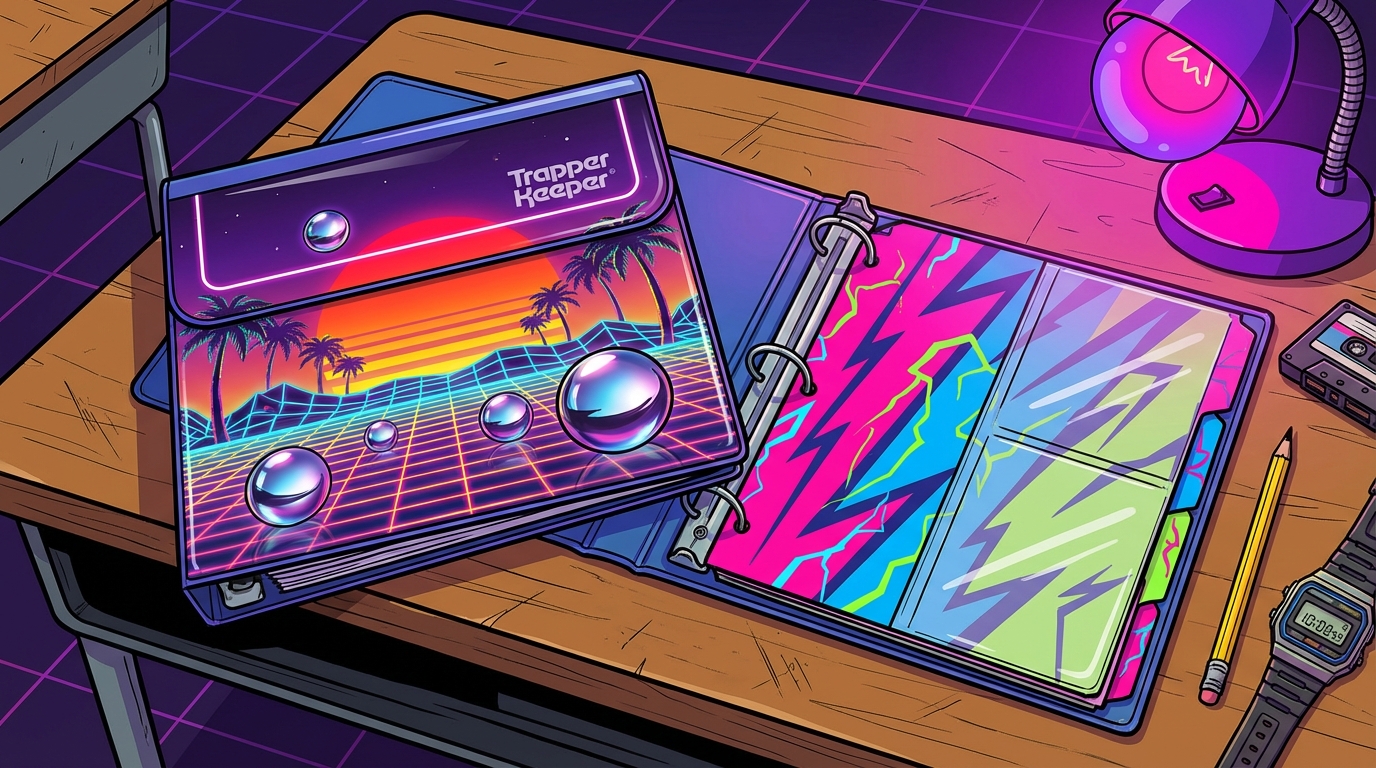
Everything changed when the design team traded in their boring color palettes for airbrushes and a heavy dose of radical imagination. Suddenly, your binder wasn’t just a folder, it was a portal into a synthwave dreamscape filled with geometric grids and glowing neon horizons. You could choose between high-speed race cars blurring into a purple sunset or majestic space cats floating through a nebula of pink and teal. These legendary covers captured the exact moment when early computer graphics and mall culture collided to create a unique aesthetic. Owning one of these masterpieces meant you were the coolest kid in homeroom, carrying a piece of the future tucked under your arm.
By the time the late eighties and early nineties rolled around, the artwork had evolved into a full-blown explosion of abstract patterns and tropical vibes. Designers leaned hard into the Memphis Group style, decorating your school gear with squiggly lines, confetti triangles, and bold zig-zags. These binders served as a bridge between traditional stationery and the emerging digital art world, influencing the way an entire generation viewed graphic design. Looking back at these airbrushed wonders feels like a nostalgic trip through a VHS tape filled with Saturday morning cartoons and arcade aesthetics. They remain the ultimate icons of retro cool, proving that even a three-ring binder can be a legendary piece of pop culture history.
If you think your old school supplies are just junk gathering dust in the attic, you might want to check the resale value on those neon masterpieces. What started as a clever way to stop your homework from flying out of your binder has transformed into a high-stakes market for plastic gold. Collectors are scouring the internet for those specific designs that defined the 1980s, from radical geometric patterns to airbrushed synthwave landscapes. These binders are more than just stationery, as they represent a unique bridge between early graphic design and the peak of 80s pop culture. Finding a pristine piece with the original Velcro still providing that satisfying rrip sound is like discovering a legendary item in a retro RPG.
Navigating the vintage market requires a sharp eye for detail and a bit of luck to avoid overpaying for a beat-up relic. You should prioritize pieces that still have their original folders intact, as these vertical-pocket inserts are often the first things to go missing over the decades. Look closely at the edges for any cracks in the plastic or fading in the artwork that might suggest it spent too much time in a sunny locker. While the primary color models from the early eighties are classic, the real treasures are the licensed art pieces featuring space themes or radical animal prints. Keeping your budget intact means hunting for player grade binders that might have a few scuffs but still capture that authentic lo-fi aesthetic.
Owning one of these binders today is like holding a physical piece of early digital art history before everything went high-definition. The bold colors and grid-based patterns influenced an entire generation of designers and continue to inspire the modern vaporwave movement. When you slide a vintage binder out of your bag, you are making a statement that transcends simple nostalgia for the classroom. It is a functional time capsule that proves the eighties had the best eye for future aesthetics even if we were just using them to store math quizzes. Secure your favorite design now before the prices hit the moon and leave your retro dreams stuck in the loading screen.
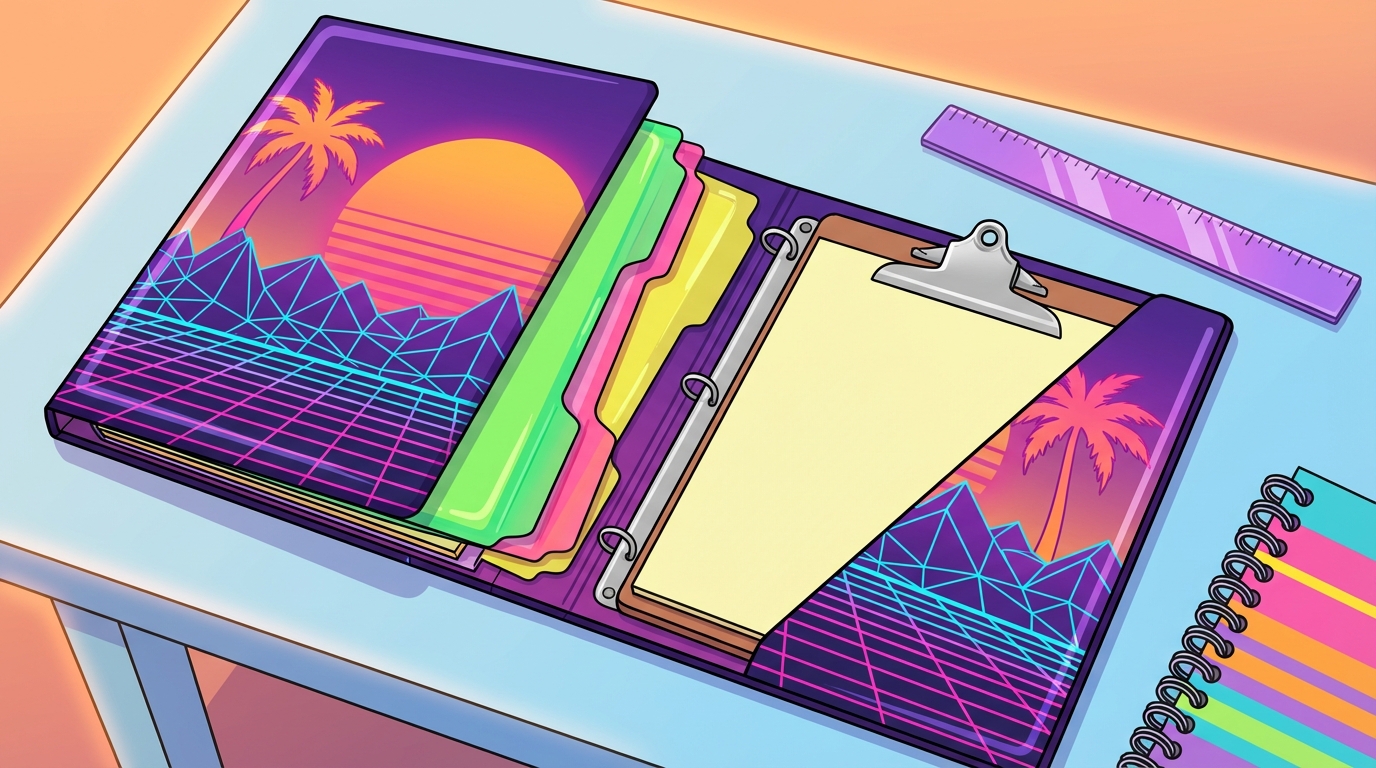
You probably remember the satisfying rrrr-rip of that Velcro flap echoing through a quiet classroom like a signal of pure status. While these binders started as a clever way to keep your loose papers from flying away, they have morphed into the ultimate holy grail for anyone obsessed with the vaporwave aesthetic. Today, you will find collectors hunting down those specific neon sunsets and grid-patterned landscapes that look like they were ripped straight out of a retro journey through arcade culture. These designs represent a bridge between old-school stationery and the birth of early digital art, making them much more than just school supplies. They are portable time machines that capture the exact moment when the world started dreaming in 16-bit colors.
Modern fans and gamers have reclaimed these binders as a symbol of peak retro-cool, using them to store everything from vintage trading cards to tabletop RPG character sheets. You do not just see these in dusty attics anymore, because the demand for that specific 80s flair has sparked a massive revival of the classic designs. Whether it is a radical geometric pattern or a majestic space dolphin, these visuals tap into a deep sense of nostalgia that modern, minimalist tech just cannot touch. Owning an original or a faithful reproduction is like wearing a badge of honor for the synthwave generation. It is about celebrating a time when your biggest worry was making sure your folders matched your binder while you waited for the weekend.
The quest for the perfect vintage binder has turned into a digital scavenger hunt for anyone who misses the tactile feel of a three-ring system. You might find yourself scrolling through endless galleries of airbrushed masterpieces, searching for that one specific design that lived in your backpack decades ago. These items have transitioned from functional tools into iconic design pieces that define an entire era of graphic history. Even in a world full of tablets and cloud storage, there is something undeniably awesome about the physical presence of a brightly colored binder. It is the ultimate accessory for anyone who wants to bring a little bit of that retro translucent vibes back into their daily routine.
It is time to dust off your mental cassette tapes and give your inner 80s kid a well-deserved high five. Embracing a vintage binder is about more than just owning a folder, as it is a direct portal to a world of neon grids and radical geometric patterns. You can finally relive the glory of that satisfying Velcro rip that echoed through quiet classrooms like a bolt of lightning. These iconic pieces of stationery were the original command centers for our secret notes and sticker collections. They bridged the gap between boring school supplies and the high-energy aesthetic of early digital art, often paired with retro futuristic fonts that defined the era.
Your desk deserves a splash of that retro synthwave energy that only a classic masterpiece can provide. Whether you are a hardcore collector or just someone who misses the smell of fresh vinyl, these binders represent a peak era of creative expression. You do not have to be a math whiz to appreciate how those vertical pockets kept your life from spiraling into total chaos. It is the perfect way to celebrate the vibrant art and organized madness that defined an entire generation. Grab your favorite gel pens and let the nostalgia take over your workspace today.
A standard binder is just a boring folder, but these are portable command centers for your life. They feature a heavy-duty wrap-around flap with a Velcro seal and specialized vertical pockets that keep your papers from flying away. It was basically the first piece of high-tech tactical gear designed specifically for the school hallway grind.
The revolution started in 1978 when a visionary named E. Bryant Crutchfield decided that messy piles of loose leaf paper were a total buzzkill. He engineered the vertical pocket system to act like a high-security vault for your homework. His genius gave every kid in the cafeteria a way to look like they were living in a neon-tinted future.
Traditional horizontal pockets were a recipe for disaster because your papers would slide out the moment you tilted your binder. These specialized folders used vertical pockets that defied gravity and locked your documents down tight. This design was a total upgrade for anyone trying to survive the chaos of middle school without losing their assignments.
That legendary Velcro crunch is the ultimate 80s startup chime that tells the world you are ready to get down to business. It provided a tactile, sci-fi experience that felt way cooler than clicking a mouse or swiping a screen. In a quiet classroom, that sound was the ultimate flex to show everyone you had arrived.
You could customize your vibe with everything from majestic unicorns and neon space-grids to synthwave sunsets. These designs turned your school supplies into a lifestyle statement that made you the main character of the school. Carrying a colorful masterpiece was the easiest way to earn maximum style points without saying a word.
These relics of the analog age have officially reclaimed their throne as the kings of retro cool for anyone who loves a synthwave aesthetic. They represent a time when organization was about more than just digital loot boxes and spreadsheets. Owning one now is like holding a piece of tactical history from the greatest decade ever.