Picture yourself at 2:00 AM, bathed in the neon purple glow of your monitor while a slowed-down remix of an 80s pop hit echoes through your headphones. You’ve likely stumbled upon a video of Bart Simpson skateboarding through a hazy, VHS-filtered dreamscape and wondered how we got here. Exploring simpsonwave meme history means traveling back to a time when the internet decided that childhood nostalgia and trippy, melancholic beats were the perfect match.
It all started around 2015 when creative fans began slicing up classic Springfield moments and drenching them in glitchy, vaporwave aesthetics. What began as a weird experiment on Vine quickly exploded into a full-blown movement thanks to iconic tracks that made you feel homesick for a decade you might not have even lived through. It’s a vibe that captures that specific feeling of being a kid on a Sunday night, staring at the TV while the world outside feels perfectly still.
The whole movement kicked off around 2015 when a few creative fans on Vine and Facebook started experimenting with the ultimate nostalgia cocktail. You had early pioneers who realized that the hazy, neon-soaked sounds of vaporwave were the perfect match for the colorful chaos of Springfield. By layering slowed-down retro tracks over classic clips from the early seasons, they created something that felt like a half-remembered dream from a Saturday morning in 1992. It was a weirdly beautiful aesthetic that transformed your favorite childhood cartoon into a trippy, melancholic masterpiece. These short snippets proved that the internet was hungry for a specific brand of irony mixed with genuine longing for the past.
Everything truly leveled up when a physics student named Lucien Hughes entered the scene and turned this niche hobby into a full-blown internet phenomenon. He released legendary videos like S U N D A Y S C H O O L and C R I S I S, which quickly racked up millions of views and established the blueprint for the genre. Suddenly, you weren’t just watching a cartoon, you were experiencing a purple-hued, VHS-filtered journey through the suburban psyche of Homer Simpson. Hughes used his technical skills to polish the visuals, adding scan lines and glitch effects that made the footage feel like a dusty tape found in an attic. His work turned Simpsonwave into more than just a meme, making it a legitimate audiovisual experience for anyone who loves synth-heavy beats and 90s vibes.
You can think of this era as the moment the internet finally figured out how to bottle up the feeling of being a bored kid on a warm summer evening. These creators tapped into a collective memory, using the most recognizable family on television to anchor their experimental art. Because the early seasons of the show have such a distinct hand-drawn look, they blend seamlessly with the grainy textures and bright pink palettes of the Vaporwave Aesthetic world. It is the ultimate chill-out genre for gamers and retro fans who want to escape the present and live in a lo-fi version of the past for a few minutes. What started as a few jokes on social media became a massive movement that still keeps the spirit of the 80s and 90s alive today.
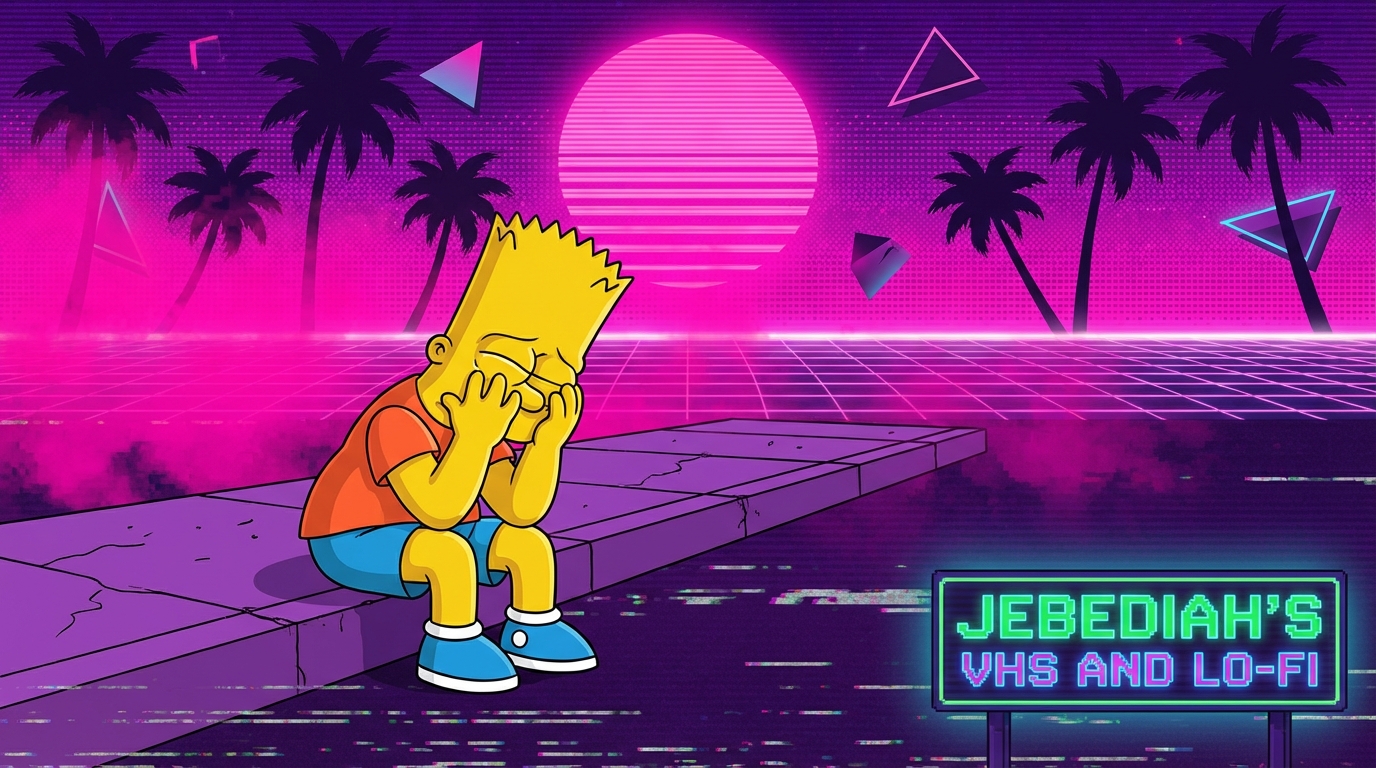
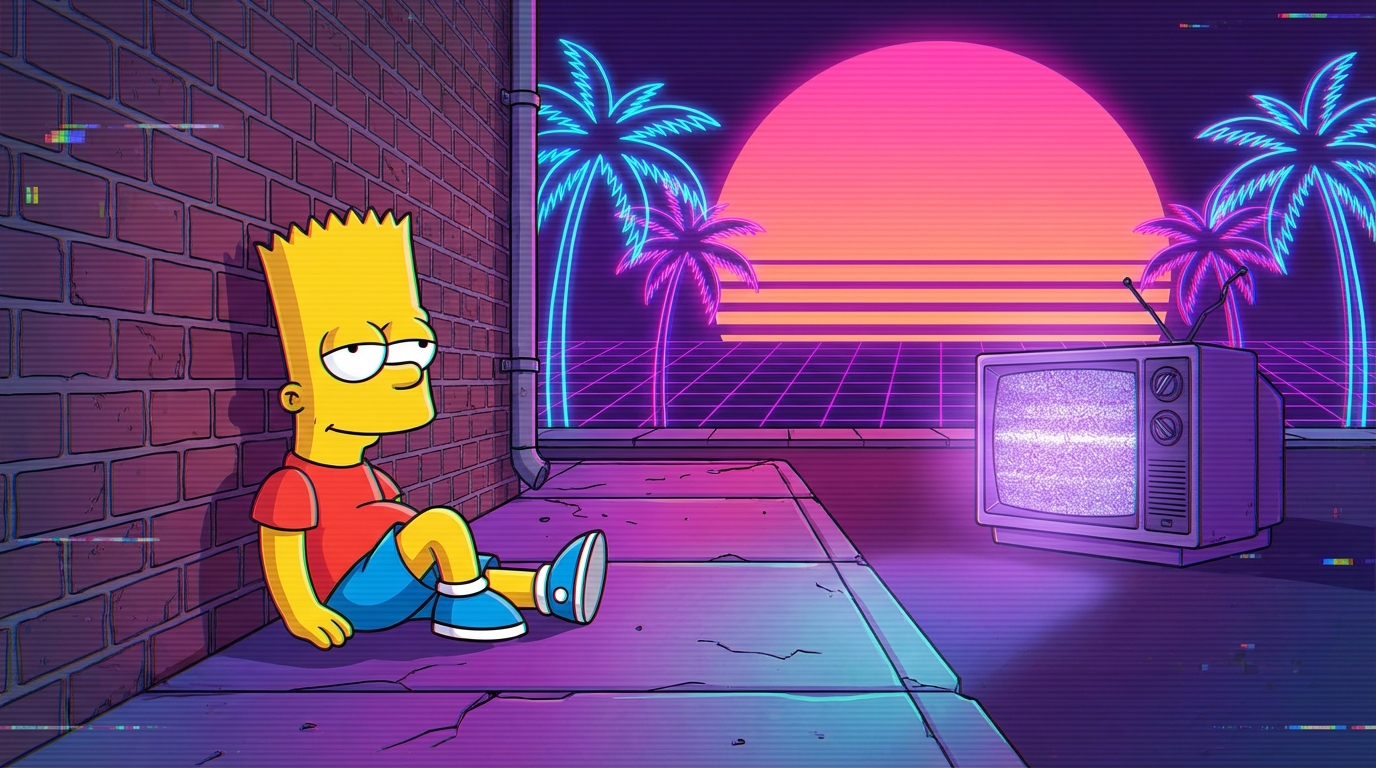
The visual soul of Simpsonwave lives inside a dusty, purple-tinted VHS tape that someone left out in the sun for too long. When you hit play, you are immediately hit with a heavy dose of neon purples and pinks that transform Springfield into a hazy, late-night dreamscape. These videos rely heavily on glitch effects and scan lines to make everything feel like a distant memory from a 1980s television set. You will often see Bart or Homer staring blankly into the distance while the background ripples with digital distortion. It is a specific kind of low-fi magic that turns a standard cartoon into a trippy, emotional masterpiece.
You can spot a classic Simpsonwave edit by its obsession with sadness and suburban isolation. Creators love to take clips of Bart feeling misunderstood or Lisa playing her saxophone alone and slow them down to a snail’s pace. These melancholic moments are layered with retro filters that make the colors bleed together like a watercolor painting. To top it all off, the footage is usually zoomed in or cropped to create a sense of cozy claustrophobia. It is the perfect visual companion for those late-night sessions when you just want to vibe out to some synth-heavy beats.
Everything about this aesthetic screams nostalgia for a time period you might not have even lived through. By mixing the bright, commercial world of The Simpsons with the warped textures of vaporwave, these videos create a feeling of “anemoia,” which is just a fancy way of saying you are homesick for the past. You will see plenty of floating 3D shapes, Japanese text overlays, and grainy static that makes the screen feel alive. This style turned a simple meme into a full-blown artistic movement that captures the heart of internet culture. Whether you are a gamer looking for a chill background or a synthwave fan, these visuals are designed to pull you into a neon-soaked state of mind.
You probably remember 2016 as the year your YouTube recommendations suddenly turned purple and started playing slowed-down 80s pop hits. While creators like Lucien Hughes were busy perfecting the melancholic vibes, it was the legendary FrankJavCee who really kicked the doors down for the mainstream. He released a satirical tutorial that broke down the exact recipe for making Simpsonwave, showing everyone how to layer VHS filters over Homer and Bart. By poking fun at the aesthetic while simultaneously celebrating it, he gave the internet a permission slip to start experimenting. This moment transformed a niche art project into a full-blown viral phenomenon that took over the lo-fi corner of the web.
Once the secret sauce was out, the floodgates opened and YouTube became a neon-soaked wasteland of nostalgic content. You couldn’t scroll through your feed without seeing a sad Bart Simpson wearing a bucket hat while a distorted synth track played in the background. Content creators everywhere began digging through old seasons of the show to find the most trippy, psychedelic moments they could find. This wave of videos turned The Simpsons into the ultimate mascot for the vaporwave movement, blending childhood memories with a weirdly comforting sense of loneliness. It was a golden era of internet culture where anyone with a laptop and a love for Vaporwave Artists and retro animation could join the aesthetic revolution.
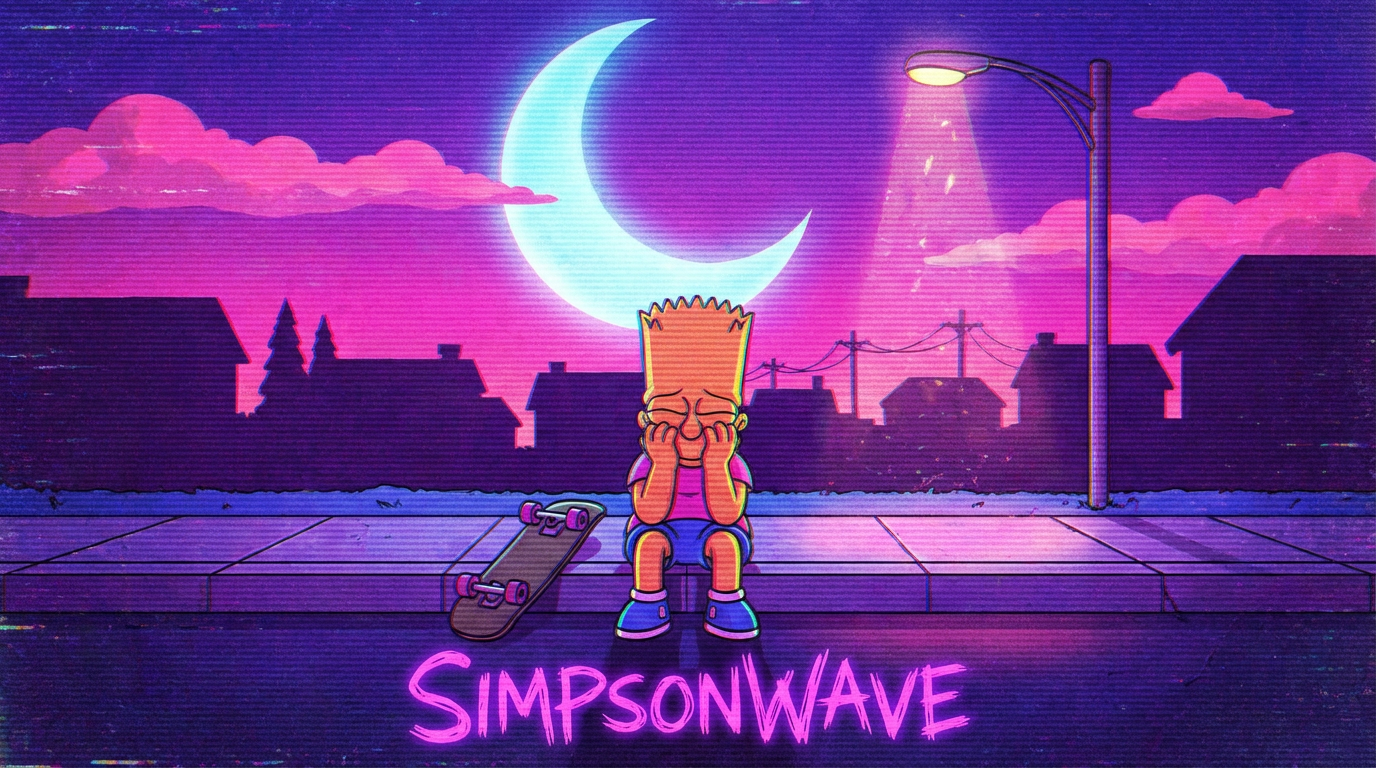
You probably remember those lazy Saturday afternoons spent in front of a heavy tube television, watching the bright yellow antics of Springfield while the sun set outside. Simpsonwave takes that core childhood memory and dips it in a bucket of purple neon paint and VHS static to create something entirely new. For gamers and 90s kids, these videos feel like a warm hug from a ghost, blending the comfort of familiar characters with a lonely, late-night atmosphere. It is the digital equivalent of staring out a rainy car window while your favorite lo-fi beat plays on a loop. This specific brand of melancholy hits home because it captures the feeling of a world that no longer exists, wrapped in the fuzzy glow of a CRT monitor.
The magic of this aesthetic lies in how it turns a wacky cartoon into a deep, emotional journey through the suburban void. You are not just watching Homer eat a donut, you are experiencing a trippy, slowed-down version of reality where every frame is a piece of vaporwave art. The glitchy visuals and echoed soundtracks mirror the way our own memories start to fade and distort over time. It provides a perfect space for you to zone out and escape the hustle of modern life, trading your stress for a dose of chill, retro vibes. Whether you are grinding through a game or just winding down after a long day, these videos offer a unique sense of peace that only a cartoon dad and a heavy bassline can provide.
As we fade out into the static of the final scene, it is clear that Simpsonwave is more than just a fleeting internet joke. It stands as a digital monument to the power of nostalgia and the creative ways we repurpose the media we grew up with. This movement proved that even the most mainstream pop culture icons can be transformed into something artistic, weird, and deeply personal. By celebrating the lasting legacy of these neon-soaked remixes, we acknowledge that the 90s will always have a special, glitchy place in our hearts. So keep your headphones on and your brightness low as you continue to explore the beautiful, blurry world of the internet’s favorite aesthetic.
Simpsonwave stands as a colorful testament to how the internet can take a childhood staple and turn it into a neon-soaked fever dream. You have seen how this niche movement transformed Springfield into a purple-hued sanctuary for lo-fi beats and existential longing. By blending the glitchy aesthetics of vaporwave with the classic humor of the early seasons, creators like Lucien Hughes managed to capture a specific type of digital melancholy. It is more than just a meme, it is a vibe that invites you to sit back and let the VHS static wash over your brain.
The journey from simple Vine clips to million-view masterpieces shows just how much we crave that sweet, retro nostalgia. You can clearly see the impact this movement had on internet culture, proving that even a cartoon dad can become a synthwave icon with the right filter. These videos filled a unique gap in the mid-2010s, offering a relaxed escape for gamers and late-night scrollers alike. Whether you are here for the trippy visuals or the chill soundtracks, the legacy of this genre remains a cornerstone of the aesthetic world.
As you look back on this strange trip through internet history, remember that the best memes are often the ones that make us feel something deep. Simpsonwave proved that you do not need a big studio budget to create a cultural phenomenon, just a love for retro tech and a bit of creativity. It remains the ultimate soundtrack for anyone who wants to feel like they are floating through a 1980s shopping mall in a dream. Keep your eyes on the neon horizon because Synthwave vs Vaporwave: What’s the Difference? helps explain how the spirit of these lo-fi masterpieces continues to influence how we consume digital art today.
It is a trippy mashup where classic clips of The Simpsons meet the glitchy, neon aesthetics of vaporwave music. You get a heavy dose of VHS filters and slowed down 80s tracks that turn Springfield into a purple hued dreamscape. It is basically the ultimate vibe for when you are feeling nostalgic at 2:00 AM.
The movement officially kicked off around 2015 on platforms like Vine and Facebook. Creative fans realized that the colorful world of the early seasons matched perfectly with the hazy, melancholic sounds of synthwave. It started as short experiments and quickly evolved into a massive internet phenomenon.
Early pioneers laid the groundwork with their short, trippy snippets. However, a physics student named Lucien Hughes is the one who truly leveled up the game. His iconic videos like S U N D A Y S C H O O L set the gold standard for the entire aesthetic.
The genre taps into a specific feeling of longing for a past you might not have even lived through. By slowing down retro pop hits and adding glitchy visuals, it captures that lonely Sunday night feeling of being a kid watching TV. It is a mix of irony and genuine emotion that hits you right in the childhood feels.
You need three main ingredients: classic Simpsons footage, a vaporwave or lo-fi soundtrack, and a heavy layer of purple VHS effects. The goal is to make the animation look like a worn out cassette tape from 1992. If it makes you feel like you are skateboarding through a neon dream, you have found the real deal.
While the initial explosion happened years ago, the aesthetic has left a permanent mark on internet meme culture. You can still find massive playlists and new edits that keep the purple glow alive for a new generation of fans. Many people still ask What is Vaporwave? when they first encounter these trippy, slowed-down remixes of their favorite childhood cartoons. It remains the go to style for anyone who loves synthwave visuals and retro animation.