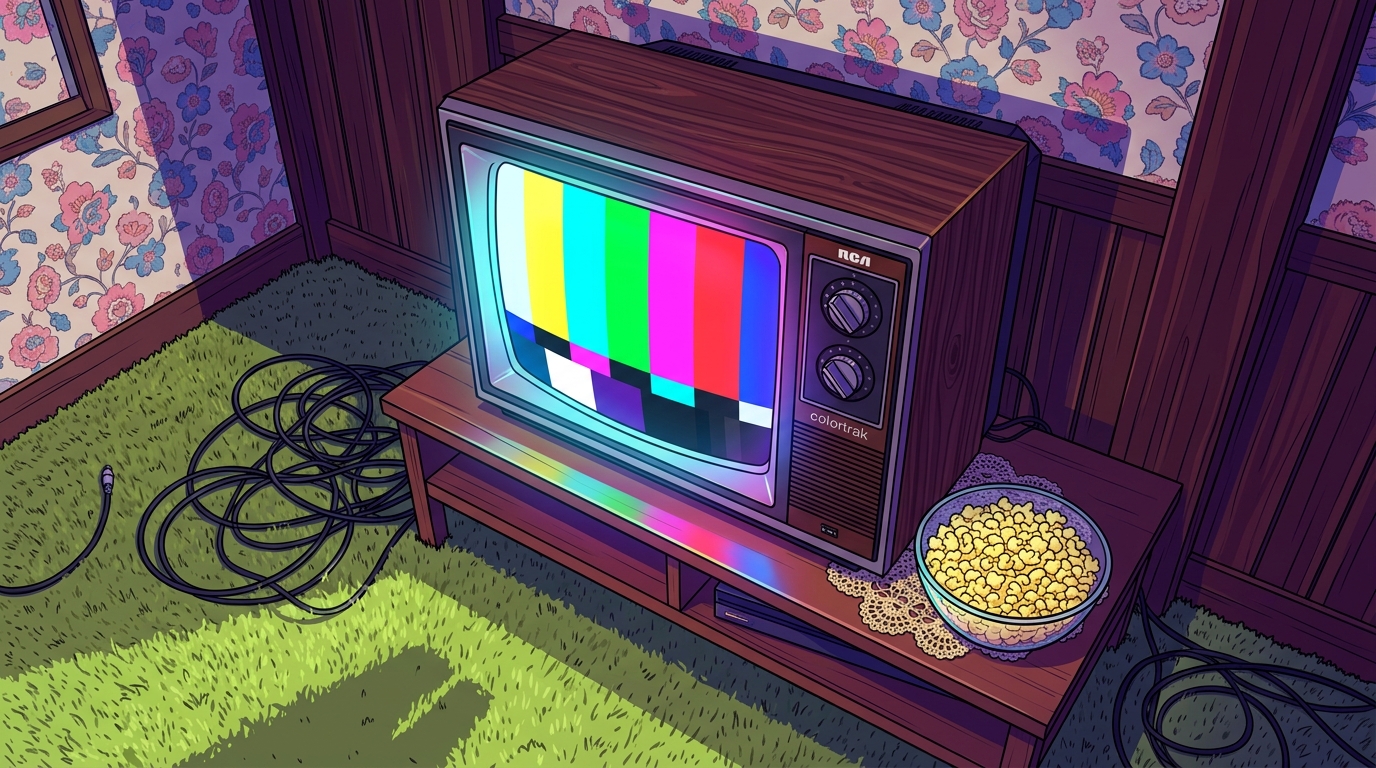
Picture yourself sitting on a shag rug, surrounded by neon patterns and the faint smell of hairspray, as you stare into the glowing hum of a CRT screen. This was the dawn of 1980s cable television, a time when the “Big Three” networks finally realized they weren’t the only players in the game. In just ten years, the number of channels exploded from a handful of boring options to a massive buffet of 79 different networks. You watched as the world went from black-and-white static to a vibrant, synth-heavy wonderland that forever changed how you binged your favorite shows.
It wasn’t just about having more channels; it was about the glorious chaos of narrowcasting that catered to your specific, weird interests. While your parents were worried about the price of gas, the industry was spending $15 billion to wire up your neighborhood like a futuristic circuit board. By the end of the decade, over half of the country was plugged into this digital shift, trading boring nightly news for 24-hour music videos and non-stop sports. You were living in the ultimate golden age of entertainment, where the only limit was how long you could stay awake without your eyes glazing over.
When the clock struck midnight on August 1, 1981, your television transformed from a boring box of sitcoms into a glowing portal to a neon-soaked dimension. The launch of MTV didn’t just give you something to watch, it gave you a 24-hour visual jukebox that forever changed how you experienced music. You suddenly had VJs with big hair and cool jackets guiding you through a dreamscape of lo-fi graphics and experimental short films. This wasn’t just TV, it was a total vibe shift that replaced grainy evening news with vibrant, synth-heavy spectacles.
The aesthetic of early cable was a beautiful mess of tracking lines and saturated colors that felt like a digital fever dream. You might remember staying up way too late to catch those weird, late-night public access clips or low-budget music videos that looked like they were filmed in a basement filled with fog machines. It was a world of grid patterns, palm tree silhouettes, and chrome logos that looked like they belonged on a high-score screen. This unique broadcast glow created a specific mood that today’s vaporwave fans still try to recreate with VHS overlay effect filters and glitch effects.
Watching these videos felt like you were part of a secret club where the dress code involved way too much hairspray and fingerless gloves. The network turned every living room into a front-row seat at a concert that never ended, making the narrowcasting revolution feel incredibly personal. You weren’t just a viewer anymore, you were a witness to the birth of a visual language that defined an entire decade of pop culture. From the pixelated transitions to the chunky typography, every frame was a love letter to the future as seen through a cathode-ray tube.
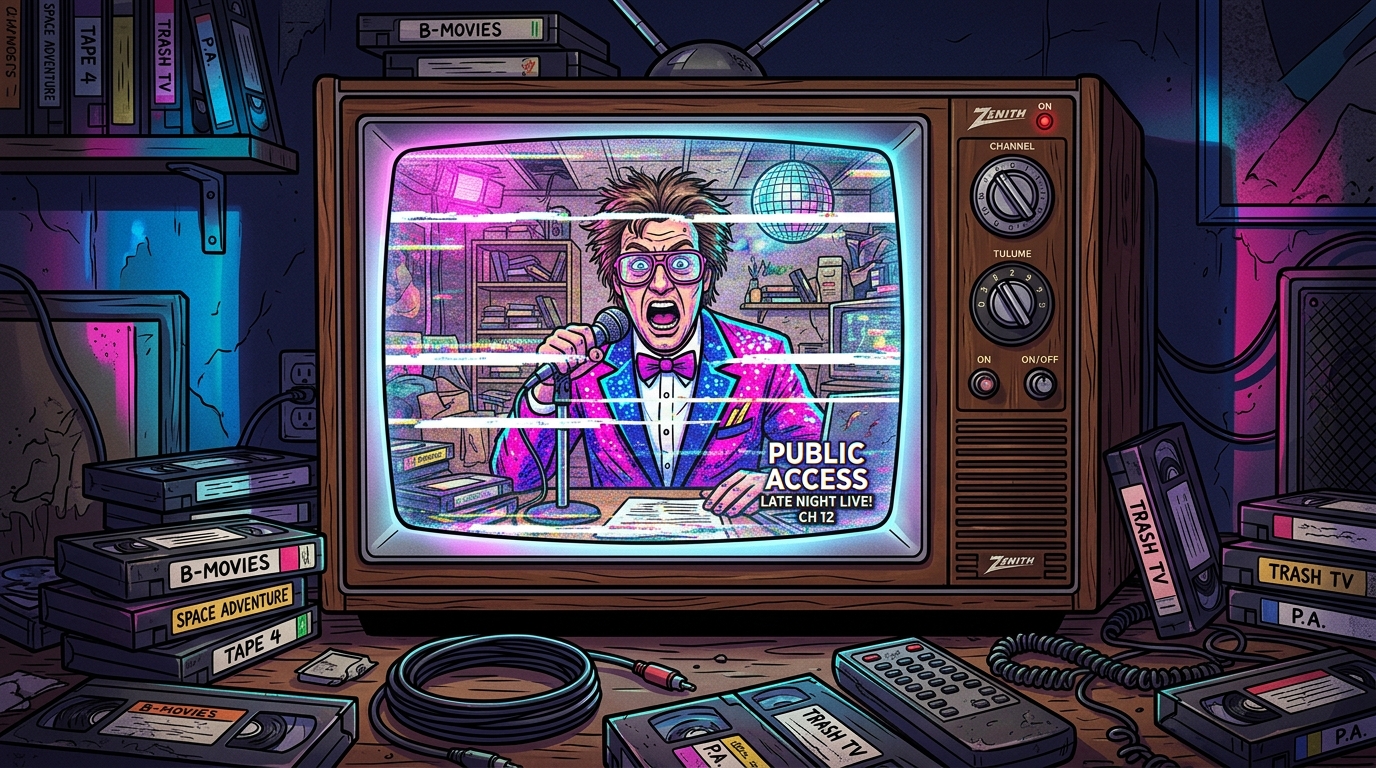
You remember those nights when you would scroll through the channels past midnight and land on a signal so fuzzy it looked like a swarm of digital bees. This was the peak of public access television, where your neighbor might be hosting a talk show from their basement using a camera that cost fifty dollars. The tracking lines would dance across the screen in rhythmic patterns, accidentally creating the lo-fi aesthetic that every vaporwave producer tries to copy today. It was a beautiful mess of neon graphics and strange, echoey audio that felt like a broadcast from another dimension.
Early MTV was just as wild, serving up a constant stream of experimental visuals that felt like a fever dream in a shopping mall. You could get lost in the grain of the film and the saturated colors that defined the era before high definition ruined the mystery. These broadcasts weren’t just entertainment, they were the foundation of a specific mood that combined late night loneliness with futuristic synth melodies. Between the local weather scrolls and the low budget commercials for regional car dealerships, you were witnessing the birth of an entire internet subculture decades before it had a name.
There is something oddly comforting about that specific shade of electric blue and the way the screen would flicker when the tape got old. You didn’t need a high resolution display when you had the warm glow of a cathode ray tube to keep you company during those late night hours. Those distorted signals and glitchy transitions were the original glitches, turning everyday television into a surrealist art gallery for anyone who stayed up late enough to find it. It was a time when the technology was just barely keeping up with the imagination of the creators, and we are still chasing that vibe today.
Before cable took over, you were stuck with whatever the Big Three networks decided to feed you, which usually meant a test pattern or a static screen once the clock struck midnight. The 1980s flipped the script by introducing narrowcasting, a radical idea that turned your television into a 24-hour neon buffet of specific interests. Suddenly, you didn’t have to wait for the local news at six o’clock because global updates were blasting around the clock. If you were a sports fanatic, specialized networks were there at three in the morning to satisfy your craving for highlights and obscure competitions. This shift meant the old gatekeepers were losing their grip as viewers traded broad appeal for niche obsessions.
There was something incredibly hypnotic about the lo-fi aesthetic of early cable that still inspires vaporwave creators today. You might remember stumbling upon a public access channel featuring a local eccentric or getting lost in the grainy, high-contrast visuals of early music videos. These networks didn’t have the glossy perfection of modern streaming, but they had a raw energy that felt like a digital frontier. The glow of the cathode ray tube filled living rooms with vibrant colors and synth-heavy soundtracks that defined the decade. It was a glorious era of experimental broadcasting where anything felt possible as long as you had a converter box and a long coaxial cable.
By the end of the decade, the television world had transformed from a handful of channels into a sprawling grid of seventy-nine different networks. This explosion of content meant that nearly sixty percent of American homes were wired into a new reality of endless choices. You could jump from a heavy metal countdown to a cooking show or a financial report with just a click of a clunky remote. The Big Three networks saw their massive audience share crumble as people realized they preferred specialized content over generic programming. It was the ultimate retro flex for home entertainment, paving the way for the hyper-targeted world we live in now.
As you reach back to unplug that dusty coaxial cable, it is clear that the glitchy spirit of the eighties never truly faded away. The era of neon-soaked music promos and bizarre public access rants created a lo-fi aesthetic that has found a second life in modern media. You can see its DNA everywhere, from the hazy purple hues of vaporwave videos to the intentionally low-budget vibes of your favorite indie streamers. Those flickering tracking lines and saturated colors were once considered technical flaws, but now they are the ultimate symbols of retro-cool for a new generation.
The experimental chaos of early cable actually paved the way for the hyper-niche internet culture you enjoy right now. Back then, narrowcasting was a wild gamble that allowed weird, late-night experiments to reach living rooms across the country. Today, that same energy lives on in the endless rabbit holes of social media and the quirky, DIY content that dominates the web. You are essentially living in the high-definition evolution of those early cable dreams, where anyone with a camera and a vision can broadcast their own strange world to the masses.
Reflecting on those static-filled screens reminds us that perfection is overrated compared to raw, unpolished creativity. The 1980s proved that you did not need a massive budget to capture an audience, as long as you had a bold style and a bit of attitude. Whether you are a gamer looking for that perfect synthwave background or a fan of glitchy art, the influence of those early cable pioneers is impossible to ignore. Even the most secure signals weren’t safe, as seen during the Max Headroom incident where a hacker proved just how vulnerable the new digital landscape could be. So, keep those neon lights glowing and remember that the most memorable moments are often found within the digital noise.
You went from having basically three boring options to a massive buffet of 79 different networks. It was a total explosion of content that turned your living room into a glowing portal of endless entertainment.
By the end of the decade, over half of the country was plugged into the digital revolution. Professional service providers spent a cool 15 billion dollars to wire up neighborhoods like futuristic circuit boards just so you could get your fix.
MTV turned your TV into a 24-hour visual jukebox guided by VJs with epic hair and cool jackets. It was a total vibe shift that replaced the dusty nightly news with neon-soaked music videos and synth-heavy spectacles.
Narrowcasting was the glorious chaos of networks finally catering to your specific, weird interests instead of trying to please everyone. It meant you could trade boring sitcoms for non-stop sports or music videos that actually matched your aesthetic.
The early cable look was a beautiful mess of tracking lines, saturated colors, and lo-fi graphics that felt like a digital fever dream. It was all about that vibrant, synthwave wonderland feel that looked perfect on a humming CRT screen.
Since cable never slept, the only limit to your binge-watching was how long you could stay awake without your eyes glazing over. You were living in the ultimate golden age where music and sports were available at any hour of the day or night.