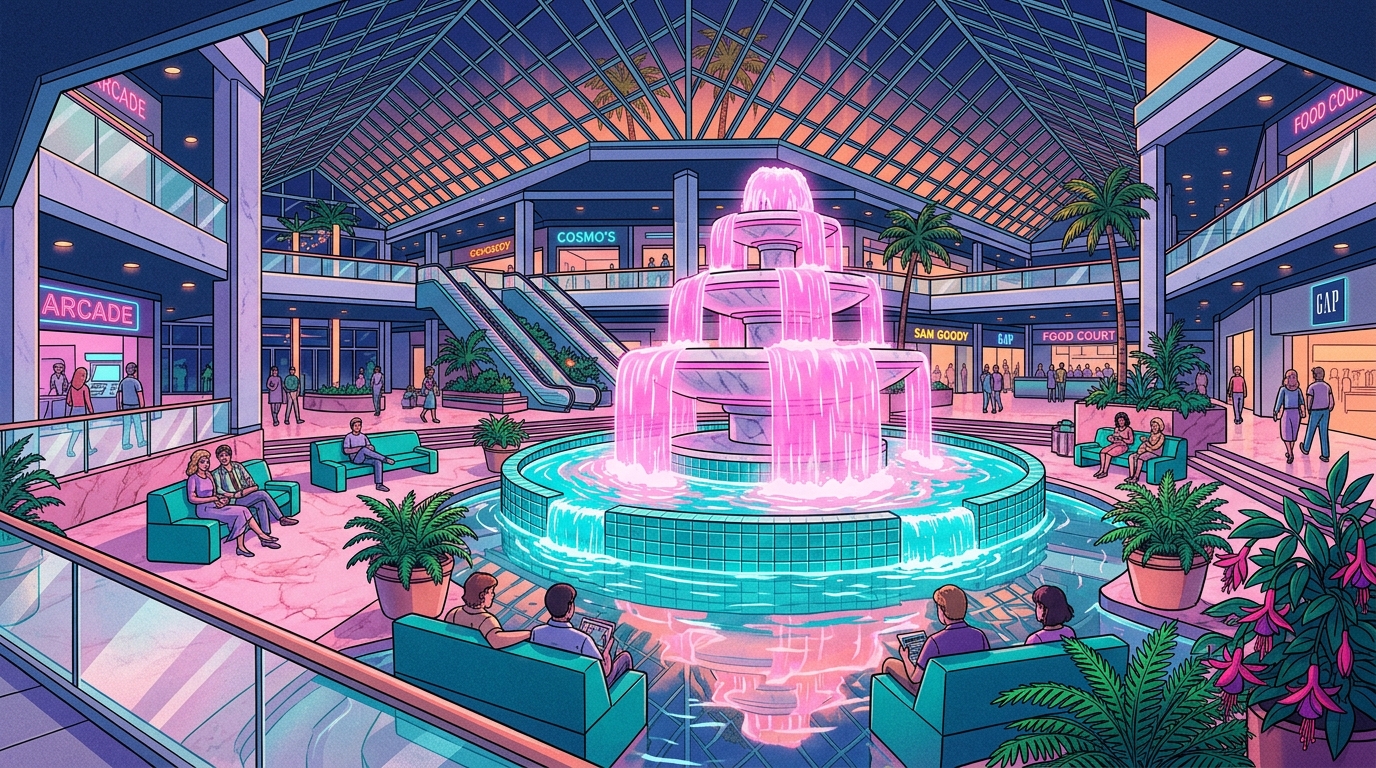
Picture yourself sitting on a concrete ledge, surrounded by neon signs and the faint scent of Auntie Anne’s, while the gentle hum of a water feature drowns out the world. This is the heart of the mall fountain philosophy, a vibe where 80s architectural dreams met your Saturday afternoon hangout spot. Back in the day, these fountains weren’t just for tossing pennies; they were the save points of the retail world, designed to keep your stress levels low while you leveled up your wardrobe.
You probably remember that specific mix of chlorine and white noise that felt like a lo-fi hip-hop track come to life. These watery monuments were built to turn a simple shopping trip into a quest for community, acting as the ultimate Third Place before everyone had a smartphone glued to their hand. Whether you were waiting for your squad or just vibing to the synthwave aesthetic of the food court, the fountain was the undisputed king of the castle. Now, these relics are evolving from casual town squares into high-end luxury experiences that feel like a glitch in the retro-matrix.
Victor Gruen was the ultimate dreamer who wanted to give you a slice of a European vacation right between a Sears and a RadioShack. He imagined the indoor mall as a futuristic town square where you could hang out with your friends without worrying about the rain or the heat. The fountain was the shimmering crown jewel of this vision, acting as a high tech watering hole that pumped out endless loops of soothing white noise. It was supposed to be a place for civic connection, but it mostly became the perfect spot to toss a penny and hope your crush would notice your new denim jacket.
You probably remember sitting on those cold concrete ledges, mesmerized by the smell of heavy chlorine and the neon glow reflecting off the ripples. These water features were basically architectural Valium designed to drown out the chaotic sounds of screaming toddlers and clicking heels on tile floors. By mimicking the grand plazas of Italy with nothing but some pumps and a few bags of chemicals, Gruen created a strange sanctuary for every mall rat in existence. It is the ultimate vaporwave mood, capturing that specific feeling of being in a climate controlled paradise that feels both totally fake and deeply comforting.
Today, these abandoned basins serve as the hollowed out monuments of a lost civilization that valued the aesthetics of luxury above all else. When you look at an old photo of a mall fountain with its teal lighting and chunky geometric shapes, you are seeing the birthplace of the digital lo-fi aesthetic. Gruen wanted a community center, but he accidentally gave us the perfect backdrop for a synthwave music video. Even if the water has stopped flowing, the echoes of those splashing waterfalls still resonate in our collective memories of Saturday afternoons spent wandering through the neon haze.
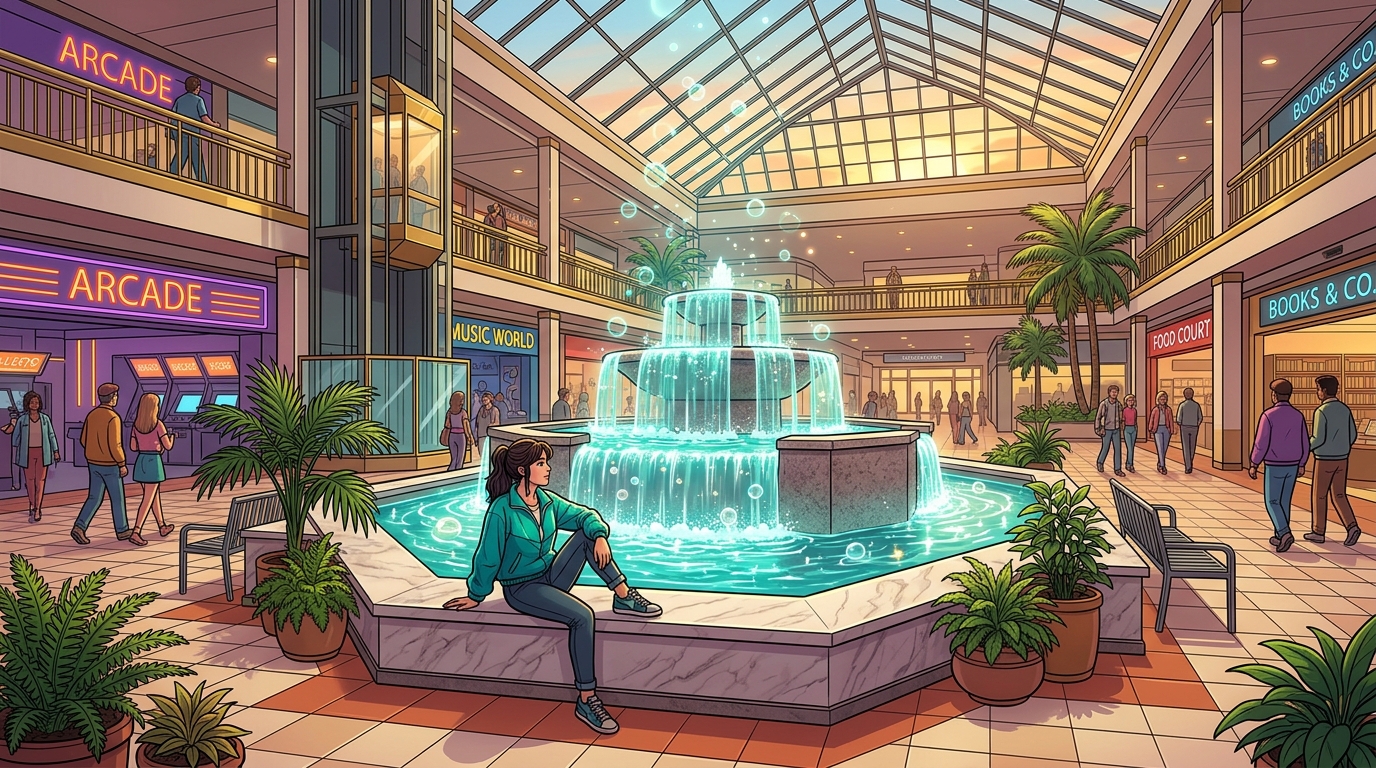
You step into the atrium and that familiar, chemical breeze hits you like a warm hug from a 1990s screensaver. That constant, splashing rhythm is basically architectural white noise, designed to drown out the echoes of screaming toddlers and the distant thud of food court chairs. It creates a private sensory bubble where you can just exist in a state of pure, low-resolution bliss. This isn’t just water falling over concrete, it is a localized frequency of psychological safety that makes the rest of the world feel like it is on mute. You are standing at the center of a simulated town square, surrounded by plastic palms and the faint smell of pretzels. It is a vibe that feels both deeply lonely and incredibly comforting, like finding a save point in a video game that hasn’t been updated since 1994.
Think of these fountains as the ultimate physical manifestation of a lo-fi hip hop radio stream. Back in the day, developers used this chlorinated magic to trick your brain into feeling like you were in a fancy European plaza instead of a giant box in the suburbs. Now, in the era of vaporwave and dead mall tours, that sound represents a glitchy, nostalgic sanctuary from the chaos of the modern internet. You are standing at the center of a simulated town square, surrounded by plastic palms and the faint smell of pretzels. It is a vibe that feels both deeply lonely and incredibly comforting, like finding a save point in a video game that hasn’t been updated since 1994.
As you toss a copper penny into the turquoise basin, you are participating in a sacred ritual of consumerist zen. The fountain acts as a natural reset button for your fried attention span, offering a steady loop of audio that never changes and never demands anything from you. It is the heart of the mall’s internal motherboard, pumping life through the corridors while keeping your heart rate at a cool, synthwave tempo. Even if the nearby department stores are boarded up, that steady hum remains a constant reminder of a simpler time. You are soaking in the aesthetic of a bygone era, wrapped in a blanket of misty, indoor rain.
You probably recognize that specific aesthetic of a grainy VHS tape where a neon-lit fountain bubbles away in an empty food court. This is the heart of vaporwave, a digital subculture that finds a weird, beautiful peace in the skeletons of 1980s consumerism. When you watch these videos, you are not just looking at old plumbing, you are witnessing a glitch in the simulation of the American Dream. The water keeps flowing even though the shoppers are long gone, creating a loop of endless, lonely tranquility. It feels like a save point in a video game where the music is soft, the lighting is purple, and the outside world stops existing for a while.
These abandoned water features represent a time when malls were designed to be your entire universe. Back then, developers used the sound of splashing water as a psychological chill pill to keep you relaxed while you hunted for new sneakers. Now that these places are mostly empty, that same white noise feels like a haunting echo of a party that ended decades ago. You can almost smell the heavy scent of chlorine and cinnamon rolls just by looking at a low-resolution thumbnail. It is a mix of irony and genuine sadness that hits you right in the nostalgia, turning a simple mall feature into a monument of a bygone era.
Modern internet culture treats these lonely fountains like digital shrines to a simpler time. You do not need to be a history buff to appreciate the vibe of a marble basin surrounded by dead plastic ferns and flickering fluorescent lights. It is all about that liminal space feeling, where you are caught between the high-energy neon past and the quiet, dusty present. Whether you are a fan of synthwave beats or just like looking at weirdly soothing ruins, the mall fountain aesthetic is the ultimate symbol of cool. It reminds you that even when the stores close forever, the poetry of the water keeps moving in its own retro rhythm.
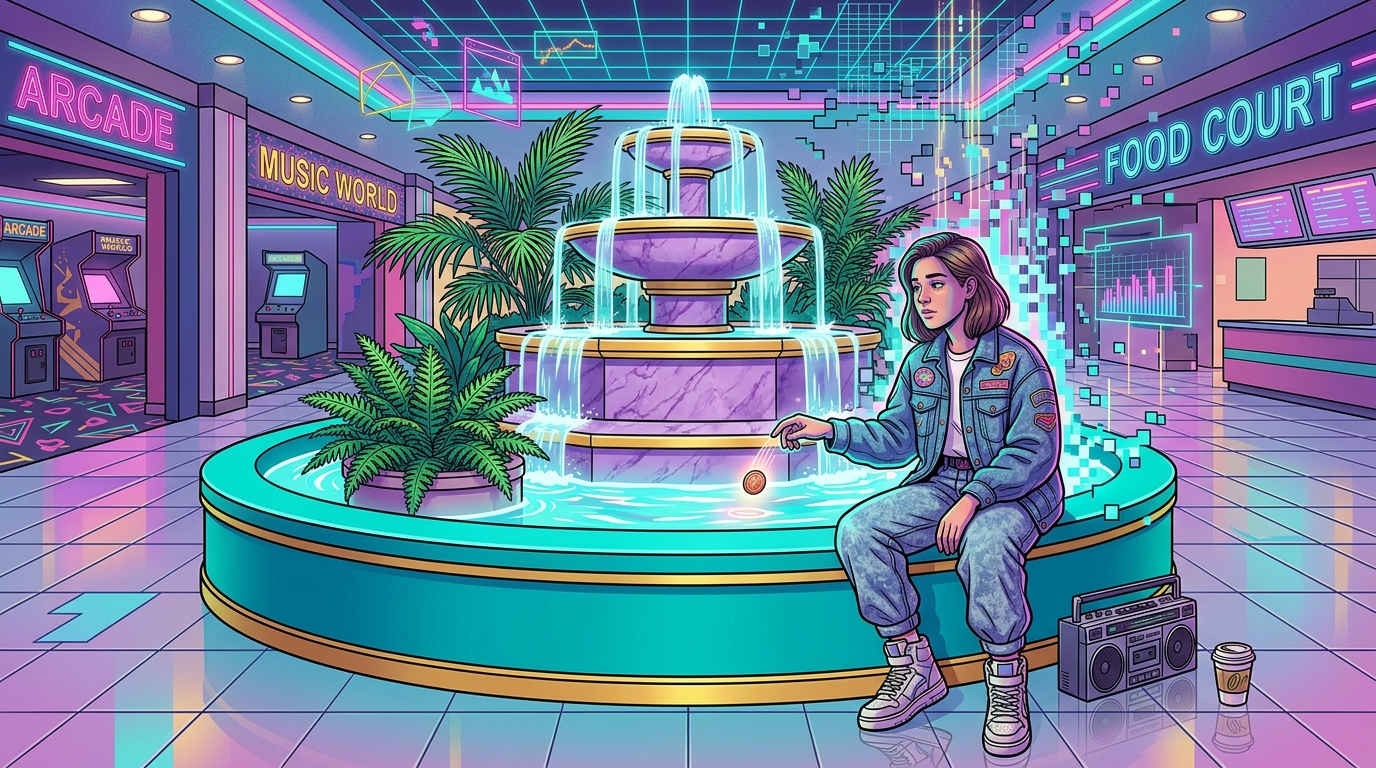
The mall fountain used to be the ultimate psychological hack designed to keep you wandering through neon corridors for hours on end. Back in the day, retail architects used that steady, chlorinated white noise like a giant bottle of architectural Valium to mask the sounds of crying toddlers and squeaky sneakers. You probably remember sitting on those smooth concrete ledges, hypnotized by the blue tinted water while your brain went into a low power mode that made buying a neon windbreaker seem like a life or death necessity. It was a calculated move to mimic a European plaza, turning a giant box of stores into a cozy Third Place where you could just exist without a care in the world.
Fast forward to the era of digital decay, and those once majestic water features have become the holy grails of the Vaporwave Aesthetic. When you see a grainy video of a dry, cracked fountain in an abandoned shopping center, it hits harder than a slow reverb remix of a forgotten pop hit. These relics have transitioned from tools of consumerism to symbols of a lost future where everything was supposed to be bright, watery, and endless. For the internet subculture, the mall fountain is no longer about retail psychology but about a deep, ironic longing for a time when the world felt as safe and steady as a recirculating pump.
Today, you can find entire communities dedicated to tracking down these dead mall icons just to capture that specific vibe of lonely luxury. There is something profoundly peaceful about watching a low resolution clip of water cascading over pink marble while a synthwave beat plays in the background. It is a weirdly beautiful evolution where a trick to make you buy more shoes turned into a digital monument for the lonely aesthetic of the eighties. You are not just looking at a fountain anymore, you are looking at a glitchy, nostalgic time machine that reminds you of a world that only exists in your memories and aesthetic playlists.
The mall fountain stands as the ultimate monument to a future that never quite arrived. You can almost feel the scanlines on your vision as you stand by the tiled edge, listening to the white noise of chlorinated water hitting a concrete basin. It is the heart of the vaporwave dream, a place where neon lights and potted ferns created a digital paradise long before we had the internet to host it. These fountains were never just about decoration, they were the save points in the RPG of suburban life. Now, as they sit in quiet, half empty corridors, they have become artifacts of a lost civilization that valued marble floors and mallsoft aesthetic music or slow synth beats.
Stepping away from the mist feels like waking up from a dream where it is always 1989 and the food court never closes. You realize that the mall fountain philosophy is really about the beauty of the temporary, a glitch in the matrix of modern retail. Whether you are a fan of retro aesthetics or just someone who misses the magic of mall fountain sounds, these water features remind us that some things are worth keeping around just for the vibes. So, next time you see a lonely fountain bubbling away in a quiet corner, take a second to toss a coin and appreciate the glitchy, lo-fi magic. The retro-future might be fading, but the echo of the water is still playing our favorite soundtrack.
It is the ultimate vibe shift that turns a chaotic shopping trip into a lo-fi meditation session. Think of it as the real world equivalent of a video game save point where the white noise and chlorine scent help you reset your brain between side quests at the food court.
Victor Gruen was the visionary architect who wanted to bring the classy vibes of a European town square to the local suburbs. He designed these fountains to be the shimmering crown jewels of the mall, creating a futuristic space where you could hang out without worrying about the weather or the outside world.
That heavy chlorine scent is basically architectural Valium for your senses. It was intentionally designed to drown out the stress of retail crowds, creating a sensory bubble that makes you feel like you are chilling in a synthwave music video.
While you probably used them to toss pennies and hope your crush would text your pager, they were actually built for civic connection. They served as the original Third Place, acting as a high tech watering hole where the community could gather and vibe long before social media existed.
They are evolving from casual hangout spots into high end luxury experiences that blend nostalgia with modern aesthetics. Sitting by a fountain today feels like stepping into a glitchy, neon soaked memory of the 80s that has been upgraded with 4K resolution.
Not at all because that gentle hum was engineered to be the ultimate lo-fi hip-hop track for your life. It acts as a sonic shield against the mall chaos, allowing you to level up your relaxation while you wait for your squad to finish shopping.