1980s public access television was a slice of cable TV set aside for ordinary residents and community groups, not networks or advertisers. Pretty much anyone with a camera and a wild idea could pitch a show. A 1987 Los Angeles Times report said San Diego’s public-access channels reached about 400,000 homes and ran 35 to 40 hours of programming every week. The only cost to users was their own blank videotapes. Talk about a bargain for future TV stars.
Getting on the air was another story. Century’s public-access channel had a nine-month wait for a regular time slot in 1988, and weekly shows could only run for 12 weeks. Still, that scrappy, shoestring energy is exactly what made the era so weird, so wonderful, and so easy to forget. Grab your VCR and get ready for some serious neon nostalgia.
Public access television was a slice of cable TV set aside for residents and community groups to make their own noncommercial programs. Networks and advertisers didn’t call the shots. Instead, your neighbor with a camera and a bold idea could pitch a show, and the local cable system had to find room for it.
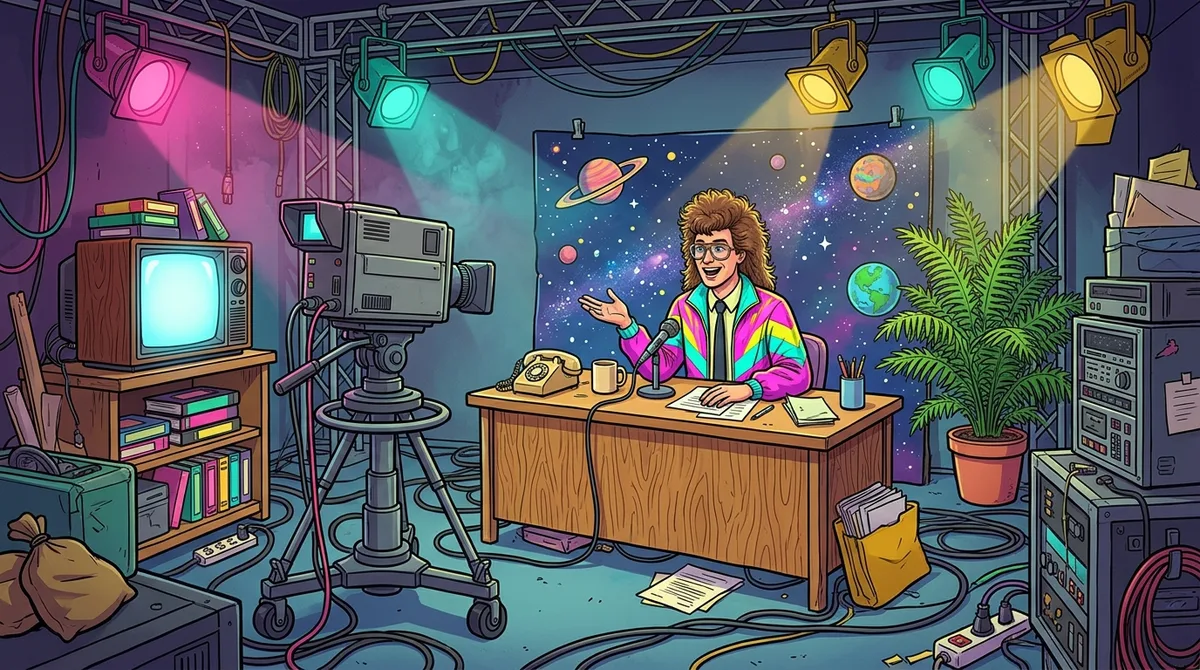
Most of the magic happened in shared studios where regular folks could book time, grab a borrowed camera, and learn the basics from a trainer. The training was usually short and practical, so the learning curve was steep. Expect shaky framing, crackling microphones, and sets built from whatever was lying around the storage closet. Nobody was polishing anything for a glossy network look.
The output was wildly varied. On any given night you might catch a community education program, a local political show, an amateur talk show, or a live music performance. Some shows were earnest, some were bizarre, and a few managed to be both. One of the most famous examples of the weird side was Glenn O’Brien’s “TV Party”, which ran weekly on Manhattan Cable in New York from 1978 to 1982. It mixed a talk-show format with the feel of a party you probably weren’t invited to, and it’s still a favorite for fans of unfiltered 80s TV.
Activist groups saw the potential too. Paper Tiger Television, co-founded by DeeDee Halleck in 1981, went on to become the first nationally distributed public-access program, according to New York University’s archive. Its founders used the format to comment on the media itself, which tells you a lot about how far a homemade show could aim.
So picture a TV lineup where the host might be your dentist, your city council hopeful, or a guy twisting balloons into shapes while explaining the meaning of life. That’s the spirit you’re dealing with.
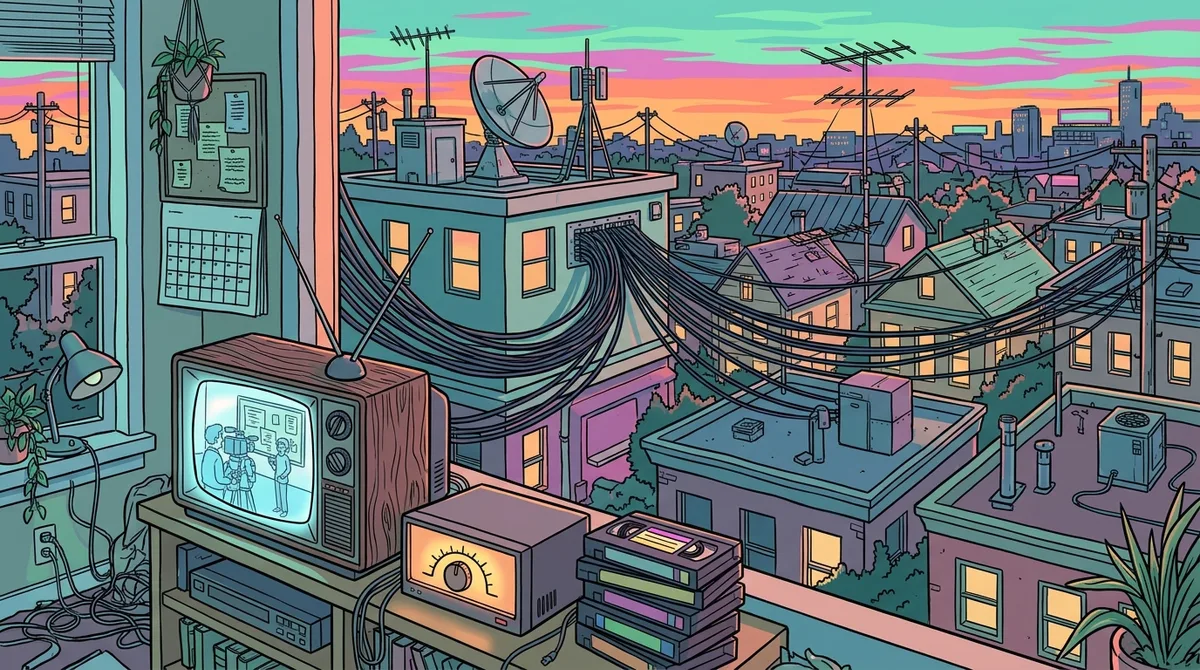
Every city had different channels because the rules were written town by town, not by one national plan. Back in 1972, the FCC’s rules called for one public, one educational, and one local-government channel on cable systems. Then the Supreme Court struck those rules down, and the national blueprint disappeared.
By the early 1980s, public, educational, and governmental (PEG) channels had become common in local cable franchise agreements, according to the Congressional Research Service. Think of it as a cheat code that each town had to enter for itself.
The Cable Communications Policy Act of 1984 gave local franchising authorities the power to require channel capacity for these uses. Under 47 U.S.C. § 531, a town could ask for them in its cable deal. But the law did not force every locality to set up those channels, so one city might end up with a busy community studio while its neighbor got nothing but reruns and the weather radar.
The rules also kept cable companies from playing gatekeeper. Under the same statute, cable operators generally could not exercise editorial control over PEG channel use. The big exception covered programming with obscenity, indecency, or nudity, which operators could refuse. That’s why a balloon-twisting philosopher could land a time slot without a network executive giving the thumbs up.
The end result was a messy patchwork. Access depended on what each local deal promised, how much money the city put behind it, and whether anyone bothered to push for a channel at all. So the scene in San Diego or Century’s neighborhood didn’t look anything like the scene in a town down the road. That uneven map is a big part of why public access feels so strange and so memorable today.
Once you had a camera and a wild idea, the next step was learning to use the gear. Trainers covered the basics in short, practical sessions, and then you were on your own. Your first episode would probably feature wobbly framing, a microphone that crackled like a campfire, and lighting that made everyone look like they were lit by a desk lamp in a basement.
The cost of entry was refreshingly low. Shared studios and borrowed equipment meant that the main thing you had to bring was your own blank videotape. In San Diego, the public-access channels reached about 400,000 homes and filled roughly 35 to 40 hours of airtime every week, so the channels were always hungry for new shows.
Getting that airtime was the real boss battle. Waiting for a regular slot could drag on for a long time, and weekly shows had a hard cap on how long they could run. Imagine finally scoring your slot, then watching your series end just as your audience started to grow.
Facilities were slowly catching up, though. When Beverly Hills broke ground on its first public-access studio in 1989, the Los Angeles Times reported that the planned building would cover 5,000 square feet. It included three cameras, editing rooms, offices, and a training center. Airtime was to be assigned first come, first served, so the early bird really did get the worm.
Picture a neon-lit studio packed with aspiring hosts, each clutching a box of tapes and a hopeful grin. A bigger studio meant more shows, more practice, and maybe a few more hours of sleep for the crew. Not bad for a town better known for palm trees and celebrity mansions.
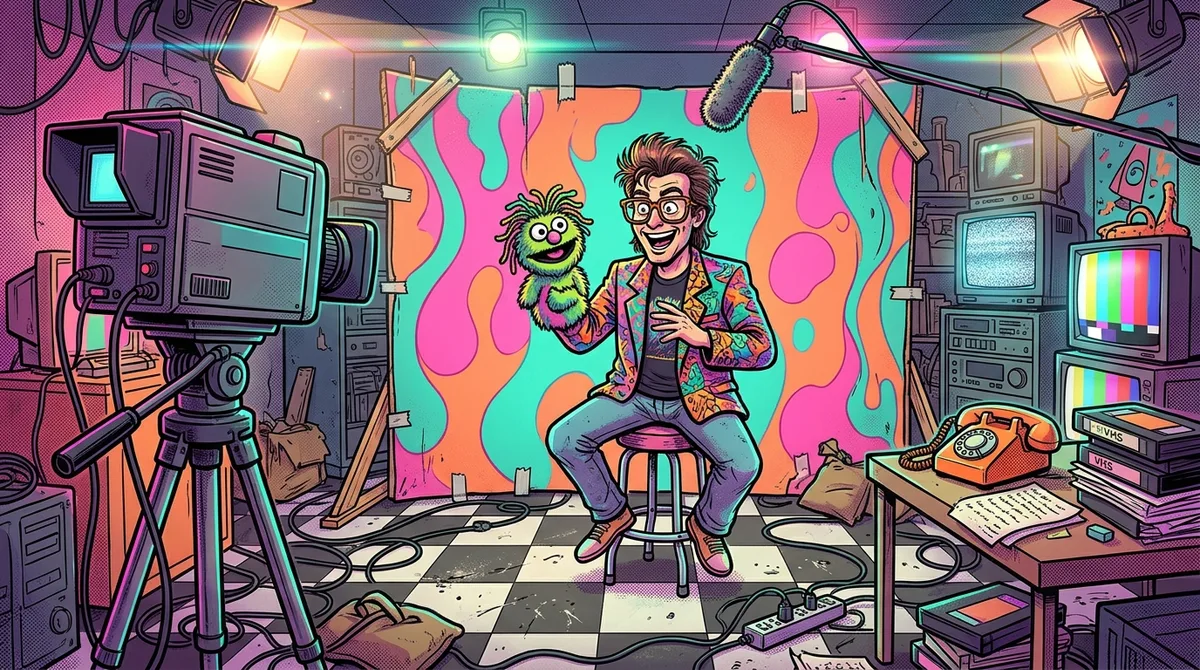
Public access offered a grab bag of strange shows, and you never knew what was coming next. One minute you might be watching a lecture, and the next, a lounge act. The local schedule had room for almost anything a neighbor could dream up.
Here’s a sampler of what could pop up on the channel:
Music and education shared the same schedules, so a mellow guitar set might be followed by a how-to segment with no network executive in sight. That mix is a big part of the charm. Nobody had to make the whole lineup match.
If you want the best example of weird meeting cool, look at Glenn O’Brien’s “TV Party.” It ran weekly on Manhattan Cable in New York from 1978 to 1982, blending talk-show chatter with the chaotic energy of a house party. Picture a late-night gathering where the guests, the drinks, and the cameras all seemed to be improvising together.
Some groups used the format to make a point. Paper Tiger Television, co-founded by DeeDee Halleck in 1981, grew into the first nationally distributed public-access program. The group then launched Deep Dish Television in 1986, which became the first grassroots satellite network in the United States. Suddenly, homemade shows could reach far beyond their home town.
Flip the dial past the balloons, the bongos, and the earnest local politicians, and you’d find a channel that felt like it had been built by a bunch of hobbyists with a camera, a dream, and a box of blank tapes. That’s the magic of the era.
Yes, though the link is one of attitude and style rather than a straight line of influence. Public access never handed anyone a playbook, but it left behind a look that online creators would later recognize: an ordinary person pointed at a camera, a set built from spare parts, and a host talking straight into the lens as if you were the only viewer on the couch.
Deep Dish Television shows how that DIY spirit went national. Paper Tiger Television founded it in 1986, and it became the first grassroots satellite network in the United States. Before that, a homemade show usually stayed inside its own city’s cable system. Deep Dish let local producers share community-made work far beyond one town, so a program shot in a single neighborhood could land in living rooms across the country. For a scene built on shoestring budgets and borrowed gear, that was a very big deal.
Now think about the vibe of today’s livestreams, vlogs, and meme-ready clips. Shaky handheld shots, awkward pauses, and a host who looks like they just wandered in from the next room all feel familiar to anyone who stayed up late with a public access lineup. The unpolished look signaled honesty, and online creators quickly learned that viewers often trust a messy, personal video more than a glossy one.
Did every YouTuber sit down to watch balloon-twisting philosophers? Probably not. The overlap is in the playbook: grab a camera, talk to the audience like an old friend, and let the weirdness be part of the appeal. Public access just did it first, with a lot more crackling microphones and a lot fewer filters.
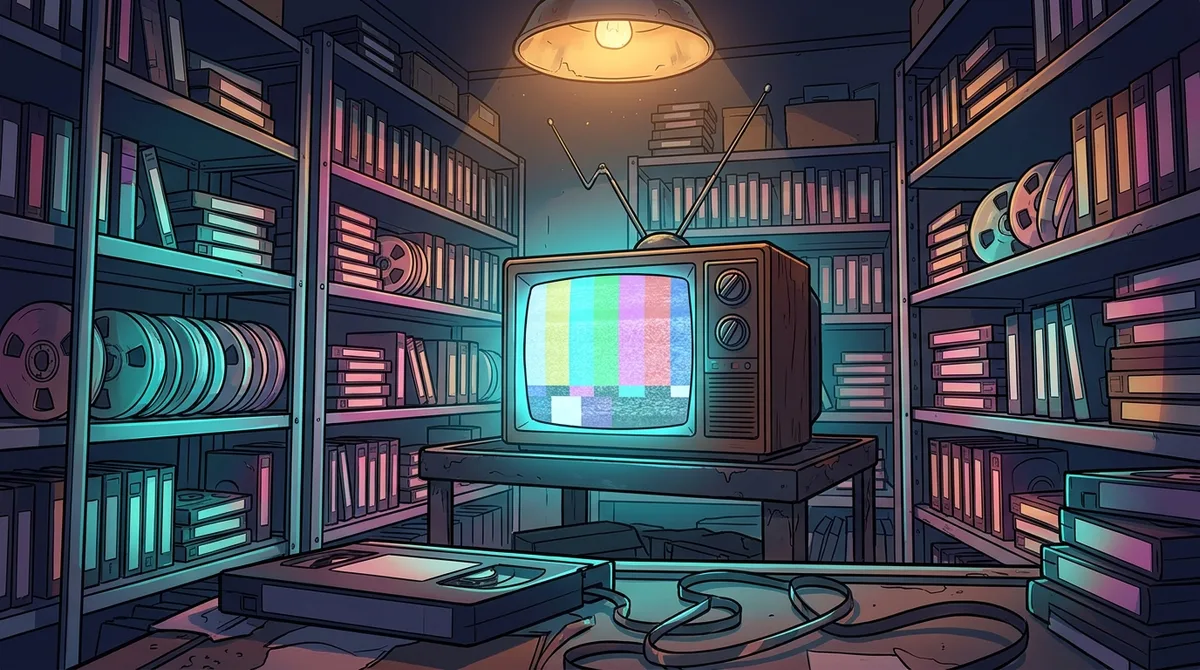
Most of those old tapes are still tucked away on archive shelves, in closets, and in dusty storage rooms, but people are finally digging them out. Archivists are inventorying the collections and converting fragile videotapes into digital files before the magnetic tape gives up the ghost.
Portland is a good example. The Oregon Historical Society’s 2022 account says its inventory of Portland public-access videotapes totaled more than 1,400 items. Many of those recordings come from the Video Access Project, which ran from the early 1980s into the 1990s, and digitization work on its material is underway. That means the wild shows nobody bothered to save could one day stream on your laptop.
Atlanta’s story is even more hopeful. Channel 24 launched in the 1980s, went off the air in 2023, and came back in January 2025 as ATL Community Media. The relaunch came with a new production studio at 2 Peachtree Street, so the spirit of the old community studios is getting a second shot. Let’s hope the next generation of local hosts brings the same crackling microphones and bold ideas, with a few more lights this time.
Start close to home. Local historical societies and library archives are digitizing their collections, so search their online catalogs and ask a librarian what video they hold. Many of these collections are still being sorted, which means some of the best finds are waiting to be discovered.
Then follow this trail:
Maybe your own pilot episode will end up in an archive someday. Pick a topic, borrow a camera, and let your balloon-twisting philosophy shine.
Start by checking whether your own town ever had a public access channel. Those channels were set up city by city, so the answer depends on your local cable deal. Search your city or county website for “PEG” or “public access” along with your cable provider’s name. Franchise agreements are often public records, so you can see whether a channel was promised and who was supposed to run it.
Next, call your nearest public library and ask the reference desk whether it holds any local video from the 1980s or 1990s. Some branches have dusty boxes of community tapes that never made it online. Ask about the local historical society too, since many of them keep recordings from neighborhood studios.
If you want to see what the scene looks like today, check the schedule for ATL Community Media in Atlanta. The Atlanta Journal-Constitution covered the channel’s return, and its new studio at 2 Peachtree Street is a good place to start. Compare what you find with the wild, wobbly shows you’ve been reading about.
Then grab a bowl of popcorn, dim the lights, and let the crackling microphones do their thing. You might spot a balloon-twisting philosopher or two. Just don’t be surprised if, after a few hours of neon nostalgia, you start sketching a pilot of your own.