
You finally scored that gorgeous, neon-glowing 80s keyboard off the internet, but now it sounds more like a dying dial-up modem than a synthwave masterpiece. Before you press F to pay respects to your bank account, getting a clear picture of repair costs is key. Understanding the actual vintage synthesizer repair cost ahead of time can save you from a major case of sticker shock when you hand over your noisy baby. Fix-it wizardry isn’t cheap when retro parts are rarer than a shiny Pokémon, but knowing what to expect keeps your wallet safe.
Most electronic wizards charge around $100 to $180 an hour to work their magic on those ancient circuit boards. You will usually drop a small bench fee upfront just for them to look under the hood, though that cash almost always goes toward your total bill. If you are trying to revive a boss-level synth, expect a bigger deposit since those sacred old components are super hard to track down. Getting your retro rig back to making face-melting laser sounds is totally doable once you know how the pricing works.
Before you can unleash those buttery neon soundscapes or finish your ultimate synthwave masterpiece, your ailing analog beauty needs a proper checkup from a wizard of legacy electronics. Walking into a repair shop with a dusty keyboard isn’t like buying a budget software plugin, because tech gurus charge a bench fee just to look under the hood. You should expect to pay an upfront diagnostic fee between $100 and $200 right at the counter before any real fixing begins. Luckily, this initial entry fee is usually credited directly toward your total labor bill if you decide to go ahead with the repair. Think of it like paying a cover charge at a retro arcade, except this token goes straight into saving your hardware from digital death.
Once the technician pops open the hood and diagnoses the glowing electronic madness inside, the standard hourly clock starts ticking. Skilled synth repair specialists generally command around $100 to $180 per hour for their hard-earned wizardry. If you happen to be on a strict studio deadline and need emergency service to save an active recording session, prepare for rush rates hitting $200 to $250 per hour. Tracking down loose solder joints or leaking capacitors takes genuine patience, so those labor hours add up faster than points in a high-score run. Paying for expert labor ensures your vintage gear stays alive rather than becoming an expensive, non-functional paperweight.
Things get even wilder if you walk into the shop carrying one of the legendary heavyweights of the analog era. Complex multi-voice polysynths are notorious final boss fights for hardware techs. Most shops demand a hefty intake deposit of $500 or more just to accept these vintage monsters onto their workbench. Total repair invoices for these complex beasts easily breach $2,000 once you factor in extensive recalibration and hard-to-find replacement parts. Budgeting carefully for these legacy repair costs is the ultimate key to keep your studio rig flexing pure 1980s power.
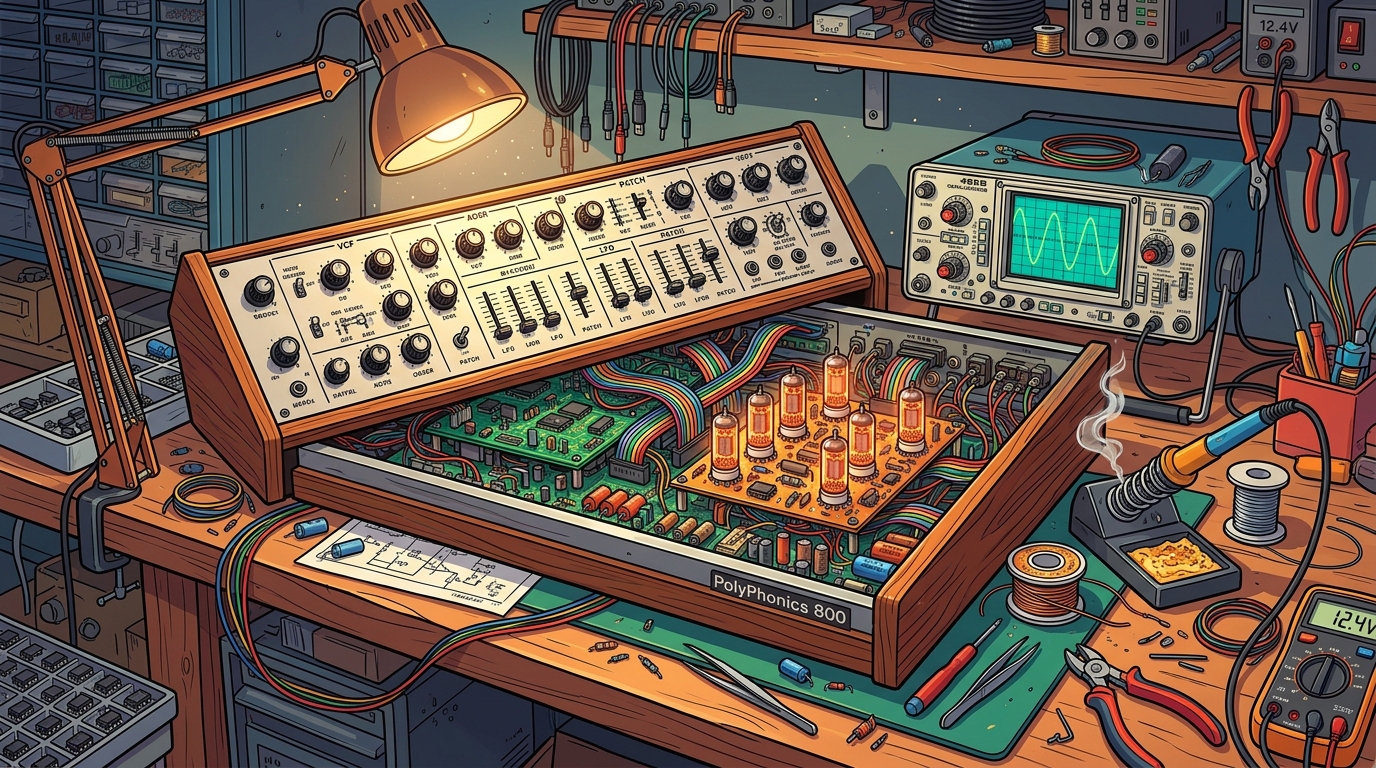
Keeping your glowing neon dream machine humming standard synthwave basses does not always require selling a kidney. If your iconic 80s synth just needs a fresh internal battery, a thorough contact cleaning, or a simple recapping, you are usually looking at a minor bump in the road. Most wizard technicians charge a basic bench or diagnostic fee between $100 and $200 upfront just to take a look under the hood. Luckily, that initial fee almost always gets applied directly toward your final bill when they fix the problem. Standard bench labor typically runs between $100 and $180 an hour, which is a small price to pay to get those sweet retrowave arpeggios flowing through your studio monitors again.
When you decide to rescue a legendary analog final boss, prepare your wallet for an epic side quest. These giant, voice-card-stuffed beasts require specialized wizardry, rare legacy parts, and endless hours of painstaking calibration. Shops usually demand an upfront intake deposit of $500 or more just to tackle these complex polysynths because the total bill can easily clear $2,000. If you need a total restoration overnight because your album drop is looming, emergency studio rates can jump up to $250 an hour. Restoring a vintage polysynth is definitely a serious flex, but knowing the cost tiers helps you budget before your credit card catches fire.
Ultimately, paying skilled techs to revive dead analog circuitry is the price we pay for pure nostalgic bliss. You cannot recreate that true hardware warmth with software plugins alone, no matter how shiny the digital interface looks. Budgeting for regular maintenance keeps your retro setup performing at maximum power during late-night jamming sessions. Think of every dollar spent as leveling up your sonic arsenal for the ultimate cyberpunk soundtrack. Your vintage gear will thank you by pumping out silky smooth synth pads for another forty years.
You just dropped off your beloved 1983 analog polysynth, dreaming of fat retro basslines, only to learn the repair queue is longer than the wait for a new video game sequel. Why does fixing a classic electronic keyboard take three or four months? Finding skilled bench wizards who actually understand legacy analog circuits is remarkably tough these days. Sourcing rare replacement chips manufactured four decades ago also turns simple fixes into epic quest lines. To make matters worse, every synthwave producer in town is dumping their vintage gear at the exact same local shop, creating a massive backlog.
When your record label is banging on your door and your main synth starts blowing smoke, waiting until next season is simply not an option. That is the exact moment you hit the panic button and pay a heavy rush fee to cut right to the front of the line. Expedited service often jacks up the standard hourly labor rate to a spicy $200 or $250 per hour. If you bring in a super complex, highly sought-after monster synth, shops will likely demand a fat initial deposit of $500 or more before turning a single screw. Coughing up that extra cash hurts, but saving your album deadline from total disaster makes that eye-watering fee feel like a necessary boss-fight expense.
Keeping your gear in top shape means balancing your bank account against your current level of studio urgency. Luckily, that upfront diagnostic fee usually counts directly toward the ultimate labor cost once technical work begins. Expecting a lightning-fast repair turnaround without paying those extra rush fees is like expecting to beat a retro arcade game on your very first try. Planning your recording calendar around realistic repair timelines will save you from major stress down the road. Your wallet will stay much happier, and your legendary analog gear will keep pumping out those sweet 80s soundscapes for years to come.
Keeping your favorite glowing analog beast alive definitely requires some serious digital gold. Between those upfront diagnostic fees and hourly labor rates that rival a rocket scientist, vintage synthesizer repair costs can feel like a boss battle for your bank account. However, paying a skilled tech to fix those leaky capacitors and sticky keys is the ultimate level-up for your retro music setup. That warm, neon sound is worth every single penny when you finally hit that lush synthwave chord progression. With a little planning and a realistic budget, you can keep your beloved hardware humming without living on instant noodles for the next six months.
You do not need to let scary maintenance bills ruin your rad music-making dreams or blast your synthwave budget into outer space. Taking care of your legacy hardware with regular tune-ups will prevent massive invoices down the road and keep your studio vibes immaculate. While you wait for your tech to finish resurrecting your favorite gear, you can still surround yourself with the ultimate retro aesthetic energy. Taking these fun steps keeps your retro sound alive while ensuring your studio stays as cool as a midnight neon drive.