
Published VHS transfer prices range from a promotional $14.99 per tape to $40 per tape, before extras. Your final bill depends on output quality, tape count and length, shipping, and whether you want a USB drive, enhancement, or faster processing. A $12.49 return-shipping fee may apply. Processing estimates range from about one week after approval to four to six weeks for standard service. The sticker price is just the opening credits. Your real mission is to rescue your home-video lore without letting surprise fees steal the show.
Before choosing, compare what the quote includes: an SD, Full HD, or Ultra HD file; digital delivery or physical media; and what happens if a tape is blank, damaged, or won’t transfer. A low per-tape price may be less appealing if your preferred file format requires a separate USB drive or another add-on. Published offers use different pricing models, so compare the full order total instead of lining up headline prices like high scores on an arcade leaderboard. The goal is a usable digital copy at a price that fits your tape count and budget, with the turnaround and return of your originals clear before you send anything off.
Published VHS transfer prices range from a promotional $14.99 per tape to $40 per tape. Your final amount depends on the service, the digital output you choose, the number of tapes, and any extras. That leaves plenty of room between the bargain-bin price and the deluxe, neon-lit version of your home-video rescue.
Published examples in between include $19.99 for SD, $29.99 for Full HD, and $39.99 for Ultra HD. Other common price points include $19 or $24 per tape for smaller orders, with a lower per-tape price for larger orders. Those figures give you a useful comparison point, but they don’t guarantee that every tape will cost the same. Some prices are higher for longer tapes or physical copies.
Check what the per-tape price leaves out. Shipping, a required USB drive, AI enhancement, and faster processing may each add to the bill. Digital delivery may be included, while physical copies may cost extra. A low transfer price can glow like a high score on an arcade screen, then lose some sparkle when add-ons appear at checkout.
Before choosing, compare the checkout total, the deliverable you’ll receive, the turnaround estimate, and the rules for blank, damaged, or untransferable tapes. Check whether the final file is SD, Full HD, or Ultra HD, and whether it arrives by download, on a USB drive, or on a DVD. Policies for tapes that cannot be transferred can matter just as much as the headline price.
Timing matters, too. The National Archives says magnetic tapes stored under archival conditions commonly show decay that is difficult to handle within about 10–50 years, depending on the tape’s composition, storage, and handling. In other words, your family’s camcorder-era lore isn’t getting more durable with time. Comparing costs now can help you choose a transfer plan before those birthday parties, school plays, and mysterious living-room dance battles fade further into the analog fog.
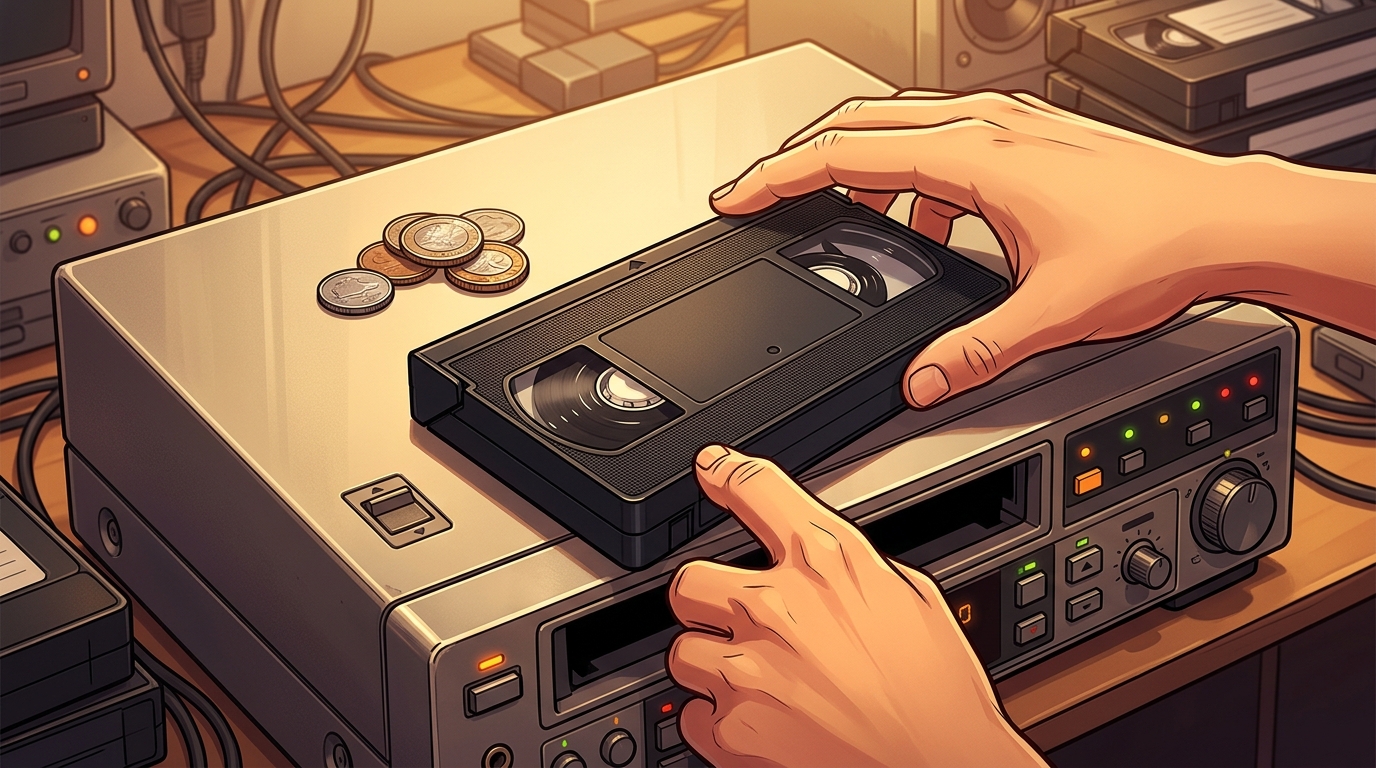
VHS transfer pricing commonly uses a per-tape rate, a kit size, or a volume tier, and the quoted amounts include different files, physical copies, and processing options. The comparison below shows why a promotional price, a kit price, and a per-tape rate aren’t interchangeable.
| Pricing model | General price example | What to note |
|---|---|---|
| Per-resolution pricing | SD: $19.99 per tape; Full HD: $29.99; Ultra HD: $39.99 | Prices may be the same regardless of tape length. Return shipping may cost $12.49 per order. Full HD and Ultra HD may require at least one $14.99 USB drive. A typical processing estimate is 2–3 weeks after items arrive. |
| Kit-based pricing | Starter: $69.98 for up to 2 items; Family: $319.98 for up to 10 items | Standard processing estimates are 4–6 weeks. Expedited processing may cost $37.99 for an estimated 2–3 weeks; rush processing may cost $67.99 for an estimated 1 week. |
| Promotional per-tape pricing | $14.99 per videotape with code SAVE50, compared with a displayed regular price of $29.99 | Promotional AI enhancement pricing may be $4.99 per tape. Some turnaround estimates are about one week after the box arrives and the order is approved. |
| Volume-tier pricing | $24 per tape for the first 10; $19 each for 11 or more | Volume-tier rates may cover standard VHS, VHS-C, Hi8/8mm/Digital8, MiniDV, and Betamax transfers. A secure-service add-on may cost $5 per item and include a choice of one USB thumb drive or one DVD set, plus written labels transcribed into filenames. |
| Format-specific pricing | VHS: $19 per tape; VHS-C: $25 per tape | Some VHS/VHS-C rates include a Full HD MP4 file and chapter markers. |
| Length and minimum pricing | NTSC VHS/VHS-C: $40 per tape | A Summer 2025 fee schedule lists a $15 surcharge for tapes longer than 1.5 hours and a typical $60 minimum for transfer jobs. |
A kit priced at $69.98 covers up to 2 items, while a $319.98 kit covers up to 10. A $14.99 promotional rate requires code SAVE50; a $19 volume rate applies only at 11 or more tapes. Compare the price for the number of tapes you actually have, rather than treating every headline figure like the same arcade token.
File quality and physical delivery can change the match, too. Per-resolution pricing separates SD, Full HD, and Ultra HD rates, and Full HD and Ultra HD options may require a USB drive. Some VHS/VHS-C rates include a Full HD MP4 file and chapter markers. A $5-per-item secure-service add-on may include a choice of USB or DVD and put written item labels into filenames, while AI enhancement may be available as a separate per-tape option.
Tape condition can affect the bill as well. Some per-resolution pricing policies do not charge for blank tapes or tapes that fail to transfer, and may include tape repair and case replacement at no additional charge. Other pricing may add a charge for longer NTSC VHS/VHS-C tapes or set a minimum job cost. Those details matter when your box contains a mix of home movies, mystery recordings, and tapes that may be blank.
Match the pricing model to your priorities: a small batch may fit a per-tape rate or starter kit, while a larger batch may benefit from a volume tier or a kit with more capacity. If file quality matters most, compare the stated output rather than the price alone. If timing is the main quest, check the processing estimate and the price of faster service before choosing.
Your total can include the transfer fee, shipping, physical media, enhancement, expedited processing, and charges related to tape condition or repair. A per-tape price is only useful when you know which costs are already included and which might arrive later like an unexpected boss fight. Confirm what the finished output actually is. SD, Full HD, and Ultra HD describe picture quality; MP4 describes a digital file format. A USB drive stores that file, while a DVD is a physical disc. If you want to watch videos on a computer or TV, check that the quoted file type and delivery method work for your setup. Some offers require you to buy a USB drive for Full HD or Ultra HD files. Others include a digital file in the transfer price or sell a USB drive or DVD set as an add-on. Enhancement, such as AI enhancement, may also be charged per tape. The transfer and the extras are separate line items, even when they appear together in one shiny package. Before requesting or comparing quotes, write down the details of your order. Use the same checklist with each provider so you’re comparing matching offers, not a bargain price against a deluxe package.

Yes. Some transfer prices stay the same regardless of runtime, while others add a surcharge for longer tapes, and tape format can have its own rate. A length-independent price is easier to estimate when your recordings run long, but it doesn’t mean every cassette in your box costs the same. The fine print can still be lurking like a hidden level.
Some published prices add $15 for tapes longer than 1.5 hours. A short family birthday video and a longer school concert could therefore land at different prices, even if both are on VHS. Other pricing models charge the same per tape regardless of length, so estimating runtimes helps you spot which quote is likely to fit your stack.
Format matters, too. Published rates include $19 per tape for standard VHS and $25 for VHS-C. VHS-C may look like a tiny cassette from the neon arcade era, but a quote for standard VHS doesn’t automatically cover it at the same price. Other video formats can also have separate rates, so check the format list before assuming every cassette gets the same treatment.
An order minimum can change the math when you have only a few tapes. A stated $60 minimum means a small batch may still cost at least $60, even if multiplying the per-tape rate by your tape count comes out lower. Check for a minimum before comparing a short stack against a per-tape offer with no stated minimum.
Compare the actual deliverables as well as the price label. SD, Full HD, and Ultra HD describe picture resolution; MP4 names a digital file format; chapter markers can help you jump to sections within a recording. A Full HD MP4 with chapter markers offers different features from an SD file without markers, even if the per-tape fees look close. Check whether the output quality, file type, and navigation features are included or cost extra.
Before comparing quotes, make a quick inventory: count standard VHS, VHS-C, and any other video formats, then estimate which tapes run longer than 1.5 hours. A simple list of formats and likely runtimes can reveal a surcharge, separate format rate, or minimum before it turns your budget into a surprise boss battle.
Yes, you can transfer VHS at home if you have compatible playback equipment and are willing to handle the setup and file management. DIY conversion needs a VCR or camcorder that can play your tape, plus a way to capture its video into a digital file on a computer. If you don’t have equipment that works with your tapes, a mail-in or local transfer service may be the more straightforward route. No need to summon a rare VCR from the digital wilderness. The trade-off is money versus time and setup effort, not a guaranteed bargain. With DIY, you handle the connections, recording, and checking yourself. A service takes on the transfer work, but you’ll need to compare its price and terms. The right choice depends on what equipment you already have, how many tapes you’re preserving, and whether you’d rather spend an afternoon troubleshooting or hand the task to someone else. DIY also means managing the whole capture process. You’ll need to get each tape playing, start and monitor the recording, and make sure the finished file is saved where you can find it. A tape can hold a long family event, so plan for enough storage space rather than discovering mid-transfer that your computer is full. If you have several tapes, the hands-on time can add up: your home-video marathon may be less “instant nostalgia” and more “please don’t let the connection drop.” Plan for backup storage, too. Keep a copy somewhere separate from the device you use every day, so a lost or failed computer doesn’t take the digital versions with it. When comparing services, check the actual deliverable, such as a downloadable file or physical drive, and the handling terms, including how original tapes are returned and what happens if one won’t transfer. A clear quote is useful, and a clear plan for your files is useful, too. If the tapes stay at home, store them in a cool, relatively dry, clean, stable environment. The Library of Congress home-media care recommendations give about 35–40% relative humidity as a guideline for a home collection. Think less sun-baked attic, damp basement, or tape tossed beside the neon lava lamp, and more steady conditions away from dust and moisture. That care matters whether you’re preparing tapes for a service or keeping the originals after a DIY transfer.

Shipping and turnaround are easiest to compare when you weigh the return cost and the clock’s starting point instead of choosing the fastest estimate by default. Return shipping may be a separate per-order fee, with published pricing that includes $12.49. Kit pricing or other bundled pricing may include parts of the process, so check whether the price covers only transfer capacity or includes items such as digital delivery or return shipping.
Published estimates use different starting lines. Some say most orders are completed in about one week after the box arrives and the order is approved. Other estimates are 2–3 weeks after items arrive. Standard processing estimates for kit-based pricing range from 4–6 weeks, with expedited processing priced at $37.99 for an estimated 2–3 weeks and rush processing at $67.99 for an estimated 1 week.
Those numbers aren’t a clean race unless you compare the wording, too. One estimate starts when the box arrives; another starts after arrival and order approval. An approval step can affect when processing begins, so check whether you need to review a quote or confirm an order before the clock starts. A neon stopwatch is less useful when each provider starts it at a different checkpoint.
Faster processing may be worth the extra charge if you have a deadline, but standard service may suit you just fine if you aren’t racing a neon countdown timer. For a box of family birthdays and camcorder-era dance moves, the best fit may be the one with clear terms and a return plan, not the one with the flashiest speed claim.
Before packing irreplaceable recordings, read the service’s instructions for labeling and protecting tapes, and check whether tracking is available for the outgoing shipment and return. Confirm how original tapes will be sent back, whether return shipping is charged separately, and what happens if a tape is blank, damaged, or cannot be transferred. Some published policies do not charge for blank tapes or tapes that fail to transfer, but policies can differ. Keep the order details and any tracking information together, so your memories don’t vanish into the shipping dimension while you’re waiting for their digital encore.
Choose your plan by naming the constraint that matters most: total spend, output quality, batch size, or deadline. Then write one request you can use for each provider: “I have [number] VHS and [number] VHS-C tapes. I want [SD, Full HD, or Ultra HD] files delivered by [download, USB, or DVD]. My deadline is [date].” That makes it easier to compare like with like instead of letting a surprise upgrade hijack the budget.
If you have more than 10 tapes, check whether a volume rate fits your mix. If a deadline is driving the choice, compare the faster processing options with the date you actually need the files. If output quality is your priority, calculate the price for your selected quality tier together with any required USB drive.
Before sending tapes that contain TV shows, films, or music you didn’t create, consider whether your intended copying or sharing needs permission from the rights holder. Reproducing or distributing protected material may require permission beyond uses allowed by fair use or statutory exemptions.
Send the same written request to your finalists and ask for the full order total, processing estimate, and return-shipping terms. Choose the quote that meets your must-haves without paying for extras you don’t want.