Confused by sync licensing vs royalty free? You’re not alone. Music rights can feel like a boss battle with a neon-haired final villain. Sync licensing is permission to pair music with video, while “royalty-free” usually describes how you pay for that permission, often through a one-time fee or subscription. So yes, royalty-free music can still need a sync license, because copyright doesn’t vanish in a puff of ’80s smoke.
Choosing the right track means knowing what your license actually covers, from YouTube clips and podcasts to ads, films, games, and beyond. You may need permission for both the song itself and the specific recording, so pressing play is not the same as pressing “legally cleared.” Get the details right, and your project can glow like a perfect synthwave sunset instead of triggering a copyright-claim jumpscare.
Sync licensing and royalty-free music often get treated like rival arcade fighters, but they are not really fighting in the same arena. Sync licensing is permission to pair music with timed visuals, such as a film scene, ad, game trailer, YouTube video, or neon-soaked montage. Royalty-free usually describes how you pay for that permission, often through a one-time fee or subscription instead of a new payment every time the track plays. In other words, sync answers “What are you allowed to do?” while royalty-free answers “How does the bill work?”
A royalty-free track is usually not free, copyright-free, or an all-access cheat code. You still need a license, and that license may limit where, how, or for how long you can use the music. Many royalty-free libraries offer a pre-cleared sync license, which can make the process faster and easier for video, advertising, games, and online content. Before you press start, check whether the license covers commercial use, paid ads, client work, social platforms, games, territories, and monetization.
Traditional sync licensing can involve a custom deal based on the project, audience, placement, and length of use, while a royalty-free license may offer clearer upfront pricing. Neither option is automatically better, because the right choice depends on your budget, project size, and how much control you need over the music. You may want a flexible, ready-to-use track for a quick campaign, or a specific song that brings full boss-level personality to a major production. Understanding the difference helps you compare rights and costs without accidentally mistaking a neon sign for a green light.
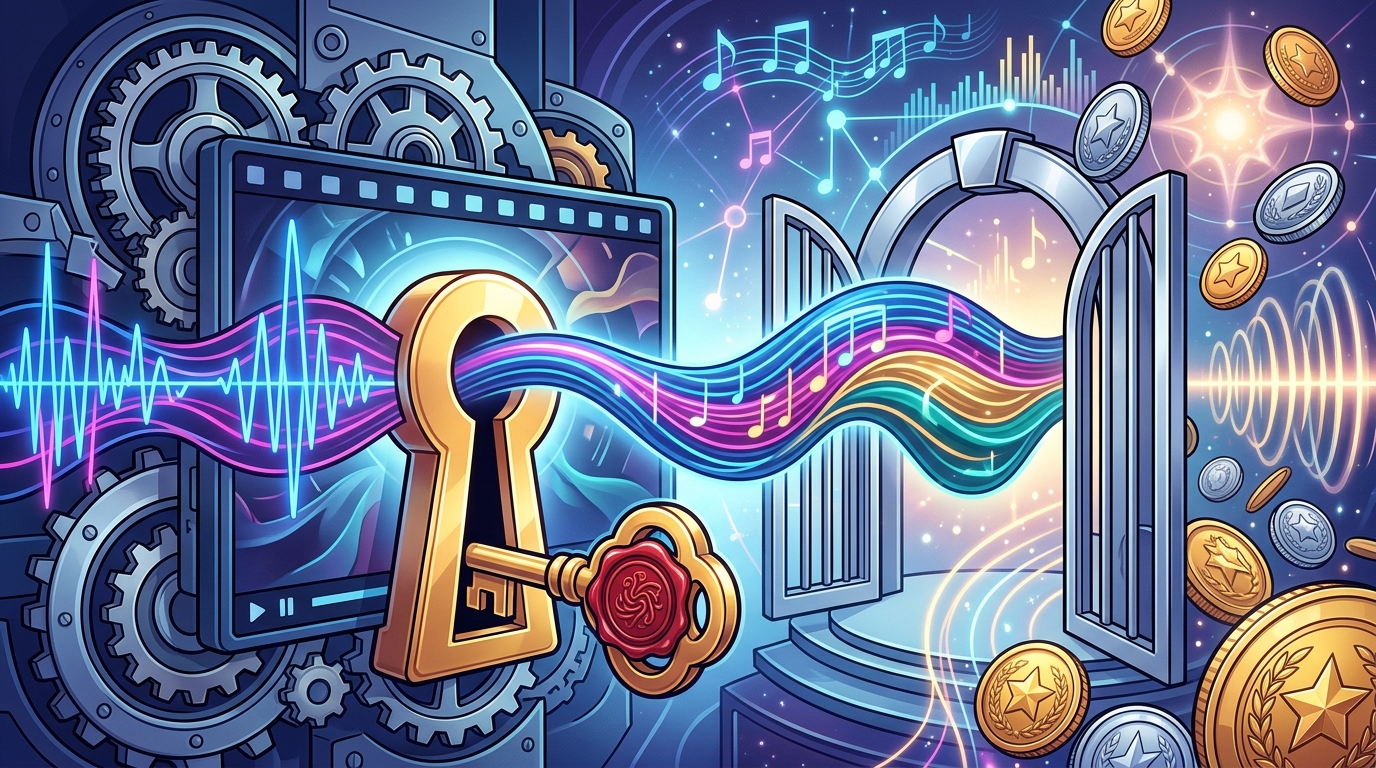
Sync licensing is permission to pair music with timed content, such as a film, ad, game, podcast, or YouTube video. Think of it as the backstage pass that lets your neon montage and synthwave anthem enter the same arcade cabinet. Royalty-free describes how you pay for that permission, usually through a one-time fee or subscription instead of a new charge every time someone watches your project. Sync licensing is the usage right, while royalty-free is the payment model, not a showdown between two rival ’80s bands.
A royalty-free track can still include a pre-cleared sync license, making it a convenient choice when you need music without chasing paperwork through a maze of fax machines. Your purchase or subscription may cover approved uses across online videos, ads, games, or other media, depending on the license terms. You should still check the details, including where the project can appear, how long the license lasts, whether paid advertising is allowed, and how many projects you can use it in. “Royalty-free” does not mean free, copyright-free, or unlimited, because even the coolest pixel hero needs boundaries.
For many projects, royalty-free music offers predictable costs and a faster path from creative idea to final cut. Traditional sync deals may involve negotiating the track, the project, the audience, and sometimes separate rights for the composition and sound recording. That route can make sense for major campaigns or highly specific songs, while a pre-cleared royalty-free sync license may suit your next trailer, livestream, or boss-battle montage. Before you hit publish, confirm that the license covers every use you need, so your video does not get ambushed by a copyright claim in the final level.
When you place a commercially released song into a video, ad, game, or other timed project, you usually need two clearances. The first covers the musical composition, meaning the lyrics, melody, and underlying song, often controlled by the songwriter or music publisher. The second covers the master recording, meaning the exact recorded performance you want to use, usually controlled by a label or recording owner. Think of it as needing both the game cartridge and the console before the ’80s boss fight can begin.
A sync license gives you permission to pair the composition with moving images or timed action, such as a neon-heavy trailer, a product ad, or a character montage in a game. Master-use permission lets you use that specific recording, including the familiar vocals, drums, and synths that make fans shout, “That’s the one!” If you record your own version, you may avoid clearing the original master, but you still need permission for the composition. Either way, the project’s territory, length, audience, media, and paid promotion can affect the price and paperwork.
Royalty-free music is a different idea because it usually describes how you pay rather than which right you receive. A one-time fee or subscription may give you a pre-cleared sync license for an eligible track, but royalty-free does not mean free, copyright-free, or unlimited. Check whether the license covers client ads, games, broadcast, social platforms, paid campaigns, and future edits before your soundtrack powers up. With a popular commercial song, you typically negotiate composition and master rights separately, while a royalty-free track may bundle the needed permissions into one simpler license.
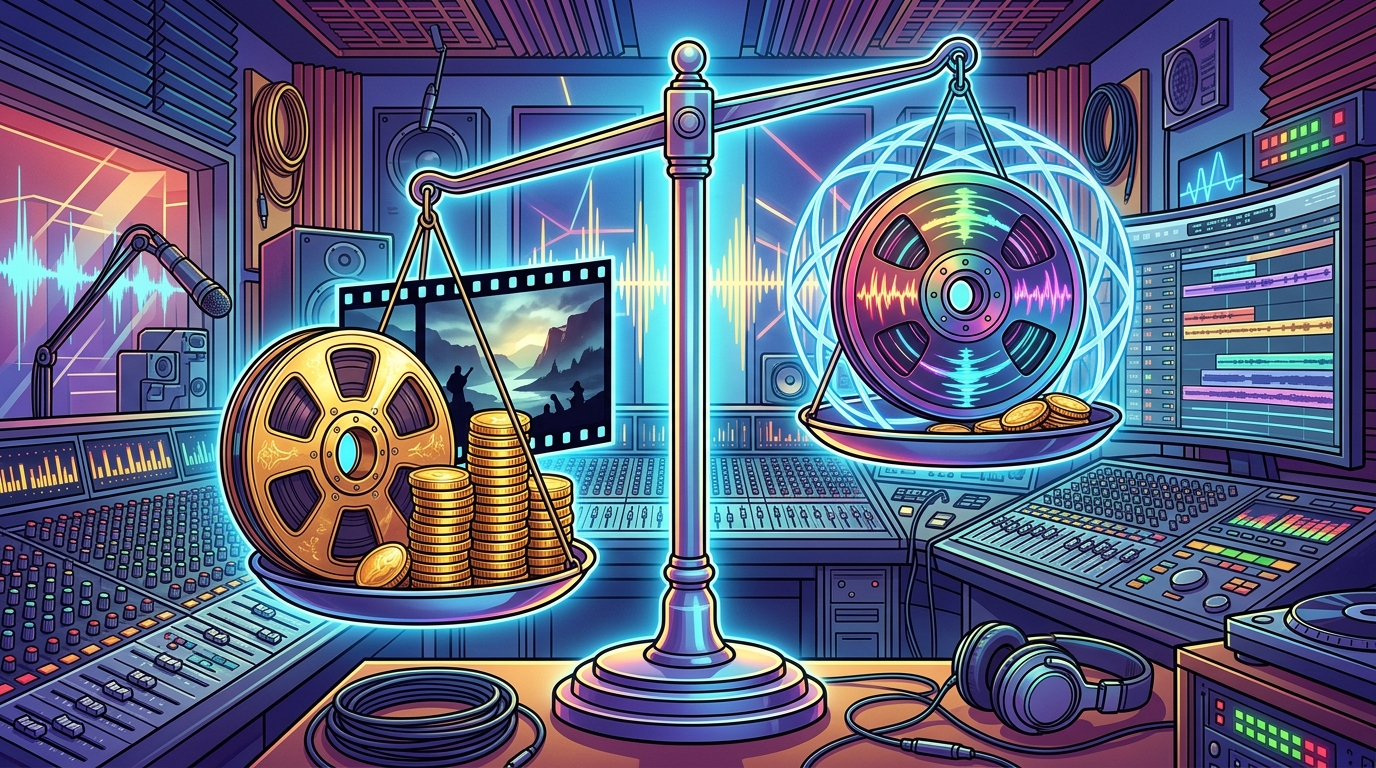
“Royalty-free” does not mean “use it everywhere forever,” sadly, because even neon synths need rules. Your license may limit the platforms where a track can appear, the size of your audience, the type of project, or the countries where people can watch it. It may allow a YouTube video but exclude paid advertising, broadcast television, games, or theatrical releases. Monetization can also be restricted, and sharing the file with clients, coworkers, or other creators may count as redistribution. Always check whether the license covers your exact project before the music drops like an ’80s arcade boss.
A negotiated sync license gives you more room to shape the deal around your campaign, film, game, or series. You might pay an upfront fee for specific media categories, territories, platforms, and a defined term, such as one year or the life of the project. A larger audience, global advertising campaign, or high-profile release can raise that fee because the music reaches more ears and eyeballs. Some agreements also require additional royalties, renewal fees, or payments when you expand into new countries or media. Royalty-free pricing is often simpler, while sync licensing is more customizable, like choosing your power-up loadout before the final level.
The better option depends on how predictable and valuable your usage needs to be. For a small online video with limited distribution, a pre-cleared royalty-free sync license may keep costs tidy and paperwork low. For a major ad, film, television placement, or game launch, a negotiated sync deal can provide clearer rights and fewer surprises when the project goes worldwide. Compare the upfront price with the limits on monetization, audience, territory, term, and redistribution, then confirm whether both the composition and recording are covered. A cheap track with the wrong permissions can become a very expensive plot twist.
Royalty-free music is usually the fast lane when you need a track today, a clear price, and fewer clearance headaches. You pay a one-time fee or subscription, then use an approved track within the license terms, making it a strong fit for online videos, games, ads, and social posts. Just remember, “royalty-free” does not mean free, copyright-free, or unlimited, because the fine print still runs the arcade. Choose it when speed, predictable costs, and simple licensing matter more than using a famous song.
Custom sync licensing is the better route when a recognizable song, exact mood, or major brand moment is the whole point of the scene. Sync means getting permission to pair music with timed content, and a popular commercial recording may require clearance for both the song itself and the specific recording. That process can cost more and take longer, but the right track can deliver instant nostalgia, stronger emotional impact, and a full neon-title-screen level of attention. Royalty-free is the practical power-up, while custom sync is the boss battle with bigger creative rewards.
Before the credits roll, check the license so your project does not get muted, blocked, or sent back to the legal dungeon. Confirm that it covers your platform, territory, project type, audience, and length of use, including paid ads and client work. Also verify whether you can edit, loop, remix, or use the music in future versions, and keep your receipt and license records handy. Use this quick checklist:

Sync licensing and royalty-free music are not true opposites, despite sounding like rival arcade bosses. Sync licensing is permission to pair music with timed content, such as a video, advertisement, game, film, or podcast. Royalty-free usually describes the payment setup, often a one-time fee or subscription instead of a new usage payment every time the track plays. In many cases, royalty-free music includes a packaged sync license, but you still need to follow the license terms.
“Royalty-free” does not mean free, copyright-free, public-domain, or unrestricted, so do not let the label flash neon promises in your face. Check where you can use the track, how long the license lasts, whether paid ads, broadcast, games, or client work are allowed, and whether you can edit or remix it. You should also confirm that the license covers the composition and the master recording, since clearing only one is like inserting one cartridge and expecting the whole console to work. Keep your receipt and license details handy in case your project becomes the next big internet boss battle.
For a small personal video, a packaged royalty-free license may be a simple and budget-friendly choice, while a major campaign or widely distributed game may need a more customized sync deal. Before publishing, review the usage limits, audience size, territory, term, and media covered by the agreement. If the project has serious commercial reach, a licensing professional can help you avoid expensive plot twists and confirm that every right is properly cleared. A little homework now can keep your music working smoothly while your visuals go full neon sunset.
Sync licensing and royalty-free music are not true opposites, more like two different power-ups in the same video-game menu. Sync licensing is permission to pair music with timed content, such as a film, ad, game, or online video, while royalty-free usually describes how you pay, often through a one-time fee or subscription. In many cases, royalty-free music still comes with a sync license, so “royalty-free” does not mean free, copyright-free, or unlimited. You should check whether your license covers the composition and the sound recording, plus your intended platforms, territory, project type, and length of use.
Choose royalty-free music when you want clear pricing and a faster path to publishing, especially for social videos, indie games, or recurring content. Choose a custom or negotiated sync license when you need a specific song, major campaign reach, exclusive rights, or flexible terms that go beyond a standard library license. Read the fine print before the neon credits roll, because restrictions on ads, streaming, downloads, or broadcast use can turn a bargain into a boss battle. Review your music licensing options carefully so you can secure the right permissions with confidence.