One catchy chorus can turn your podcast into a neon-lit legal boss battle. Understanding podcast music rights means knowing that a song usually involves two separate permissions: one for the composition and another for the specific recording. And no, the legendary “10-second rule” is not real. Copyright does not work like an arcade cheat code.
Before you drop that perfect synthwave intro or meme-worthy clip, make sure your license covers podcasts, editing, distribution, and ads. A regular music-streaming subscription usually does not grant those rights, and fair use is not an automatic shield. Get the basics right, and you can keep your show rocking without a surprise copyright jump scare.
That catchy synthwave intro may sound like the opening level of an unbeatable arcade game, but pressing play does not automatically give you permission to use it. A commercial track can involve separate rights for the musical composition and the specific sound recording, so your podcast may need approval for both. The same goes for a dramatic background track, even if you use only a short clip, because there is no automatic 10-second or 30-second safe zone. Before publishing, confirm that your license covers podcast use, editing, distribution, and any commercial or promotional plans.
This U.S.-focused guide will help you understand basic podcast music rights and compare safer ways to source intro, outro, and background music. Depending on your budget and goals, you might choose music created specifically for licensing, a track with clear podcast permissions, or a custom composition with written terms. Rules can vary by country, so a license that works in the United States may not work everywhere your neon-powered show reaches. This overview is general information, not legal advice, so consider qualified legal guidance when the stakes are higher than a boss battle.
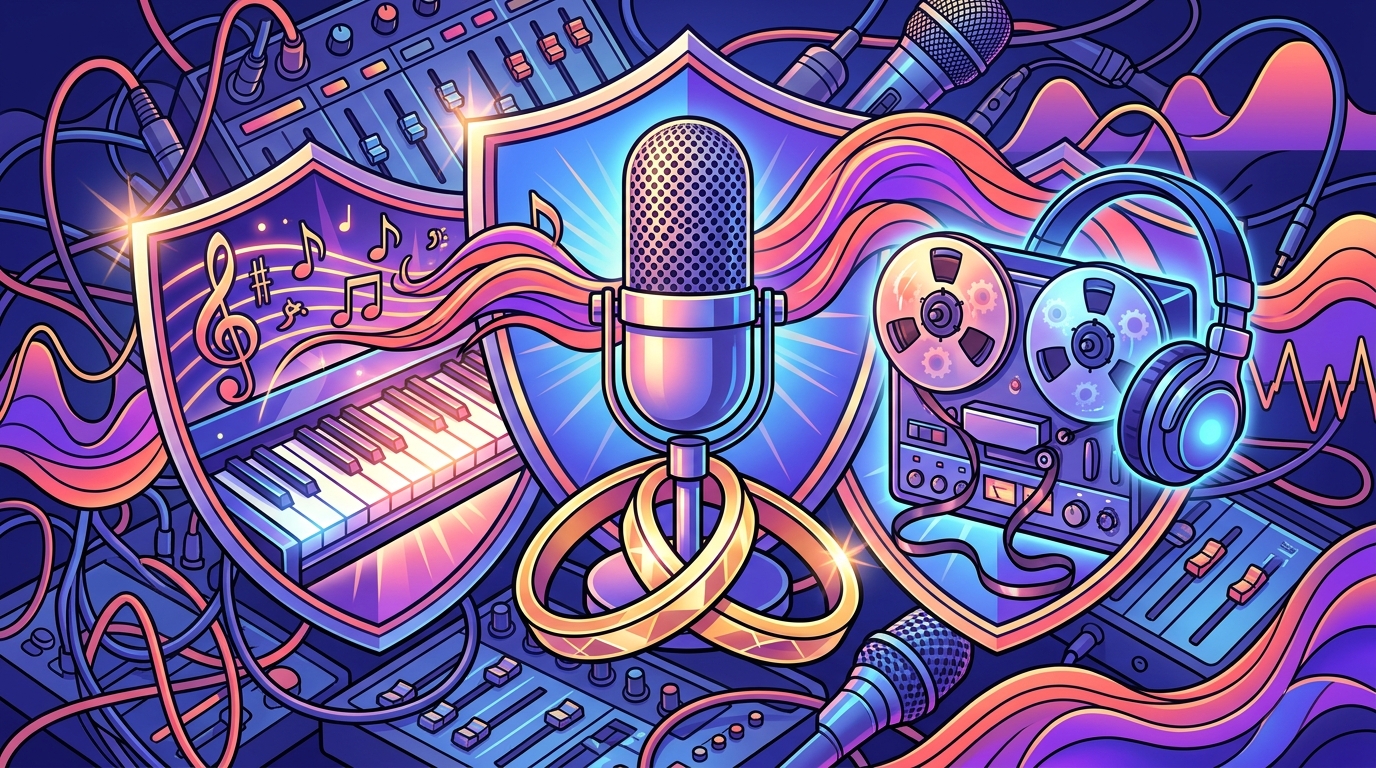
A commercial song usually contains two separate copyrights: the musical composition and the sound recording, also called the master. The composition covers the melody, lyrics, and songwriter or publisher rights, while the master covers the specific recorded performance you hear. Think of it as the game code versus the cartridge, the same adventure with different rights. For your podcast intro, outro, or background music, you may need permission for both sides before the neon starts glowing.
For example, imagine you get permission from a songwriter to use a song, but you want a particular studio recording. That approval clears the composition, but it does not automatically clear the recorded performance or the owner of that master. You could still be missing a key permission, like reaching the final boss with no health potions. A license for one copyright does not magically unlock the other, even if you use only a short clip.
Before publishing, confirm that your music license covers podcasts, your intended territory, the license length, and use in intros, outros, or background audio. Do not rely on a supposed 10-second or 30-second rule, because no automatic time limit makes copyrighted music safe to use. The simplest route is often music offered with clear podcast rights or a custom agreement that expressly covers both the composition and the master. That way, your show can keep its synthwave sparkle without triggering a surprise copyright boss battle.
Your safest podcast music rights option is a direct license from the copyright owners, especially when you want a recognizable song for an intro, outro, or dramatic boss-fight moment. A commercial track usually has two separate parts to clear: the musical composition and the specific sound recording, so permission for one may not cover the other. Ask for written permission that covers synchronization with your episode, copying and editing the track, distribution through podcast feeds, downloads, and monetized episodes. A regular music-streaming subscription only lets you listen, not turn your playlist into a legal neon soundtrack.
Production music libraries and royalty-free catalogs are often the most practical choices for busy creators, but read the license instead of trusting the word “free” to do a backflip. Check whether the fee or subscription covers podcast use, commercial or sponsored episodes, permanent downloads, social clips, video versions, worldwide distribution, and future reruns. Commissioning an original track can give you a custom synthwave groove and clearer control, but your agreement should spell out who owns the composition and recording, along with every use you need. Get the rights menu in writing before the pixelated spaceship launches.
Public-domain compositions may be usable without permission, yet a newer recording of that old work can still have its own copyright, so do not grab the first version you find. Creative Commons music can work too, provided you follow the exact license terms, including attribution, limits on commercial use, remix rules, and any download or distribution conditions. Keep copies of licenses, invoices, creator permissions, and attribution text in your records, because future-you should not have to investigate a copyright mystery at 2 a.m. There is no automatic 10-second or 30-second safe zone, and fair use is fact-specific, so a clearly written license is usually the better power-up for monetized episodes.
The “10-second rule” and “30-second rule” are copyright myths, not magical shields from the legal boss battle. Even a tiny slice of a song can raise podcast music rights issues, whether it appears in your intro, outro, or under your voice as background music. Fair use may sometimes cover music used for criticism, commentary, news, or education, but there is no stopwatch that makes a clip automatically safe. Courts look at the full situation, including why you used the track, how much you took, and whether your use could affect the market for the original. In other words, “It was only eight seconds” is not a cheat code.
If you are using a song simply to set a neon mood or make your opening feel like an ’80s arcade montage, fair use is usually not a shortcut you should count on. The safest route is to get permission that covers your planned use, or choose music with a clear podcast license and check whether it includes commercial distribution, editing, downloads, and the platforms you use. Remember that a song can involve separate rights for the composition and the specific recording, so one permission may not cover both. Save the license terms and proof of permission with your episode files, because future-you will appreciate the paperwork when copyright’s final boss appears.
Before publishing, confirm exactly what track you are using and who controls its rights. Podcast music rights can cover both the composition, meaning the melody and lyrics, and the sound recording, meaning the specific performance you downloaded. Do not rely on a “10-second rule” or assume a music-streaming subscription covers podcast use, because short clips can still require permission. Get the license or written approval before your intro, outro, or neon-soaked background loop goes live.
Keep the paperwork in one easy-to-find folder, including invoices, license agreements, email approvals, screenshots of the licensing page, and the track’s file name and download date. Save cue details too, such as where the music starts and stops, how long it plays, and which episode uses it. A simple spreadsheet with the track, rights holder, license term, territory, and renewal reminder can save you from digging through digital junk drawers later. If a dispute arrives like a boss fight from 1987, clear records give you the evidence to respond instead of panic-dodging pixel fire.
Podcast music rights usually involve two separate pieces of the puzzle: the composition and the master recording. The composition covers the melody, lyrics, and publishing rights, while the master is the specific recorded performance you want to play. Clearing one does not automatically clear the other, so grabbing a recognizable track can feel like unlocking a secret level until a rights issue appears. A normal music-streaming subscription also does not usually give you permission to use songs in a podcast.
Short clips are not automatically safe, because there is no universal 10-second or 30-second rule for podcast music. Even a tiny hook under your intro, outro, or dramatic “boss battle” moment may need permission, especially if the show is monetized or widely distributed. Fair use can apply in limited situations such as criticism or commentary, but it depends on the facts and is not a guaranteed shield. Trimming the clip is not the same as clearing the clip.
The safest paths are music you create yourself, a commissioned track with written podcast rights, or a clearly labeled license that covers podcast use, distribution, monetization, and promotional clips. You can also seek direct permission from every relevant rights holder, but keep the paperwork, because memory is not a licensing system. Check whether the license covers both the composition and the master, and watch for limits on platforms, downloads, ads, or listener-supported revenue. Choose music with clear podcast permissions before publishing your neon masterpiece.
Podcast music rights are easier to manage when you remember that one song can involve two separate copyrights: the musical composition and the specific sound recording. Your intro, outro, and background tracks may each need permission, even if you use only a short clip, because there is no automatic “10-second rule” or podcast safe harbor. A music-streaming subscription also does not usually give you permission to use songs in a published episode, so check whether your license covers podcast distribution, ads, monetization, downloads, and social clips. Think of it as your podcast’s copyright power-up, not a boss battle you can defeat with a neon cheat code.
The safest route is to choose music with clear licensing terms, save your receipts and permissions, and confirm whether the license covers your planned platforms and future episodes. If you want a custom track, make sure the agreement explains who owns the composition and recording, along with any limits on edits, exclusivity, and reuse. Rules can vary by country, and fair use depends on the facts, so this U.S.-focused overview is general information rather than legal advice. Ready to publish without summoning the copyright police? Explore our Best Music Licensing Service In 2026 For Creators And Filmmakers to find a suitable soundtrack solution for your show.