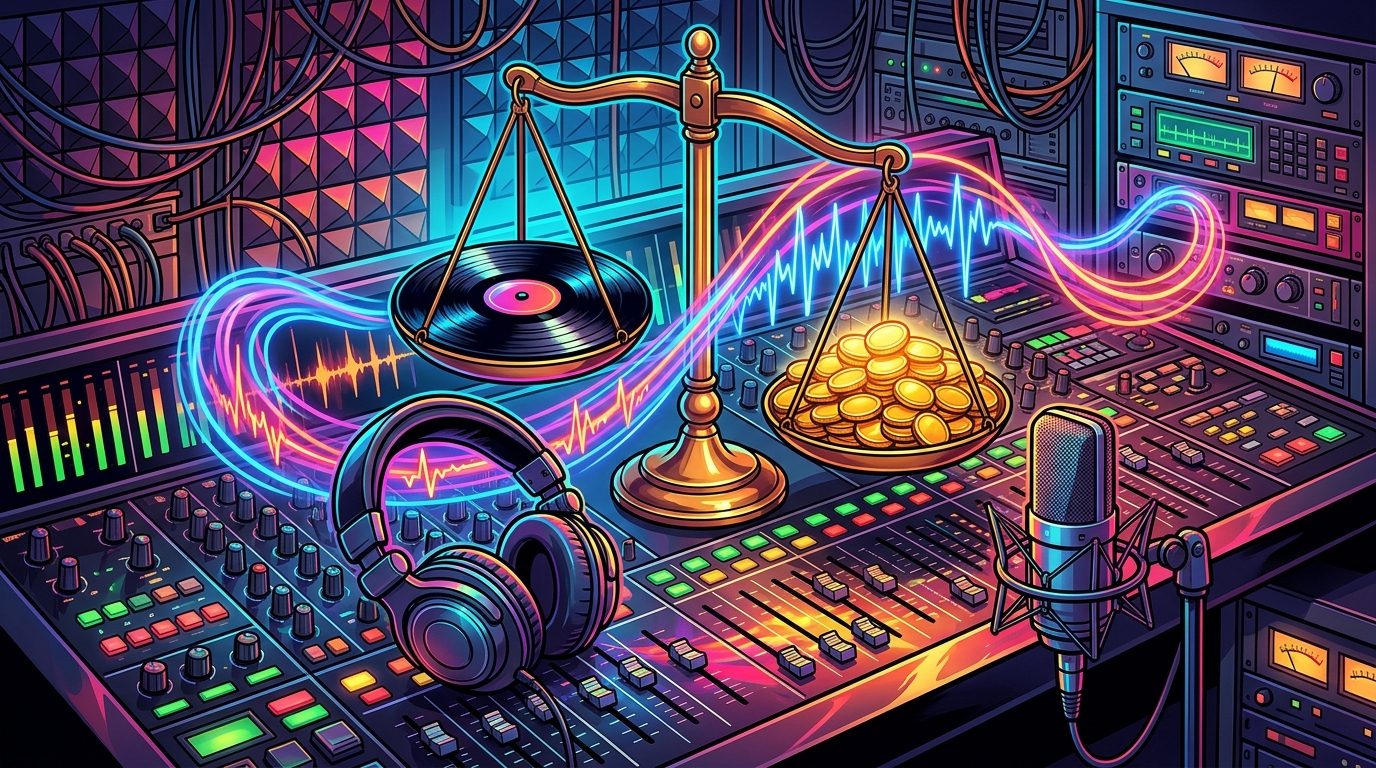
Music licensing cost is not one magic number hiding behind a neon arcade cabinet. In the U.S., a small online video might cost $0 to $500, while a film placement can run from hundreds to tens of thousands of dollars. A major ad campaign can blast past $50,000. The price depends on the song, recording, audience, platform, territory, length of use, and how prominently the music appears.
Before you press play and summon the copyright boss battle, you need to know which rights you are paying for and who owns them. A popular track may require more than one permission, while production music or creator libraries can offer simpler, budget-friendly options. Get the basics right, and your project can keep its synthwave glow without turning your budget into a sad “Game Over” screen.
Music licensing cost usually starts with two separate copyrights: the musical composition and the sound recording. The composition is the song itself, including its melody, lyrics, and structure. The sound recording is the specific performance you hear. If you want to pair an existing song with a film, ad, game, or online video, you typically need a synchronization license for the composition. In other words, the catchy chorus and the neon-soaked guitar riff each have their own boss battle.
Using the original recording usually adds a master-use license, which gives you permission to use that specific audio file. You may need approval from different rights holders for the composition and the master, so the price can rise faster than a vintage arcade score. A small online project may cost $0 to $500 through a production-music or creator library, while a negotiated film or television placement can run from hundreds to tens of thousands of dollars. A major advertising campaign using a well-known recording may reach $50,000 to $250,000 or more, depending on the song and the deal.
Recording your own version can help you avoid the master-use fee because you are not using the original sound recording, but it does not make the composition free. You still need permission to sync the song itself, and your budget must cover musicians, studio time, production, and other recording costs. The final music licensing cost depends on your audience, territory, term, media, revenue potential, and how prominently the song appears. Think of it like choosing a game difficulty level: a short local web ad is not the same licensing quest as a worldwide campaign with a giant neon billboard.
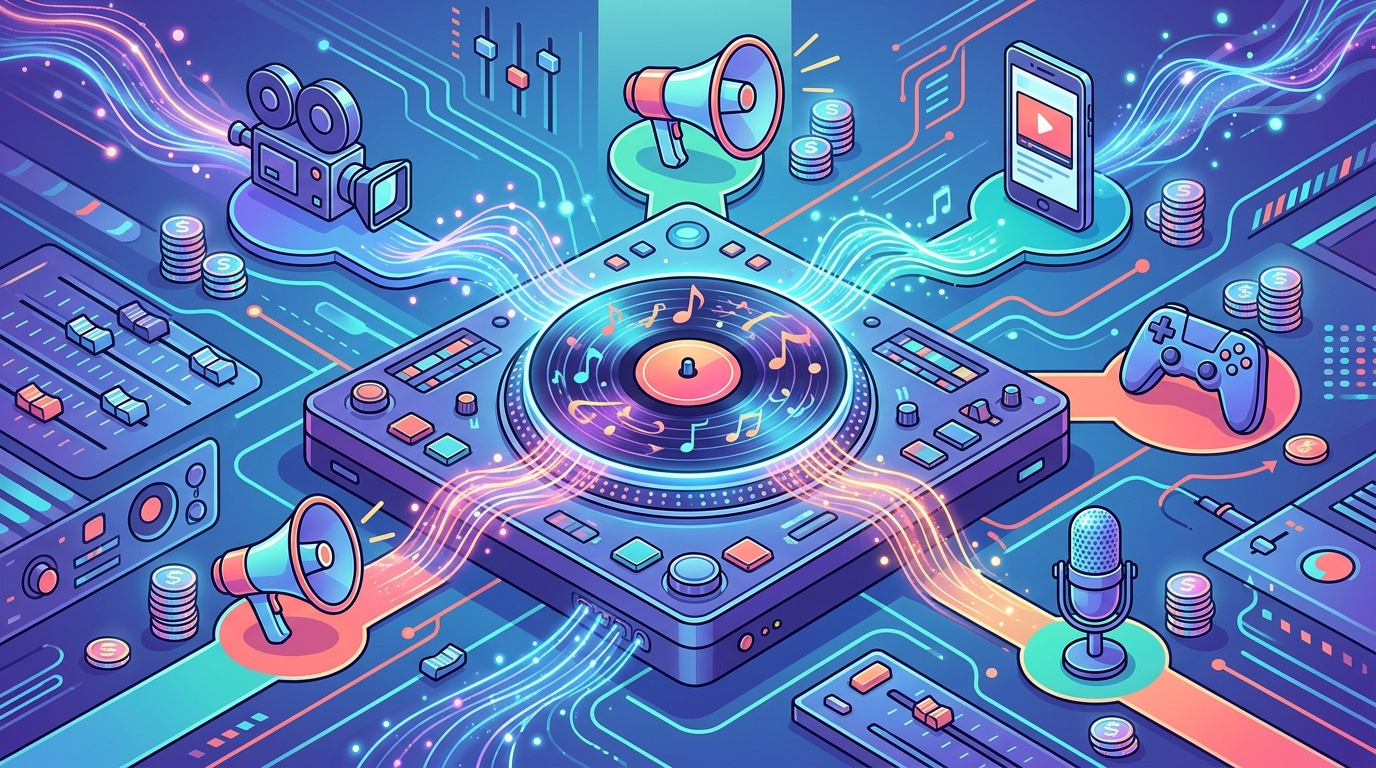
Music licensing cost for a small online video often falls between $0 and $500 when you choose music from a creator library or production-music catalog. That range may cover a limited term, platform, audience size, or project type, so check the license before your video blasts off like an ’80s arcade cabinet. Organic social posts and podcasts can land in a similar range, while paid social ads usually cost more because they promote a business to a larger audience. The bigger the audience, territory, campaign length, and brand visibility, the faster the price meter starts making that classic “coin inserted” sound.
For films and television, negotiated sync deals commonly range from hundreds to tens of thousands of dollars. An independent short film, web series, or small podcast may sit near the lower end, while a prominent song in a feature film, hit show, or major podcast network can climb much higher. Games also vary widely, from affordable library tracks for an indie release to negotiated fees for music that is central to the game’s identity or trailer. Remember that the recording and the underlying song may require separate permission, which is one reason a seemingly simple request can turn into a boss battle.
Large advertising campaigns are the neon-soaked end of the pricing spectrum, especially when you want a famous recording or a recognizable artist. In the U.S., those deals can reach $50,000 to $250,000 or more, depending on the campaign’s reach, media channels, territory, term, and how prominently the track appears. These figures are negotiated market benchmarks, not fixed prices, so your quote may be lower or higher based on the exact use. Before budgeting, write down your project type, platforms, audience, campaign dates, locations, and whether the music is background flavor or the star of the show.
Music licensing cost starts with the size of the permission you need. A short term, one U.S. market, and a small audience usually cost less than a multi-year, worldwide license aimed at millions of viewers. The quote can also rise when your music appears across several channels, such as streaming video, television, social media, cinema, and paid ads. If the project can generate serious revenue or support a major brand launch, the price may climb because the music is helping power the money-making machine. In plain English, a tiny neon scooter needs less fuel than a worldwide rocket launch.
The song’s role matters just as much as the project’s size. A 15-second background cue under dialogue is usually less expensive than using the same track for a hero’s main-character entrance, trailer, title sequence, or emotional finale. Exclusivity can raise the music licensing cost because the rights holder may be unable to license that song to anyone else during your term. A popular track can command a premium because audiences recognize it instantly, while a lesser-known song may offer more budget-friendly options. That is why your retro arcade montage and your billion-dollar superhero reveal should not expect the same checkout total.
For a small online video, production-music or creator-library options may fall around $0 to $500, while negotiated film or television placements can range from hundreds to tens of thousands of dollars. A major advertising campaign using a well-known recording may reach $50,000 to $250,000 or more, depending on the rights, reach, and deal terms. These are U.S. market benchmarks, not fixed menu prices, so your exact quote depends on the recording, composition, owners, and requested use. To keep the budget from going full boss battle, define the term, territory, audience, channels, prominence, and exclusivity before requesting a quote.
Production music libraries are often the budget-friendly power-up for videos, podcasts, games, and ads, with licenses commonly ranging from free to a few hundred dollars. Creator subscriptions can lower the music licensing cost further when you need several tracks, but check whether the plan covers commercial use, client work, monetized channels, and projects released after you cancel. Royalty-free catalogs may save you from paying a fee every time your video plays, but “royalty-free” does not mean “use it anywhere,” so review limits on platforms, territories, audience size, and paid advertising. Also confirm whether the license is permanent or requires renewal, because nothing ruins a neon victory lap like a surprise invoice.
Commissioned music gives you a custom sound without paying superstar rates, and an independent composer may charge from hundreds to several thousand dollars depending on length, revisions, usage, and deadline. Ask who owns the composition and the recording, whether you receive broad commercial rights, and whether the composer can reuse the track elsewhere. Public-domain compositions can cost little or nothing to use, especially older classical works, but a modern recording of that composition may still have its own copyright. Recording the piece yourself can avoid that recording fee, while original music made in-house may save future licensing payments. You still need written agreements with every performer, composer, and producer.
Before pressing play, price the full package around your project’s term, territory, audience, placement, and prominence. A background cue for a small online video costs far less than music leading a national ad campaign. In the United States, a small commercial video may land around $0 to $500 through a library or creator service, while negotiated film, television, and advertising licenses can climb from hundreds into the tens or hundreds of thousands. Check whether the quote includes both the song rights and the specific recording rights, plus edits, social clips, trailers, paid media, renewals, and extra platforms. Get those permissions in writing, and you can keep your budget from transforming into an ’80s arcade game where every beep costs another quarter.
Estimating music licensing cost starts with mapping every part of the project before you request a quote. Identify the composition and recording rights, then spell out the use case, platform, territory, campaign length, audience, budget, and how prominently the track appears. A small online video may cost $0 to $500 through a production-music or creator library, while a negotiated film or television sync license can run from hundreds to tens of thousands of dollars. A major advertising campaign using a famous recording may reach $50,000 to $250,000 or more because the neon price meter goes into final-boss mode fast.
Your best defense is to compare licensed alternatives early, including production music, library tracks, custom music, and different versions of the same idea. Ask whether the quote covers both copyrights, all platforms, paid ads, edits, term extensions, and worldwide use, since surprise extras can turn a cool budget into a sad dial-up connection. Treat published ranges as market benchmarks, not fixed prices, because rights holders negotiate based on reach, revenue, exclusivity, and timing. If you want a tailored option, explore custom retro soundtrack services for games and films to see how an original track can support your project without sending your budget into a pixelated boss battle.