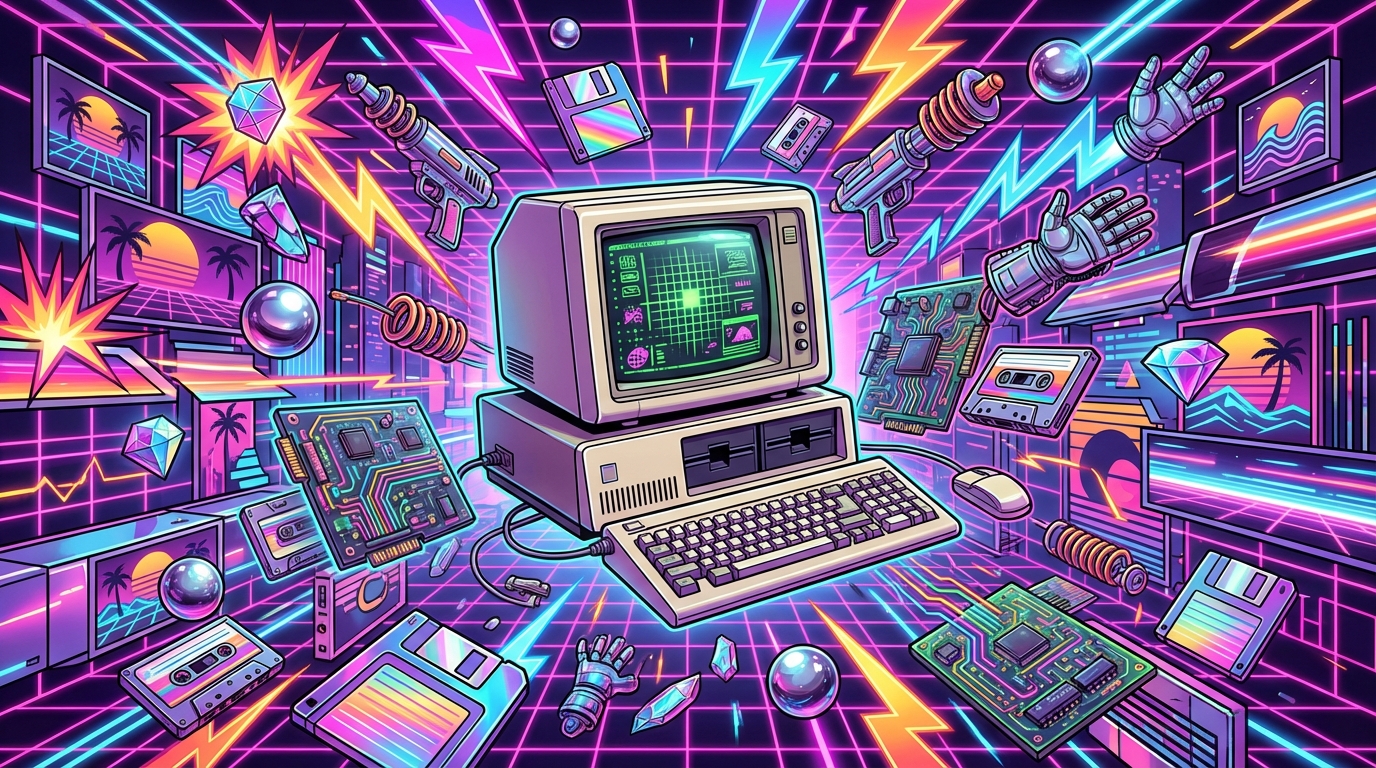
Picture yourself cruising through a neon-soaked 1982 dreamscape, where the hair is big and the floppy disks are even bigger. Flipping through these vintage computer hardware ads is like entering a glitchy time machine where “cutting edge” meant a hard drive the size of a microwave. Back then, owning a piece of the future required a bank account as massive as your shoulder pads, and the tech specs would make your modern toaster look like a supercomputer.
Imagine dropping $3,500 on a 10MB hard drive just to store a few pixelated photos and a dream. It is wild to see how these grainy, colorful pages sold us on the magic of “massive” 64K memory while rocking pure synthwave vibes. You are here to witness the glorious era when storage cost a literal fortune and every pixel was earned with blood, sweat, and a lot of beige plastic.
Imagine walking into a store and dropping fifteen hundred dollars on a hard drive that holds a measly five megabytes of data. In the early eighties, this was not just a bad dream, it was the actual price of admission for cutting edge storage. You would be hauling home a massive metal brick that weighed more than your family cat just to store a couple of low resolution photos. These vintage computer hardware ads sold the dream of infinite space with a straight face, even though today that same amount of money could buy you enough terabytes to archive every cat video on the internet. It is peak comedy to see a businessman in a power suit grinning next to a three thousand dollar machine that has less computing power than your smart toaster.
The marketing gurus of the synthwave era really knew how to polish a digital turd with neon colors and bold claims. You might see a full page spread featuring a ten megabyte disk drive priced at nearly thirty five hundred dollars, framed by enough laser grids to make a sci-fi director weep. These ads promised that you were buying the future, ignoring the fact that you needed a small forklift and a second mortgage to get the hardware into your home office. High end business units with three hundred megabytes could even push twenty thousand dollars, which is basically the price of a luxury car today. Looking back at these outrageous sales pitches makes you realize just how far we have come from the days of paying a fortune for a tiny sliver of digital real estate.
Step back into a time when tech companies had to convince you that a beige plastic cube was actually a portal to the future. In the early eighties, marketing shifted from boring spec sheets to pure, unadulterated personality. You were not just buying a machine with a measly 64K of RAM, you were joining a digital revolution fueled by neon dreams and aggressive sales pitches. These ads used quirky humor and bold claims to turn expensive hardware into must-have lifestyle accessories for your living room. It was a wild era where a computer could be marketed as both a serious business tool and a radical gaming rig all in the same breath.
The price tags in these vintage glossies will make your modern wallet ache with sympathy. Imagine dropping fifteen hundred dollars on a hard drive that only held five megabytes of data, which is barely enough for one high-quality selfie today. Marketing geniuses had to get creative to justify those astronomical costs, often using funny scenarios or over-the-top characters to distract you from the dent in your savings. They turned these clunky boxes into cultural icons by promising that owning one would make you the smartest, coolest person on the block. It was less about the actual processing power and more about the vibe you projected while sitting in front of a glowing cathode ray tube.
Step into a time machine where neon grids and questionable puns ruled the marketing world. You will find that early tech ads were a chaotic mix of futuristic ambition and total design fails that make today’s sleek smartphone commercials look incredibly boring. Marketing teams back then loved to use cringey wordplay and bizarre themes, often featuring people in lab coats or wizards to sell you on the magic of silicon. It was a wild era where a company might try to convince you that a bulky beige box was the ultimate lifestyle accessory. These ads are a goldmine for anyone who loves that classic synthwave aesthetic and a good laugh at how we used to view the future.
Looking back at the price tags in these retro layouts might actually give you a bit of heart palpitations. Imagine seeing a glossy ad for a 10MB hard drive that costs over $3,000, which is enough to buy a decent used car today. You could even find high end business units with 300MB of storage listed for a staggering $20,000 while draped in glorious 80s neon. It is hilarious to see these massive, expensive machines marketed with slogans that promised they would change your life forever. Even though the tech was primitive, the sheer confidence of these awkward sales pitches is something you have to respect.
The legendary Commodore 64 eventually crashed the party with aggressive pricing that finally brought the digital age into the average living room. These ads often featured families huddled around a tiny screen with looks of wonder on their faces. You might notice how the layouts are packed with walls of text and strange font choices that would never pass a modern design test. It is a nostalgic trip to see how brands tried to make spreadsheets and pixelated games look like the coolest thing on the planet. These vintage gems prove that while the hardware was heavy, the marketing was even heavier on the cheese.
Looking back at these neon-soaked relics of the past really puts your modern gaming rig into perspective. It is hard not to laugh at a glossy magazine spread trying to convince you that a five megabyte hard drive is a steal at fifteen hundred bucks. These ads are a total vibe, capturing a world where beige boxes were the height of fashion and business power meant spending twenty thousand dollars on a machine with less kick than a digital watch. You have to love the sheer confidence of those early tech gurus as they pitched a future that looked like a grainy sci-fi movie.
We have come a long way from the days of chunky keyboards and storage units that weighed as much as a small car. Today, you can carry more processing power in your pocket than an entire department store could have sold you in 1982. While the prices in these vintage ads might make your wallet cry, the design aesthetic is pure gold for anyone who loves that retro-futuristic look. Whether you are here for the synthwave nostalgia or just to mock the outdated sales pitches, these old school ads remind us that we are still unleashing the 1980s tech boom in our modern culture. Whether you are here for the synthwave nostalgia or just to mock the outdated sales pitches, these old school ads remind us that tech history is just as weird as it is impressive.
Next time your laptop takes two seconds too long to load a webpage, just remember the pioneers who paid a fortune for a screen that only showed green text. Those early adopters paved the way for the high-speed, pixel-perfect world we live in now, even if they had to look at some questionable font choices along the way. If you want to capture that same aesthetic today without the 1982 limitations, you can learn how to build your own sleeper PC. We can appreciate the hustle of those vintage marketing teams while being incredibly glad we do not have to refinance our homes for a tiny bit of memory. Keep those retro vibes alive, but definitely be thankful that your current setup does not cost as much as a luxury sedan.
Back in the day, you were paying for the literal birth of personal computing technology. Storage was a luxury item that required massive amounts of physical hardware and expensive materials to hold even a tiny bit of data.
You could barely squeeze a few low resolution, pixelated photos onto a drive that size. Today, that same 10MB would not even be enough to hold a single high quality song or a short video clip.
It was just enough power to run basic word processors or very simple games with blocky graphics. You were basically working with less computing power than the chip inside your modern electric toothbrush.
Industrial designers in the eighties were obsessed with that classic office aesthetic. They wanted these machines to look serious and professional, even if they weighed as much as a small boulder and took up your entire desk.
You can certainly try, but you will need a lot of patience and some serious adapters. Most of this gear is better suited for a neon-lit shelf as a conversation piece rather than trying to browse the modern internet.
Marketing teams used those synthwave visuals to make slow, clunky machines look like they were from a sci-fi future. It was all about selling the dream of high speed tech, even if the reality was a noisy metal box that cost a fortune.
It sounds like a joke, but your smart toaster or microwave actually has significantly more processing power than the top tier machines from 1982. We are living in the future that those neon ads could only dream about.