thoughtful predictions swimming in my head…
Close your eyes and imagine you’re back in 1994, rocking a neon windbreaker and
Close your eyes and imagine you’re back in 1994, rocking a neon windbreaker and holding a lukewarm pretzel while the soothing hum of mall fountain sounds washes over you. This wasn’t just random splashing; it was a high-tech acoustic shield that blocked out the screaming toddlers and squeaky sneakers of the food court. Like a real-life save point in a video game, these watery masterpieces provided the ultimate lo-fi vibe before lo-fi was even a thing.
Whether it was a massive industrial roar or a gentle babbling brook, these fountains were the secret sauce of the retail experience. They functioned like a giant white noise machine for your brain, turning a chaotic shopping trip into a chill synthwave dreamscape. You might not have realized it then, but those echoing splashes were doing some heavy lifting for your mental health while you hunted for the perfect graphic tee.
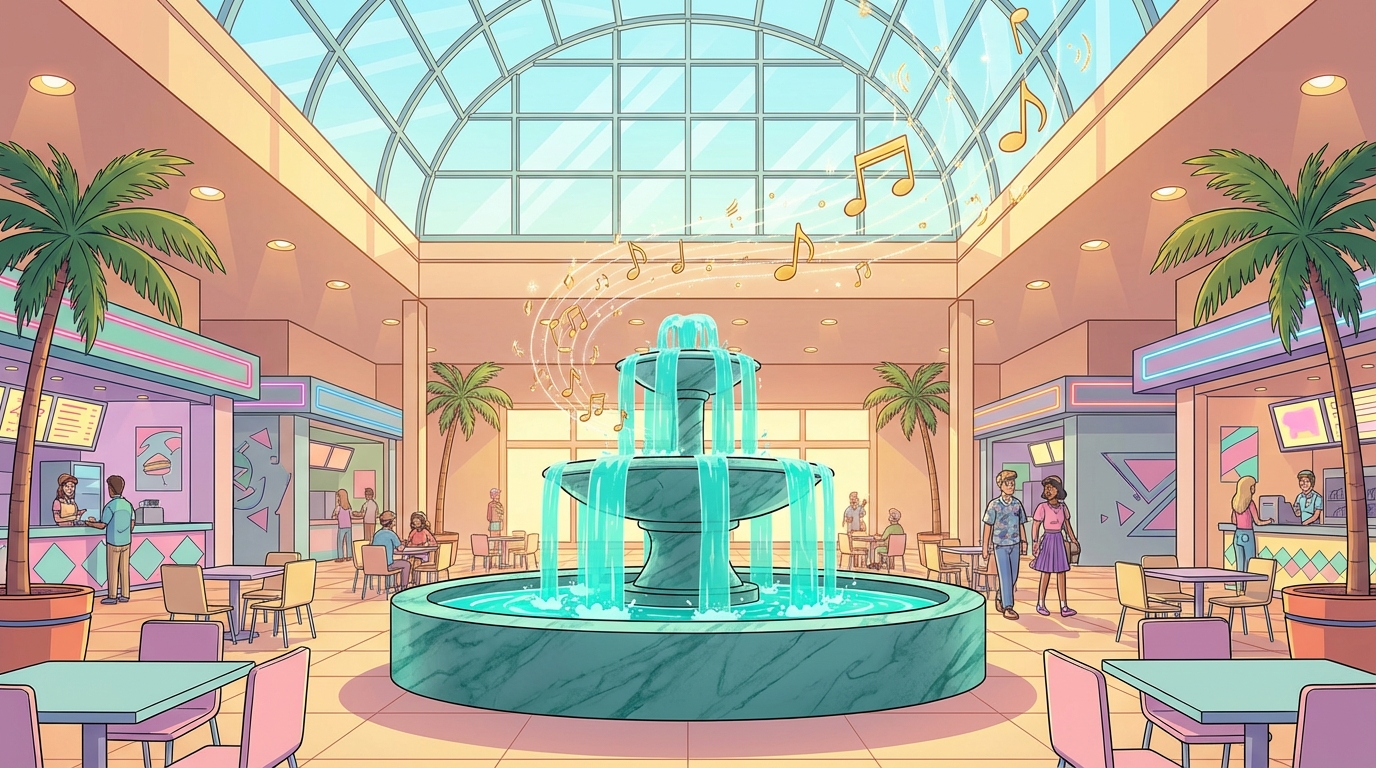
Picture yourself standing in the middle of a neon-lit atrium, clutching a lukewarm orange drink while the world around you dissolves into a hazy blur of pastel windbreakers. That massive concrete basin in the center of the food court was more than just a place to toss your lucky pennies, as it functioned as the ultimate acoustic fortress. The heavy, hollow splash of water hitting marble created a thick wall of industrial white noise that effectively muted the high-pitched squeals of sugar-rushed toddlers. You could finally hear your own thoughts or at least the catchy synth hook of a pop hit playing faintly from a nearby record store. It was a sensory shield that turned a chaotic shopping hub into a personal lo-fi chill zone.
The magic of these retro water features lived in the rhythmic hum of the heavy-duty mechanical pumps hidden beneath the surface. This low-frequency vibration acted like a grounding bassline for the entire building, masking the annoying rhythmic squeak of sneakers on polished linoleum floors. Designers knew exactly what they were doing when they traded silent trickles for these booming, tiered cascades that felt like a localized rainstorm. For anyone who grew up in the golden age of the mall, that specific frequency is a major nostalgia trigger that feels like a warm hug for your brain. It provided a sense of privacy in a crowded public space, allowing you to disappear into the vaporwave aesthetic of your surroundings.
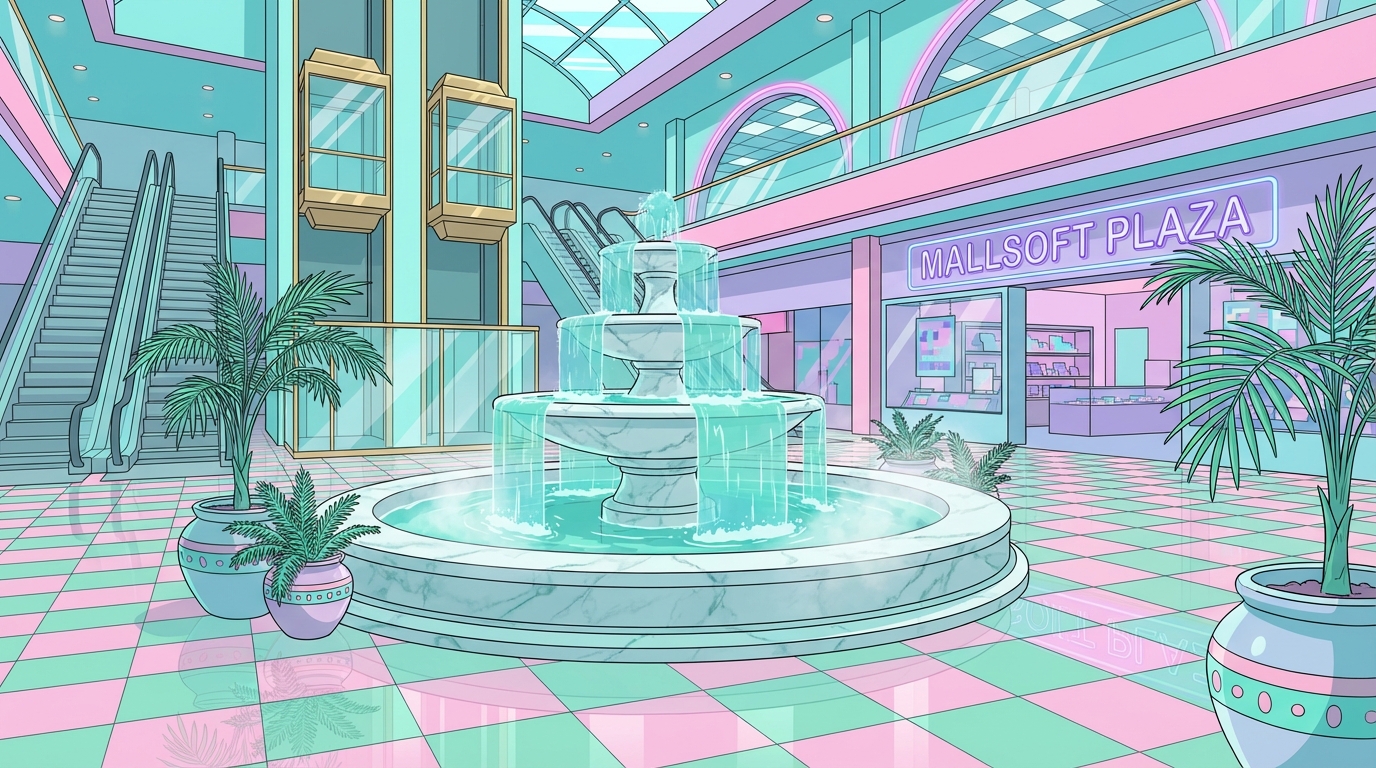
You know that specific, hollow splash that feels like a warm hug for your brain? When you are crafting the ultimate mallsoft track, you aren’t just looking for music, you are looking for a time machine made of water and marble. Those multi tiered basins create a complex, rhythmic babbling that acts like a natural low pass filter for the world. It is the secret sauce that masks the ghost of a distant food court and turns a simple loop into a nostalgic masterpiece. You can almost feel the cool mist on your face as the neon lights reflect off the cascading tiers.
Think of these stone fountains as the original white noise machines for the 80s and 90s generation. While the bottom pool provides a deep, industrial thrum, the higher levels add those crisp, sparkly droplets that tickle your ears. This acoustic layering is basically the lo-fi equivalent of a perfect synth pad, giving your project a sense of physical space that digital plugins just can’t mimic. It is the sound of peak relaxation, back when your biggest worry was whether the arcade had the newest fighting game. Adding this texture to your playlist is like hitting the save button on a collective childhood memory.
If you want to achieve that peak vaporwave aesthetic, you have to respect the architecture of the splash. These fountains were designed to drown out the chaos of a thousand shoppers, creating a private bubble of peace right next to a department store. When you drop these tiered water sounds into a mix, you are tapping into a psychological hack for creativity and focus. It is more than just background noise, it is a sensory trigger that tells your brain it is time to zone out and vibe. Grab your headphones and let the stone basins do the heavy lifting for your next ambient adventure.
The secret to that perfect mallsoft vibe lies in how the water actually hits the deck. When you walked past those massive 80s installations, the sound wasn’t just a random splash but a high-fidelity remix of physics and luxury. Heavy marble basins provided a deep, resonant thud that felt like a bass drop in slow motion, grounding the entire food court in a solid wall of sound. These stone surfaces acted like natural amplifiers, turning every droplet into a crisp, authoritative note that made you feel like you were shopping in a Roman temple with neon lights. It was the ultimate acoustic camouflage, masking the screech of sneakers on tile with a sophisticated, textured roar.
If the marble was the bass, then the acrylic and glass tiers were the synthesizers of the fountain world. Water sliding over smooth plastic or transparent sheets created a brighter, more rhythmic pitter-patter that sounded like a lo-fi study beat coming to life. These materials lacked the heavy vibration of stone, instead producing a shimmering treble that felt light and airy, much like the hairspray-filled atmosphere around you. You could practically hear the difference between a fountain designed for a high-end department store and a playful, multi-tiered splash pad near the arcade. This material symphony transformed the simple act of walking to the record store into a full-blown sensory experience that your brain still craves today.
The echo of a multi-tiered marble fountain is more than just background noise, it is the ultimate acoustic vibe for your brain. Whether you are a mallsoft producer looking for that perfect sample or just someone who misses the smell of chlorine and pretzels, these liquid time machines hold a special place in our digital hearts. They acted as the original white noise machines, drowning out the chaos of the food court and letting you get lost in a neon-soaked daydream. You can almost feel the cool mist on your face as the industrial splash hits the basin, creating a rhythmic loop that feels like home.
Even though many of these concrete giants have been filled with dirt or replaced by kiosks, their sounds live on in the great mallsoft aesthetic library of the internet. We celebrate these fountains because they offered a rare moment of zen in a world of flashing lights and arcade high scores. They are the sensory triggers that transport you back to a simpler time when the only thing that mattered was finding the right CD or meeting your friends by the giant clock. So, keep those vaporwave playlists running and let the soothing splash of virtual water wash over you like a digital waterfall.
These watery masterpieces were basically high-tech acoustic shields designed to block out the chaos of the food court. The heavy splash of water hitting marble created a thick wall of industrial white noise that acted like a real life save point for your brain.
The splashing functioned as a giant white noise machine that effectively muted high-pitched squeals and squeaky sneakers. It turned a stressful shopping trip into a chill synthwave dreamscape where you could actually hear your own thoughts.
That was the rhythmic vibration of heavy duty mechanical pumps hidden beneath the surface. It acted like a grounding bassline for the entire mall, masking annoying background noises and keeping your stress levels in the green zone.
Absolutely, because those echoing splashes were doing heavy lifting for your brain while you hunted for graphic tees. They provided a sensory shield that transformed a busy atrium into a personal lo-fi chill zone for maximum relaxation.
While they weren’t playing actual tracks, the combination of mechanical hums and splashing water created a soothing lo-fi vibe before it was even a thing. It served as the perfect background track to the synth hooks playing from the nearby record store.
Your brain associates those specific frequencies with the ultimate 1994 shopping experience and the safety of a neon-lit atrium. Hearing that industrial roar again is like hitting the reset button on your stress and returning to a simpler, more aesthetic time.