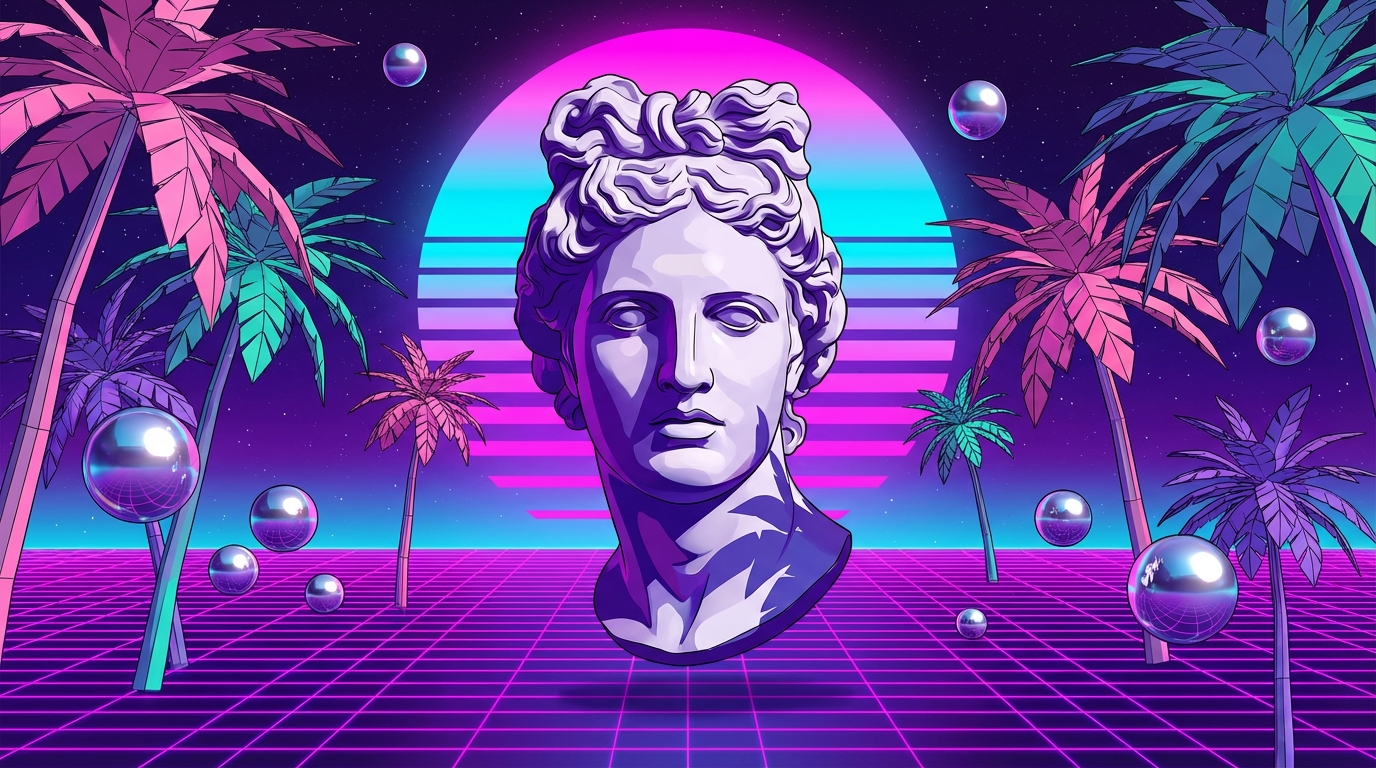
Picture this: you just booted up a dusty 90s computer rig, cracked open a crisp can of pastel iced tea, and suddenly you are staring at a floating marble head surrounded by hot pink neon grids. If you have spent any time scrolling through surreal internet memes or chilling to slowed-down elevator music, you have definitely crossed paths with vaporwave Greek statues. They are the ultimate glitch in the cultural matrix, taking fancy museum art and slapping it right into a neon-soaked, retro-futuristic fever dream.
Ever wonder why a snooty marble dude from ancient history is suddenly the poster child for your favorite synth-heavy playlists? It all started as a massive internet joke that mashed up untouchable high art with glorious 90s digital trash, turning ancient gods into glitchy pop culture icons. You are essentially looking at a bizarre timeline where classical history collided head-on with a broken arcade cabinet, creating a strangely perfect vibe that hits right in the nostalgia.
You can trace the entire obsession with neon-drenched marble heads back to a single legendary album drop in 2011. When an iconic vaporwave producer unleashed Floral Shoppe onto the internet, the cover art featured a strangely pink-tinted bust of the sun god Helios. This bizarre visual choice instantly hard-launched a massive cultural reset for terminally online music nerds everywhere. Before you knew it, everyone was slapping sad classical sculptures in front of bright pink grids to show off their elite underground tastes. It gave you the perfect excuse to pretend a floating Greek god was the ultimate symbol of retro computing nostalgia.
The joke became incredibly funny because it took something highly respected and dragged it straight into the digital gutter. You were suddenly seeing priceless ancient art chilling next to pixelated 90s computer icons and floating cans of cheap iced tea. This hilarious mashup perfectly captured the surreal vibe of endless dial-up internet scrolling. Classical statues normally belong in boring museums, but vaporwave turned them into depressed mall cops guarding a glitchy virtual reality. Every gamer and synthwave fan quickly realized that a weeping marble face just looks undeniably cool under a heavy coat of neon purple lighting.
Picture a priceless marble statue of an ancient god, but instead of sitting in a boring museum, it is floating through a neon pink grid next to a chunky 90s operating system logo. You have just stumbled into the hilarious world of vaporwave art, where ancient Greek masterpieces get treated like cheap clip art. This wild visual trend exploded back in the early 2010s when an album called Floral Shoppe slapped a pink-tinted bust of the sun god Helios right on its cover. Suddenly, every online nerd and synthwave fan realized that classical sculpture looked incredibly cool when drenched in pastel colors and nostalgic computer graphics. It gave you the perfect excuse to turn serious historical artifacts into the ultimate internet meme material.
The real magic happens when you mix these fancy museum pieces with total junk food culture. There is something endlessly funny about placing a highly respected marble bust right next to a pixelated dolphin or a pastel can of sugary iced tea. By dragging high art down into the digital gutter, you are completely flipping the script on what society considers valuable or sophisticated. The joke relies on treating a masterpiece that took years to carve with the exact same respect as a glitchy dial-up internet icon. It is a brilliant rebellion against stuffy art critics, wrapped up in a cozy blanket of retro gaming nostalgia and surreal neon vibes.
You have definitely scrolled past a sad marble bust floating in front of a glowing pink grid at some point in your internet travels. This bizarre visual became the ultimate aesthetic for online nerds after a famous 2011 vaporwave album cover slapped the Greek sun god Helios right next to some blocky retro text. It is a hilarious mix that takes the fanciest, most respected high art of the ancient world and completely disrespects it. Instead of sitting in a boring museum, these classical statues are suddenly hanging out in abandoned neon malls or chilling with retro 90s computer icons. By pasting a pristine Roman emperor over a glitchy digital sunset, you get an instantly recognizable meme that feels both incredibly weird and perfectly nostalgic.
Believe it or not, there is actually a brilliant philosophical joke hiding behind all that neon magenta and tropical foliage. Those ancient empires eventually collapsed and left behind nothing but crumbling marble ruins for us to stare at. In a funny twist of fate, our own modern society is already leaving behind a digital graveyard of clunky 64-bit gaming consoles and obsolete floppy disks. Vaporwave artists realized that placing a Greek statue inside a dead 90s computer interface creates a perfect bridge between the ruined civilizations of the past and our own rapidly decaying tech. It is a clever way to remind you that your beloved childhood gaming consoles are basically the modern equivalent of a busted Roman pillar.
This surreal mashup is exactly why slapping a chiseled philosopher next to a pixelated can of cheap iced tea just feels right. You are taking the grandest achievements of human history and forcing them to exist in the cheapest, most disposable parts of pop culture. It creates a completely fake nostalgia for a retro future that never actually existed outside of old arcade cabinets and VHS tapes. Every time you see one of these vaporwave statues glitching out on your screen, you are participating in a massive inside joke about the absurdity of consumerism. It lets you kick back, listen to some slowed-down elevator music, and appreciate the beautiful trash of our digital age.
As you prepare to disconnect your dial-up modem and return to the real world, it is worth asking why this bizarre trend still rules the internet. Slapping a neon pink grid behind a sad marble bust somehow became the ultimate visual language for online nerds everywhere. This glorious digital meme culture takes something completely ancient and forces it to live inside a glitchy arcade cabinet. You have to admit that seeing a noble philosopher floating next to a spinning floppy disk is objectively hilarious. The whole aesthetic perfectly captures that weird, nostalgic feeling of wandering through an abandoned shopping mall in the late nineties.
The true magic of this style comes from totally disrespecting traditional high art in the best way possible. You are taking a priceless museum artifact and forcing it to chill next to a pastel iced tea can and a vintage computer error message. It is a brilliant joke that started with iconic album covers in the early 2010s and quickly spiraled into a massive cultural obsession. By dragging these serious historical figures into a neon wasteland, you completely strip away their original boring context. Suddenly, a rigid god of the sun becomes the perfect mascot for your late-night retro gaming sessions.
Now you are fully equipped to embrace the surreal vibes and create your own digital masterpiece. All you need to do is find a picture of a random Greek bust and paste it onto a checkered purple floor. Throw in a palm tree, add some glowing Japanese text that you do not actually understand, and bathe the whole thing in a cyan filter. You can proudly call it high art, upload it to your favorite forum, and wait for the nostalgic praise to roll in. Just remember to keep your virtual sunglasses on, because the neon glow of this timeless internet aesthetic is never fading away.
You know those snooty marble museum heads you slept through in history class? Throw them into a broken arcade cabinet with hot pink neon grids and glitchy computer graphics. It is the ultimate mashup of untouchable high art and glorious 90s digital trash.
It all kicked off as a massive internet joke to drag highly respected historical art straight into the digital gutter. You get to take ancient gods and turn them into glitchy pop culture icons. It creates a strangely perfect vibe that hits right in your nostalgia feels.
You can blame the legendary 2011 album drop Floral Shoppe by an anonymous internet producer for this entire neon-drenched obsession. The cover art featured a pink-tinted bust of the sun god Helios next to some retro computer text. Before you knew it, everyone was copying the look to flex their elite underground music tastes.
Absolutely nothing, and that is exactly why it works so perfectly. You just take a crisp can of cheap iced tea and slap it next to a priceless Roman sculpture to create the ultimate surreal meme. It is all about celebrating the weirdness of consumer culture and early internet vibes.
Those glowing grids are the ultimate cheat code for unlocking pure retro-futuristic nostalgia. They instantly teleport your brain back to 80s synthwave posters and dusty laser tag arenas. Throwing a pale marble statue into that neon mix makes the glitchy aesthetic pop even harder.
Sure, you could say it is a deep critique of modern capitalism clashing with classical beauty. But honestly, it is mostly just a ridiculously fun way to make your computer desktop look like a vaporwave fever dream. You get to chill out to slowed-down elevator music while a pixelated Greek god judges your internet search history.
Grab a picture of a fancy museum bust and boot up your favorite image editor. Just crank up the pink and cyan filters, drop in some pixelated 90s computer icons, and maybe add a random Japanese word. You will be crafting elite digital trash for your synth-heavy playlists in no time.