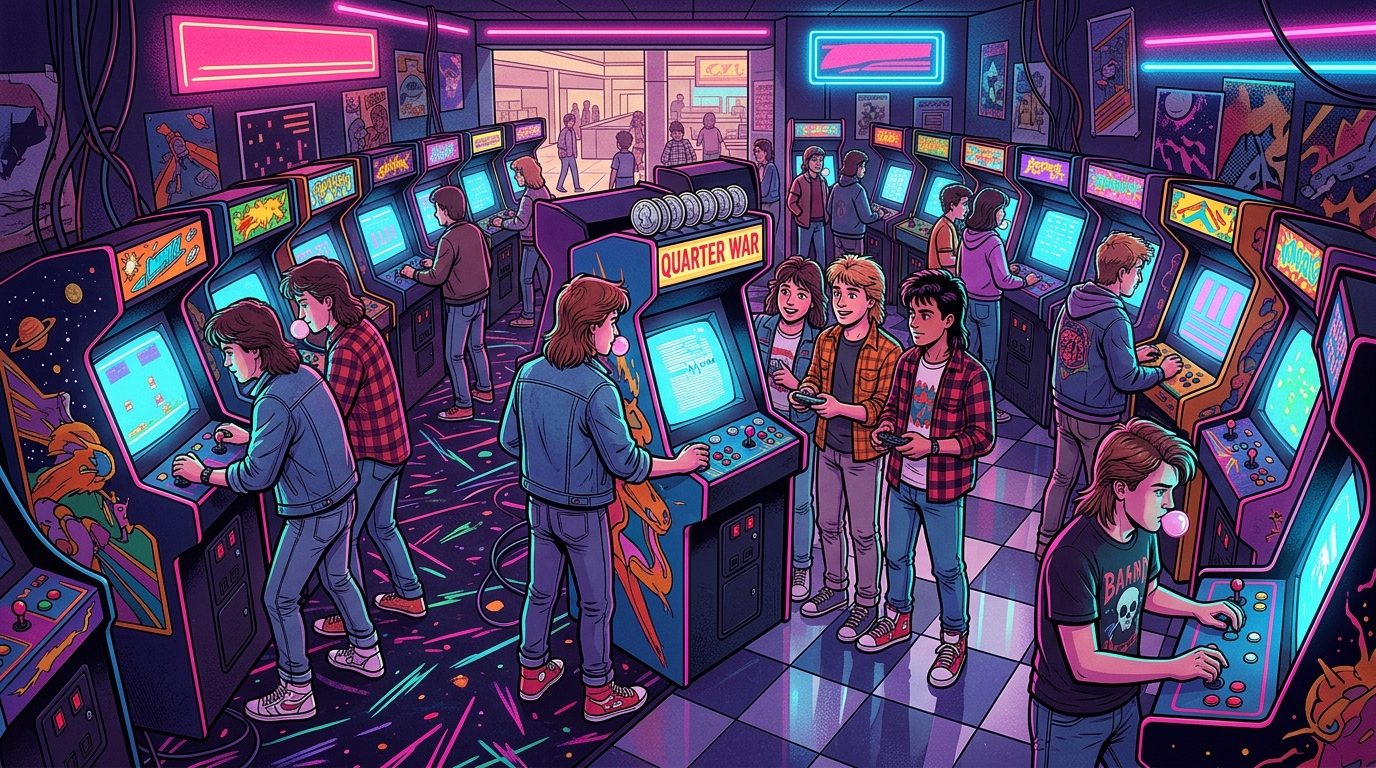
Picture yourself wandering through a labyrinth of neon lights and checkerboard floors, where the air smells like buttered popcorn and ozone. You’ve got a pocket full of quarters and a mission to defend the galaxy from pixelated aliens at the local 80s mall arcades. It was the ultimate third place where you could escape your chores, dodge your siblings, and finally settle that high-score grudge match against your neighborhood rival.
Back in 1981, these glowing dens of digital glory were a massive $7 billion industry, boasting 24,000 locations across the country. While the golden age eventually flickered out like a glitched-out screen, the vibe is officially making a comeback through the power of pure nostalgia. You don’t need a time machine or a flux capacitor to relive the magic of synthwave soundtracks and joystick-induced hand cramps.
Stepping through those glass mall doors felt like crossing a portal into a high stakes sci-fi movie where the sun never rises and the blacklights never dim. You were immediately greeted by that iconic carpet featuring neon squiggles and geometric shapes that looked like a Trapper Keeper exploded under a UV light. The air smelled like a weirdly comforting mix of ozone, hot electronics, and the faint scent of buttery popcorn from the nearby theater. It was the ultimate third place where you could escape your chores and lose yourself in a sea of glowing screens. This was your cyberpunk sanctuary, a windowless world where time stopped and your high score was the only thing that mattered.
The atmosphere was a chaotic masterpiece of sensory overload that would make a modern smartphone look boring by comparison. You had to shout just to be heard over the symphony of synthesized explosions, digitized voices, and the rhythmic clicking of a hundred joysticks. Every cabinet competed for your attention with flashing marquees and bold cabinet art that promised adventures in deep space or gritty urban streets. It was a social hub where a crowd of strangers would gather around a single machine to cheer on a total pro. You werent just playing a game, you were part of a buzzing community fueled by quarters and pure adrenaline.
While the outside world was busy with school and responsibilities, the arcade offered a neon-drenched slice of the future that you could access for just twenty-five cents. Standing shoulder to shoulder with other kids in the dim light created a shared bond that defined an entire generation of gamers. You could spend hours watching the reflection of the CRT monitors bounce off your aviator glasses. It was the peak of 1980s cool, a place where the music was always synth-heavy and the vibes were perpetually immaculate. Even if you ran out of money, just hanging out in that electric glow was enough to make you feel like the main character.
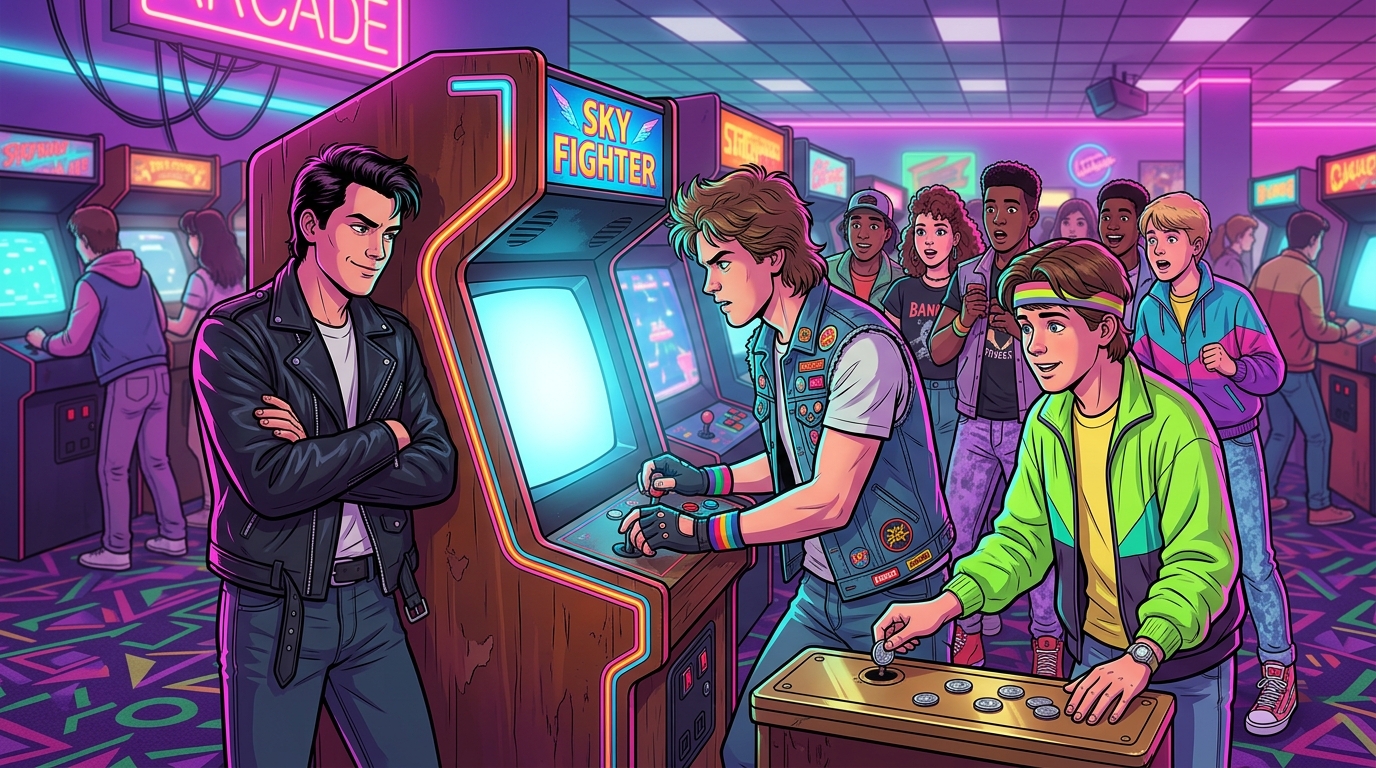
Stepping into a 1980s mall arcade was like entering a neon-soaked arena where your social standing was determined by the coins in your pocket. You didn’t just walk up to a machine and start playing if someone else was already there. Instead, you had to follow the sacred ritual of placing your quarter on the cabinet bezel to claim your spot in the queue. This simple act of putting down a shiny 25 cent piece was a silent contract that everyone respected. It signaled to the current player and the gathering crowd that you were the next challenger stepping up to the plate.
The atmosphere was a chaotic symphony of synthesized bleeps, heavy bass lines, and the constant clacking of plastic joysticks. When a skilled player reached a high-level boss or neared a record-breaking score, a literal physical gravity would pull people toward that specific cabinet. You could feel the heat of the crowd pressing in behind you as the glow of the CRT monitor reflected off your aviator glasses. Having a dozen strangers watch your every move created a high-stakes drama that no home console could ever replicate. It was the ultimate stage for showing off your reflexes while the smell of popcorn and floor wax lingered in the air.
Mastering the social hierarchy meant knowing when to stay cool under pressure and when to offer a nod of respect to a departing legend. The arcade was the premier third place for the neighborhood, serving as a noisy sanctuary away from parents and homework. Whether you were a wizard at the controls or just a spectator soaking in the synthwave vibes, you were part of a living community. Those dimly lit rooms were the original social networks where high scores were the only currency that mattered. You left the mall with sore thumbs and a sense of pride, ready to return next weekend to defend your digital throne.
Stepping into an 80s mall arcade was like entering a neon-soaked portal where the outside world simply ceased to exist. You were immediately greeted by a chaotic symphony of synthesized bleeps, chirps, and the rhythmic thumping of plastic buttons being mashed into oblivion. The air was thick with the scent of salty popcorn and that unmistakable ozone smell coming from dozens of glowing CRT monitors. You probably spent more time strategically leaning against a cabinet while watching a local legend chase a high score than you did actually playing. It was the ultimate social hub where your reputation was measured entirely by the three initials you left at the top of the leaderboard.
Moving through the crowded floor required some serious footwork to avoid the groups of teenagers huddled around the latest fighting games. You had to keep a tight grip on your stash of quarters, feeling that heavy weight in your pocket as you scouted for an open machine. Whether you were guiding Pac-Man through a maze or helping Donkey Kong toss barrels, the goal was always to avoid that soul-crushing Game Over screen for as long as possible. Sometimes you walked away with a massive joystick blister on your thumb, but that was just a badge of honor in this pixelated paradise. It was a loud, vibrant, and slightly sticky environment that defined an entire era of youth culture.
Even though home consoles eventually brought the pixels to your living room, they could never quite replicate the electricity of the arcade floor. There was something special about the shared groans when someone lost their last life or the cheers when a boss was finally defeated. You were part of a community of dreamers fueled by soda and a collective desire to beat the machine. Those dimly lit rooms provided a sanctuary where you could be a hero for the price of a single coin. Today, that nostalgic world of purple and teal neon still reminds us of a time when the mall was the center of the universe.
The mall arcade was more than just a room full of blinking lights, it was the ultimate sanctuary where you could escape the real world for the price of a few quarters. You probably remember that specific smell of ozone and popcorn, the chaotic symphony of synthesized bleeps, and the glow of neon tubes reflecting off the dark carpet. It was the premier third place where reputations were built on high scores and your social status was determined by how long you could stay on a single credit. This was where you met up with friends to talk about movies, music, and the latest rumors while the muffled sounds of the food court drifted through the entrance.
That radical energy did not just disappear when the mall culture started to fade away, it simply evolved into the retro gaming obsession we all share today. You can still feel that same rush of adrenaline when you see a pixelated sprite or hear a lo-fi sound effect from your childhood. We keep chasing that vibe because it represents a time when gaming was a shared, physical experience rather than something done alone in a dark room. Whether you are playing on a modern console or visiting a boutique barcade, you are tapping into a legacy of neon bites and legendary gaming sessions.
Even though the $7 billion industry saw a massive shift over the decades, the heart of the experience remains totally tubular. Today, we celebrate those digital dens as the birthplace of modern gaming culture and the reason we still love that synthwave aesthetic. You do not need a time machine to appreciate the impact of those noisy, crowded spaces on your own sense of nostalgia. The spirit of the 80s arcade lives on every time you hit start, reminding us that the quest for the high score is a journey that never truly ends.
Imagine a glorious mix of ozone from hot circuit boards, buttery popcorn from the nearby theater, and just a hint of floor cleaner. It was the scent of digital freedom and late night gaming sessions. This unique aroma was basically the official perfume of every cyberpunk sanctuary back then.
The arcade industry was an absolute beast in 1981, raking in a massive 7 billion dollars. With 24,000 locations across the country, you could find a glowing den of pixelated glory in almost every town. It was a massive cultural phenomenon that ruled the pre internet world.
Those neon squiggles and geometric shapes were designed to look like a Trapper Keeper exploded under a blacklight. The chaotic patterns were perfect for hiding stains while making you feel like you stepped into a sci-fi movie. It was all part of the sensory overload that made the atmosphere feel like a high stakes paradise.
The arcade served as your ultimate third place, which is a spot that is not home or school where you can just hang out. It was a windowless world where you could escape chores, dodge your siblings, and settle grudges with neighborhood rivals. In this sanctuary, time stopped and your high score was the only thing that truly mattered.
It was a deafening symphony of synthesized explosions, digitized voices, and the rhythmic clicking of a hundred joysticks. You basically had to shout just to be heard over the glorious chaos of all those machines competing for your attention. It was a masterpiece of sensory overload that made modern smartphones look totally boring.
The golden age vibe is officially making a massive comeback through the power of pure nostalgia and synthwave culture. You do not need a time machine or a flux capacitor to relive the magic of glowing screens and joystick induced hand cramps. Many modern spots are recreating this neon aesthetic for a new generation of gamers.