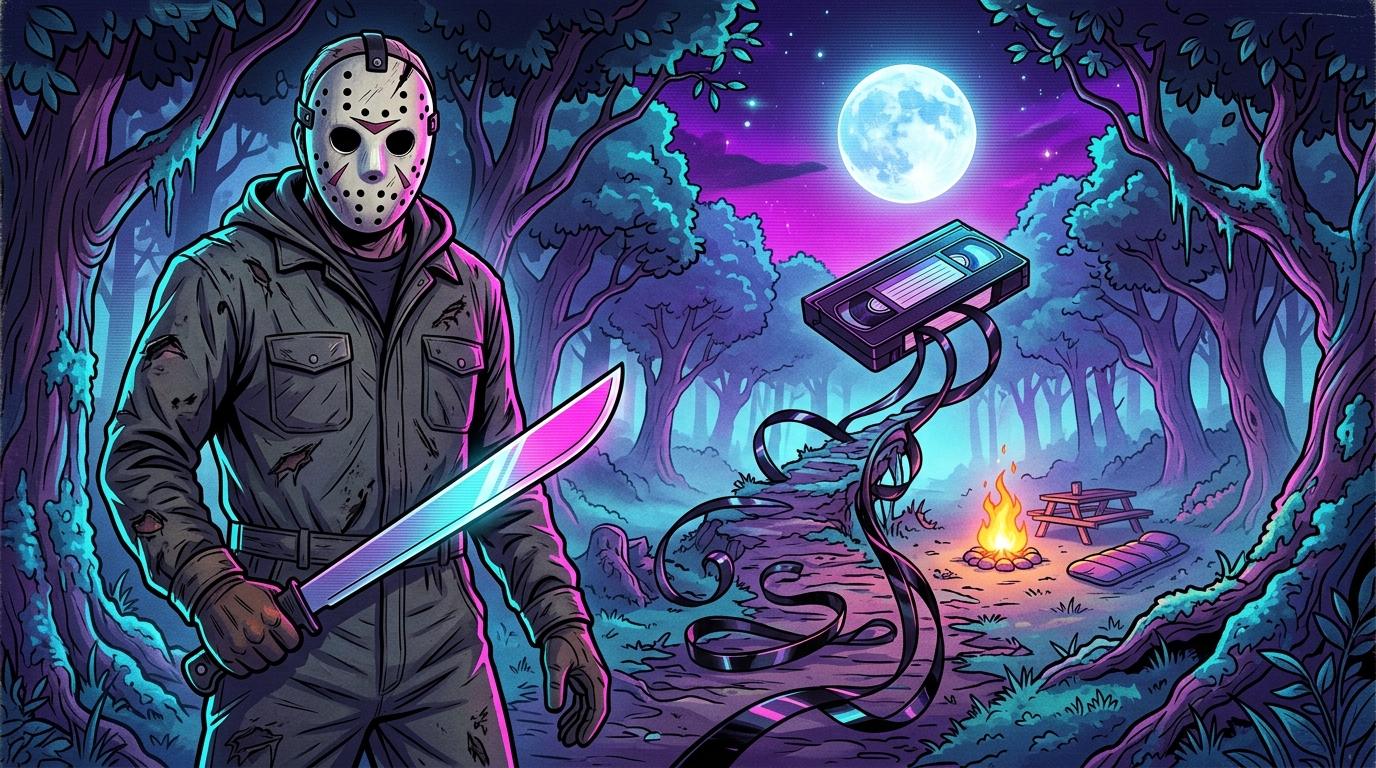
Picture yourself in a neon-soaked dream where the hair is big, the synth music is loud, and your choice of friends is questionable at best. You’re living through the golden era of horror, where 1980s slasher tropes turned every summer camp and suburban street into a high-stakes survival game. Whether you’re the tech-savvy nerd or the brave soul destined to be the Final Girl, you know exactly how the script goes before the killer even picks up a blade.
It’s time to dust off your VHS tapes and embrace the glorious clichés that made these movies legendary. From masked villains who somehow outrun sprinting teenagers by walking slowly to that one creepy guy who warns you to turn back, these patterns are baked into our pop culture DNA. You don’t need a PhD in horror to recognize the signs of a looming jump scare or a supernatural threat that just won’t stay down.
You know exactly how the lineup looks the moment the neon titles fade and the synth bass kicks in. Every classic slasher squad is a checklist of walking targets, from the meathead jock in the varsity jacket to the prankster whose only job is to provide a jump scare before getting axed. You have the party animal who is way too busy looking for a beer to notice the masked killer behind the curtain, and the couple that definitely should have stayed in the car. These archetypes are built to be deleted, serving as mere fodder to pad out the body count while the soundtrack gets increasingly intense. It is a beautiful, predictable dance of bad decisions that keeps you shouting at the screen every single time.
Standing at the center of the carnage is the Final Girl archetype, the only one in the group who actually noticed the creepy guy lingering by the tool shed. She is the virtuous survivor who prefers a good book over a keg stand, making her the ultimate hero for the VHS era. While her friends are busy breaking every safety rule in the book, she is busy finding a knitting needle or a coat hanger to fight back. Her survival is a total vibe, proving that being the observant one pays off when the power goes out. By the time the credits roll, she is the last one standing in the morning light while the rest of the cast is just a memory in a grainy police report.
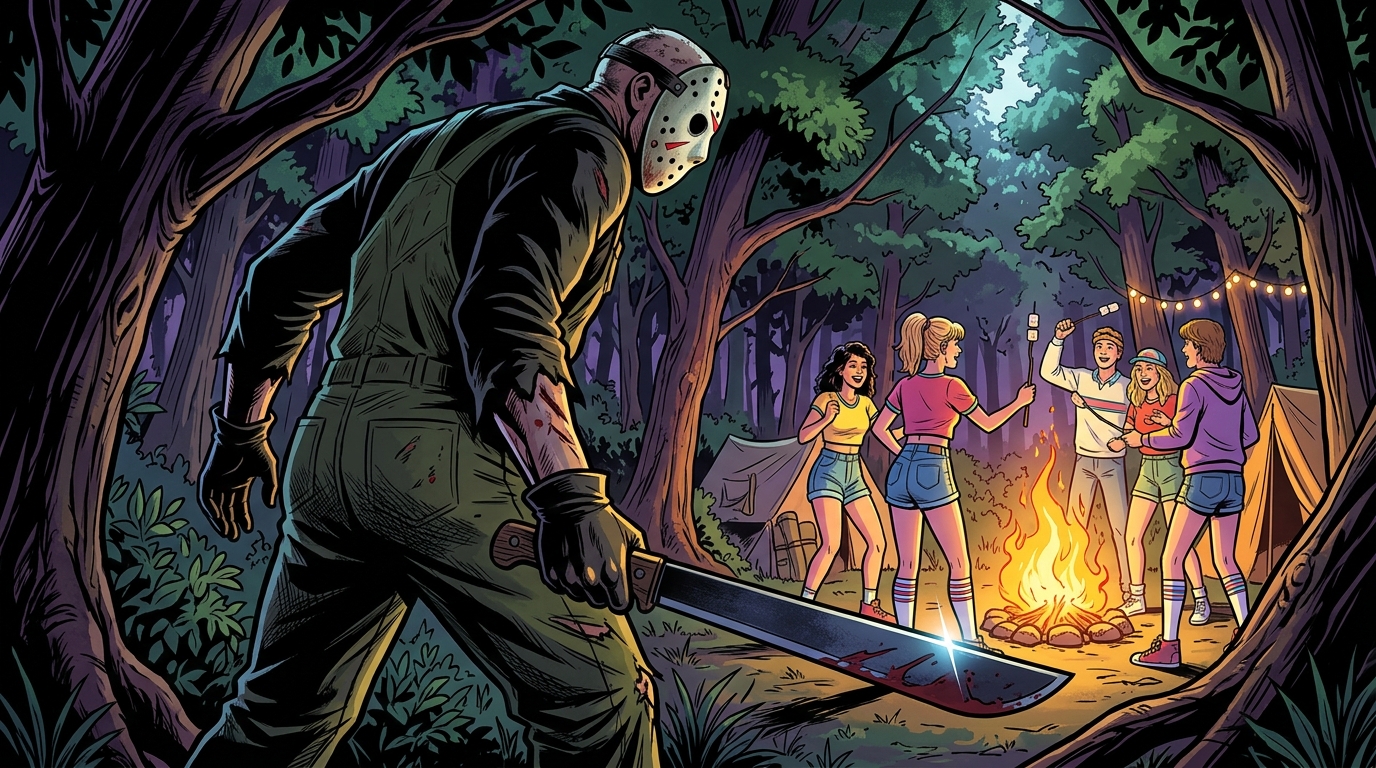
In the neon-soaked world of 1980s horror, the local masked killer isn’t just a monster, he is actually a very strict guidance counselor with a giant blade. You might think you are just having a good time at a summer camp or a house party, but the slasher sees every beer cracked open as a personal invitation to crash the party. The rules are hilariously simple because if you decide to have a little fun, you are basically putting a giant neon target on your back. It is the ultimate “sin equals death” equation where the moment you stop paying attention to your surroundings to enjoy a drink, the music gets ominous and your screen time is officially running out.
Predictability is part of the charm when you are watching a group of teenagers ignore every red flag in the book. You can almost time the kills based on how much fun the characters are having, creating a rhythm that feels as consistent as a synthwave drum beat. If a couple decides to sneak off for a quick kiss in the woods, you might as well start playing the credits for them right then and there. The killer acts like supernatural moral arbiters, punishing anyone who dares to break the unspoken social codes of the decade. While the Final Girl survives by being the only one who stays focused, everyone else finds out the hard way that partying in a horror movie is a one-way ticket to a jump scare.
In the 1980s, a simple kitchen knife or a little bit of fire was never enough to actually finish the job. You could drop a house on these guys or blast them with high voltage, but they would always find a way to twitch their fingers just before the credits rolled. Famous cinematic icons turned dying into a temporary hobby, proving that a solid box office return was the best healing potion available. It became a beloved ritual for fans to watch a villain get absolutely wrecked, only to see them stalking a new batch of teens in a neon-drenched sequel a year later. This cycle of cinematic resurrection turned these masked menaces into the ultimate heavy metal mascots of the VHS era.
The logic behind these supernatural slashers was about as consistent as a scratched cassette tape, but that was half the fun. You knew that no matter how many times the Final Girl knocked the killer down, he was going to stand back up with a slow, robotic head tilt. These guys were basically the final bosses of a glitchy arcade game who refused to stay in the game over screen. Whether they were emerging from a lake or haunting your dreams, their inability to stay dead made every encounter feel like a high-stakes synthwave music video. It taught us all a valuable lesson: if the music is still playing, you should probably keep running.
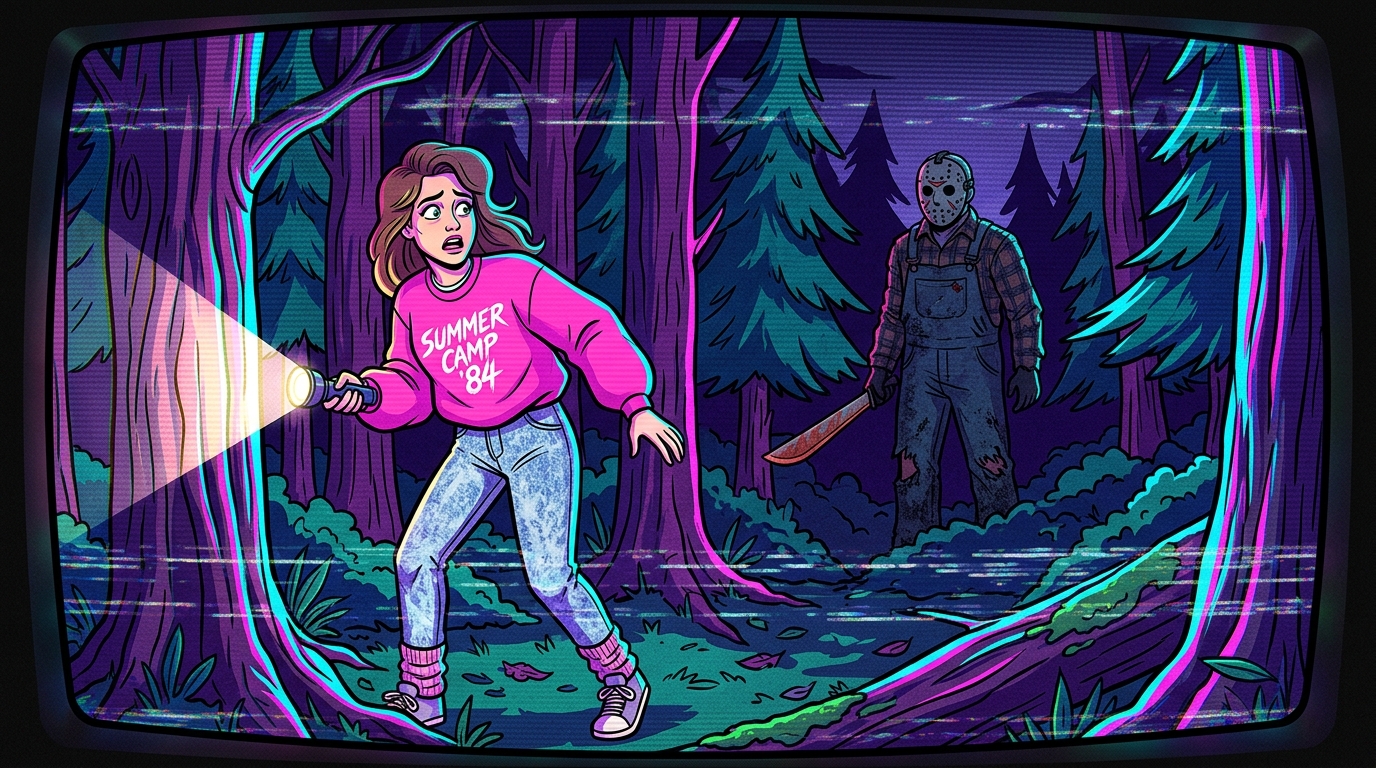
You know exactly who is going to die the second the screen flickers to life with that glorious, fuzzy tracking static. There is a strange comfort in watching the jock, the prankster, and the overly confident “cool kids” ignore every single red flag while a masked killer breathes heavily in the bushes. You are basically shouting at the TV because these characters are legally obligated to make the worst decisions possible. Whether they are wandering into a dark basement alone or trying to start a car that inevitably stalls, their doom is our entertainment. This predictable chaos is the heartbeat of the VHS era, providing a perfect rhythm for your favorite darksynth tracks.
The character roster is so consistent it feels like picking your fighter in a retro arcade game. You have the Final Girl who is destined to survive through sheer resourcefulness, while her friends are busy being walking punchlines for the killer’s creative weaponry. These movies do not care about logic, and honestly, neither do you when the neon blood looks this good under a moonlit sky. It is all about that specific aesthetic where the synthesizers swell just as the killer appears in the reflection of a mirror. We love these tropes because they represent a time when horror was unapologetically loud, colorful, and delightfully ridiculous.
Late-night movie marathons thrive on this formula because it allows you to turn your brain off and soak in the vibes. There is something deeply satisfying about a villain who refuses to stay dead, popping back up for one last jump scare before the credits roll. Even if the plot is thinner than a worn-out magnetic tape, the atmosphere of abandoned summer camps and foggy suburban streets is unmatched. It is not just about the scares, but about the specific feeling of a decade that turned slasher tropes into a high art form. You keep coming back to these films because they feel like home, even if that home is currently being stalked by a supernatural man in a hockey mask.
The golden age of 1980s slashers was a neon-soaked fever dream that proved you do not need a complex plot when you have a masked killer and a cabin full of questionable decisions. Whether it is the invincible monster who somehow walks faster than the teenagers run or the classic Final Girl who discovers her inner warrior just in time, these films are pure comfort food for horror fans. You know exactly what you are getting when the synth music starts pumping and the screen gets that fuzzy VHS grain. It is a world where being the class clown or the star athlete is basically a one-way ticket to an early exit, and we wouldn’t have it any other way.
Embracing these established tropes is like putting on your favorite pair of worn-out high-top sneakers because the predictability is exactly what makes them legendary. From the creepy gas station attendant who gives a cryptic warning to the car that mysteriously won’t start at the worst possible moment, every cliché is a love letter to a decade of excess. These films built the foundation for the synthwave aesthetic we still celebrate today, blending gore with a vibrant, high-contrast style that feels both spooky and cool. Many of these 80s cult movies found their audience through home media, becoming legendary for their unique plots and quotable dialogue. So, next time you see a character decide to investigate a strange noise in the dark basement alone, just grab your popcorn and enjoy the glorious mayhem.
The Final Girl is the one person in your friend group who actually pays attention to the creepy vibes and avoids the keggers. To survive the night, you have to be the virtuous one who keeps your head on a swivel while everyone else is busy making bad decisions. It helps if you have a solid scream and can find a creative use for a wire hanger.
It is the ultimate slasher mystery, but a masked villain never needs to sprint to catch a teenager in a varsity jacket. This supernatural pacing is all about the tension, proving that you can’t outrun destiny no matter how much cardio you do. Just assume if you trip over a flat surface, the slow walk will win every single time.
The prankster or the meathead jock is usually the first to go because they are too busy being loud to hear the synth music getting faster. If you find yourself in a group of archetypes, try not to be the guy who says he will be right back. That sentence is basically a one way ticket to a jump scare.
You should listen to him immediately and go find a nice, brightly lit mall instead. These doom sayers are the only characters with any common sense in the entire movie. If an old man at a gas station tells you the woods are cursed, do not go looking for the lake.
Absolutely, because you cannot have a true 80s nightmare without a heavy bassline and some flickering pink lights. The aesthetic is half the fun, setting the mood for all those glorious clichés and high stakes survival games. If the music stops and the fog rolls in, you know things are about to get real.
Hiding in a closet full of slatted doors or under a thin bed sheet is a classic move that never actually works. Characters are hardwired to make the worst choices possible to keep the body count rising and the audience shouting at the screen. Your best bet is to keep running, but we all know you are going to head straight for the upstairs balcony instead. This modern fascination with retro terror is exactly why you should press play on new projects that capture that same low-fi dread.