You’re cruising down a neon-soaked highway in your favorite retro racer, but instead of a smooth vaporwave sunset, the horizon looks like a crunchy, striped mess. Those ugly lines ruining your vibe are called color banding, and they’re the ultimate buzzkill for your digital aesthetic. By leveling up to 16 bit skyboxes, you’re ditching those blocky gradients for over 281 trillion colors that are smoother than a saxophone solo in a 1984 power ballad.
Stop settling for a sky that looks like it was painted with a budget box of eight crayons. High-fidelity rendering gives you the buttery-smooth transitions you need for those epic HDR views without the chunky visual artifacts. It’s like trading in your grainy VHS tapes for a crisp laserdisc experience that makes every pixel pop. You deserve a horizon that’s as flawless as your high score, keeping your immersion totally tubular and your screenshots looking like literal art.
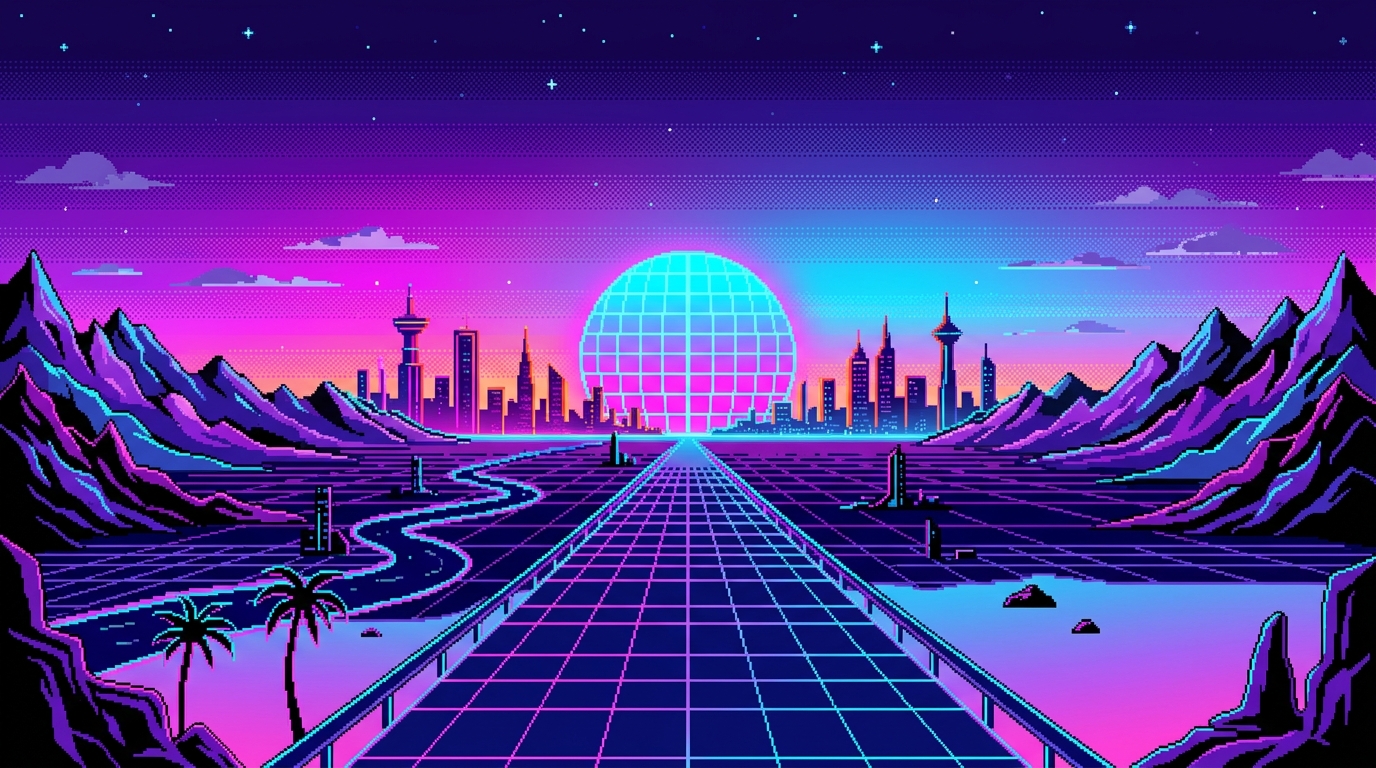
You remember those nights spent staring at your old CRT television, watching the sun set over a jagged mountain range made entirely of tiny squares. Those 16 bit horizons were more than just backdrop art, they were a vibe that defined an entire generation of digital escapism. Even with a limited color palette, developers used clever dithering and gradients to make you feel like you were standing on the edge of a limitless neon world. It was the peak of cozy gaming long before that was even a category, mixing chunky pixels with an atmosphere that felt surprisingly deep. These skyboxes proved that you did not need millions of polygons to capture the feeling of a cool evening breeze or a distant, mysterious planet.
There is a specific kind of magic in how these retro landscapes managed to trick your brain into seeing endless depth. By layering different speeds of scrolling clouds and stars, creators built a sense of scale that made your living room feel like a gateway to another dimension. You could practically hear the synthwave soundtrack kicking in as the color bars shifted from deep indigo to a vibrant, electric pink. It was all about doing the most with the least, turning technical limitations into an iconic aesthetic that still inspires every lo-fi beat and indie game today. These horizons represented a digital frontier where your imagination did half the work, filling in the gaps between those beautiful, blocky clouds.
Even though modern tech can render trillions of colors, there is something undeniably perfect about the simplicity of a classic 16 bit sky. Those crisp lines and bold color choices created a visual clarity that feels like a warm hug for your eyeballs. You do not need ultra high definition when you have the perfect shade of purple stretching across a pixelated ocean. It is the ultimate aesthetic for anyone who misses the days of blowing on cartridges and sitting way too close to the screen. These horizons remain the gold standard for cool, reminding us that sometimes the best views are the ones made of simple, glowing squares.
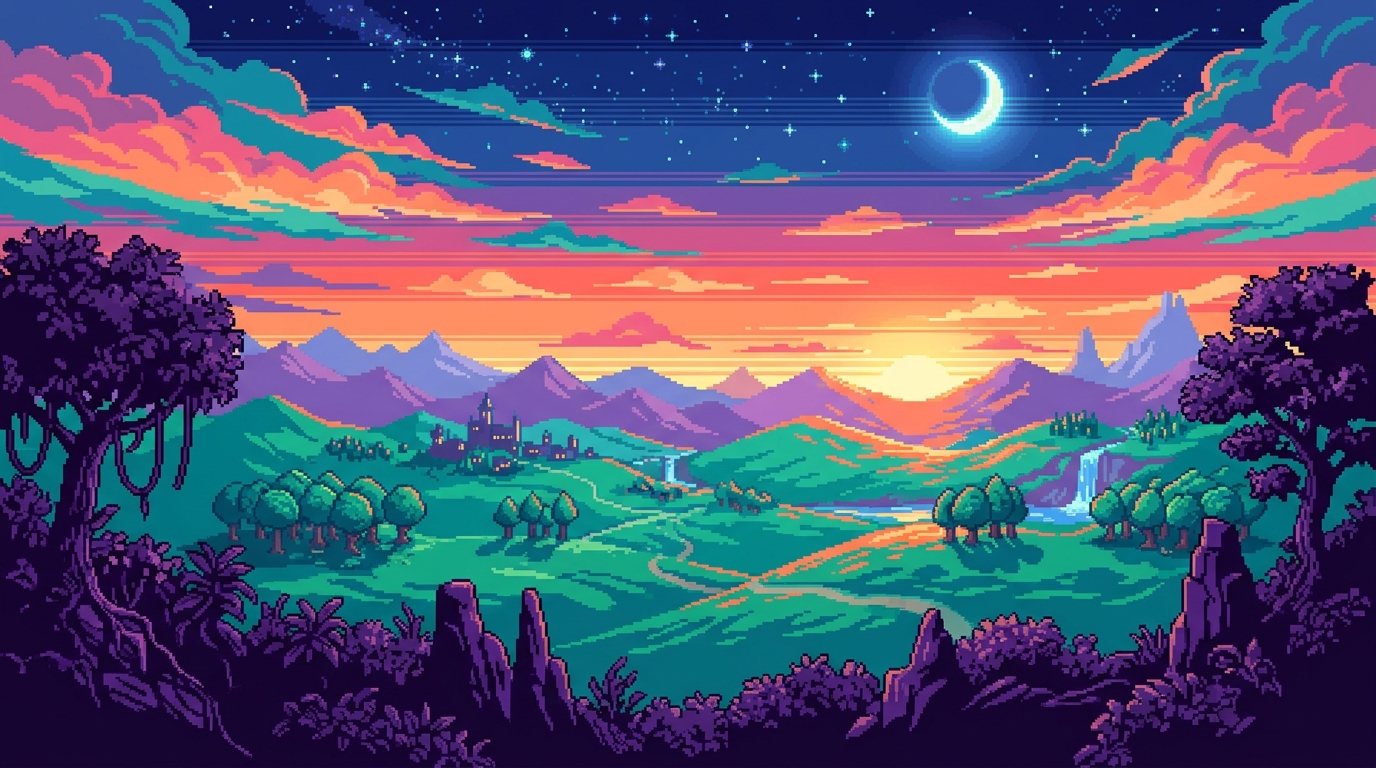
Back in the day, developers didn’t have the luxury of fancy graphics cards to render massive worlds, so they used a clever trick called parallax scrolling to mess with your head. By splitting the background into several different layers, they could move the distant mountains slowly while making the nearby clouds zip by at a faster pace. You probably remember staring at those neon sunsets in your favorite side-scrollers and feeling like the horizon went on forever. This simple illusion of depth transformed a flat, 2D screen into a sprawling digital landscape that felt alive and massive. It was basically the ultimate “fake it until you make it” move in gaming history, and it worked like a charm every single time.
While the 16-bit era was all about that retro charm, these skyboxes were actually doing some heavy lifting to keep those gradients looking smooth and vibey. By using a higher color depth, artists could blend those deep purples and electric blues without those ugly, blocky lines ruining the mood. You could spend hours just vibing to a synthwave soundtrack while watching the pixelated clouds roll over a distant, jagged mountain range. This technical wizardry meant that even though you were just sitting in your living room, your brain was convinced you were exploring a vast, atmospheric universe. It is the reason those old-school horizons still look so incredibly cool on a modern screen today.
Creating that perfect 90s horizon starts with mastering the art of the dithered gradient. Back in the day, hardware limitations meant artists had to get creative with pixel patterns to fake smooth color transitions, and you can mimic this by layering tiny checkerboard textures between your vibrant purples and neon oranges. This technique adds that crunchy, retro texture that feels way more authentic than a modern, buttery smooth blur. If you want your digital sky to look like it belongs on a dusty Sega cartridge, you have to embrace the grain and let those individual pixels shine. It is all about capturing that sweet spot where technology meets imagination through clever visual shortcuts.
To really nail the 16 bit look, you need to be intentional with your color palette and how those shades interact. Think about those endless scrolling backgrounds in classic racing games where the sun is always setting in a blaze of hot pink and electric blue. You can achieve this by limiting your color count and using high contrast edges to define your clouds or distant mountain silhouettes. This approach creates a sense of depth that feels nostalgic and immersive without needing millions of polygons. Your goal is to create your own rad synthwave art that makes the viewer feel like they could jump right into the screen and drive a futuristic sports car toward the horizon forever.
While modern tech allows for trillions of colors, the true synthwave vibe comes from knowing when to dial it back for style. You can use high bit depth to keep your workspace clean, but always finish with that signature pixelated grit that defines the era of classic gaming. Adding a slight glow or a scanline overlay can help tie the whole skybox together, making it look like it is being beamed directly from an old CRT monitor. It is a balancing act between using today’s powerful tools and honoring the lo-fi charm of the past. When you get it right, your digital landscape will radiate a cool, retro energy that any vaporwave fan would love.
The magic of those 16 bit skyboxes comes down to how they made a handful of pixels feel like an infinite, neon soaked universe. You probably remember staring at those vibrant purple sunsets and jagged mountain silhouettes while the synth music pumped in the background. Even though the tech was simple, these horizons captured a specific mood that modern photorealistic games sometimes miss. They provided a sense of wonder that felt like stepping directly into a Saturday morning cartoon or a classic sci-fi movie poster. Those endless digital vistas proved that you do not need trillions of polygons to create an atmosphere that stays with you for decades.
Today, that retro aesthetic is more than just a memory because it has become a full blown movement in the world of digital art. You can see the influence of these pixelated horizons in everything from lo-fi chill hop videos to the latest indie gaming hits. Modern creators are leaning back into those high fidelity gradients and bold color palettes to dodge the boring, flat looks of standard graphics. By embracing that pixel art aesthetic, artists are able to skip the visual glitches like color banding and go straight for that smooth, dreamy glow. It turns out that those old school horizons were not just backgrounds, they were the blueprint for the coolest vibes on the internet. You can even level up your art by combining these skyboxes with glowing grids for the ultimate 80s look.
Color banding is those ugly, chunky stripes you see when a gradient can’t transition smoothly. It happens when your skybox doesn’t have enough colors to play with, making your epic sunset look like a cheap stack of construction paper. Switching to 16 bit fixes this by adding 281 trillion colors for a buttery smooth look.
Not at all, it is actually the exact opposite. While we love the retro vibe, 16 bit rendering is like upgrading to a crystal clear laserdisc that removes all the visual fuzz. You get all the nostalgic soul of the 80s without the low quality artifacts holding your graphics back.
You absolutely do if you want your screenshots to look like literal art. Those extra bits give you the high fidelity depth needed for HDR views that don’t fall apart when things get bright. It is the secret sauce for keeping your immersion totally tubular while you cruise the digital highway.
They used clever tricks like dithered gradients and parallax scrolling layers to fool your brain into seeing endless space. By moving clouds and stars at different speeds, they created a sense of scale that made a flat screen feel like a gateway to another dimension. It is all about that cozy, atmospheric magic.
While it fits the neon aesthetic perfectly, smooth gradients are a win for every single genre. Whether you are exploring a distant planet or a fantasy kingdom, nobody wants a sky that looks like it was painted with a budget box of crayons. Every gamer deserves a horizon that is as flawless as their high score.
Modern rigs handle these higher bit depths like a total champ, so you can keep your frame rate high and your visuals crisp. You are basically getting a massive boost in eye candy without sacrificing the speed you need for those retro racers. It is the ultimate level up for your digital world.