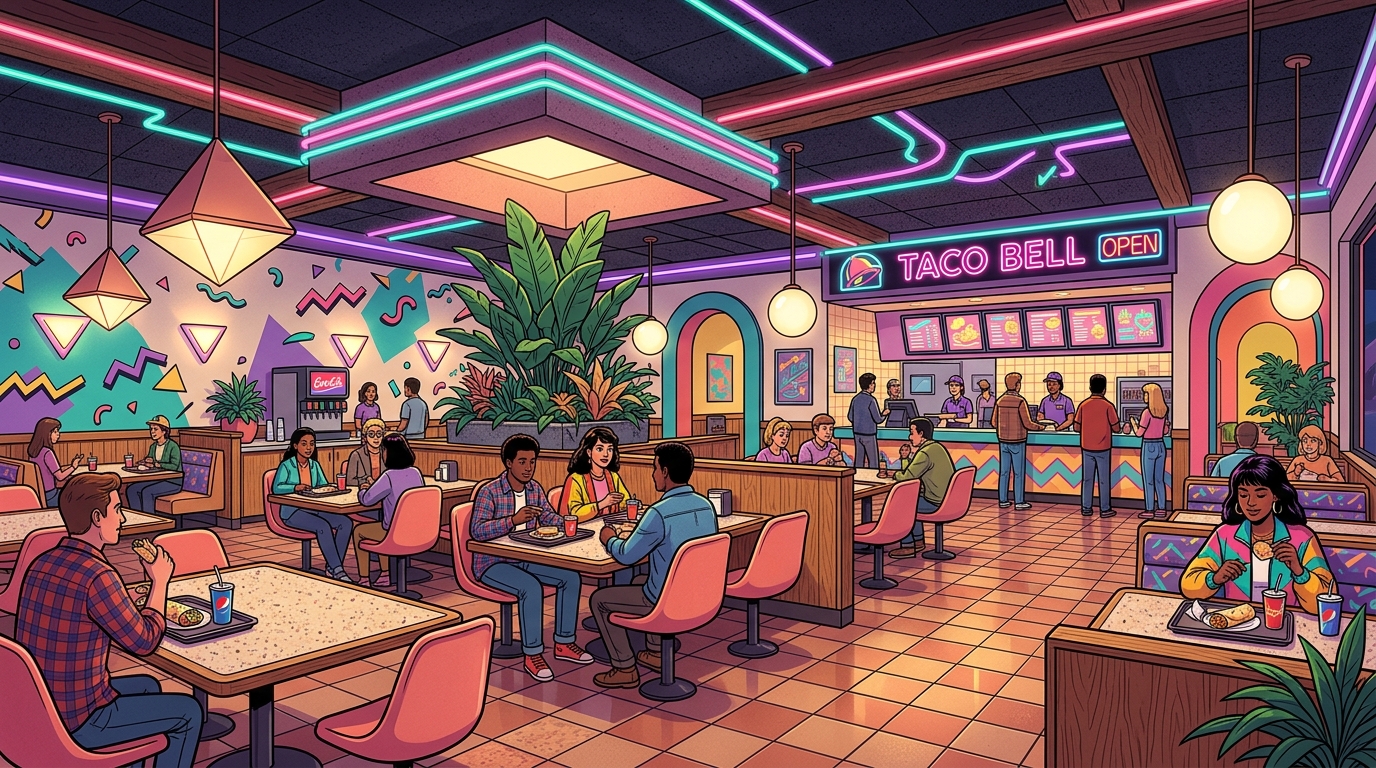
Close your eyes and imagine a world where the floor is a geometric fever dream and the air smells like seasoned beef and nostalgia. Stepping into a retro taco bell interior is like hitting a warp pipe straight back to 1994, where neon purple and teal zig-zags ruled the land. Before everything became a sleek gray box, these locations were basically playable levels in a synthwave music video. You aren’t just there for a cheesy gordita; you’re there to soak in those Saved by the Bell vibes while sitting in a swivel chair that probably saw the premiere of the original PlayStation.
Whether you miss the mission-style arches of the 80s or the neon-soaked chaos of the 90s, the quest for these surviving relics is the ultimate side quest. These legendary spots are becoming rarer than a shiny Pokémon, making every teal booth and clay-tiled floor a piece of fast-food history. It’s a total glitch in the matrix of modern minimalism that reminds us of a time when design was loud, proud, and slightly pixelated. Finding a piece of this Heritage design is like unlocking a secret level where the aesthetic is always set to maximum vaporwave.
Step inside and you will immediately feel like you have been transported into a high stakes level of a 16 bit video game. The interior design of this era was heavily influenced by the Memphis Group, a collective of designers who traded boring rules for chaotic shapes and vibrant energy. You can see their fingerprints everywhere, from the squiggly teal lines on the walls to the purple geometric patterns etched into the tables. It is a world where nothing is symmetrical and everything feels like it was designed by someone who really, really loved Saturday morning cartoons.
Those glowing neon tubes lining the ceiling did more than just light up your burrito, as they turned a simple lunch into a full synthwave experience. Walking through the dining room felt like being an extra on the set of a teen sitcom, surrounded by bold splashes of color that refused to be ignored. The clash of hot pink, deep purple, and electric teal created a visual buzz that made every visit feel like a special event. It was a loud, proud celebration of postmodern style that turned functional architecture into a playground for your eyes.
You probably remember sliding into those heavy booths and feeling like you were part of a radical design experiment. These spaces were built for a generation that embraced the futuristic vibes of the early nineties, favoring bold zigzags over the dusty browns of the past. Even the floor tiles seemed to pulse with a low resolution energy that matched the aesthetic of a 90s jazz cup pattern or a retro arcade. It was a glorious era of design where the furniture was as spicy as the hot sauce, making sure you never forgot exactly where you were eating.
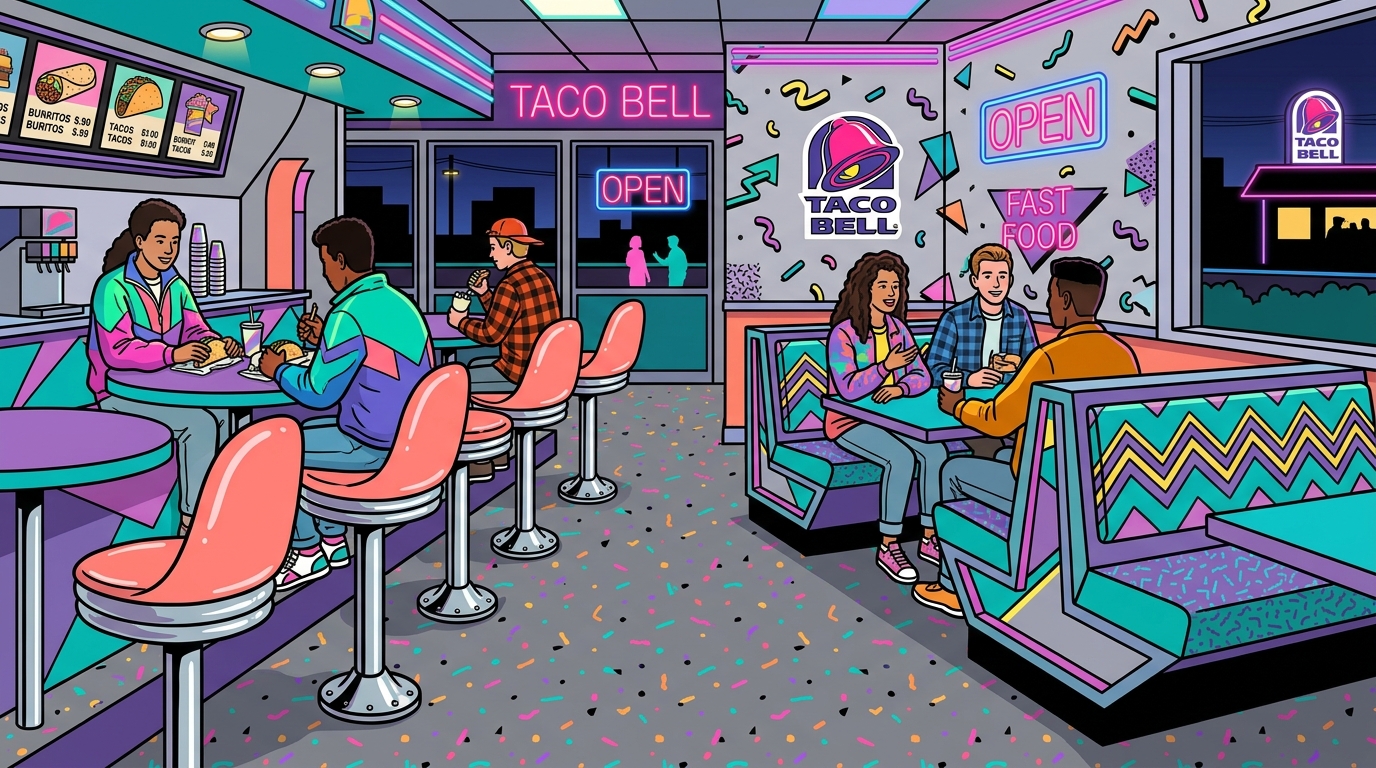
Stepping into a classic restaurant is like loading into a high-definition level of a vaporwave video game. You are immediately hit by that legendary Memphis Group design, where every corner is a explosion of teal, hot pink, and purple geometry. Those heavy plastic swivel chairs were built to survive a nuclear blast, and they definitely do not care about your comfort. You have to master the art of sliding into a teal booth without knocking your drink onto the zig-zag patterned floor. It is a total sensory overload that feels exactly like an episode of a Saturday morning sitcom.
The furniture from this era was less about ergonomics and more about making a bold architectural statement. You will find yourself surrounded by squiggles, triangles, and neon tubes that look like they were ripped straight from a synthwave album cover. These indestructible booths are the holy grail for anyone who misses the days when fast food joints looked like a future-retro fantasy of neon and plastic. Modern buildings might be sleek and gray, but they lack the chaotic energy of a 1990s dining room. Hunting down one of these surviving relics is the ultimate quest for any true nostalgia fan.
You might remember the early days when walking into a local taco spot felt like stepping into a dusty Spanish mission. Those original buildings featured heavy brown tiles, faux-stucco walls, and mission-style arches that screamed 1970s California. It was a look that took itself pretty seriously, focusing on those Mission Revival roots with earthy tones and dim lighting. You probably spent your childhood staring at those hanging bell lanterns while waiting for a cheap bean burrito. This era was all about that rustic, desert-inspired vibe before the world decided everything needed to be way more colorful.
Suddenly, the dusty browns vanished and you were transported into a neon-soaked wonderland that looked like a glitch in the Matrix. The interior designers clearly traded their architecture books for episodes of Miami Vice and a heavy dose of Memphis Group inspiration. You were surrounded by zig-zagging teal lines, bright purple geometric patterns, and those iconic swivel chairs that felt like they belonged on a spaceship. This was the peak aesthetic era where every meal felt like a scene from a Saturday morning sitcom. It was a glorious explosion of postmodern style that turned a simple lunch run into a full-blown synthwave experience.
Today, this specific look has become the holy grail for internet meme culture and aesthetic enthusiasts everywhere. You can see the influence of these vibrant patterns in everything from vaporwave album covers to modern retrowave fashion and gaming setups. While many locations have sadly traded these neon dreams for boring gray boxes, the nostalgia for that colorful chaos remains stronger than ever. Fans treat these rare surviving locations like sacred temples of 90s design, proving that zig-zags and teal paint are truly timeless. It is more than just a place to grab a snack, as it represents a peak moment in functional art that we just cannot stop obsessing over.
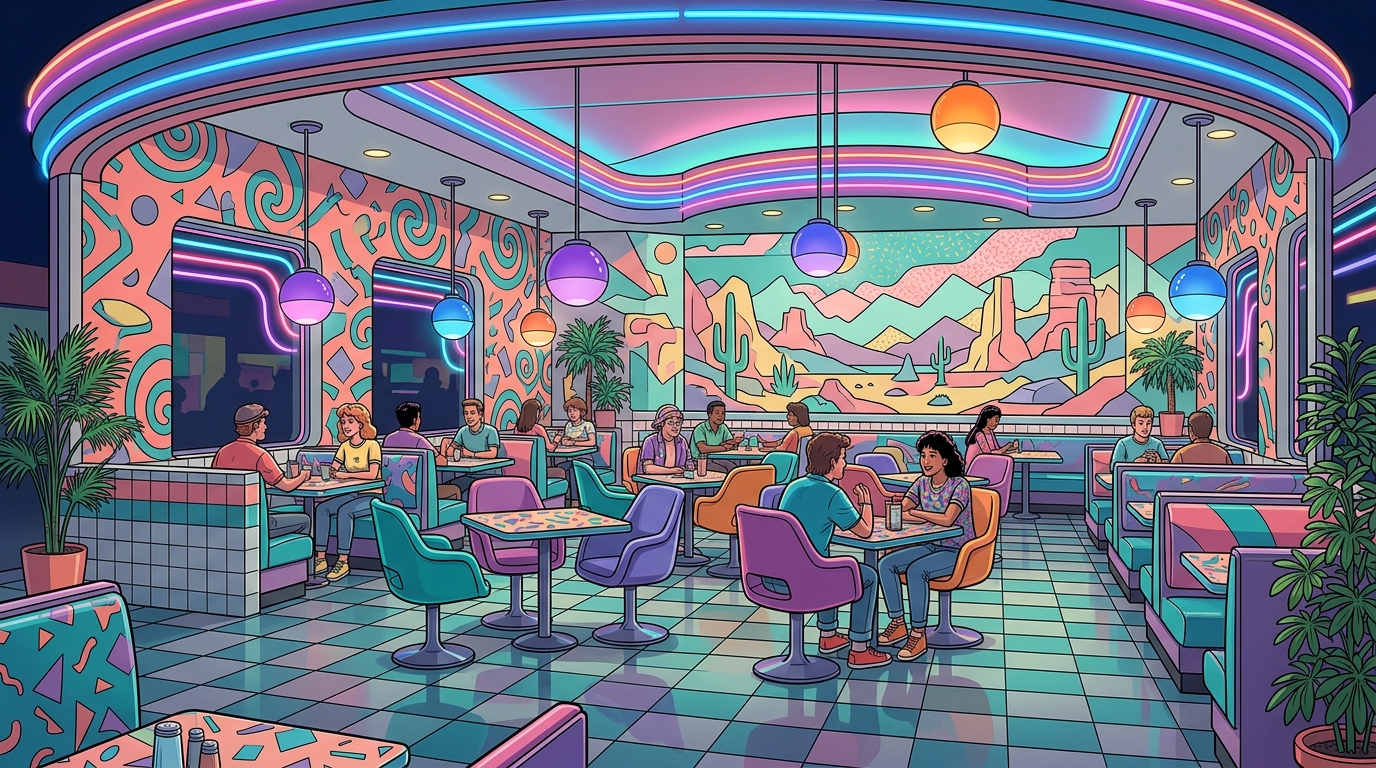
Hunting for an original interior feels like trying to find a legendary loot drop in a retro RPG. You are looking for those rare time capsules that still rock the peak Memphis Group aesthetic from the early nineties. We are talking about the glorious teal and purple color palettes, zig-zag neon strips, and those geometric wall patterns that look like they were ripped straight from a synthwave album cover. These spots are the ultimate retro taco bell vibe for anyone who misses the days of colorful swivel chairs and lighting that made every taco run feel like a scene from a cyberpunk movie.
While many of these nostalgic treasures have been swapped for boring gray boxes, the brand is finally leaning into its Heritage design with new throwback designs. You might stumble upon a Heritage concept store that brings back the iconic notched bells and mission-style architecture of the seventies. These locations blend the old-school California cool with modern tech, giving you a chance to experience that classic Mission Revival look without needing a time machine. It is a win for the aesthetic hunters who want their crunchy tacos served with a side of heavy nostalgia and vibrant history.
Spotting these surviving gems requires a bit of digital detective work and a love for the open road. Keep your eyes peeled for the classic brown shingle roofs or those specific curved windows that hint at a glorious past. When you find one, it is like stepping into a physical manifestation of an internet meme, where every corner is a photo op for your feed. Grab your favorite neon windbreaker and hit the pavement to find these legendary spots before they vanish into the digital void forever.
The retro interior is way more than just a place to grab a quick taco; it is a full-blown sensory experience that feels like stepping directly into a glitchy VHS tape. You can almost hear the synthwave beats dropping as you scan those legendary teal and purple geometric patterns that define the Memphis Group design style. These spaces were built with a loud, unapologetic energy that makes modern minimalist buildings look totally boring by comparison. Every zig-zag neon light and colorful swivel chair serves as a reminder of a time when fast food architecture actually had a soul. It is the ultimate vibe for anyone who spent their childhood dreaming of living inside a Saturday morning cartoon.
You should take a moment to appreciate these legendary architectural masterpieces before they completely vanish into the digital ether of internet meme culture. Grabbing a bright soda under the glow of a pink neon sign is basically a spiritual requirement for anyone obsessed with that 90s aesthetic. While the world tries to turn everything into a plain gray box, these surviving locations keep the dream of the mall food brands and the Saved by the Bell era alive and well. It is a nostalgic trip that hits harder than a spicy bean burrito at midnight. Keep that neon light burning bright and celebrate the funky shapes that made these buildings iconic landmarks of our collective past.
Think of it as a time machine built out of neon tubes and geometric chaos. You are looking for the holy trinity of 90s design which includes teal zig-zags, purple Memphis Group patterns, and those legendary swivel chairs. It is basically the physical version of a vaporwave playlist.
The design was heavily inspired by the Memphis Group, a crew of designers who hated boring rules and loved loud shapes. They wanted your dining experience to feel like a 16 bit adventure where symmetry is the enemy. Every squiggle and triangle was placed there to make your lunch feel like a Saturday morning cartoon.
Finding one of these relics today is like spotting a shiny Pokémon in the tall grass. While most spots have been updated to the boring gray box look, a few legendary locations still rock the original mission arches and clay tiles. You have to treat your road trip like a high stakes side quest to find them.
Those glowing tubes were designed to turn a simple taco run into a full synthwave experience. The neon purple and teal lighting creates a glitch in the matrix that makes you feel like you are inside a Saved by the Bell episode. It provides the ultimate aesthetic vibe for your meal.
This is the official terminology for the era when restaurants embraced loud colors and bold architecture. It represents a time before minimalism took over the world and everything became sleek and serious. It is a piece of fast food history that celebrates being loud, proud, and slightly pixelated.
If you manage to find a surviving retro location, you can absolutely claim your throne in a classic swivel chair. These seats are the ultimate relics of 1994 and probably witnessed the original PlayStation launch. Sitting in one is the ultimate way to soak in the 90s vibes while you eat.