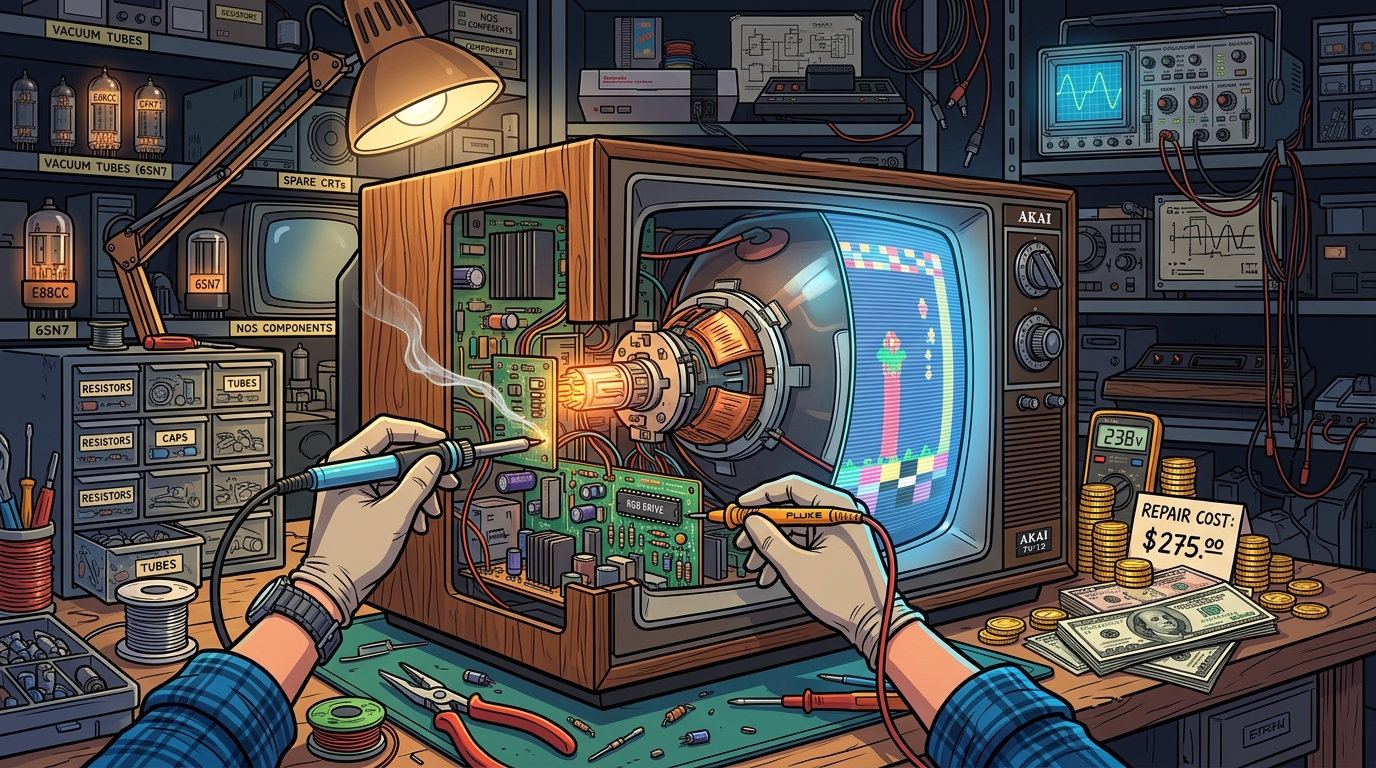
You’ve finally rescued that chunky, glowing beast from your parents’ basement, but your retro gaming dreams are on hold because the screen won’t stop flickering. Figuring out the crt tv repair cost in 2026 feels a bit like trying to find a working payphone in a cyberpunk dystopia. While these vintage boxes used to be a dime a dozen, keeping the scanlines alive today requires some serious tech-wizardry and a bit of extra cash for specialized labor.
Since most repair shops now treat a tube TV like an ancient alien artifact, you can expect to pay a premium for that sweet, nostalgic glow. Most fixes will land you somewhere between $100 and $500, depending on whether your set just needs a quick tune-up or a total heart transplant. It’s the price we pay for that authentic 80s aesthetic and perfectly lag-free gameplay.
Deciding whether to save your chunky vintage beast or let it fade into the digital sunset usually comes down to the price of the revive spell. For most standard fixes, you are looking at a price tag between $100 and $500 to get those scanlines looking crisp again. While a simple blown fuse or a loose port might only set you back on the lower end, specialized labor is the real boss fight here. Since finding a technician who knows their way around a high voltage anode is like finding a rare shiny pokemon, you should expect to pay a premium for that old school expertise. Most shops will start with a diagnostic fee of $50 to $150 just to open the hood, though they often count that toward your final bill.
The most common quest your CRT will take is the legendary recap, which involves swapping out crusty old capacitors for fresh ones to fix wavy lines or power issues. This service typically lands in the $100 to $300 range and can breathe new life into a set that has been sitting in a dusty garage since the nineties. If your screen is totally dark and needs a flyback transformer replacement, the cost climbs higher because those parts are becoming vintage relics themselves. While it might seem cheaper to just buy a modern laggy converter, true retro fans know that nothing beats the glow of real phosphors. Investing a few hundred bucks into a professional restoration ensures your setup stays peak aesthetic for years to come.
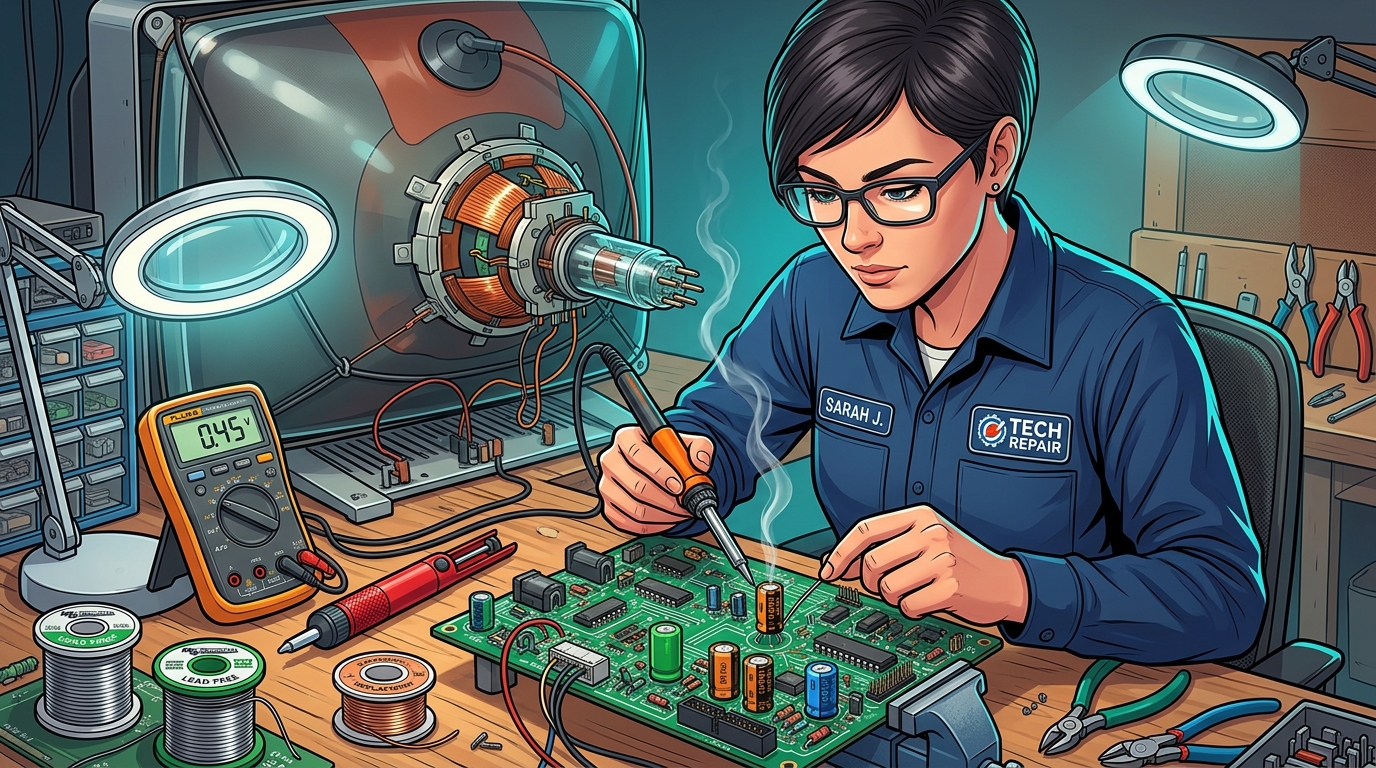
If your vintage gaming rig is starting to look like a scrambled cable channel from 1989, you are likely facing the dreaded capacitor failure. In 2026, finding a wizard who can actually handle a soldering iron without blowing their eyebrows off is getting tougher than beating Mike Tyson on a laggy emulator. You can expect to shell out anywhere from $100 to $300 for a professional recapping service, which might seem pricey until you remember that these machines contain enough stored electricity to send you back to the future. This fee covers the painstaking process of swapping out leaky, crusty components for fresh ones that make your scanlines pop like a neon sign in a synthwave music video. Paying for this specialized labor ensures your precious hardware stays out of the landfill and remains the centerpiece of your retro cave.
Choosing to invest in a pro restoration is a total power move for anyone who values that authentic glow over a cheap, soulless HDMI converter. While standard tech repair shops might look at your CRT like it is a prehistoric relic, specialized enthusiasts treat these sets with the respect they deserve. The premium you pay covers hours of meticulous work, including discharging the tube safely and fixing those wonky geometry issues that make your favorite plumber look like he is walking through a funhouse mirror. It is a small price to pay to keep your childhood memories running in glorious 240p without the zero input lag that ruins your high scores. Think of it as a spa day for your television, ensuring it survives another decade of late night marathons and pixelated adventures.
Getting your retro setup back to its former glory often feels like a side quest with some seriously tough hidden bosses. Before a technician even touches your screen, you are likely looking at a travel fee or diagnostic charge ranging from 70 to 150 dollars just for them to show up at your door. Since these heavy glass beasts are basically workout equipment in disguise, most pros will not even consider a house call without a guaranteed payment for their gas and time. You have to decide if that initial investment is worth it before you even know if your favorite light gun game will ever work again. It is a steep price to pay for a vibe check, but that is the reality of keeping the analog dream alive in a digital world.
The real final boss of your repair bill comes down to the skyrocketing prices of parts that have been out of production since the days of dial-up internet. If you are rocking a high-end professional monitor, finding a replacement flyback transformer or a specific neck board can feel like searching for a legendary loot drop with a one percent spawn rate. These components are becoming extinct, and the few people who still have them often charge a premium that would make a scalper blush. You might find yourself paying hundreds of dollars for a single vintage chip just to get those crisp scanlines back. At some point, you have to do the math and see if a modern converter and a flat screen might be a more budget friendly way to chase that neon nostalgia.
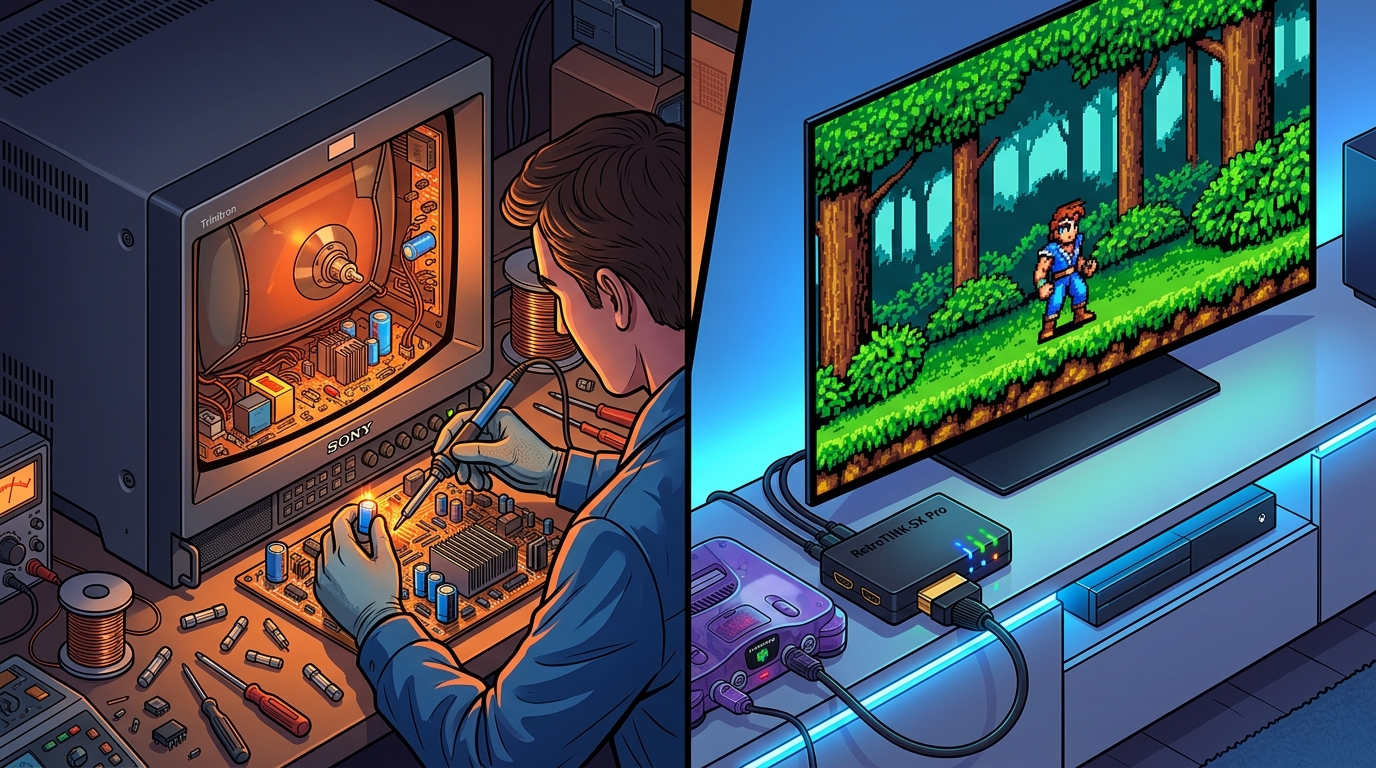
Deciding whether to drop $500 on a professional CRT restoration or buy a modern scaler is the ultimate boss battle for your wallet. While a high end converter can make your modern flat screen look surprisingly crisp, it still feels a bit like eating a veggie burger when you really wanted a steak. You get the convenience of HDMI and a lightweight setup, but you lose that authentic glow and the zero lag response time that only a heavy glass tube can provide. If you are just looking for a quick nostalgia hit without the bulk, a digital scaler is a solid power up for your living room.
Investing in a full recap and professional tune up for your vintage set is like restoring a classic arcade cabinet to its former glory. That $100 to $500 price tag might seem steep compared to a cheap dongle, but you are paying for the soul of the 80s and the expertise of a technician who knows how to handle high voltage magic. There is a certain vibe to seeing scanlines on a real screen that no digital filter can perfectly replicate. If you want your childhood games to look exactly the way they did in a neon soaked basement, saving the tube is the only way to go.
Ultimately, your choice depends on whether you value the convenience of modern tech or the pure aesthetics of a bygone era. A scaler is a great way to keep things simple and save space, especially if you are tired of moving a hundred pound box every time you rearrange your room. However, for the true purists who want that authentic flicker and the warmth of a buzzing cathode ray, the repair cost is a small price to pay for a time machine. Just remember that once these glorious tubes are gone, they are gone for good, so keeping one alive is doing your part for gaming history.
Deciding whether to save your chunky vintage beast or finally let it go to the big arcade in the sky is a total mood. While a diagnostic fee of fifty to one hundred and fifty dollars might feel like a buzzkill, it is the only way to know if your screen just needs a quick solder or a full heart transplant. Spending three hundred dollars on a capacitor recap might seem steep when modern screens are everywhere, but you cannot put a price on that authentic scanline glow. If you are rocking a high end professional monitor, dropping five hundred dollars to keep those pixels popping is a small price to pay for the ultimate retro gaming sanctuary.
Choosing to invest in your crt tv repair cost is about more than just money, it is about preserving a piece of history that modern converters just cannot replicate. You have to weigh the nostalgia of that warm glass hum against the reality of specialized labor costs in an age where these skills are becoming rare. If your budget is tight, the best CRT TV for your needs might still be out there waiting to be found. Once you have decided to keep that vintage aesthetic alive and well, you should take the next step to level up your entire setup. You can upgrade your workspace with retro computer mascots and futuristic office supplies to ensure your gaming desk matches the neon vibes of your newly revived television.
You should expect to spend anywhere from $100 to $500 to get those glorious scanlines humming again. The final price tag depends on whether your TV needs a simple tune-up or a full-blown heart transplant of vintage parts.
Most tech-wizards charge a diagnostic fee between $50 and $150 just to open the hood and see what is wrong. The good news is that most shops will count that fee toward your final repair bill so you are not losing extra gold.
A recap involves swapping out crusty old capacitors that have gone bad over the decades for fresh ones. This legendary service usually costs between $100 and $300 and is the best way to fix wavy lines or power issues.
Finding a technician who understands high voltage anodes is like finding a rare shiny pokemon in the wild. You are paying a premium for specialized labor because most modern repair shops treat these sets like ancient alien artifacts.
If you want that authentic 80s aesthetic and lag-free gaming for your retro consoles, the repair cost is totally worth it. You cannot get that sweet neon glow or perfect motion clarity from a modern flat screen.
Unless you want to get zapped into the next dimension, you should leave the internal repairs to the experts. These heavy beige boxes hold a massive electrical charge even when unplugged, so let a pro handle the dangerous tech-wizardry.