Picture yourself in a room bathed in the neon glow of a CRT monitor, surrounded by more floppy disks than you know what to do with. Back then, technology wasn’t just a cold slab of glass; it was a weird little guy with a trident or a pixelated penguin trying to be your best friend. Every iconic retro computer mascot was designed to make those confusing green lines of code feel a little more human and a lot more fun.
You aren’t just looking for a logo; you’re looking for that hit of 16-bit nostalgia that reminds you of Saturday morning cartoons and synthwave soundtracks. These digital sidekicks defined an era where branding was loud, colorful, and occasionally a bit bizarre. From the basement-dwelling heroes of the early Unix days to the 90s icons that battled for your loyalty, these characters were the true faces of the digital revolution.
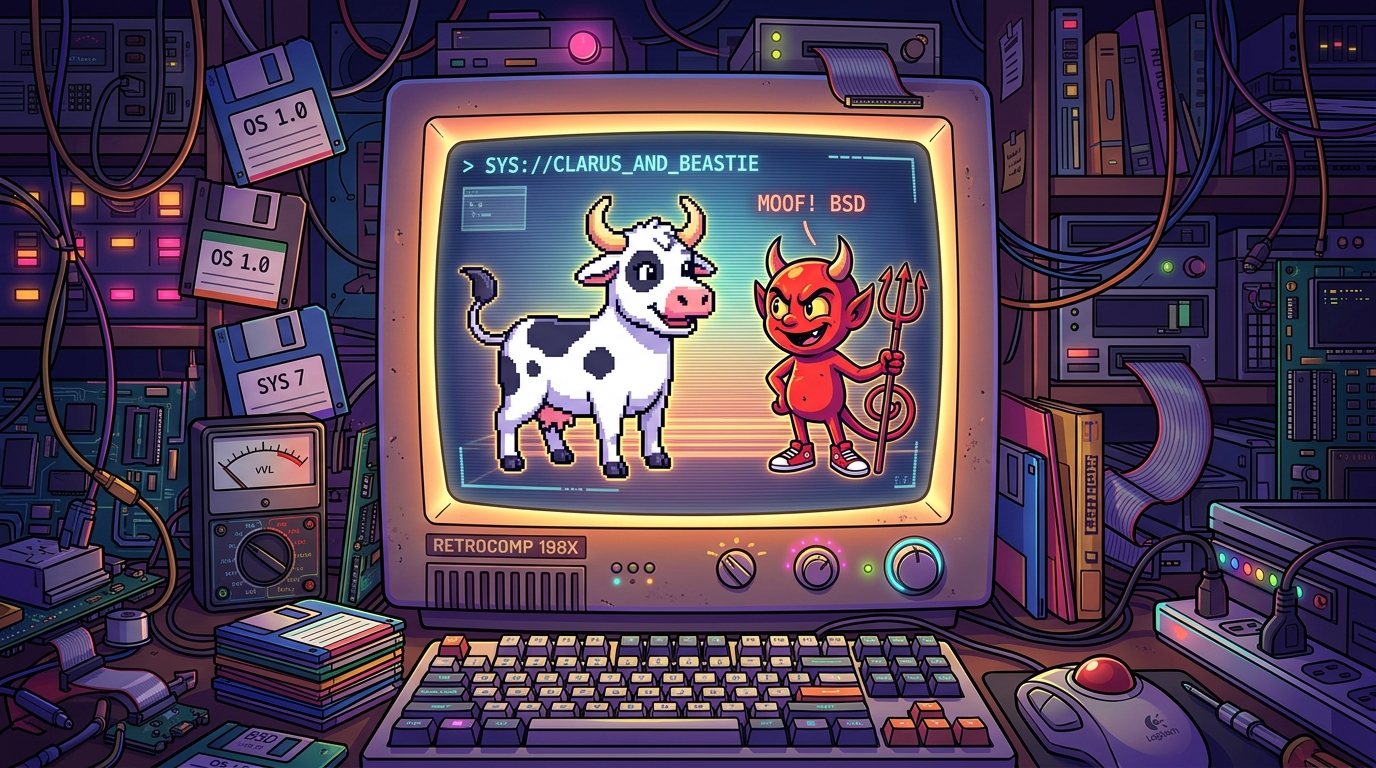
Back in the day, your computer was essentially a beige breadbox that hummed like a refrigerator, so companies had to get creative to make you actually like the thing. You were greeted by a bizarre cast of digital weirdos that looked like they were birthed from a neon fever dream or an underground comic book. Take Clarus the Dogcow, a pixelated hybrid who lived inside printer settings and uttered a confused Moof because she did not know what she was. These characters were not just logos, they were the strange, bitmapped soul of your hardware.
If you thought software was just for spreadsheets, you clearly never met the BSD Daemon, a grinning red imp who literally represented the processes running in your background. These mascots were often creepy, slightly off-model, and felt like they were designed by someone who had spent way too much time staring at a glowing cathode ray tube. They humanized the clunky tech of the eighties by giving you a digital buddy to guide you through the world of command lines. This was the era of the mascot wars, where every operating system needed a weird little guy to build brand loyalty before things got boring and corporate.
You can still feel the lingering vibes of these icons every time you see a retro gaming meme or a synthwave album cover. Whether it was a penguin named Tux or a miner stuck in a loop on a ZX Spectrum, these characters turned cold circuitry into something that felt alive and personal. They were the original influencers of the desktop world, proving that we would rather take advice from a pixelated animal than a dry instruction manual. Even if they looked like they belonged in a glitchy fever dream, they made the early home computing experience feel like a wild adventure.
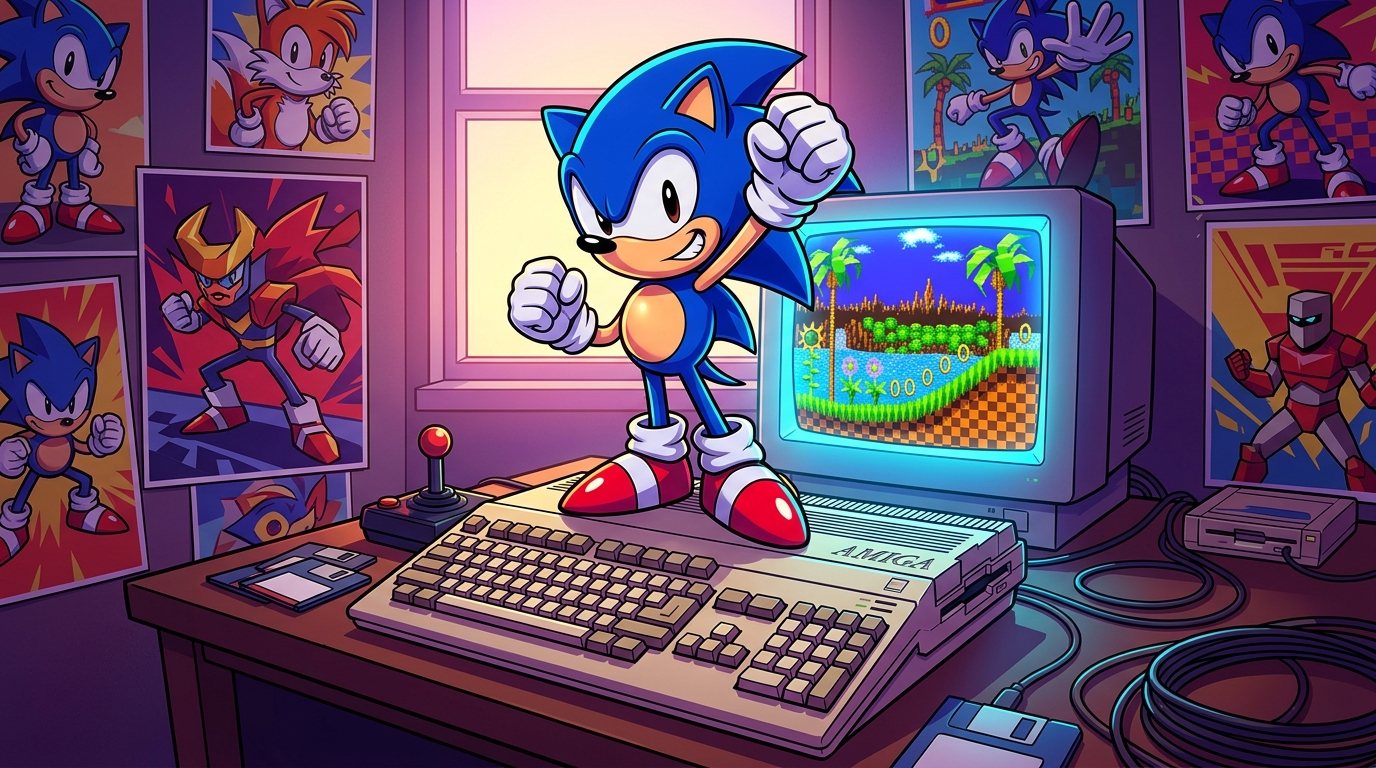
If you grew up during the 16-bit era, you probably remember the frantic energy of companies trying to manufacture cool out of thin air. While the console titans already had their superstar frontmen, computer manufacturers were left scrambling to find a face that didn’t look like a corporate tax form. This led to a fever dream of neon-soaked marketing campaigns and increasingly bizarre anthropomorphic animals designed to prove that home computers were just as edgy as specialized gaming machines. You couldn’t open a magazine without being bombarded by side-scrolling hopefuls who looked like they were trying way too hard to be your best friend.
The quest for a definitive icon gave us Zool, a gremlin-like ninja from the Nth Dimension who literally lived in a world of branded lollipops and synthwave colors. He was supposed to be the answer to the high-speed platforming craze, radiating a too cool for school attitude that felt both desperate and strangely captivating. Looking back at these characters today provides a goldmine of meme-worthy nostalgia, mostly because their designs were often more creepy than cute. These weird little guys were the foot soldiers in a marketing war that prioritized radical poses and backwards caps over actual personality.
You have to appreciate the sheer chaos of an era where a literal green gremlin or a tuxedo-wearing penguin was considered a viable strategy for selling expensive hardware. These mascots were the ultimate bridge between the stuffy world of operating systems and the exploding culture of arcade-style gaming. Whether they were carrying tridents or jumping through candy lands, they represented a wild time when tech companies weren’t afraid to get weird. Even if they never quite reached the heights of the biggest legends, these funky digital ambassadors gave our favorite old machines a soul that modern minimalist logos just can’t match.
Before the internet was a polished playground of minimalist logos, the open source community decided that the best way to sell complex operating systems was through a collection of weird little guys. You probably recognize Tux the penguin who became the unlikely face of an entire digital revolution. He was not exactly the peak of high-end graphic design, but his chubby, friendly appearance helped make the intimidating world of coding feel like a backyard barbecue. Choosing a flightless bird as a mascot was a bold move that signaled to the world that this software did not take itself too seriously. Long before we had modern social media, Tux was already being photoshopped into every scenario, effectively becoming one of the first true tech memes.
While Tux was busy conquering servers, a giant green Mozilla lizard was stomping through the early browser wars with a vibe straight out of a classic monster movie. This neon reptilian mascot looked like he belonged on a vintage lunchbox or a synthwave album cover rather than a piece of professional software. It was a glorious era where corporate branding felt more like a fever dream, using bright colors and slightly creepy creatures to catch your eye. These mascots were designed to humanize the cold, gray hardware sitting on your desk, turning lines of code into characters you could actually root for. Even if these designs feel a bit chaotic today, they captured a sense of fun and rebellious energy that modern, sleek tech brands just cannot replicate.
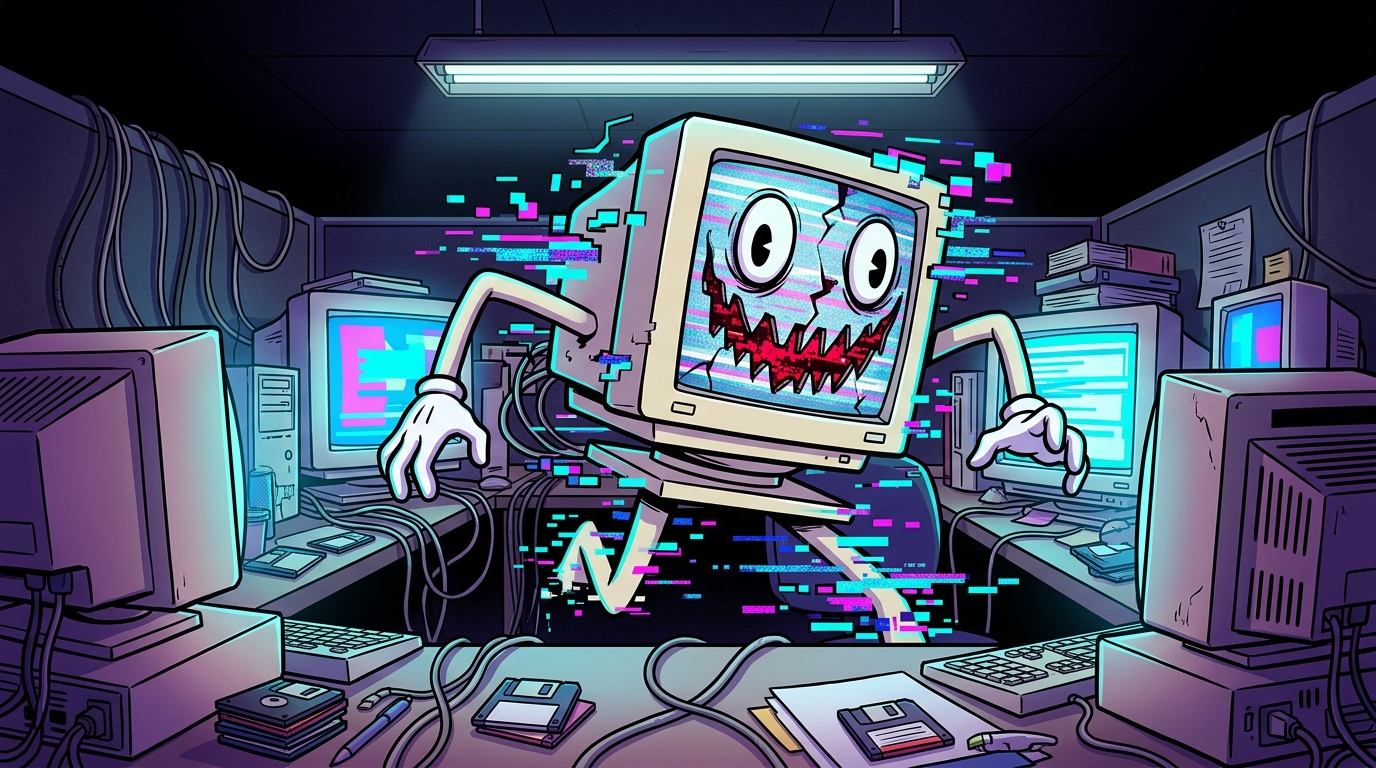
Before the world of sleek, minimalist logos took over, tech companies tried to win your heart with some truly bizarre creations that looked like they crawled out of a neon-soaked fever dream. You might remember the friendly faces, but the 80s and 90s were also packed with corporate experiments that felt more like a glitch in the simulation than a marketing win. These characters were supposed to make complex hardware feel approachable, yet they often ended up looking like they belonged in a low-budget horror flick. From bulging eyes to limbs that defied the laws of physics, these sprites and illustrations are the ultimate fuel for modern internet memes.
Imagine opening a magazine and being greeted by a grinning anthropomorphic computer chip that seems to be staring directly into your soul. These mascots often featured jagged 2D pixels and questionable color palettes that screamed budget design even for the time. You have to wonder what the marketing teams were thinking when they greenlit creatures that looked like they were vibrating with pure caffeine. It was a wild era where a trident-wielding demon or a frantic miner could be the face of a technical revolution.
Getting nostalgic for this era means embracing the absolute chaos of character designs that arguably should have stayed on the drawing board. You can practically hear the synthwave soundtrack playing in the background as you stare at a mascot with way too many teeth or an unsettlingly wide smile. These icons represent a time when the digital frontier was still a weird, lawless place where anything went. Whether they were trying to be cool or just plain helpful, these vintage computer hardware ads and cursed corporate creatures remain a hilarious reminder of tech history’s most awkward growing pains.
Ultimately, these pixelated pals were more than just marketing gimmicks designed to sell you a beige box with 64KB of RAM. They were the weird, digital bridge between us and the complex world of early computing. Whether it was a trident-wielding demon or a frantic miner, these characters gave a face to the cold, hard silicon hidden under the desk. You could almost forgive a system crash when a smiling animal was the one delivering the bad news. Their glitchy charm and bizarre designs proved that tech didn’t have to be boring or corporate to be a big deal.
We still hold onto these strange mascots because they represent an era when the internet felt like a digital frontier filled with neon nostalgia and dreams. Modern tech branding might be sleek and minimalist, but it lacks the chaotic energy of a penguin in a tuxedo or a sentient yellow circle. These characters have become legendary memes because they remind us of a time when every software release felt like a wild experiment. You can upgrade your processor and double your storage, but you can never quite replace the soul of a mascot that looked like it was drawn on a napkin during a lunch break.
The next time you see a grainy sprite or a low-polygon creature from the 80s, remember that they were the original influencers of the tech world. They survived the mascot wars and the transition to 3D graphics just to stay tucked away in our collective nostalgia. Even if their designs were a little creepy or their backstories made no sense, they made the digital world feel like a place where anything could happen. Keep riding that synthwave vibe and never forget the weird little guys who paved the way for the devices you use today.
These are the funky digital sidekicks from back when your computer looked like a beige toaster. They were colorful characters designed to make scary green code feel like a Saturday morning cartoon. Think of them as your pixelated best friends who turned cold hardware into a neon fever dream.
Early computers were basically loud, humming boxes that were pretty intimidating to use. Brands created bizarre buddies like Clarus the Dogcow to humanize the tech and give you a friendly face to look at. If you were confused by your printer settings, a pixelated hybrid animal was there to make things feel less like a math test and more like a game.
That is the BSD Daemon, the grinning red imp who represents the background processes running on your system. He is a classic example of the underground comic book vibe that early tech geeks loved. He proves that even the most technical parts of your computer deserve a mascot with a bit of a mischievous streak.
Not at all, because these characters were the faces of the entire digital revolution for everyone. Whether you were a basement dwelling coder or a 90s kid playing games, these mascots were built to win your loyalty. They were the loud and colorful icons that defined the Windows 95 aesthetic and synthwave vibe of the era.
It is all about that sweet hit of 16 bit nostalgia that reminds you of a simpler time. These mascots represent the soul of early computing before everything became a boring, flat slab of glass. They are icons of a time when technology felt like a weird and wonderful frontier to explore.
Most of these legends have retired to the great digital sunset in the sky, but their legacy lives on in retro gaming and synthwave culture. You might find them hiding in easter eggs or as icons in niche software if you look hard enough. They are the ultimate symbols for anyone who misses the glow of a CRT monitor and the sound of a floppy drive.