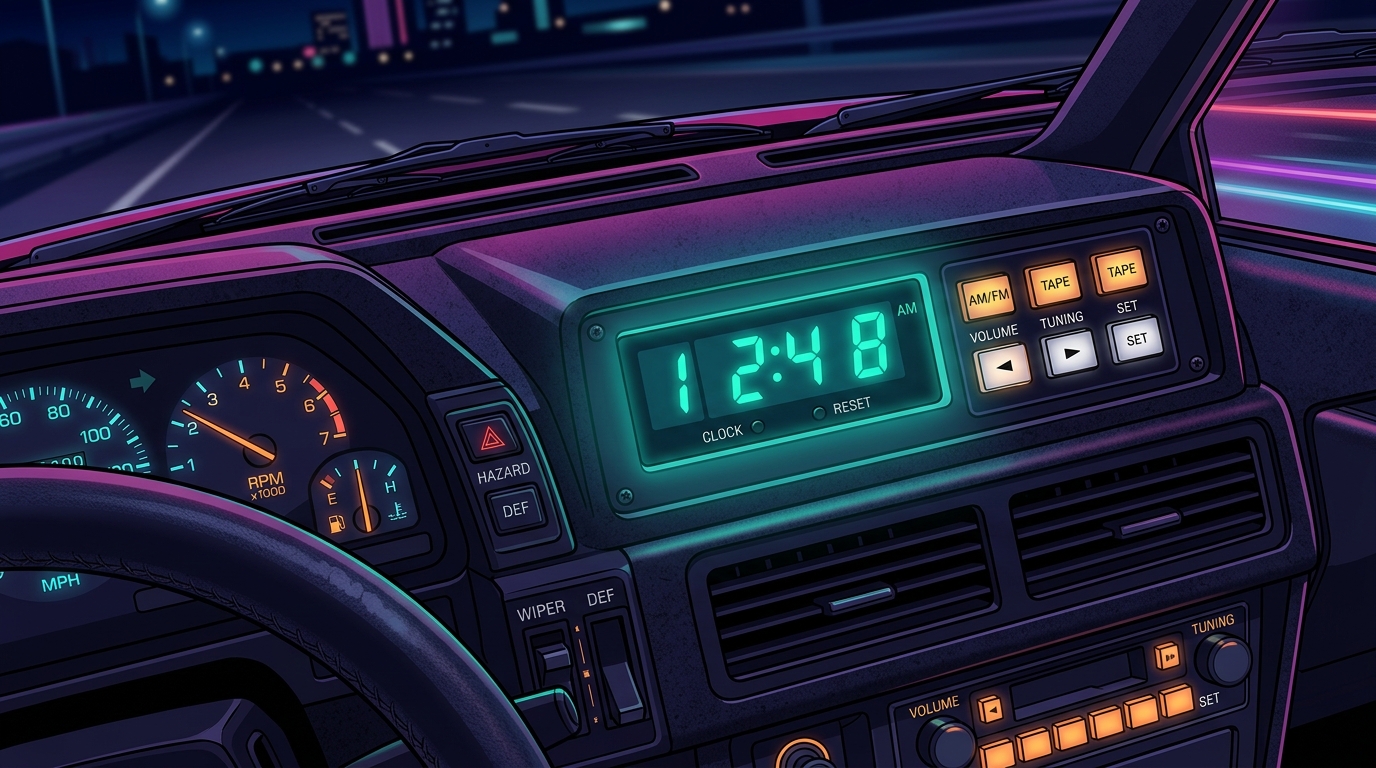
Remember when car dash digital clocks were just tiny, blinking green numbers that looked like they belonged on a microwave? Fast forward to 2026, and your dashboard has basically evolved into a high-def synthwave dreamscape that would make a 1980s sci-fi hero weep with joy. These aren’t just clocks anymore; they are the glowing heart of a $31 billion digital cockpit revolution that is taking over every inch of your ride.
You’re no longer stuck squinting at a boring plastic box while you’re stuck in traffic. Today’s screens are massive, vibrant, and packed with more pixels than your favorite retro gaming console. With the market for these futuristic displays exploding across the globe, your car is officially trading in its old clunker vibes for a sleek, neon-soaked command center that tracks time in total style.
There is something undeniably cozy about that soft, teal glow radiating from a classic vacuum fluorescent display on a dark highway. These little glass tubes are like tiny, glowing time machines that turn every late-night drive into a scene straight out of a lo-fi synthwave music video. While modern cars try to impress you with massive screens that have more pixels than your brain can process, the humble VFD clock keeps things chill with its fuzzy, electric hum. It does not want to show you a map or your social media notifications, because its only job is to look cool while telling you it is exactly 12:34 AM. You cannot help but feel like the hero of an 80s sci-fi flick every time those segments light up your dashboard.
Stepping into a cockpit with one of these displays feels like getting a warm hug from a retro-futuristic robot who just wants to vibe. Unlike the harsh, blinding white light of a modern tablet, the gentle blue-green hue of a VFD is easy on your eyes and great for your aesthetic. It is the ultimate flex for the outrun community, capturing that perfect mix of high-end luxury and arcade cabinet nostalgia. These displays represent a time when the future felt bright, neon, and full of possibilities. Even as the world moves toward giant digital instrument clusters, nothing can quite match the soul of those glowing glass digits.
Owning a car with one of these clocks means you are basically driving around in a piece of functional vaporwave art. You do not need a billion colors or a high refresh rate when you have the iconic charm of a display that looks like it belongs in a space station. It is a reminder that sometimes less is more, especially when that less looks like a neon sign from an old-school Tokyo street corner. While the market is currently obsessed with screen takeovers and high-resolution cockpits, the Vacuum Fluorescent Displays remain the undisputed king of dashboard vibes. Just lean back, turn up the bass on that cassette deck, and let those teal numbers guide you through the night.
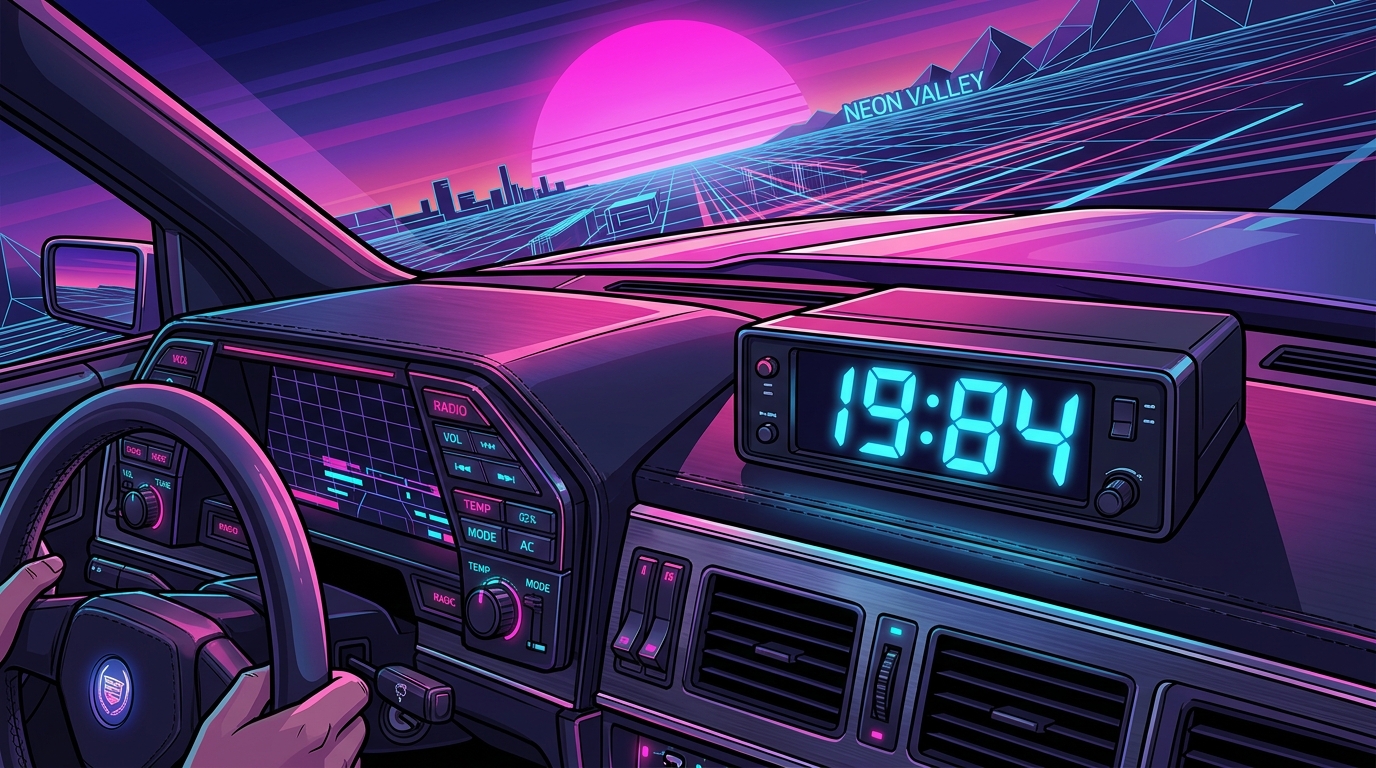
Step inside a vintage luxury ride or a high-end import from the eighties and you are immediately greeted by the warm, ghostly glow of a vacuum fluorescent display. These digital clocks were not just about telling time, they were the ultimate flex of futuristic luxury that made you feel like you were piloting a starship through a neon-soaked city. While modern cars are moving toward massive high-resolution screens that try to do everything at once, there is something undeniably cool about those chunky, teal-colored digits. They provided a specific kind of lo-fi magic that perfectly matched a cassette tape humming in the deck. You did not just check the time to see if you were late, you looked at it to confirm you were living in the future.
The aesthetic of these displays is the heart and soul of the outrun car culture, capturing that specific midnight drive energy that gamers and synthwave fans crave. Each segment of the digital clock flickered with a soft radiance that felt alive, unlike the flat and sterile pixels we see in today’s digital cockpits. These clocks were the centerpiece of a dashboard designed to look like a cockpit from a sci-fi flick, turning a simple trip to the grocery store into a cinematic experience. Even as we head into an era of integrated smart displays and massive instrument clusters, the charm of a retro car phone or a dedicated glowing clock remains unmatched. It represents a time when car interiors were bold, experimental, and unashamedly obsessed with looking like a scene from a cyberpunk dream.
Hunting for that perfect neon glow is like searching for a legendary loot drop in a retro RPG. You know the vibe, that soft teal or amber hum of a vacuum fluorescent display that makes your dashboard feel like a scene straight out of a synthwave music video. These vintage digital clocks are the heart of the 80s luxury experience, but they are becoming rarer than a working VCR. If you want to keep your cabin looking like a futuristic cockpit from 1984, you have to become a part-time detective in the world of old-school electronics. Finding a module that hasn’t succumbed to the dreaded black screen of death is the ultimate win for any retro tech fan.
Rescuing these glowing relics requires a bit of patience and a lot of love for the aesthetic. When you finally track down a surviving unit, you are not just buying a clock, you are saving a piece of digital history from the recycling bin. Most of these modules fail because of tiny components that have simply given up after decades of displaying the time for late-night cruises. You can often bring them back to life with some basic cleaning or a few simple fixes that even a beginner can handle. Keeping that nostalgic pulse alive ensures your ride remains a portal to an era of grid patterns and digital dreams.
While the modern world is obsessed with giant touchscreens and high-resolution displays, there is something undeniably cool about a simple, chunky digital readout. These vintage clocks offer a tactile, low-fi charm that a tablet glued to a dashboard just cannot replicate. They represent a time when the future looked like glowing segments and sharp angles rather than endless menus and software updates. By preserving these specific digital dash components, you are sticking it to the boring trends of today and keeping the outrun spirit alive. Your car deserves to have that iconic 1980s personality every time you turn the key and see those numbers flicker to life.
The neon mist is starting to clear, but that iconic glow from your dashboard will never truly fade away. Even as 2026 brings us massive screens and digital cockpits that look like they belong on a spaceship, nothing beats the soul of a classic vacuum fluorescent display. It is more than just a way to see that you are five minutes late for your pizza delivery. That humming green or blue light is a portal back to a time when luxury meant velvet seats and buttons that made a satisfying click. You are not just checking the time, you are checking the vibe of an entire era.
While the global market for digital clusters is exploding into a $31 billion digital cockpit industry, the humble car clock remains the heart of the retro aesthetic. Whether you are cruising through a rainy city at midnight or just sitting in your driveway listening to synthwave, that tiny digital display is your co pilot. It represents a world where tech was simple, bold, and undeniably cool. You do not need a high resolution ultra wide monitor to tell you that the night is young. Sometimes, a few glowing segments are all you need to keep the outrun dream alive and well.
That sweet neon vibe comes from a Vacuum Fluorescent Display, or VFD. These little glass tubes are like tiny time machines that give off a soft, fuzzy light that is way easier on your eyes than a modern tablet screen.
You bet they are. The digital cockpit world is exploding into a 31 billion dollar industry that turns your boring dashboard into a high-def synthwave dreamscape. Your car is basically trading its old clunker energy for a sleek, neon-soaked command center.
Not at all, because these modern screens are massive and packed with more pixels than a retro gaming console. They are designed to be vibrant and crystal clear so you can check the time without squinting like you are trying to read a microwave in the dark.
It is all about that cozy, lo-fi aesthetic that makes you feel like the hero of an 80s sci-fi flick. While new screens try to distract you with notifications, the VFD just wants to look cool and vibe with its electric hum.
The market for these futuristic displays is booming across the globe right now. You can totally upgrade your cockpit to capture that outrun aesthetic with glowing numbers that make every late-night drive feel like a scene from a music video.
In the new digital cockpit revolution, these displays are the glowing heart of your entire dashboard experience. They have evolved from simple blinking numbers into high-tech art pieces that track time with total style and maximum retro-future vibes.