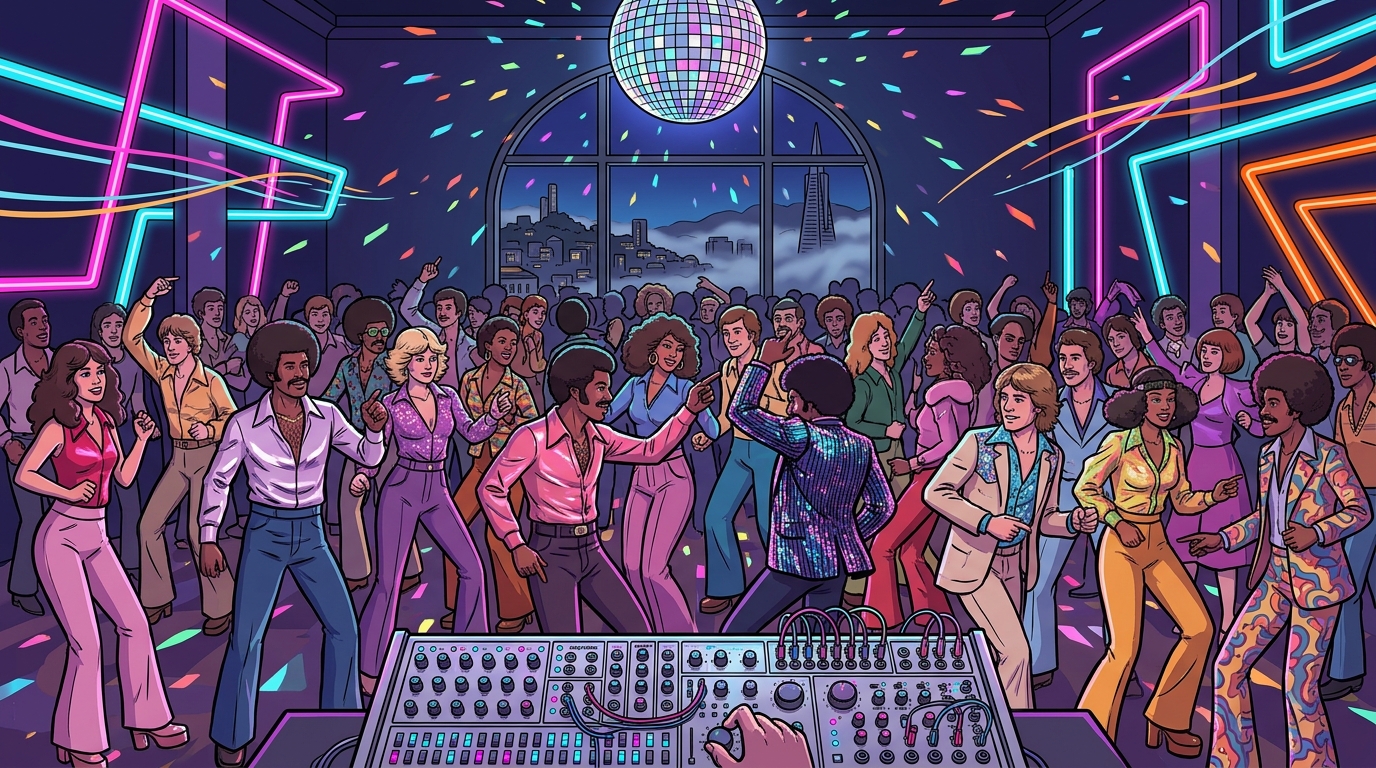
Hi-NRG music began in the late 1970s, when disco got faster, colder, and a lot more synthetic. The sound grew up in the United States and Great Britain at the same time. Nobody gets credit as the lone inventor, so think of it less like a solo superhero and more like a squad of neon-soaked side characters all hitting the same power-up. If you want one hotspot to point at, look to San Francisco’s Castro, where gay DJs, producers, and musicians built a local dance scene from 1978 to 1984 while mainstream disco faded, as documented in Menergy: San Francisco’s Gay Disco Sound.
That scene gave you a sound you can spot from across the room: fast tempos, sequenced synthesizers, octave basslines, and vocals that sound like they’re shouting at the disco ball. Patrick Cowley and Sylvester were the big names pushing it forward, and the style soon hopped the Atlantic. Evelyn Thomas’s “High Energy” climbed to No. 5 on the UK charts in 1984 and stayed there for 18 weeks, which is basically a high score for a dance tune.
Hi-NRG is uptempo electronic disco or dance music that takes its name from its high-energy sound. It grew out of late-1970s disco in both the United States and Great Britain. No single person invented it, and no single city can claim the birthplace title. It’s more like a crew of producers, DJs, and label owners who all turned the same knobs at roughly the same time.
The Historical Dictionary of Popular Music describes it as uptempo disco or electronic dance music from the late 1970s, built on staccato hi-hats, sequenced synthesizers, octave basslines, and intense vocals. Because the style developed over the late 1970s and early 1980s, there’s no single “Hi-NRG was born” moment to point at.
Much of the credit goes to producers who simply pushed disco harder. Patrick Cowley and Bobby Orlando are often credited with speeding up traditional disco into a faster, more frenzied sound. Cowley was a serious tinkerer, too. He founded the Electronic Music Lab at City College of San Francisco and worked with a Putney synthesizer, an E-MU system, and a Serge synthesizer.
By 1981, Cowley had released dance singles like “Menergy” and “Megatron Man,” founded his own label, Megatone Records, and put out his debut album. Megatone and Moby Dick Records helped take the sound worldwide with artists such as Sylvester, Paul Parker, Lisa, Loverde, and Jolo.
So if you’re hunting for the “real” origin, you’ll end up with a messy family tree rather than one parent. Hi-NRG is what happens when disco’s fans in several places refuse to slow down.
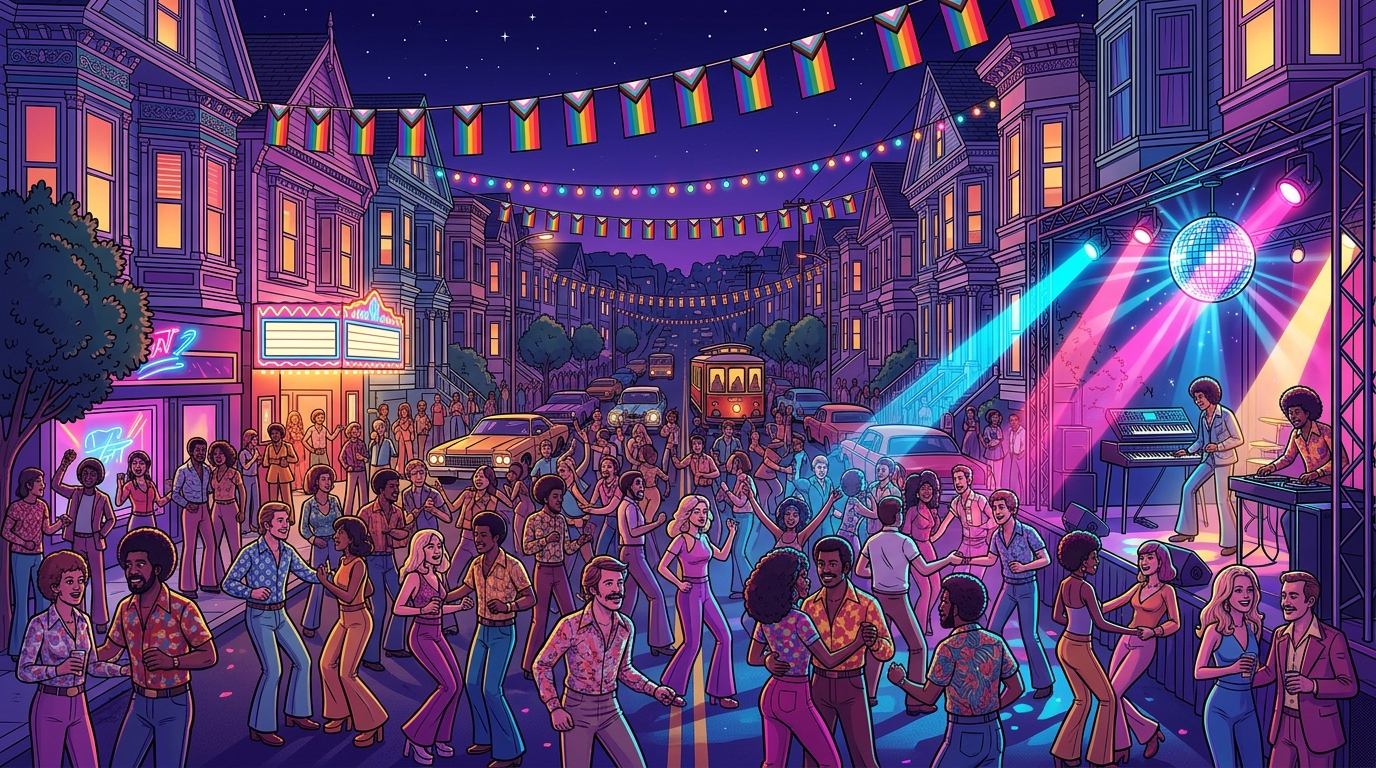
So why did the Castro become the hotspot? Picture a neighborhood where mainstream disco was losing steam and the dance floor still wanted more. San Francisco’s Castro was a gay neighborhood, and its clubs became a proving ground for faster beats, bigger synths, and vocals that could cut through any bassline.
Historian Louis Niebur pins the key window to 1978 to 1984, when a distinctive “high energy” style took shape in the Castro. Gay DJs, producers, and musicians did most of the heavy lifting. As mainstream disco declined, they stopped waiting for big record companies to call and started their own independent labels instead.
Those labels paid off. Megatone Records and Moby Dick Records reached worldwide success with artists like Sylvester, Patrick Cowley, Paul Parker, Lisa, Loverde, and Jolo, which is a wild outcome for indie labels that started in a single neighborhood.
Sylvester’s comeback shows how tight the scene was. His 1982 album All I Need was anchored by “Do Ya Wanna Funk,” a Hi-NRG single he made with Cowley, and the record came out on Megatone. You can read more about that album in the Journal of Popular Music Studies.
The catch is that the Castro’s role is easy to overlook. UK producers Ian Levine and Stock, Aitken, Waterman adapted San Francisco ideas for mid-1980s mainstream pop, and that success can make the Bay Area’s contribution harder to see. Think of the Castro as the original level, with everyone else playing the sequel.
Patrick Cowley, Sylvester, and Bobby Orlando sit at the center of the Hi-NRG crew. Cowley was the studio tinkerer, Sylvester was the voice that made everything feel like a party, and Orlando worked the same speed-up territory as Cowley.
Cowley was the kind of person who would rather rewire a machine than go home. If you’ve never seen a modular synth, picture a telephone switchboard that a very caffeinated cat has rewired. He clearly loved that chaos, and it shows in tracks built to be played loud.
A 2025 article in Dancecult traces how Hi-NRG emerged in queer club spaces, the rooms where new sounds got their first real test. Those clubs were the beta testers of the era.
Then there’s Sylvester. His singing was big, bold, and a little theatrical, which is exactly what you want when the music is racing ahead of you. Put his vocals over a pounding beat and you get a glitter-soaked sermon that sounds like it’s trying to lift the roof off.
Bobby Orlando is often named right beside Cowley, so if one name grabs you, let the other one lead you to more records. Together they made the dance floor feel like it was running a marathon in platform boots.
Put them all in one room and you get a party with no bouncer, just fog machines, bass, and a whole lot of attitude.
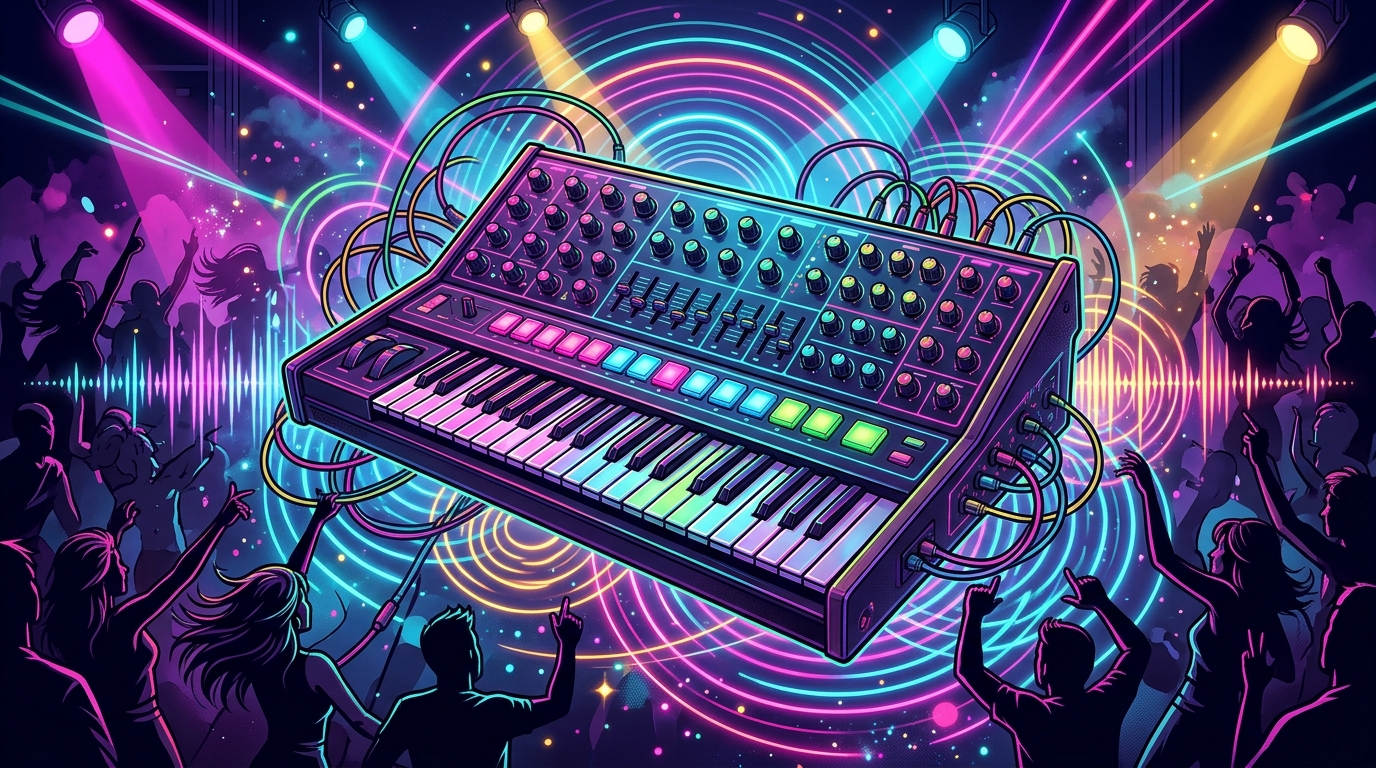
A Hi-NRG track sounds like Hi-NRG because it packs five traits into one fast, loud package: tempo, hi-hats, synths, basslines, and vocals. Spot those five and you’ve found the genre, even if you don’t know the song title.
Here’s your cheat sheet:
Earlier disco leaned on live strings, horn sections, and a looser, swaying feel. Hi-NRG swapped much of that for machines that never get tired, so the rhythm sounds tighter and more relentless. It’s the difference between a live band that takes a bathroom break and a drum machine that never blinks.
Want to hear the change for yourself? Play a classic disco track, then a Hi-NRG one right after it. Listen for the hi-hats, which stop short instead of ringing out. Then focus on the bass, which hops in octaves like a character double-jumping through a platform level.
Hi-NRG reached the UK pop charts when Evelyn Thomas’s “High Energy” first charted on April 14, 1984, and British producers then carried the sound into mainstream pop. Thomas’s single proved that a track built on racing tempos and sequenced synths could win over a much bigger audience than the Castro clubs ever did.
Think about what that meant in practice. A record shaped by San Francisco dance floors was suddenly sitting alongside the pop acts everyone already knew, and it was doing it with a straight face.
Ian Levine and the team of Stock, Aitken, and Waterman took that same toolkit and polished it for the mid-1980s mainstream. The result kept the fast pulse and bright synth hooks but swapped the sweaty club edges for radio-friendly gloss. It’s like taking a neon sign from a dive bar and mounting it in a shopping mall. It still glows, but the context changes.
Here’s the trap. When a sound becomes a chart staple, it’s easy to assume it was born in a London studio. The hit parade is loud, and the Bay Area’s role gets quieter with every new remix and reissue.
So the next time a mid-1980s pop record pulses with octave basslines, listen closely. You might be hearing a San Francisco idea wearing a British accent, and that’s a neat little plot twist for any retro fan.
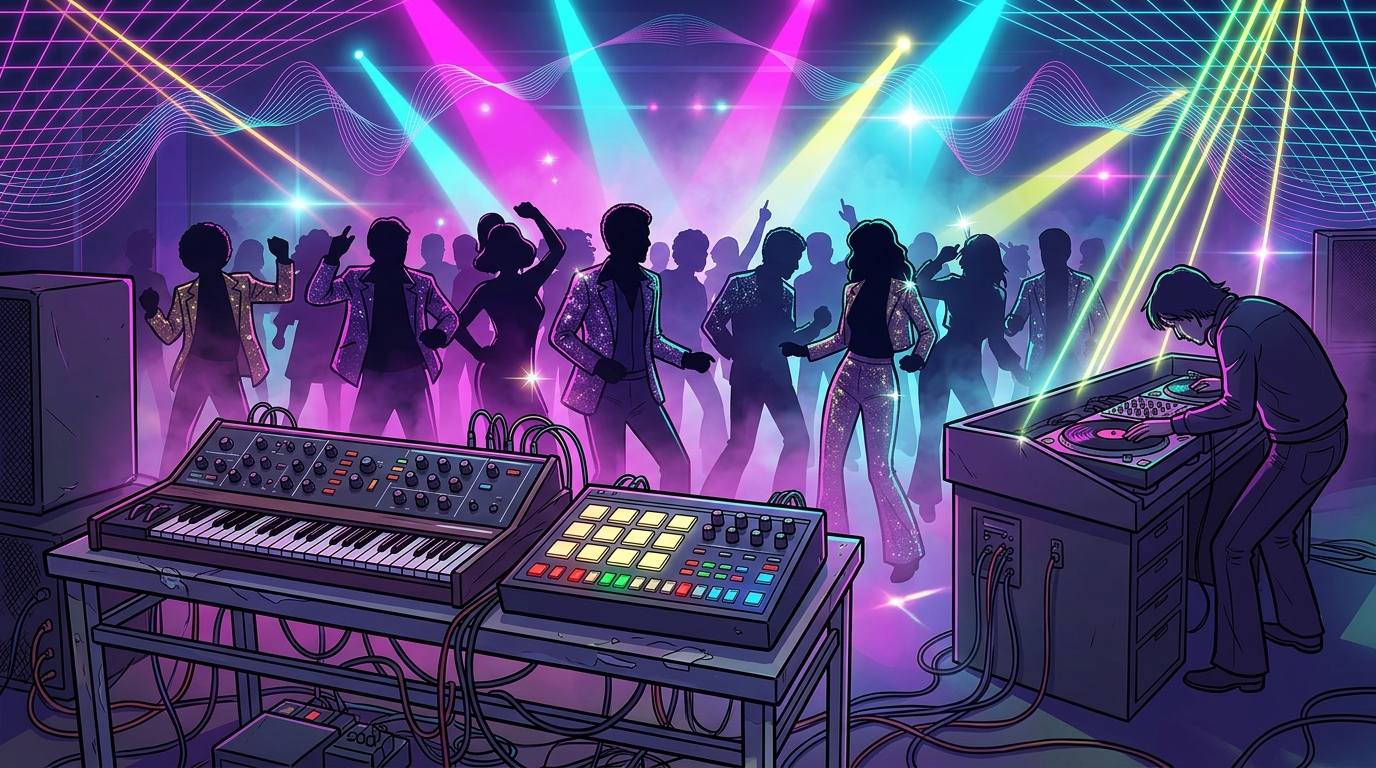
Hi-NRG is treated as an important link in the development of techno and, to a lesser degree, house. So if you trace the family tree of later club music, Hi-NRG is one of the stops you pass on the way. It’s a bit like finding a side quest that quietly unlocks the main story.
Why did it matter? Hi-NRG proved that a dance floor would happily move to machines. Its fast, synthetic sound gave later club genres a working blueprint, and those genres could build on what Hi-NRG had already tested in clubs. You don’t have to replay the first level to use the skills you picked up there.
You can hear the echo yourself. Put on a Hi-NRG track, then play a techno or house tune right after it. Notice the machine-driven pulse that never blinks, and how the synth line sits right at the center of the groove. Hi-NRG’s influence on techno runs deeper than its pull on house, so listen for the difference in weight between the two. Your ears will do the detective work for you.
You can hear Hi-NRG today mostly through archival albums and reissues of Patrick Cowley’s work, which bring the original recordings straight to your speakers. Think of it as finding an old save file that still plays just fine.
Dark Entries released Hard Ware on October 19, 2025, a 10-track archival album of Cowley material. It’s the third part of a trilogy that began with Male Box in 2022 and continued with From Behind in 2024, so if one record hooks you, the other two are right there in the same collection.
Demand hasn’t cooled off, either. A two-LP repress of Muscle Up from 2026 has been priced at £34.99, which suggests plenty of fans still want their own copy on vinyl. Frame reissues are another good route for newcomers, since they put the original recordings in front of listeners who never heard them on a Castro dance floor.
Vinyl hunters should check the details before they buy. A repress and an older original pressing can sell for very different money, so read the listing closely and compare the track list before you hit checkout.
Ready to turn all this history into a night out? Open your music app and start a playlist called “Castro Level One.” Begin with Evelyn Thomas’s “High Energy,” since it’s a landmark your ears can hold onto.
Next, search for Patrick Cowley and add “Menergy” and “Megatron Man,” the two dance singles he had out by 1981. Drop Sylvester’s “Do Ya Wanna Funk” in the middle, because it’s the Hi-NRG single he made with Cowley and it still works as a crowd-pleaser.
Aim for a tight run of tracks, not a marathon. Sprinkle in a few cuts from Hard Ware, the Dark Entries album, to hear how Cowley’s sound holds up decades later. Keep the tempo climbing, and if a song drags, swap it out. Your playlist is a boss fight, not a lullaby.
Then run a quick test. Play the list at full volume while you clean the kitchen or walk to the bus stop. Notice which snappy hi-hats make you bounce and which octave basslines make you lunge for the skip button. Write down the two tracks you replay most, then search for the rest of those artists’ catalogs. That’s your second playlist, and you’ll be a Hi-NRG fan before you know it.