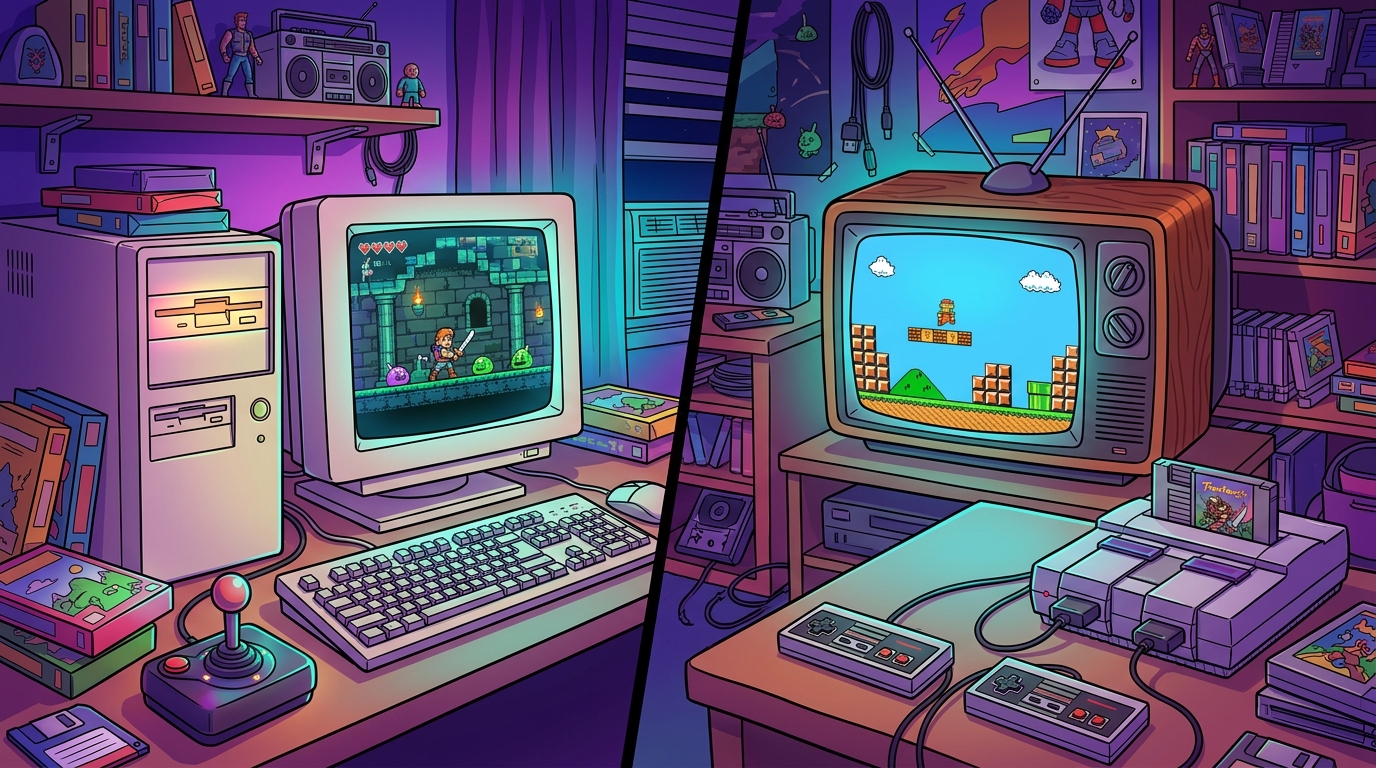
Dust off your neon windbreaker and grab a Capri Sun, because the battle for 16-bit supremacy is back and bigger than ever. Whether you’re chasing that high-score rush or just want to relive the glory days of pixelated plumbers, the retro gaming pc vs console debate is the ultimate showdown for your living room setup. You want that sweet hit of nostalgia without the headache of blowing into dusty cartridges until you’re lightheaded.
With the retro scene exploding into a multi-billion-dollar playground, you’ve got more ways to play than there are sequels to your favorite arcade fighter. You could go full “mad scientist” with a high-powered PC rig that makes old games look crisp enough to cut glass, or keep it chill with a dedicated console that plugs straight into your vibes. It’s all about finding that perfect balance between maximum frames and that cozy, plug-and-play simplicity we all crave.
Building a custom retro PC is like owning a digital DeLorean that can park in any era of gaming history simultaneously. While a dedicated console might limit you to a specific library, a PC build acts as the ultimate neon-lit vault for every title from the Atari days all the way up to the heavy-hitting PlayStation 3 era. You can hoard thousands of games in one glowing box, creating a massive library that would have cost a literal fortune in 1995. It is the ultimate flex for anyone who wants their entire childhood collection accessible with just a few clicks of a mouse.
The real magic happens when you realize that your PC can actually make these vintage gems look better than they did on your old floor-model television. You have the power to upscale vintage graphics and add sweet scanline filters that give you those perfect synthwave vibes without the bulky hardware. Instead of hunting down expensive individual cartridges or dealing with tangled wires, you get a clean and organized setup that respects your shelf space. It is a total win for collectors who want high-end performance and the variety of a thousand arcade cabinets combined into one.
Investing in a PC setup is the smartest move if you want a machine that grows alongside your obsession with the classics. You are not just buying a toy, you are building a custom command center that can handle everything from pixel-art platformers to complex 3D worlds. This path offers a clear advantage for the serious enthusiast because it eliminates the need to buy multiple pieces of hardware every time you want to play a different generation. You get to be the boss of your own digital arcade, keeping the spirit of the eighties alive with modern reliability and infinite choices.
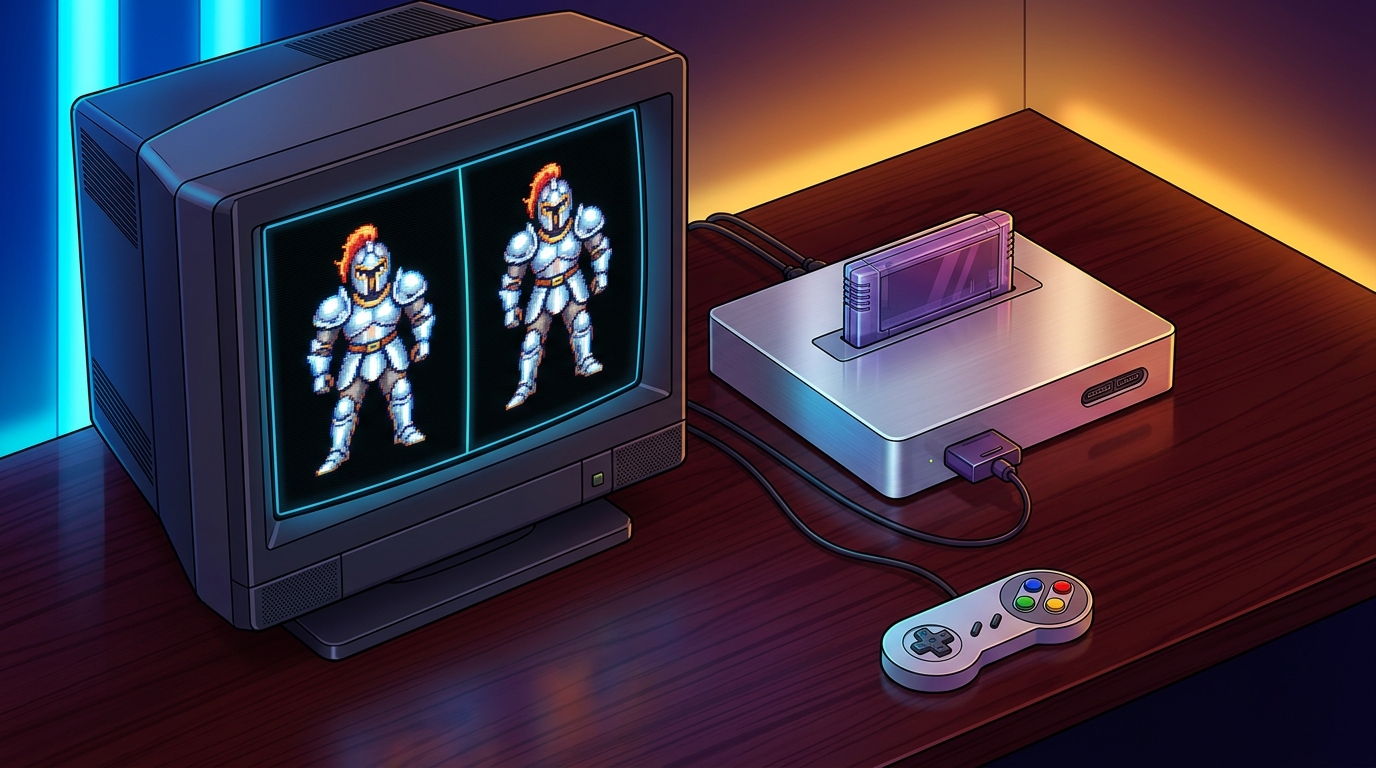
If you are the kind of gamer who can spot a single frame of lag from a mile away, FPGA consoles are your new best friend. Unlike standard software emulation that tries its best to act like an old computer, these devices use Field Programmable Gate Arrays to physically recreate the original circuits of your favorite childhood systems. It is like building a time machine out of neon lights and pure magic to ensure your button presses happen at the exact moment you intend. You get that crisp, pixel-perfect image on your modern 4K television without the blurry mess of a cheap adapter. It is the ultimate way to show your friends that your high score was not a fluke, but a result of superior hardware and some seriously radical skills.
Choosing a dedicated FPGA setup means you are trading the endless menus of a PC for a plug and play experience that feels just like Saturday morning in 1988. You do not have to worry about background apps or system updates ruining your flow while you are trying to save the princess. These consoles are built for the purists who want their pixels sharp enough to cut glass and their audio to sound exactly like those crunchy 8-bit melodies we all love. It is a premium investment for your gaming lair that clears out the clutter and focuses on what actually matters, which is pure, unadulterated fun. You get the reliability of a tank with the aesthetic of a synthwave dream, making it the clear winner for anyone tired of tinkering with settings.
The real beauty of this hardware is how it bridges the gap between the radical past and the high tech future. You can finally ditch that heavy, buzzing CRT television while keeping the lightning fast response times that made those old school games so challenging. It is all about capturing that authentic vibe without the headache of hunting down ancient cables or dealing with dying capacitors. Your setup will look cleaner than a fresh pair of high tops, and your gameplay will be smoother than a saxophone solo in a mall elevator. Investing in this tech is basically a love letter to your inner child, providing a seamless bridge to the golden age of gaming without any of the technical baggage.
Choosing a dedicated retro console is like jumping into a time machine that actually works on the first try. You get that sweet, tactile satisfaction of clicking a cartridge into place and hitting a physical power button while your CRT television hums to life. There are no driver updates or firmware patches standing between you and your high score. It is the ultimate vibe for gamers who want to spend their Friday nights playing games instead of scrolling through endless settings menus. This plug and play simplicity is perfect if you want a reliable, nostalgic centerpiece for your living room setup.
On the flip side, building a retro gaming PC is a chaotic labor of love that rewards your inner mad scientist. You will likely spend your evening wrestling with button mapping and trying to convince a modern Bluetooth controller to act like a joystick from 1987. It is a digital playground where you can upscale graphics to look crisp on a massive 4K screen, even if the setup process feels like a workout. While it takes more effort to get everything running, the sheer power and flexibility of a PC mean you can jump from arcade classics to early 3D adventures in a single click.
Deciding between these two paths really comes down to how much you enjoy the tinkering phase of the hobby. A console offers a cozy, curated experience that feels exactly like your childhood bedroom, minus the bowl cut and the homework. A PC setup is a powerhouse that lets you customize every pixel and frame rate to your heart’s content, provided you don’t mind a little troubleshooting. Whether you want the streamlined ease of a dedicated box or the infinite possibilities of a custom rig, both options will get those neon synthwave vibes flowing through your speakers.
Deciding between a retro PC and a classic console is like choosing between a high-speed hoverboard and a trusty pair of neon high-tops. If you want a machine that does it all and lets you upscale your favorite pixels to glorious 4K, a dedicated emulation PC is your best friend. You can store thousands of games in one place and customize every single setting until your heart is content. It is the ultimate power move for gamers who want one box to rule them all without cluttering up their synthwave sanctuary. Just be prepared to spend a little extra cash upfront for that top-tier performance and versatility.
On the other hand, there is nothing quite like the tactile Click-Clack of a real cartridge sliding into a dedicated console or FPGA machine. These systems are perfect if you crave that authentic, lag-free experience that feels exactly like a Saturday morning in 1989. You get those beautiful, fuzzy scanlines and the plug-and-play simplicity that makes gaming feel like a breeze. While building a physical library can get pricey, the nostalgic soul of a console is hard to beat when you are vibing to lo-fi beats. It really comes down to whether you want the infinite options of a computer or the pure, focused energy of a gaming machine.
Ultimately, your choice depends on whether you are a digital hoarder or a purist looking for that perfect retro glow. A PC offers the most bang for your buck if you plan on playing everything from arcade classics to early 3D adventures. If you just want to flip a switch and see those neon colors pop on your screen immediately, a dedicated console is the way to go. No matter which path you take, you are still winning because you get to relive the greatest era of gaming history. Grab your favorite energy drink, dim the lights, and let those pixels take you back to the future.
Ultimately, choosing between a retro gaming PC and a dedicated console is like picking between a neon-soaked supercar and a reliable, classic arcade cabinet. If you want the ultimate power to upscale your favorite 90s gems to 4K resolution while juggling a massive library of mods, the PC route is your best bet. It offers endless customization for those who love to tinker with settings until everything looks just right. You get the freedom to emulate almost any system ever made, making it a versatile powerhouse for the serious digital archivist. Just be prepared to spend some time in menus before you actually start jumping on Goombas.
On the flip side, dedicated consoles and FPGA hardware are all about that sweet, plug-and-play simplicity. You do not have to worry about driver updates or weird software glitches when you just want to blast through a round of Contra after a long day. These systems offer that authentic, lag-free experience that feels exactly like sitting on your shag carpet in 1988. It is the perfect choice if you value your time and want a physical setup that looks radical on your shelf. While you might have a smaller library of games, the tactile feel of real hardware is hard to beat.
No matter which path you take to reach gaming nirvana, your physical environment should be just as cool as your high-score list. A cluttered desk can totally ruin your synthwave aesthetic and distract you from your quest to save the princess. To keep your gaming zone looking like a futuristic command center, you should Level Up Your Desk With Retro Futuristic Office Supplies today. Discover how we can help you create the ultimate nostalgic setup by exploring our curated collection of gear. It is time to level up your surroundings and embrace the pixelated glory of the past in style.
Your PC is the ultimate digital DeLorean that can store every game from the Atari era to the PlayStation 3 in one glowing box. While consoles limit you to a specific library, a PC gives you an infinite vault of thousands of titles at your fingertips. You can hoard an entire childhood’s worth of games without ever needing to swap a single cartridge.
A custom PC rig lets you upscale resolutions and add sweet scanline filters to make those pixelated classics look crisp enough to cut glass. You get those perfect synthwave vibes on your high-def monitor without the blurry mess of an old floor-model television. It is the ultimate way to give your favorite vintage gems a modern neon glow-up.
Think of yourself as a digital mad scientist when you build a PC rig, which does require a bit more tinkering than a standard console. You will spend some time downloading emulators and organizing your digital library to get everything running perfectly. It takes a little more effort, but the payoff is a massive library that would have cost a literal fortune back in 1995.
Consoles are all about that chill, plug-and-play simplicity that lets you jump straight into the action. You do not have to worry about software updates or complex settings, just grab a controller and start chasing that high-score rush. It is the perfect choice if you want to skip the technical headaches and keep your living room vibes totally relaxed.
You can officially retire your lungs because digital emulation means you never have to blow into a dusty cartridge again. Your entire collection stays clean and organized inside your computer, saving you from the lightheaded struggle of the 90s. It is a much more reliable way to play without dealing with the glitchy hardware of the past.
A PC build allows you to ditch the tangled wires and bulky hardware for a sleek, organized setup that fits modern aesthetics. You can replace a mountain of plastic consoles with one high-powered rig that handles everything. It is the best way to keep your gaming space looking like a neon-lit dream instead of a cluttered basement.