Teletext art history kicks off in 1979, when artists realised the blocky text screens of broadcast information services could double as a canvas. Picture a grid of 24 rows by 40 columns, a small palette of colours and chunky mosaic shapes, and you have the whole medium in one squint. Think Tetris crossed with a fridge magnet, but somehow more glamorous.
The spark came from a Norwegian research project called Excursions in Teletext, led by Arild Boman. Artists Peter Broenn and Morten Juvet used the tiny grid to play with geometric figures, letter forms and even literary essays, proving that a few hundred blocks could hold seriously big ideas.
Teletext art is artwork made on teletext, the blocky text pages that broadcasters sent to your TV as an information service. Nobody sat down to make an art form. Over in the UK, the government approved Ceefax as a two-year live experiment starting in 1974, and it was meant to share the news and weather, not inspire galleries.
It grew far bigger than anyone expected. At its peak, Ceefax reached as many as 600 pages, and it reportedly had 22 million weekly users, according to Ofcom’s 2024 account. That’s a lot of people squinting at chunky text.
Artists looked at those limits and saw a language. A fixed grid, mosaic shapes and a small colour palette sound like handcuffs, but they’re more like a cheat code. You get a strict set of rules, and you have to get clever to break them.
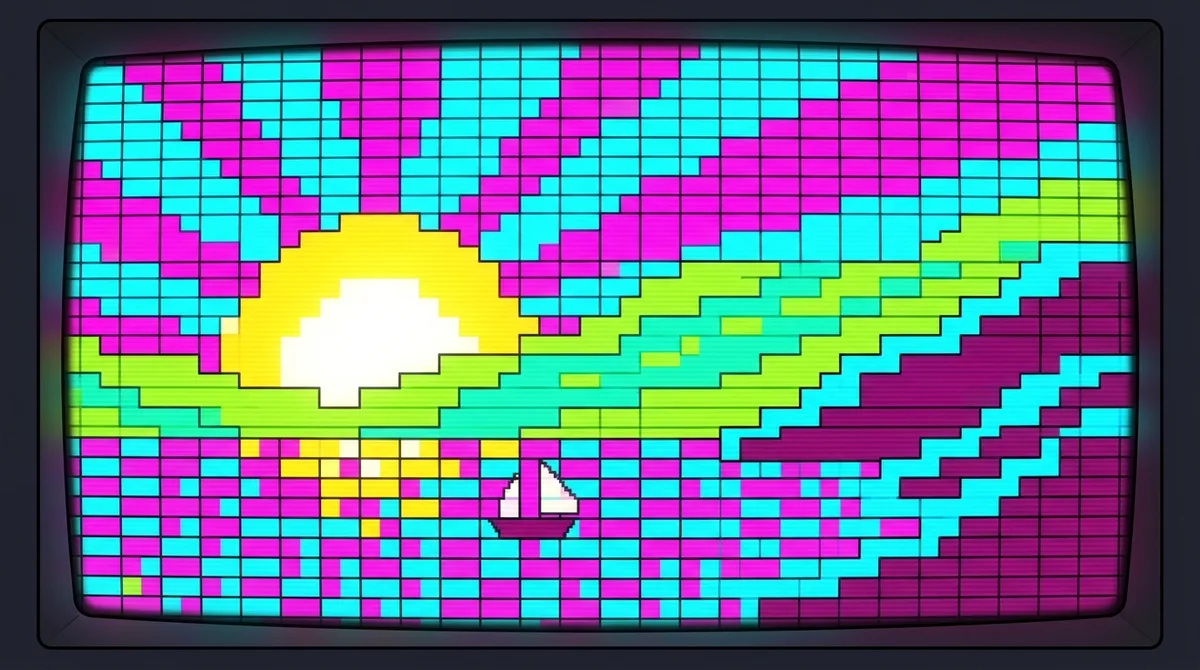
The grid mostly boxed artists in, which is exactly why the look is so chunky. The European standard, Teletext Art research lab’s account of the project covers the 1979 Excursions in Teletext work. Nobody was selling tickets yet. The work sat right alongside the news and forecasts, waiting for a curious viewer to punch in the right page number.
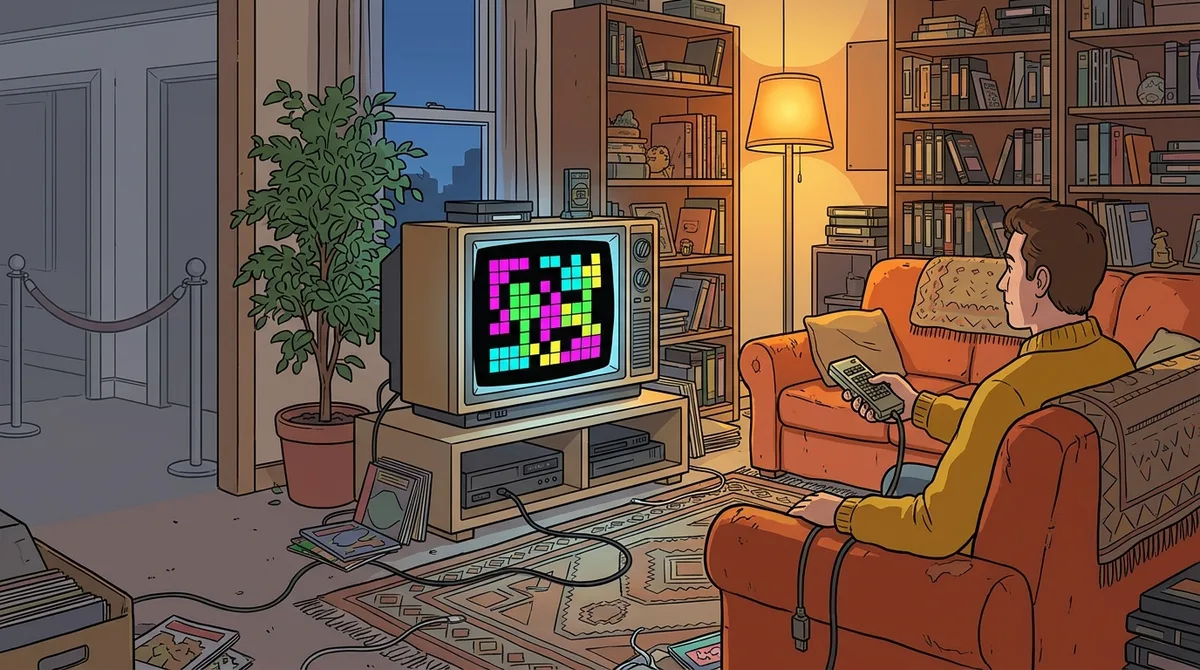
Teletext art stayed out of reach for many people mostly because the gear to see it cost extra. A 1979 Canadian government survey put converters and keypads at about $500 extra for a colour television. The same survey described the teletext service itself as virtually free, but the hardware needed to read the pages was another story.
Picture being asked to pay for a gadget just to check the weather pages. For many households, that extra kit was the difference between seeing the mosaic art and never knowing it existed. You couldn’t simply flip the channel and stumble onto a masterpiece. The hardware made the service harder to use, which kept teletext art a niche treat for a lot of viewers.
The International Teletext Art Festival, or ITAF, moved this art out of the living room and into public spaces. Finnish artists’ cooperative FixC launched it in 2012, working with Yle Television and ARD Text.
The festival ran for four years, from 2012 to 2015. Its exhibitions appeared on teletext services and in galleries across Europe, and the research lab’s history of ITAF tracks how the event grew over that time.
That shift was a total power-up. A broadcast page was something you bumped into while hunting for the weather. A festival turned it into a destination, like a gig or a night at the arcade, where you planned your evening around the mosaic masterpieces.
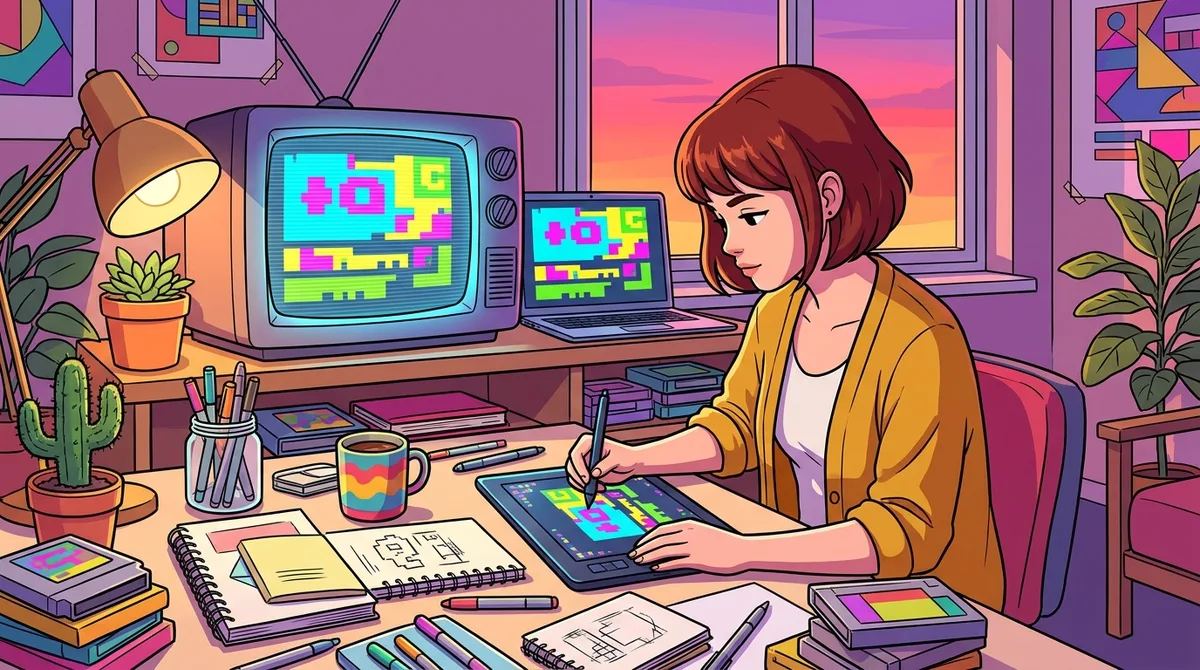
Yes, teletext art is still being made, and the newest projects show the chunky look has plenty of life left. From 9 to 23 October 2025, ORF Teletext’s World Events exhibition featured works by 15 digital artists, all built on a 78-by-69-pixel grid with 7-bit colour.
The artists used a project-specific version of TIUS teletext software, and the transmitted works were recorded as NFTs on the Tezos blockchain. Your squiggly mosaic could end up on a digital ledger, which is a pure synthwave plot twist.
The Museum of Teletext Art and Yle Text are keeping the vibe alive too. From February through December 2026, they showed 13 reconstructed works from Boman’s 1979 experiments, giving those early pages a second run on screen.
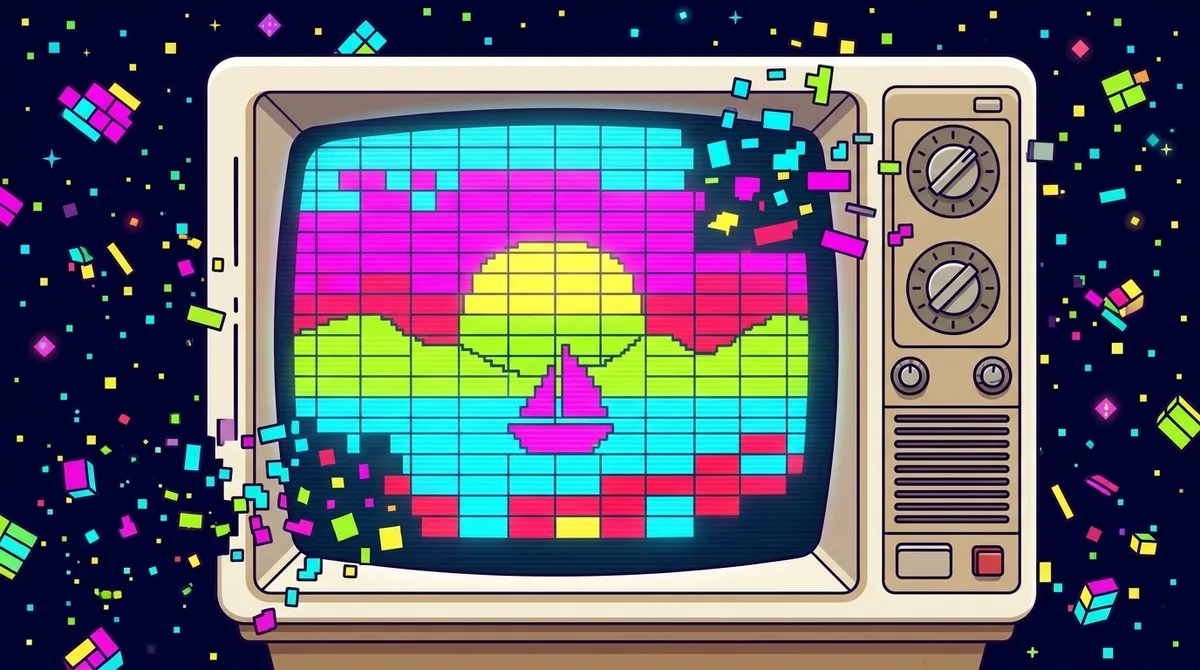
Teletext art still looks futuristic because its chunky blocks work like a time capsule of 80s screens, and that decade keeps coming back in style. You’ve probably seen a neon sunset made of square pixels and thought, “Yep, that’s the vibe.” Teletext delivers the same feeling without even trying.
The limited palette and tiled shapes match the neon-soaked look of synthwave and retro gaming. Picture a synthwave album cover with a purple sky, a chrome sports car and a grid of blocky stripes. Teletext gets there by default, which is kind of hilarious.
Its constraints also make modern pixel art feel like a deliberate homage. When today’s artists squeeze a picture into a tiny grid of blocks, they aren’t being lazy. They’re winking at the past, which is the internet’s favourite move: take something old, add a wink, and turn it into a meme.
Your hunt starts with the Museum of Teletext Art (MUTA) page, which covers the 13 reconstructed works from Arild Boman’s 1979 experiments that Yle Text showed. Read how each piece was rebuilt, then pay attention to the grid rules that shaped it.
Next, grab your remote. If your TV still has a teletext button, press it and browse for Yle Text pages, noting any page numbers that look like art.
Bring snacks. Chunky blocks are hard to rush, and you’ll want time to squint.