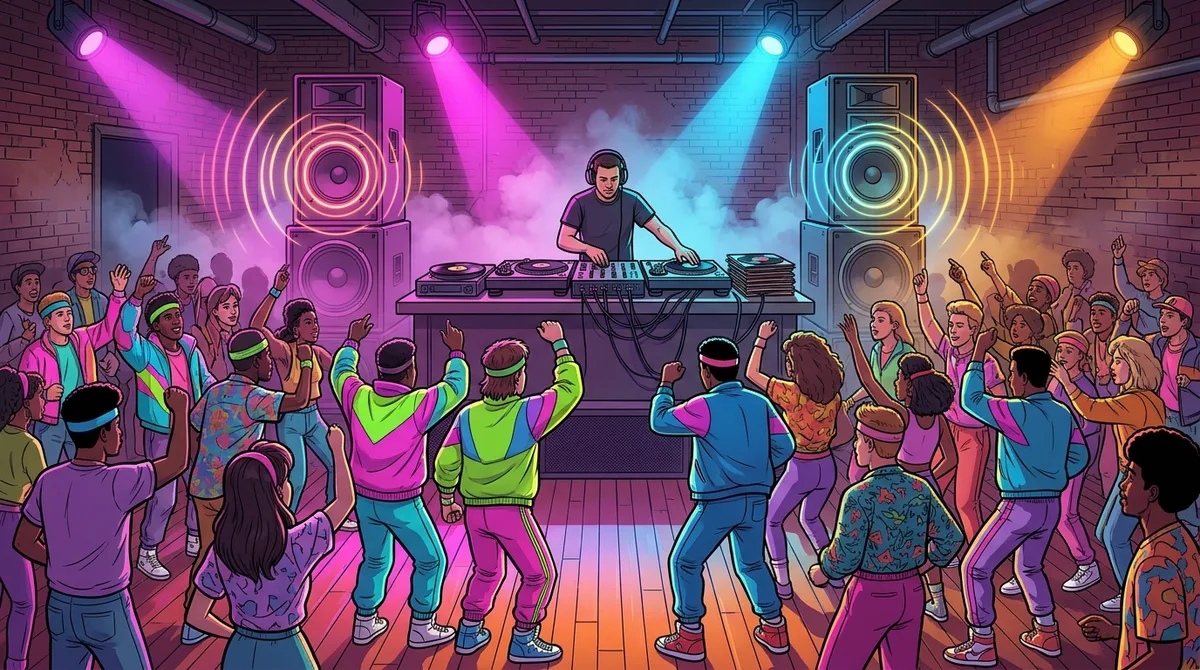
Chicago house origins trace back to a scene, not a single lightbulb moment: underground parties and clubs that slowly turned disco leftovers into something entirely new. Picture the neon-soaked glow of 1974, when Donald Crossley and friends formed US Studio to throw underground parties, and their first apartment-building bash pulled in about 500 people.
The real magic happened at the Warehouse on South Jefferson Street, where Frankie Knuckles, a 22-year-old transplant from New York, started spinning in 1977. Saturday doors opened at midnight, and the party could last until noon or 1 p.m. Sunday, a schedule your future self will not forgive. Knuckles blended disco, funk, soul, and R&B with repetitive beats, and the club’s name is widely credited with giving the music its name. Grab your leg warmers, because this is where house started.
House music did not come from one studio, one record, or one lucky night. It grew out of a scene of underground parties and clubs in Chicago, where people built their own dance floors because the mainstream would not make room for them. Think of it as a neighborhood arcade: nobody handed out the high score, and everyone kept feeding quarters into the machine.
The people who organized those early parties in the 1970s were mostly Black and gay Chicagoans. They threw their nights in apartment buildings, rented halls, and wherever else they could find space. Belonging came first, and the music was the glue that kept people coming back.
The Warehouse, at 206 S. Jefferson Street, gave that spirit a permanent address from 1977 to 1982. The club drew a mostly Black crowd, and it started as a members-only gay club. Later accounts describe it as a safe space for marginalized Black, Brown, and queer Chicagoans, which made it one of the most important places in town for many of them to be fully themselves.
Frankie Knuckles did not just play records there. He stretched them out, layering sound effects and sampled vocals over beats that kept repeating until the whole room was moving as one. Dancers learned to lose track of time, and DJs learned that a good crowd could push them somewhere new.
Records were the fuel, too. Marshall Jefferson, a Chicago DJ and producer, recalled spending about $200 a week on music while he and his friends DJed at parties and made tapes. That was serious money for a young DJ, and it shows how much these crowd-pleasing nights meant to the people throwing them. Every tape copied and passed around carried the sound a little further from the parties where it started.
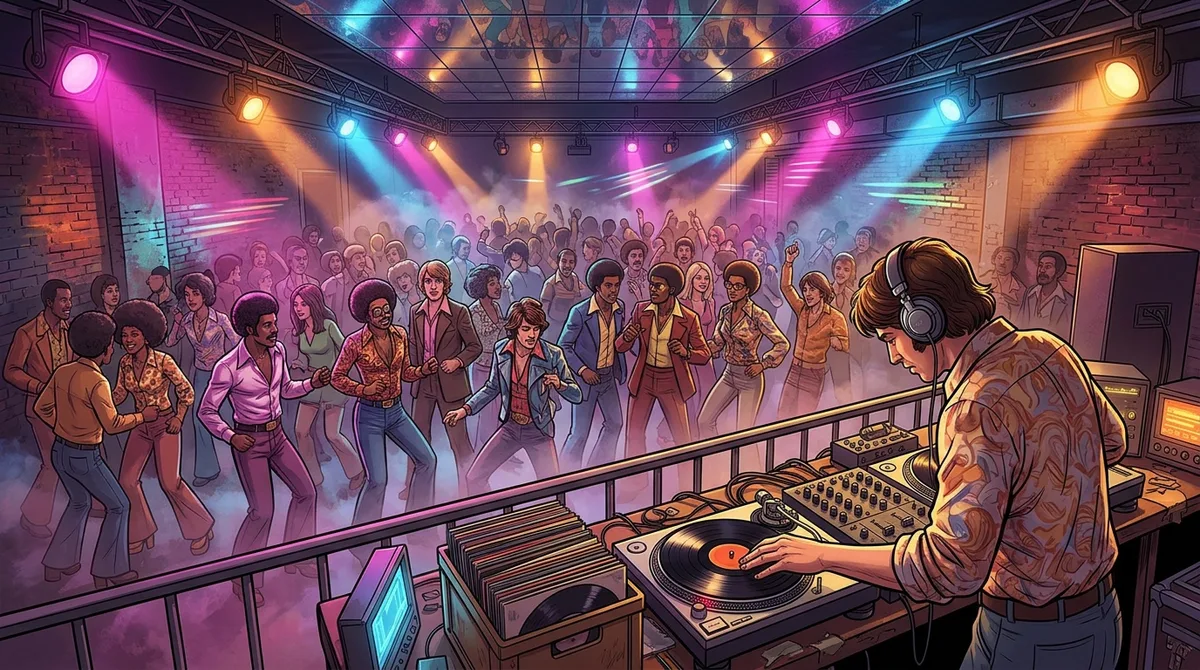
Picture the Warehouse as a neon-lit time machine. From 1977 to 1982, its doors on South Jefferson Street were the place to be. The schedule was legendary: Saturday doors opened at midnight, and the party could roll on until noon or 1 p.m. Sunday. If you had a job on Monday, you were playing on hard mode.
The club’s name is the detail music nerds love most. Many accounts credit the Warehouse with giving the sound its name, which ties the word “house” to an address on South Jefferson Street rather than a lab full of humming synths. That’s a pretty good origin story for a genre built by regular people with a lot of records and very little money.
Not every night was pure dance-floor joy. Preservation Chicago reports that safety concerns led to the club’s permanent closure in 1982, just five years after it opened. For the crowds who had found a home there, that was a huge loss, like losing your save file right before the boss fight.
The building refused to fade quietly, though. On June 21, 2023, the Chicago City Council voted to approve landmark designation for the Warehouse building. That’s a rare level-up for a club that had been closed for more than four decades.
So the next time a four-on-the-floor kick drum thumps through your headphones, you can thank a club that gave a whole genre its name and a crowd that kept showing up until the lights came on.
Jesse Saunders and Vince Lawrence’s “On & On” is often named as one of the first house records, but “first” is a claim people still argue about. They made the track in 1983, and Saunders released it in early 1984 on Jes Say Records. Think of it as an early save file: it proved the sound could live on vinyl, even if other tracks were already floating around the clubs.
That’s the tricky part of Chicago house history. The scene grew from parties, mixtapes, and dubbed copies passed from hand to hand, so there was no official starting gun. Plenty of DJs were making their own edits at the same time, and sorting out who was earliest is like trying to find the first pixel of a retro video game.
Money was a big obstacle. Chicago DJ and producer Marshall Jefferson recalled spending about $200 a week on records while he and his friends DJed at parties and made tapes. For a young DJ with a day job or no job at all, that was a serious investment, and it shows how badly people wanted those tracks.
The sound also had a clear shape. DDEX’s ChicagoHouse entry describes early house as developed in Chicago in the mid-to-late 1980s, built on a four-on-the-floor beat with syncopated hi-hat and snare patterns. Once you can hear that pattern, you will catch it in countless dance tracks for the rest of your life.
Frankie Knuckles and singer Jamie Principle took the sound further with “Your Love” in 1986. The track became a dance hit in the United Kingdom, which sent Chicago house across the Atlantic. Suddenly, a record cut in a small Chicago scene was filling dance floors thousands of miles away.
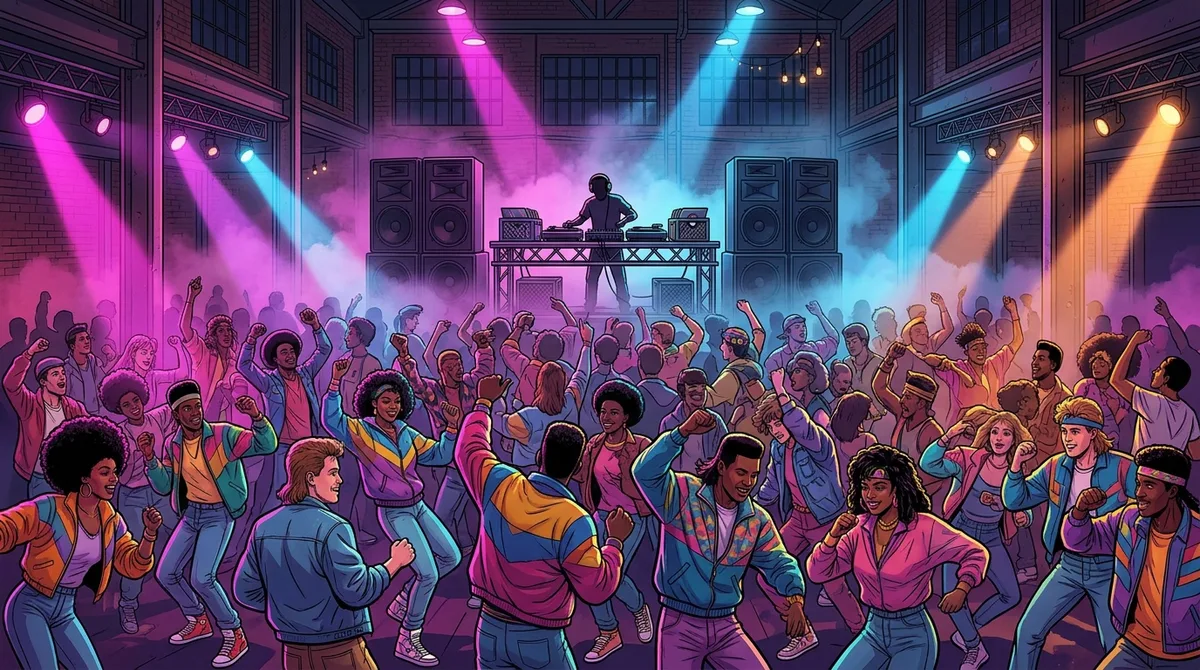
The Warehouse mattered because it gave Black, Brown, and queer Chicagoans a room where they could be fully themselves, at a time when much of the city’s nightlife had no place for them. The crowd was mostly Black, and the club started as a members-only gay space, so the door was less a velvet rope and more a promise that everyone inside had chosen each other.
Think of it as the best arcade hangout in town. The regulars know the cabinet, they know who has their back, and nobody has to explain why they showed up. That trust built a sense of belonging many people never found in mainstream bars, and for a lot of them the dance floor was the one place where nobody asked them to tone it down.
Later accounts describe the club as a safe space, and that word carries real weight. Safety was not a side quest in those years. It shaped who walked through the doors, how they felt once they were inside, and why the music felt like more than a party.
Safety concerns also ended the run. The Warehouse closed for good in 1982, only five years after it opened, and for the crowds who had built their weekends around it, that was like losing your save file right before the final boss.
The building refused to fade quietly. On June 21, 2023, the Chicago City Council approved landmark designation for the Warehouse at 206 S. Jefferson Street, more than 40 years after the lights went out.
Chicago house spread to Detroit and Europe through records, DJs swapping tapes, and clubs that were curious about what was coming out of Chicago. It travelled fast because the beat was simple enough to pick up anywhere, and the sound was catchy enough to make people want more.
Detroit was close enough for the ideas to cross over. Producers there, including Juan Atkins, Derrick May, and Kevin Saunderson, known as the Belleville Three, were tuned in to the Chicago club sound. They built Detroit techno with clear links to it, but they pushed the music somewhere else.
So what’s the difference? Chicago house leaned toward soulful vocals and disco roots, so it often feels warm and sung, like a crowd singing along with the lights down low. Detroit techno felt more machine-driven and futuristic, like a synth-powered spaceship that happens to have a heartbeat. Same family, different haircuts.
Europe caught the signal by the time “Your Love” became a dance hit in the United Kingdom. Chicago house crossed to the UK and helped shape its club scene, and British DJs and clubgoers took the sound and ran with it. Suddenly, a record cut in a small Chicago scene was turning up in clubs thousands of miles away.
Later, rave culture carried house and its offshoots into mass dance parties around the world. The intimate Warehouse nights gave way to huge rooms packed with thousands of dancers, glow sticks, and sound systems that could rattle your teeth from across the field. It was the arcade’s biggest multiplayer lobby, and everybody had a controller.
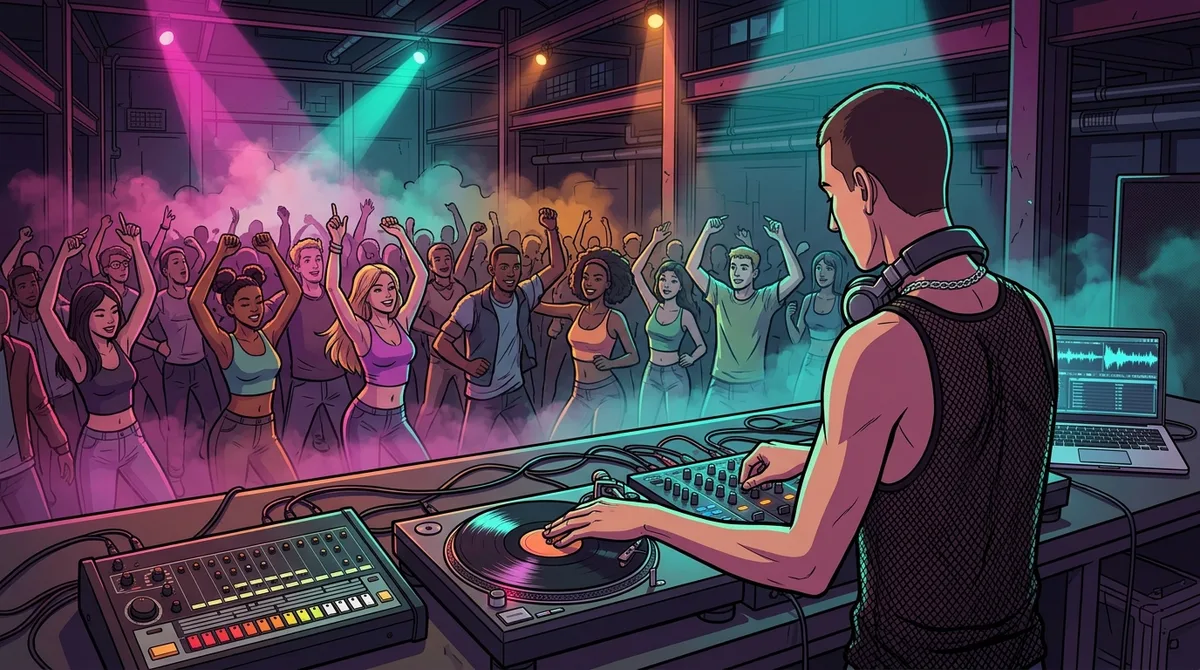
Yes, Chicago house is still very much alive, and in 2026 the city is putting its roots on full display. The sound has kept its core while branching into new styles, like a classic arcade cabinet that keeps getting upgraded boards.
Two of the biggest offshoots grew straight out of the original Chicago sound. Deep house slowed things down with smoother chords and a late-night mood, while acid house brought squelchy, squiggly synth lines that sound like a video game glitching out mid-level.
Modern producers still keep the four-on-the-floor pulse thumping in clubs. Walk into a warehouse party or a late set today and you will hear the steady kick drum, the snappy hi-hats, and the sung vocal samples that Frankie Knuckles would recognize. Fair warning: it will still make you move.
House also changed how DJs work. Chicago DJs turned mixing into an art, blending one track into the next so smoothly the crowd barely noticed the switch. They also learned to program a night like a boss fight, starting slow, building tension, and reading the room to decide what drops next.
The people who built house also shaped fashion and social movements. Black, gay, and queer communities used clubwear, bold styling, and the dance floor itself to say who they were and to fight for their place in the city. That attitude still echoes in club fashion and in the way party crowds organize around care and belonging.
The City of Chicago has scheduled the Chicago House Music Festival and Conference at the Chicago Cultural Center and Millennium Park for August 27–30, 2026, as listed on the city’s events calendar. Pack your dancing shoes and expect a crowd that knows every sample.
Ready to level up? Start with a listening night. Build a playlist with “On & On” and “Your Love,” play them back to back, and count the kick drum. If you can feel that steady four-on-the-floor pulse, you have just found the core of the sound that filled Chicago clubs.
Then pick one name and follow the trail. Frankie Knuckles is the best starting point, since his Warehouse sets were built on repeating beats with sound effects and sampled vocals. Search for live recordings and mixes from that era, and listen for how he stretched a single phrase until the whole room moved together. It’s like finding a director’s commentary for your favorite old game.
Once your ears are warmed up, go offline. Stand outside the building at 206 S. Jefferson Street and picture the line of dancers waiting for midnight. Then head to the Chicago Cultural Center or Millennium Park if your calendar allows it during the Chicago House Music Festival and Conference in late August 2026. Bring comfortable shoes, a water bottle, and a playlist of your favorite Chicago tracks.
Last, keep your own mixtape going. Share the tracks that surprised you with a friend who only knows modern dance music, and watch them discover the sound that started it all.