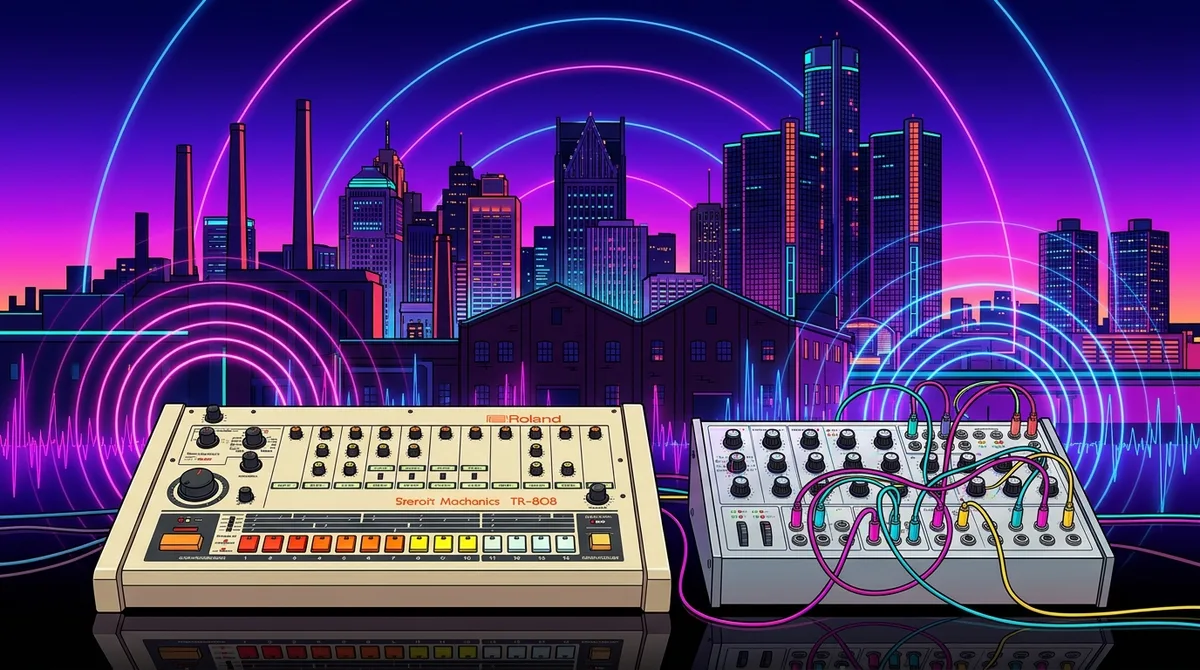
Detroit techno started with Black youth in Detroit and the nearby suburb of Belleville during the 1970s and 1980s. Picture rusty factories out back and neon signs out front, where kids mixed local radio, funk, and dance club energy with the robotic synth sounds of Germany’s Kraftwerk. The result sounded like it had been beamed in from a sci-fi movie, and it started right in your own backyard.
The story kicks off with three friends, Juan Atkins, Derrick May, and Kevin Saunderson, who met at Belleville High School in the late 1970s and became known as the Belleville Three. By 1981, Atkins’s group Cybotron had a single, “Alleys of Your Mind,” that sold 15,000 copies. For a scene still figuring out its own name, that’s a lot of vinyl flying off the shelves. Grab your headphones, because this is where the future got its first real beat.
Techno started in Detroit and the nearby suburb of Belleville, Michigan, during the 1970s and 1980s. Black teenagers there took the sounds around them and remixed them into something that still sounds like the future.
Local radio was the first ingredient. Detroit stations, including the late-night shows of The Electrifying Mojo, played funk, soul, and strange electronic tracks that most kids in the suburbs had never heard. If you had a cassette deck and a patient thumb, you could hit record and study every beat.
Funk brought the groove, with its bouncy bass lines and tight drum patterns. Dance clubs brought the crowd, and that crowd wanted music that never stopped. Producers learned to keep the rhythm steady, and Visit Detroit describes the result as a four-on-the-floor beat, the same pulse you can still feel at a club tonight.
Then came the Europeans. Kraftwerk, the German band from Düsseldorf, made songs that sounded like robots had learned to sing, with icy synth lines and deadpan vocals. Detroit producers heard that and thought, if machines can make music like this, why not us?
The city itself was changing fast. Factories were closing, and the people who stayed were looking for new ways to imagine what came next. Michigan State historian Julian Chambliss links the music’s origins to that deindustrialization and to the technology arriving at the time. He describes techno as something Black youth created and nurtured in Black and queer spaces. In a tight-knit scene like this, a shared record or a late-night tape could spark the next big idea.
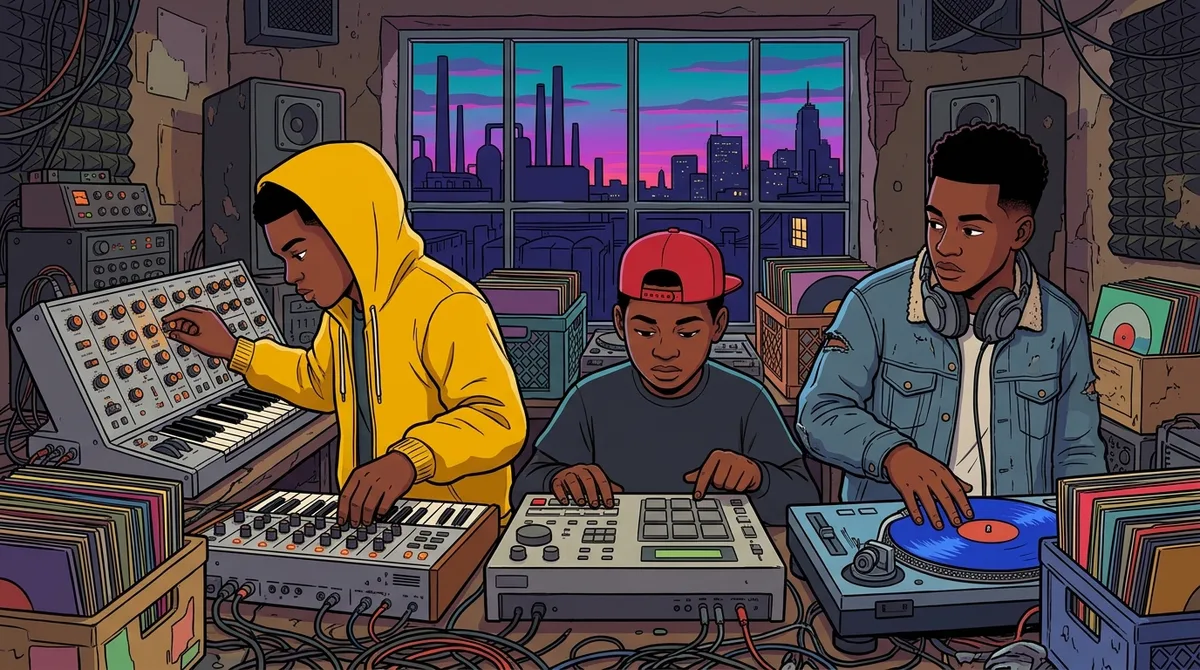
Black youth in Detroit built techno because the music gave them a way to picture a better future while their own city was falling apart. Afrofuturism, the idea that Black artists can imagine themselves into futures of space travel, advanced machines, and freedom, gave them the blueprint.
Through the 1970s and 1980s, factories were closing and the jobs that had supported families for generations were disappearing. Instead of waiting for someone to fix things, young producers grabbed the cheapest synthesizers and drum machines they could find and built a soundtrack for the world they wanted. Those machines were no longer just tools for making a song. They were a way to say that the future belonged to them too.
The music also needed space to grow. Historian Julian Chambliss describes the Black and queer spaces where the music was nurtured, and those rooms turned a few records into a movement, because people kept coming back to hear what came next.
Decades later, museums are finally giving that story the attention it deserves. Michigan State University’s 2025 exhibition, Techno: The Rise of Detroit’s Machine Music, included a 60-minute sound installation by the Detroit group Underground Resistance and stayed open longer than planned, through July 12, 2025. Earlier, the Detroit Historical Museum’s show “Techno: Detroit’s Gift to the World” ran from January 2003 through August 2004 and included a recreated basement studio filled with artists’ equipment. Standing inside a room like that, you can almost hear the first beats being tested.
Picture three Belleville teenagers with more ideas than allowance money. Juan Atkins, Derrick May, and Kevin Saunderson met at Belleville High School in the late 1970s. They swapped records, argued about gear, and pushed each other to make something that sounded new. Nobody handed them a record deal. They had a shared obsession and plenty of late-night listening sessions.
Atkins was the first to get a real project off the ground. In 1980 he formed the electronic group Cybotron with Rick Davis, and their sound leaned hard into synths and futuristic imagery that felt more like a sci-fi movie than a local garage band. Their 1981 single, “Alleys of Your Mind,” sold 15,000 copies, which is a lot of vinyl for a group that was still finding its feet.
The partnership didn’t last forever. Atkins and Davis parted ways in 1985, but Atkins kept going. He began releasing music as Model 500 and launched Metroplex, the project that let him push his ideas even further. The Detroit Historical Society’s encyclopedia entry on Atkins traces this move from group member to solo producer.
Model 500’s music was built for the dance floor, with hypnotic loops and crisp machine rhythms that rewarded anyone willing to lose themselves in the beat. For kids in Detroit, it proved something important. You didn’t need a big studio or a major label. A few machines, a sharp ear, and a clear idea could get a record heard across town and beyond.
Atkins, May, and Saunderson stayed connected to the same music that had brought them together, and that shared history is why people still call them the Belleville Three. Their work became the blueprint that a whole generation of Detroit producers would follow, and you can hear their influence in almost every techno track that followed.
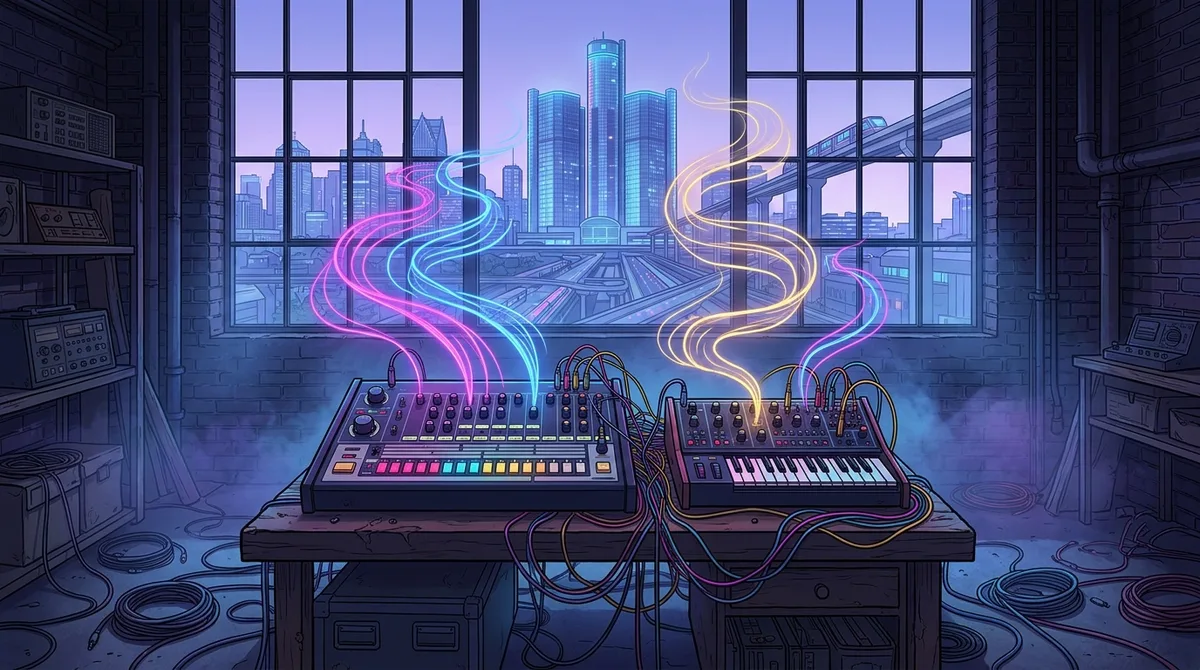
Picture a bedroom studio with a few boxes covered in blinking lights and knobs that look like they belong on a spaceship. That was the toolkit. A synthesizer built sounds from scratch, a sequencer played back patterns note by note like a tireless robot musician, and a drum machine kept the beat without ever needing a snack break.
The rhythm was where the magic really happened. Techno settled on a four-on-the-floor beat, with the kick drum thumping on every count of the bar, steady as a heartbeat. Producers layered hypnotic synth lines and crisp hi-hats on top of that pulse, and the whole thing was built to keep a dance floor moving until sunrise.
Compare that with the funk and disco on the radio. Those records bounced with live bass, horn sections, and singers hitting high notes. Machine-driven tracks sounded cooler, sharper, and a little weightless, like the music was coming from somewhere far away. For listeners used to warm grooves, that difference felt like stepping through a door into another century.
That was the point. Detroit was losing factory jobs and watching familiar streets change, and the new sounds offered a way to picture something better. Producers didn’t wait for the future to show up. They built it out of cheap gear, late-night experiments, and a stubborn belief that a city in trouble could still send signals into the unknown.
The Music Institute gave those machines a proper stage. It opened in 1988 as Detroit’s first techno club and ran for less than two years, but in that short time it turned strange new tracks into a place where people could dance, argue, and lose track of the clock. Every bass drop there sounded like a little piece of tomorrow arriving early.
Here’s a plot twist worth a high-five. In 1988, Juan Atkins submitted his track “Techno City” to a UK compilation project. The producers liked it so much that they retitled the whole record Techno! The New Dance Sound of Detroit.
That album did more than collect good tracks. It helped establish “techno” as the genre-wide name, so the music finally had one label that worked in London, Berlin, and beyond. Think of it like a boss fight finally getting a proper title screen. The sound had been brewing in Detroit basements and dance halls for years, but the record gave it a name people could shout across a packed floor.
Europe was ready to listen. Clubs across the continent picked up the sound, and DJs carried Detroit’s machine music from one city to the next. The beat was simple enough to dance to and strange enough to feel like a transmission from the future, which is exactly why it spread so fast.
Back home, The Music Institute was the place where that sound got its own neon-lit room. As Detroit’s first techno club, it gave local kids who had grown up on cassette tapes a real dance floor to test their favorite tracks. The crowds who came through its doors were the first to hear how far the music could travel, and they took that energy out into the world.
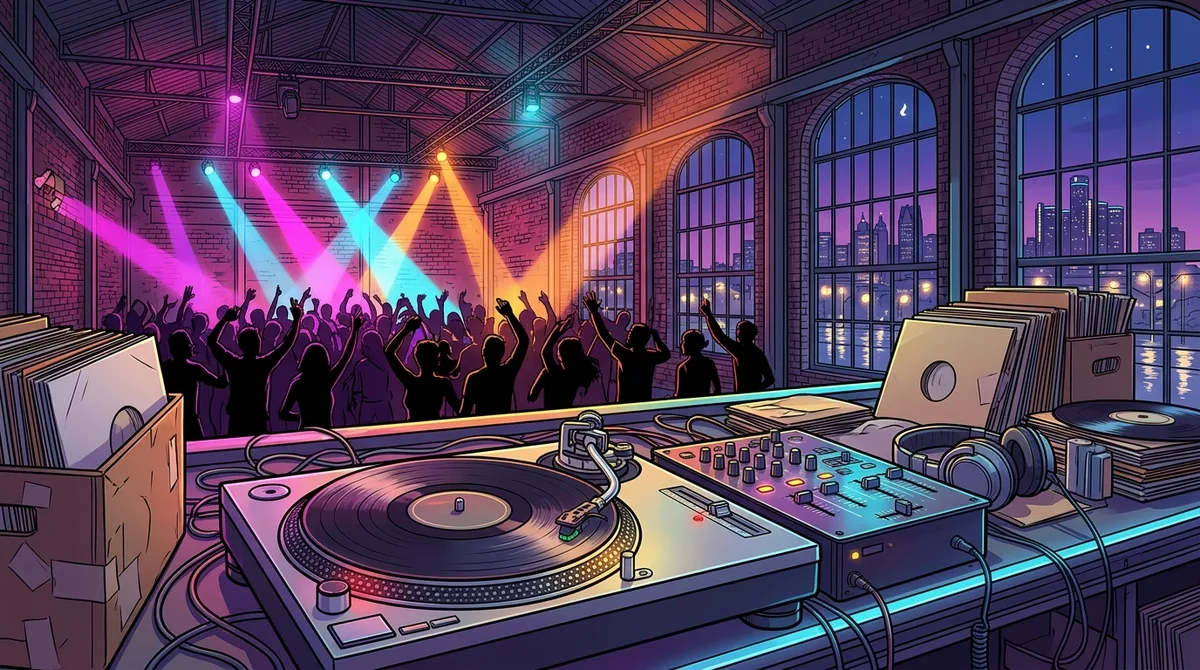
Want to hear the story for yourself? Detroit has been turning its machine music into public events for a long time, and a few stops are worth putting on your list.
Start with the year 2000, when the city held its first annual Detroit Electronic Music Festival. The event was later restructured and rebranded as Movement, so when people talk about Movement today, they’re talking about the same big city-wide party with a new name.
The Detroit Historical Museum once hosted a show called Techno: Detroit’s Gift to the World, which included a recreated basement studio stacked with equipment used by artists. That exhibit is long gone, but it is a reminder that basements, not just clubs, were part of the story.
Michigan State University keeps the conversation going. Its MSU Museum announced a free fall electronic-music series with The Cadre, a student collective, and scheduled events for September 20, October 24, and November 22, 2025. Free is the best price tag in the history of nightlife.
Here’s a quick cheat sheet for your trip:
Pack comfy shoes and a notebook. Museum floors aren’t built for dance moves, but a good exhibit will have you tapping your sneakers to the beat anyway. Keep your ears open in the hallways too, because the sound you hear might be the next big idea in a city that has been turning old machines into new music for decades.
Ready to move from reading to listening? Start with a short playlist: “Alleys of Your Mind” by Cybotron, then a few Model 500 tracks, then whatever Kraftwerk record your friends swear is overrated. Play them in that order and you’ll hear the story go from robot pop to machine-built dance floors in one listening session.
Next, check the lineup for Movement, the festival that grew out of the first Detroit Electronic Music Festival in 2000. Pick two or three Detroit-rooted artists on the bill, then follow them to the record shops and clubs they mention online. Your playlist will get a lot longer, and fast.
If a trip to Michigan isn’t in the cards this fall, pick one MSU Museum electronic-music night on the calendar and treat it like a level you have to beat. Bring a notebook and jot down which sound made you want to dance and which one made you feel like you’d landed on another planet.
Then go find the old gear behind that sound. Search for the synthesizer or drum machine that stood out to you, listen to a few tracks built on it, and see where your own sense of the future takes you.