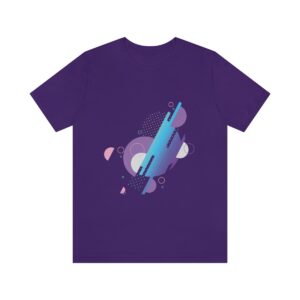
An AOP t-shirt, short for all-over-print, wraps your favorite neon sunset from shoulder to hem. The fabric you pick decides whether it feels great or feels like a hot arcade cabinet. Retrowave’s Blue Rays AOP t-shirt is 100% polyester with a regular fit. It comes in 4.0 oz or 6.0 oz weights, is tagless, and runs true to size. It’s listed at $32.00, or $27.20 when it’s on sale, which is a fair price for a shirt that looks like a grid-runner’s dream.
Polyester is the reason the colors stay so bright, but it feels different from cotton, so your comfort call matters as much as your color call. Our standard tees are 100% Airlume combed and ringspun cotton at 4.2 oz/yd², a lighter, airier option for warm days. Pick the one that fits your style and climate, and you’re ready to press start.
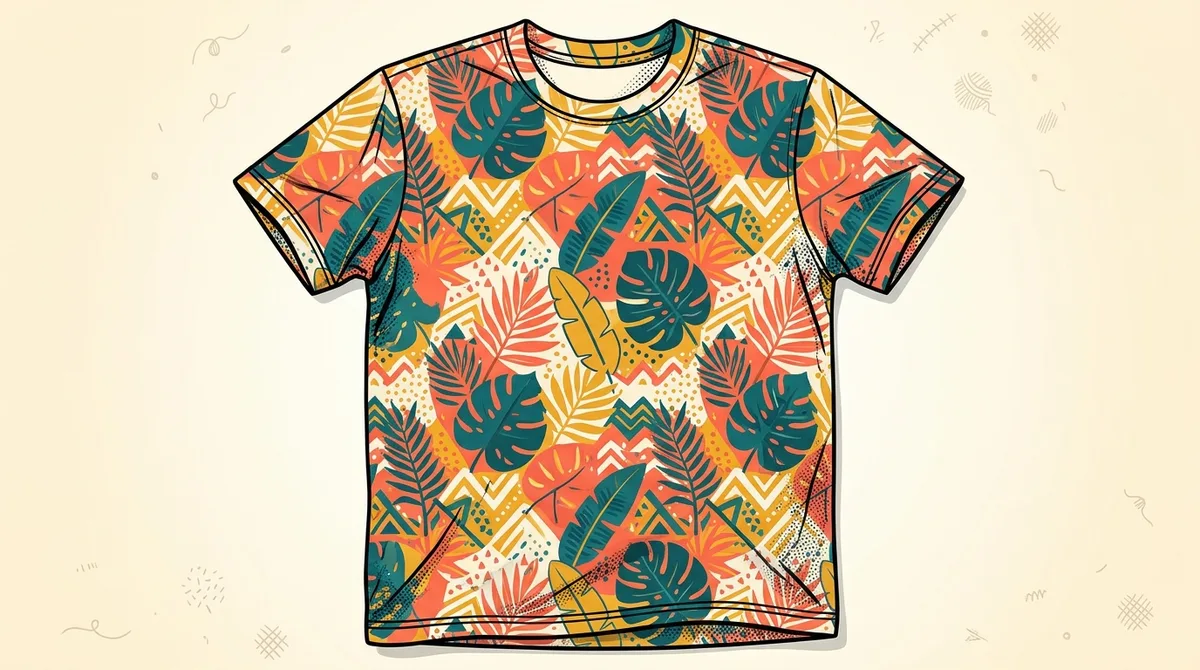
AOP shirts are made by printing a design onto flat fabric panels first, then cutting and sewing those panels into a finished tee. It’s a bit like printing a poster before folding it into a paper airplane, except the airplane is a shirt you can wear to a synthwave night.
Because the ink goes on before the fabric is cut, the design can run from seam to seam. The neon grid keeps going over the shoulders, down the sides, and around the back. That broad coverage is the whole point of cut-and-sew construction, while a standard printed tee only gets artwork on the front and back.
The most common method is dye sublimation, where the ink turns into a gas and soaks into the fibers. It works best on polyester, which is why so many AOP shirts are polyester and why their colors look so loud. Some newer methods print natural-fiber fabric with water-based pigment inks, so cotton AOP shirts exist too. Check the fiber content before you buy, because it affects both the print and the feel.
Placement is the tricky part. Once the panels are sewn, a design that depends on exact alignment can shift slightly at the seams, so a grid line might not meet neatly at the sleeve. Stretching the fabric can reveal thin white streaks near stitched areas, and folds can leave small creases. These quirks are normal for cut-and-sew AOP, so don’t expect a perfectly matched pattern at every seam.
Our Blue Rays AOP tee is 100% polyester, the fiber that suits this printing method best. That’s a good match if you want a bold, edge-to-edge look.
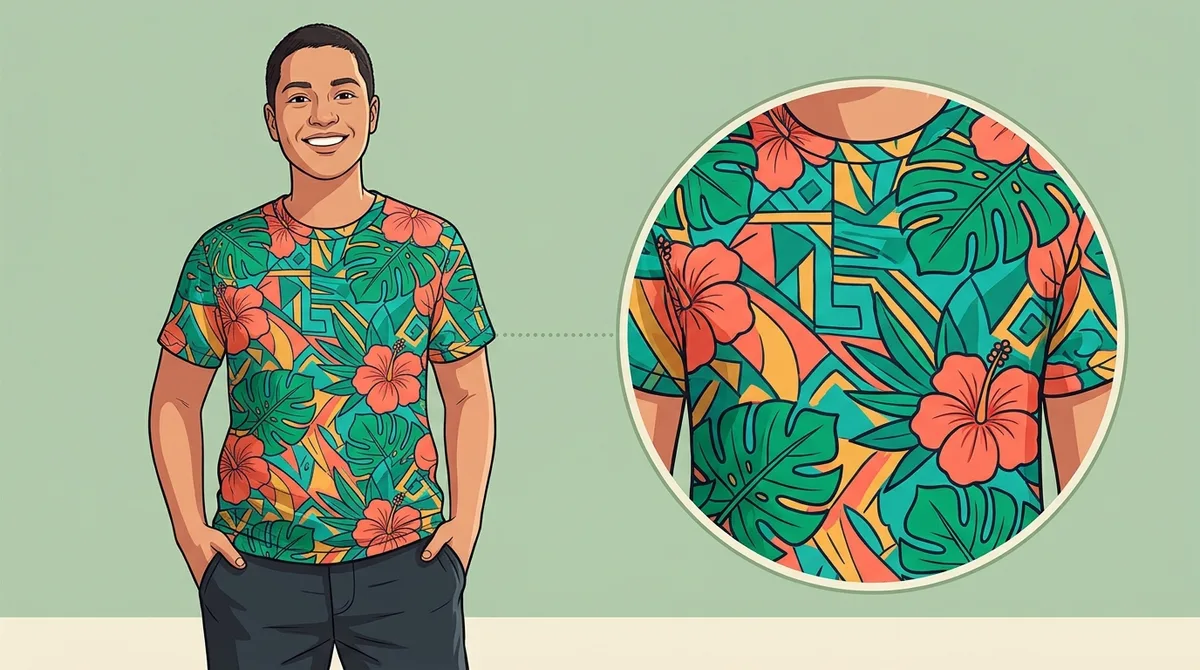
Print quality depends on three things: the fabric, the printing method, and how the panels are cut and sewn. Get one of them wrong, and your neon sunset can look more like a worn-out VHS tape.
Polyester usually holds color best with dye sublimation, because the dye bonds with the fibers instead of sitting on top of them. Cotton AOP shirts often use water-based pigment inks, which can look lovely at first but may soften or fade sooner after many washes.
To judge color durability, look for ISO 105-C06:2010, the international method for testing how well textile colors resist domestic or commercial laundering. A result from that test tells you how much color survives a set laundering routine, which is a handy stand-in for your own laundry day.
Polyester-based prints generally keep their color well when you wash them cold and dry them gently. Skip the hot dryer, which is the arcade cabinet of laundry, and your grid will glow for much longer.
Seams need a close look too. Sleeves and side seams take the most stretch, so keep an eye on them.
When you browse product photos, look for sharp edges, even color, and bold contrast. Blurry lines or patchy color in the photos often carry over to the finished shirt. If you can get a sample, check it under good light and stretch it gently at the seams.
Retrowave accepts returns within 30 days of receipt for most items in new condition, so hold off on the first wash until you’re sure the shirt is a keeper.
Polyester wins on bright color and quick drying, while cotton wins on a soft, natural feel. The right pick depends on how you like your shirts to feel and where you wear them.
Weight is the first difference you’ll notice. Our Blue Rays AOP tee is 100% polyester with a regular fit, and it comes in 4.0 oz or 6.0 oz fabric. The lighter 4.0 oz version suits muggy arcade nights, while the 6.0 oz version feels sturdier on cooler evenings. Our standard tees use 100% Airlume combed and ringspun cotton at 4.2 oz/yd² (142 g/m²), a light fabric that keeps things airy.
Polyester tends to dry quickly, which helps when you’re sweating through a long gaming session or a dance-heavy synthwave night. Cotton feels softer against your skin and suits warm, dry days, but it holds onto moisture longer once you start sweating. Think of it as the difference between a neon sign and a cozy lamp. Both glow, but they feel very different to be near.
Softness is where cotton has a clear edge. Fiber content may vary by color for our cotton tees, though, so check the product page before assuming every shade feels the same.
Stretch is where AOP shirts get interesting. Many AOP shirts blend in a small amount of elastane, and some blends use about 7%, to add stretch and recovery so the shirt bounces back after you move. That extra give can make a fitted cut more comfortable, especially when the print runs across your shoulders and sleeves.
Climate decides the rest. On a hot, humid day, a light cotton tee or a quick-dry polyester one will keep you cooler than a heavier knit. If you live somewhere with chilly evenings, the 6.0 oz polyester option gives you more body without dulling the neon.
If you sweat easily or wear your shirt for hours, lean toward polyester. If you want the softest touch and mostly wear it on mild, dry days, cotton is the comfy pick.
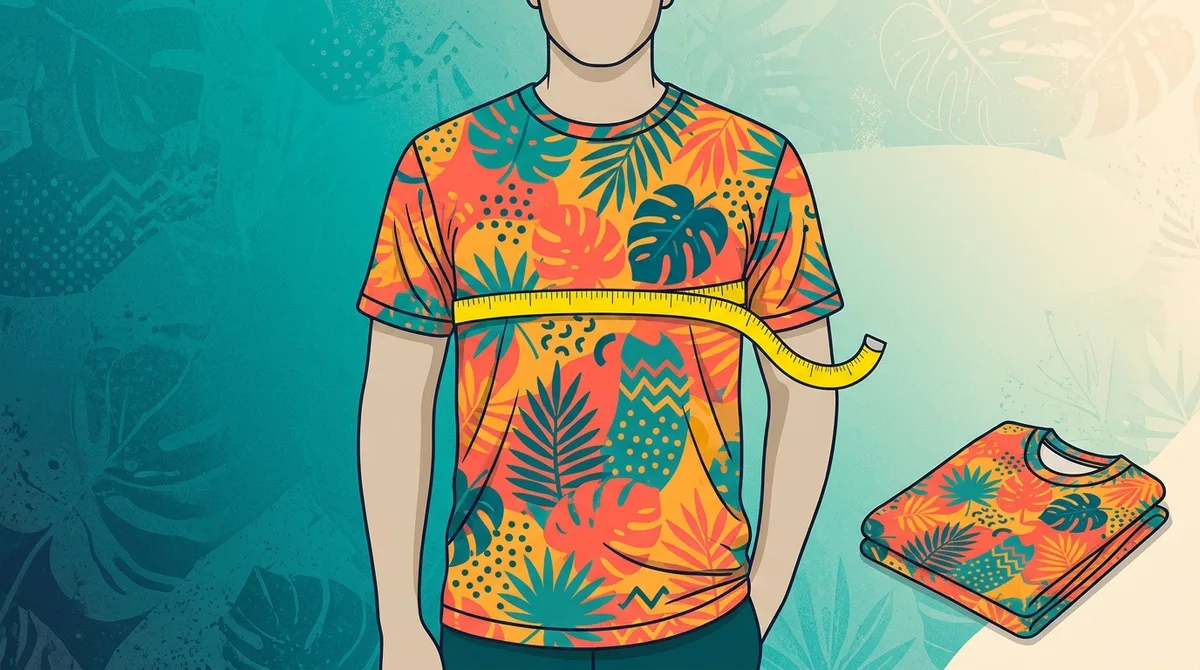
Fit decides whether your favorite print looks like a killer synthwave poster or a crumpled flyer. Our standard unisex graphic tees have a retail fit and run true to size, so if you normally wear a medium, a medium is your safe bet. The Blue Rays AOP t-shirt has a regular fit and also runs true to size, which keeps ordering simple whether you’re picking out a glowing grid for yourself or for a synth-loving friend.
Every product page has a size chart, so skip the guessing game. Grab a shirt you already love, lay it flat, and measure across the chest and from the shoulder seam to the hem. Then compare those numbers to the chart. A well-fitting shirt in your closet is the best ruler you own.
Size also changes how the print looks. An AOP design covers the whole shirt, so on a larger size the artwork stretches across more fabric and the grid lines spread out. On a smaller size, the same design gets squeezed into less fabric, so the sunset can look tighter and busier. Neither version is a flaw, but it helps to know which look you’re buying before you fall for one particular layout.
Layering is where AOP tees really shine. A slim denim jacket or an open bomber over a Blue Rays tee lets the design peek out at the collar and sleeves, like a retro game box with the cover half open. Leave the jacket unzipped so the print stays visible. If you want room for the shirt underneath without bunching at the shoulders, size up on the jacket instead of the tee.
Skip heavy puffer coats, though. Thick padding hides the print completely, and you paid for that neon sunset, so let it show.
An AOP tee at Retrowave is listed at $32.00 and often goes on sale for $27.20. Our standard unisex graphic tees are listed at $27.00 and often sell for $22.95. Here’s how the prices stack up:
Discounts and promotions show up occasionally rather than on a fixed schedule, so keep an eye out. The newsletter is the easiest way to catch them, because it announces special offers and new arrivals before most shoppers notice.
A low price doesn’t automatically mean a good shirt. Two tees can look equally bright in a product photo and still feel completely different once you wear them. Check the fabric weight and fiber content on the product page before you add anything to your cart, since those details shape both the print and the feel.
Returns are accepted within 30 days of receipt for most items in new condition. That gives you room to test an AOP tee at full price, wear it, and decide whether the fabric works for your summer nights and gaming marathons.

Retrowave ships to most countries around the world, so your neon sunset can cross an ocean without a passport. Shipping costs and delivery times vary by destination, so check the total before you fall in love with a print and get surprised at checkout.
Custom orders may take longer to ship than standard orders. If you’re ordering a personalized piece for a birthday or a convention, count back from the event date and leave extra room.
Paying is as easy as slotting a coin into an arcade cabinet. You can use:
Once your order is placed, you’ll receive a confirmation email. Save it, because it proves the order went through and tells you what to check if something looks off.
Order changes and cancellations are a different story. They’re only possible within a short window after you order, and you have to request them through customer service. Don’t wait until the weekend to second-guess your size, because that window closes quickly.
Why the rush? Once an order is processed, changes may not be possible at all. For AOP shirts, processing may mean the design is already printed and sewn for your order, so there’s no quick way to rewind the tape. Reach out through customer service or the Contact Us page as soon as you spot a mistake, and you’ll give yourself the best shot at a fix.
Returns are accepted within 30 days of receipt for most items in new condition, so you get a full month to decide whether the print lives up to the poster. Keep the tee unworn and unwashed, and you’re in good shape. If something seems off when it arrives, email customer support or use the Contact Us page right away so the team can point you in the right direction.
Labels are the unglamorous part of shopping, but they tell you what you’re really wearing. The U.S. Federal Trade Commission says most textile products must disclose fiber content, country of origin, and the manufacturer or another responsible business. Covered apparel must also include care instructions, which act as your cheat sheet for keeping the grid bright.
Standard unisex tees come with a tear-away label, while our Blue Rays AOP tee is tagless. Since there’s no tag to flip over on that one, check the product details for fiber content and care information before you add it to your cart.
Behind every print is a supply chain, and Retrowave says it sources products from suppliers who adhere to fair labor standards. That’s a nice bonus for shoppers who want their synthwave style to come with a clear conscience.
Reviews are the closest thing to a friend who already bought the shirt. After your purchase, you’ll be invited by email to review your tee, and you can also leave a review on any product page. Read them for real-world notes on fit, print quality, and how the fabric feels after a few washes.
Start with your fabric. If you game all night or dance at synthwave shows, the Blue Rays AOP tee in 4.0 oz polyester is the quick-drying pick. If your evenings get chilly, the 6.0 oz version gives the shirt more body. If you mostly wear shirts on mild, dry days, our 100% Airlume cotton standard tees at 4.2 oz/yd² are the softer choice, though they don’t have all-over print.
Measure before you click. Pull out a shirt you already love and measure the chest and the length from shoulder seam to hem. Compare those numbers with the size chart on the product page, then pick the size that matches.
Count back from your deadline. Custom orders take longer to ship than standard ones, so if a birthday or convention is coming up, order early and leave extra room. Shipping costs and delivery times depend on where you live, so check the total before you pay with Visa, MasterCard, American Express, PayPal, or another digital payment platform.
Save your confirmation email. It proves your order went through. If you spot a mistake, reach out fast, because changes are only possible within a short window after ordering.
Watch for sales. Sign up for the newsletter so you hear about special offers and new arrivals before your favorite grid-runner shirt sells out.