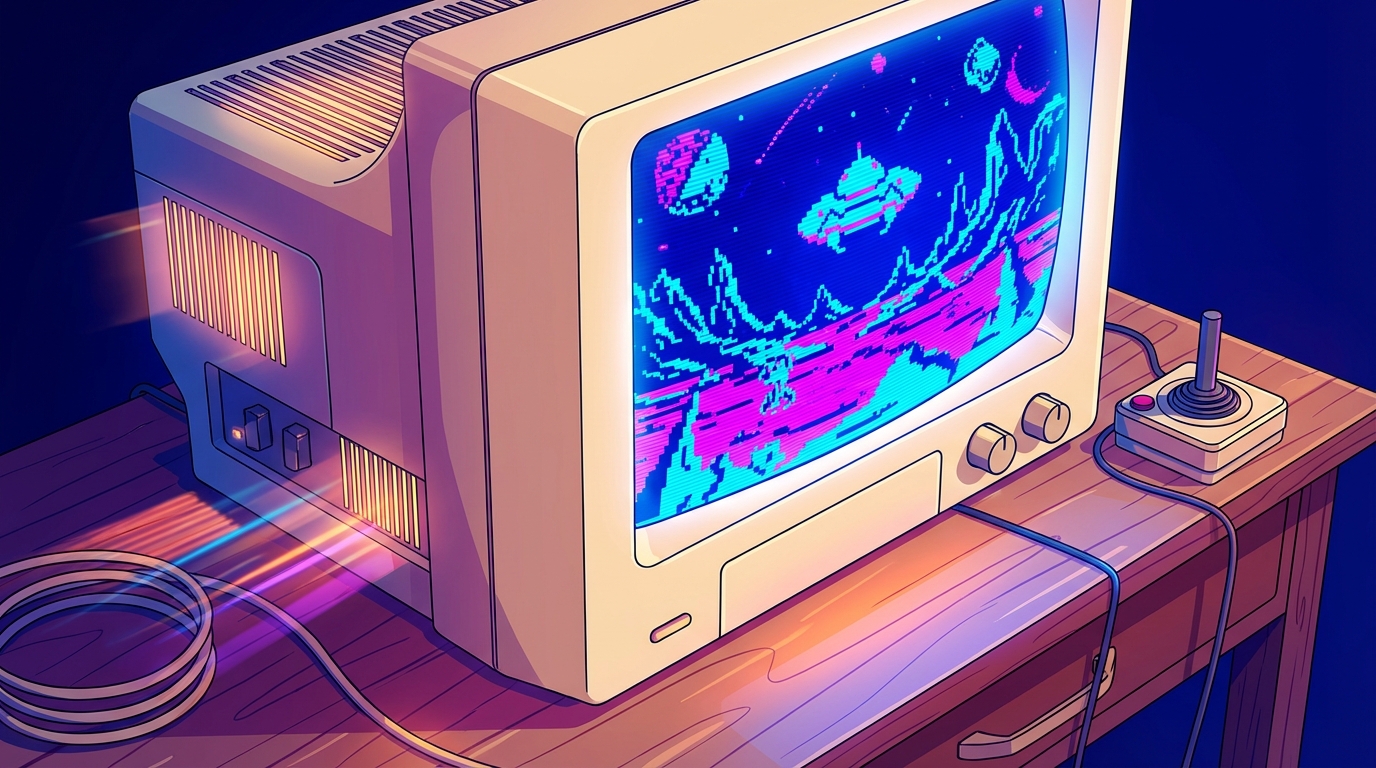
Picture a dimly lit room bathed in neon pink and blue light where the only sound is the rhythmic clicking of a mechanical keyboard. You might think the centerpiece of this retro shrine is a sleek new flat screen, but the real power players are hauling fifty-pound beige beasts out of the basement. Forget those paper-thin displays that look like they would snap in a stiff breeze because true legends know that heavy hardware implies heavy power. The gaming world is circling back to the chunky glory of the CRT monitor. It is not just because we miss the smell of heated plastic. Your dad’s old computer screen has some secret sauce that modern tech just cannot replicate.
While your fancy OLED tries to figure out what frame to show next, a cathode-ray tube is blasting electrons directly into your eyeballs at the speed of light. This vintage wizardry offers virtually zero input lag. That means your button mashes translate to on-screen action instantly. Modern screens use a method that holds the image for a tiny moment and creates a blurry mess when things move fast. CRTs keep it crisp like a fresh can of soda. Competitive gamers are ditching high-tech panels because they are tired of losing matches to invisible delays. When you play on glass, you are seeing the game exactly as the developers intended back when hair was big and synth music ruled the airwaves.
Plugging into one of these heavy humming boxes unlocks a buttery smooth visual experience that makes digital ghosts disappear forever. The motion clarity is so good that it feels like you are cheating the laws of physics or at least hacking the matrix. You do not need to worry about dead pixels or weird smearing effects ruining your high score run on a classic shooter. Sure, you might throw out your back trying to lift this monster onto your desk, but the aesthetic points are totally worth the physical therapy. Embrace the static and get ready to see your favorite games in all their glowing, radioactive glory.
While modern screens are busy thinking about what to show you next, that chunky beige beast on your desk is already blasting photons into your eyeballs. It uses an analog electron beam that draws the image directly onto the glass at the speed of light. You skip the digital processing queue entirely. There is no input lag here to blame for your missed shots because the response is practically instantaneous. Compare that to your fancy OLED. It uses technology that holds onto frames and makes fast movement feel like running through molasses. With a CRT, the moment your finger mashes the button, the action happens on screen before your brain even processes the click.
This raw analog speed gives you a superpower that feels almost like using cheat codes in real life. You will spot enemies peeking around corners with perfect motion clarity while your opponents are still staring at a blurry mess of pixels. Those new monitors try to fake this smoothness with digital tricks, but nothing beats the authentic glow of phosphor decay. It is the visual equivalent of driving a neon-soaked sports car down a digital highway with zero traffic. Your reflexes will feel sharper than a polygon edge in a retro arcade game. You get the upper hand in every match.
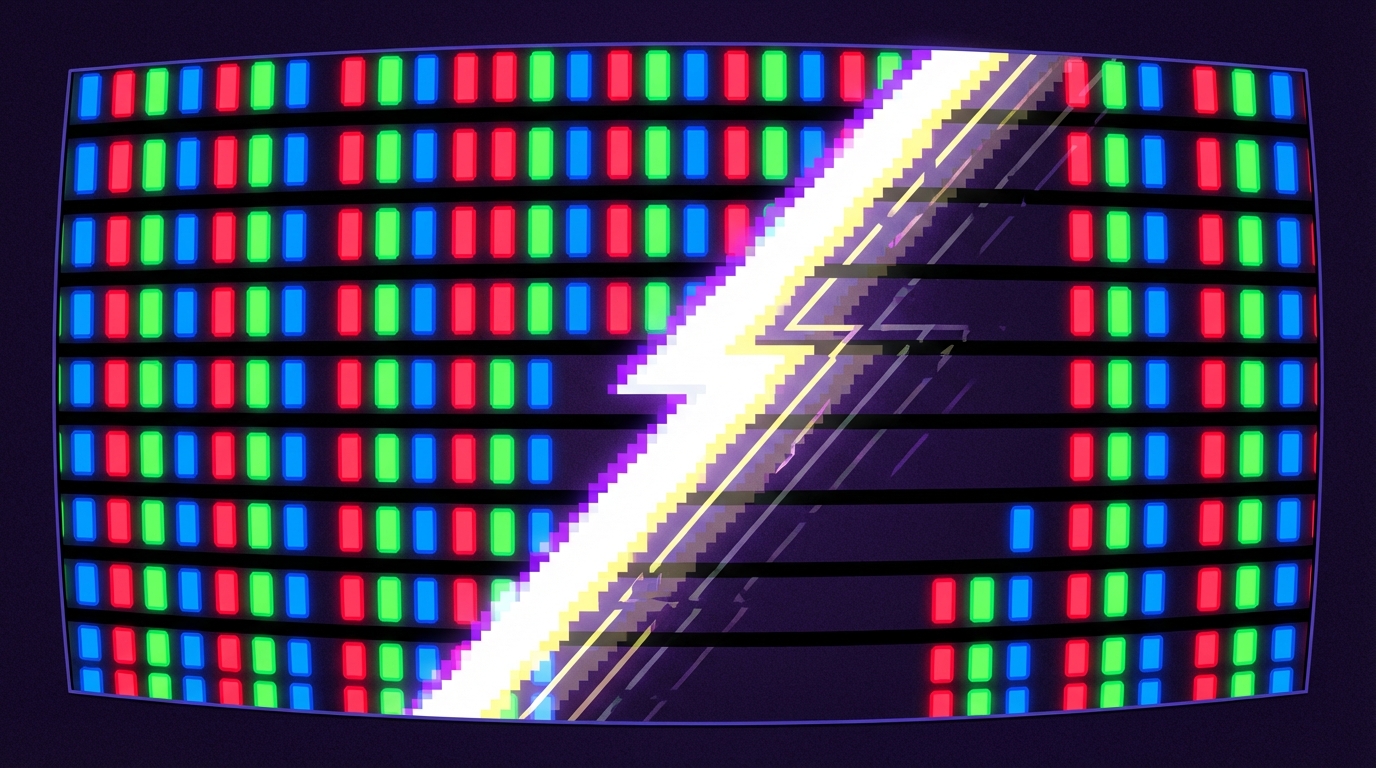
Modern 4K screens are ruthless snitches that reveal every jagged edge of your favorite retro sprite. When you plug that old console into a CRT, the natural scanlines act like a magical beauty filter for your games. Those thick dark lines between the glowing rows of pixels help your brain fill in the gaps. It makes Mario look like a round plumber instead of a blocky mess. It turns a grid of sharp squares into a smooth, vibrant image that looks exactly how the developers intended back in the day. You simply cannot get this authentic look on a flat panel no matter how many fancy shaders or retro filters you try to slap on top.
The secret sauce behind that legendary radioactive glow is something called phosphor decay. Instead of a grid of lights that just stay on like a boring light switch, the electron beam paints the screen with fading light. This creates a pulsing, living image that feels warmer than a fresh pair of leg warmers right out of the dryer. Because the light fades so naturally between frames, your eyes perceive motion that is buttery smooth without any of that ugly ghosting found on modern screens. It is a visual experience that hits your nostalgia center harder than a synthwave bass drop at 2 AM.
If you have ever whipped your mouse around in a fast shooter on a modern screen, you probably noticed the world turning into a blurry soup. That happens because flat panels use a boring method called sample-and-hold where the image stays stuck on the screen until the next frame arrives to replace it. A CRT monitor blasts electrons onto the glass like a laser light show at a retro arcade, and that light fades almost instantly. This rapid pulsing means your eyes do not get tricked into seeing a smeary mess when you are trying to track enemies. It is basically black magic from the 1990s that makes everything look crisp enough to slice a pizza.
Crank that beige beast up to 100Hz and you will witness motion clarity that makes expensive gaming monitors cry digital tears. While your fancy OLED is trying to fake smoothness with software tricks, the tube is delivering raw speed with zero input lag. Tracking a target feels instant. It is almost like your brain is plugged directly into the server via a synthwave datastream. You do not have to worry about ghosting or motion blur ruining your killstreak in competitive matches. It turns fast-paced arena shooters into the buttery smooth experience they were always meant to be.
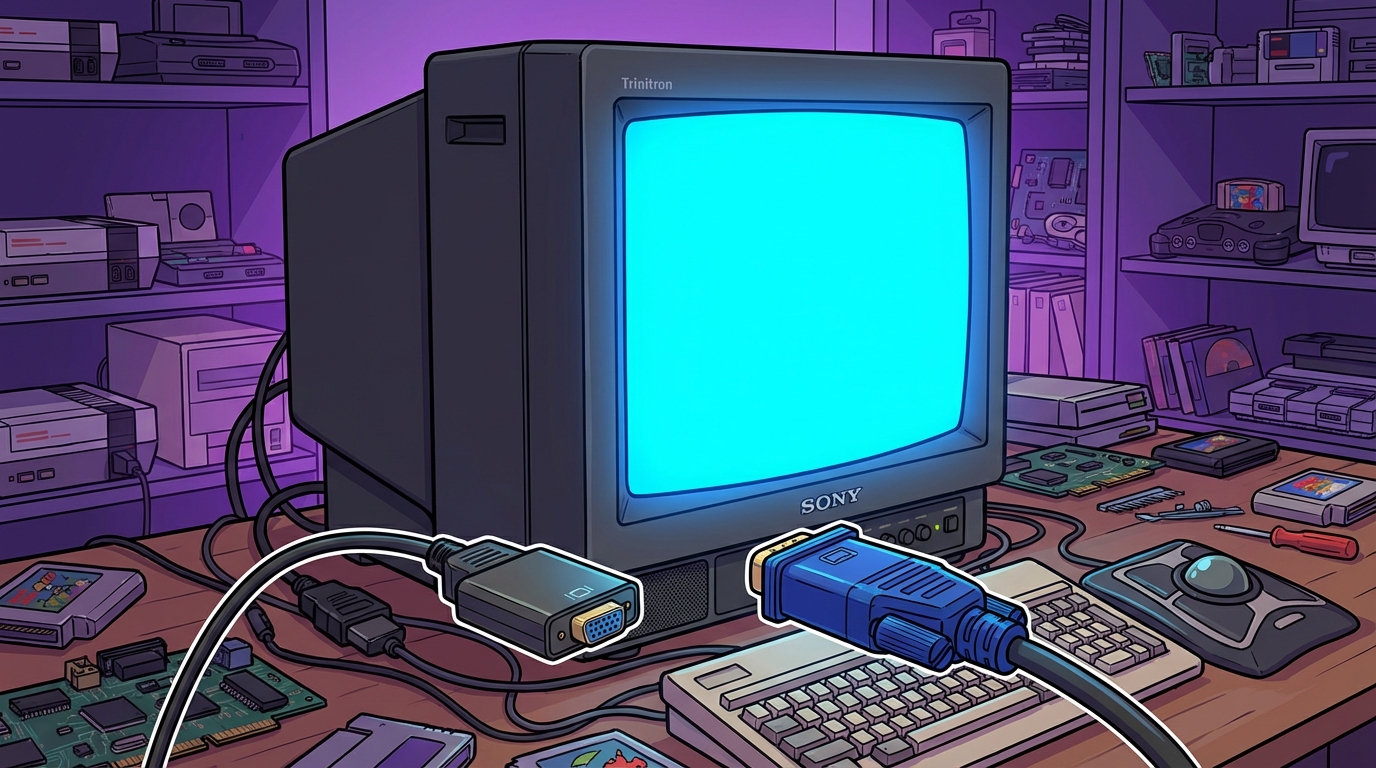
Scouring your local thrift shop feels less like shopping and more like an epic RPG dungeon crawl in search of ancient loot. You are looking for the legendary Sony Trinitron. It is usually hidden behind a wall of dusty toaster ovens and forgotten VHS tapes. These beige beasts are heavy enough to crush a small goblin, so make sure you leveled up your strength stat before trying to lift one into your cart. Finding one in the wild is rare, but securing that aperture grille display is the first step to unlocking true retro power. Once you spot that iconic logo, grab it immediately before another retro hunter beats you to the save point.
Dragging that massive glass cube home is only half the battle because your shiny new graphics card probably forgot what a VGA port looks like. You will need to embrace the dongle life and acquire a high-quality digital-to-analog converter to bridge the gap between the cyberpunk future and the analog past. Cheap adapters might introduce lag that ruins the whole vibe, so do your research to keep those frames buttery smooth. Hooking up a DisplayPort cable to a VGA adapter feels like forbidden magic, but it is necessary to feed high resolutions to your new CRT. When the screen finally flickers to life without exploding, you will feel like a total hacker straight out of a cheesy 90s movie.
Your lower back might be screaming in agony, but seeing that crisp motion clarity makes every ounce of pain totally worth it. There is absolutely no ghosting or input lag here. Just pure unadulterated speed that makes modern screens look like they are moving through molasses. The ultimate satisfaction comes when you press the degauss button and watch the screen wobble with a satisfying electric thwong sound. You have officially ascended to gaming nirvana where the scanlines are real and the pixels glow with the warmth of a thousand neon suns.
Even though these chunky beige beasts look like they belong in a stranger’s basement from 1985, they are secretly the ultimate weapon for competitive gaming. While modern flat screens try to fake speed with fancy tricks, a trusty CRT delivers that sweet, instantaneous response time without breaking a sweat. You get virtually zero input lag because that electron beam paints the picture faster than a ninja on an espresso binge. It is basically like having a hardware cheat code that lets you react before your opponent even knows what hit them. Do not throw away that heavy glass box just yet because it might be the only way to truly experience lag-free glory.
Beyond the speed, there is nothing quite like the buttery smooth motion clarity you get when firing up your favorite retro titles on a tube monitor. Modern displays often turn into a blurry mess during fast action, but a CRT keeps everything crisp and sharp no matter how chaotic the screen gets. You also get those authentic scanlines that make pixel art pop with a neon glow that an OLED screen can only dream of replicating. Old technology handles motion way better than the tech found in the shiny new monitor on your desk. Playing on glass is the only way to see the graphics exactly how the developers intended them to look back in the day.
Dragging a hundred pounds of glass and plastic onto your desk counts as a gym workout, but the visual payoff is totally worth the back pain. Whether you are chasing high scores in an arcade classic or sweating it out in a modern shooter, the CRT remains the undisputed king of response times. We might be living in the future of 2025, but sometimes the old ways are still the best ways to get that radical gaming experience. If you have the desk space and the muscle power, keeping one of these legends alive is a total power move. Just make sure your table legs are strong enough to handle the weight of pure gaming excellence.