Darkwave music origins go back to the early 1980s, when the label “dark wave” was coined for a moodier variant of post-punk new wave. Picture post-punk that found a fog machine and a bass line it could not shake.
Dutch band Clan of Xymox formed in Amsterdam in 1981, and by its 1985 debut it was a staple of 4AD, the label that gave the scene its shadowy glow. Your reverb-soaked synths, moody basslines and all-black wardrobe owe a little something to those early days.
Darkwave grew out of Britain’s Gothic subculture in the late 1970s and early 1980s, when dark, disquieting music found a loyal crowd of black-clad fans. A 2009 Newcastle University thesis places this emergence in that period and notes that Gothic music includes gothic rock, darkwave, and ethereal goth.
The sound itself came from a crossover. Post-punk, new wave, and gothic rock bumped into each other in the early 1980s, and darkwave swiped a little from each. The result was never one fixed style, so the branches do not share a single uniform sound.
Psyche is the other name you will see on early reference lists. AllMusic credits Clan of Xymox and Psyche with defining the genre, describing it as more somber and ethereal than industrial dance.
Deathrock is the wild cousin of this scene. It borrowed the gloom of Gothic music and turned it into a stage show, with horror-movie makeup, thrift-store capes, and plenty of theatrical drama. If you have ever wanted your wardrobe to look like a haunted arcade, deathrock is where that idea was born.
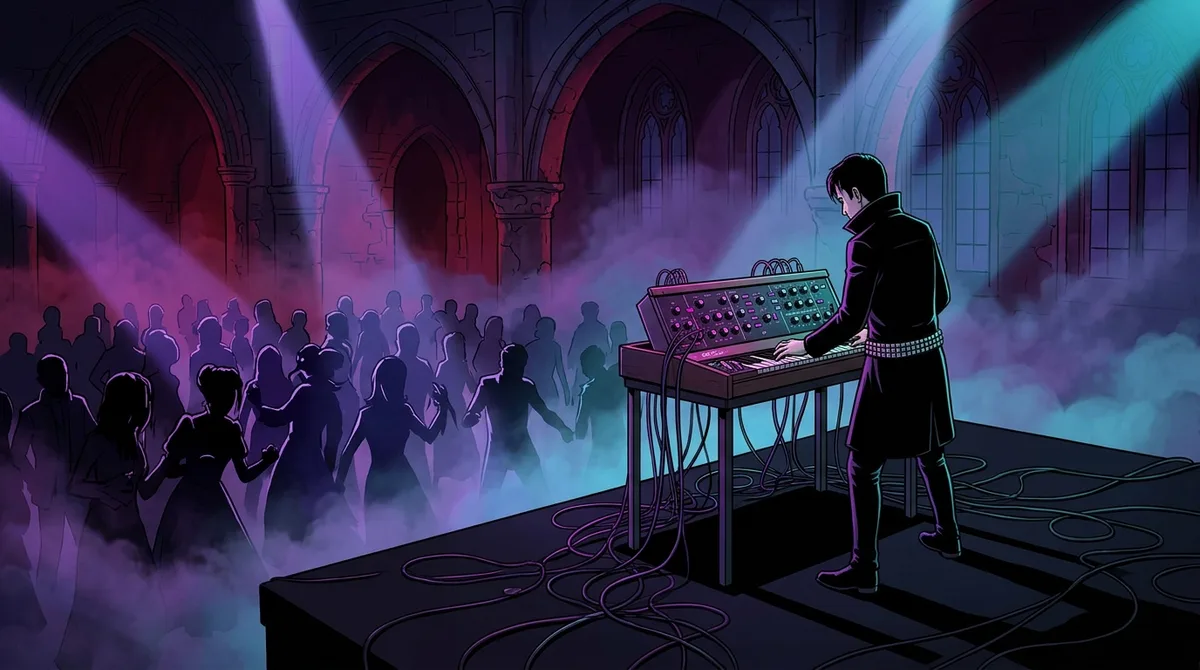
Early darkwave often sounds like a late-night synth jam in a foggy warehouse. Expect minor-key synth patterns, a heavy bass line, and drum-machine beats that repeat like a hypnotic video game loop, all wrapped in echoing vocals.
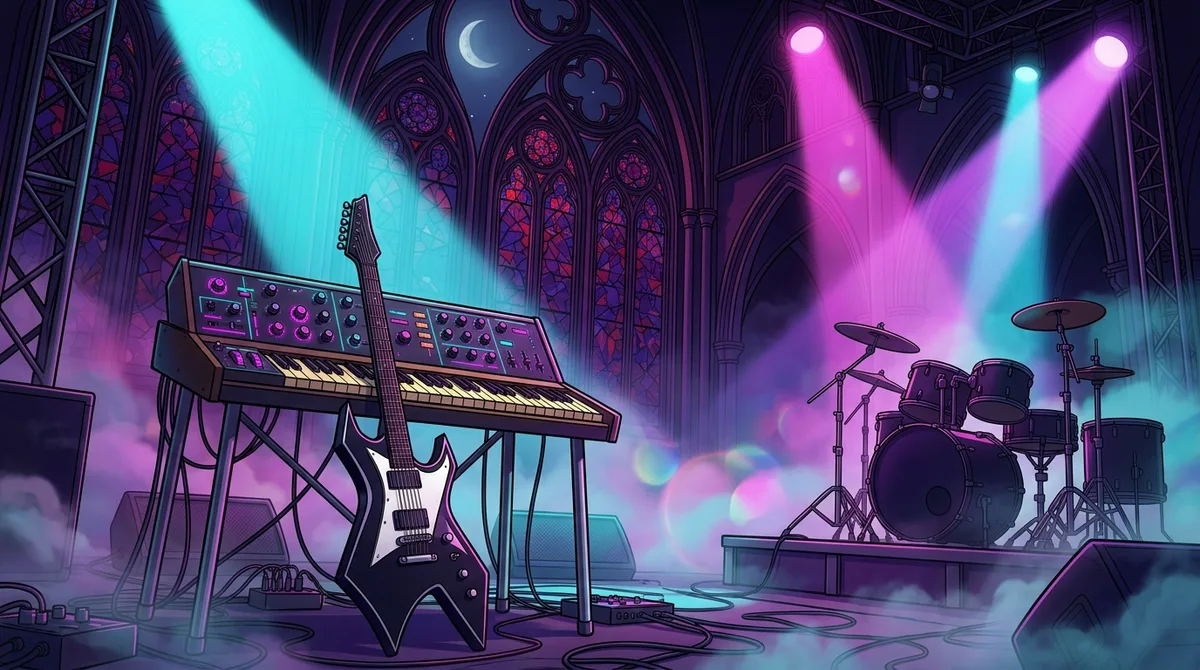
Post-punk gave darkwave its stripped-back mood, new wave added synths and pop hooks, and gothic rock brought the dramatic voice. Think of them as three friends who each showed up to the same midnight party with a different bag of gear.
Sisters of Mercy is the band most fans point to when they talk about that theatrical side. Frontman Andrew Eldritch sang in a deep, sneering croon over guitars and drum machines that made every song feel like a noir movie scene. Put one of their tracks next to a synth-pop single and you can hear exactly how the two worlds met.
Darkwave took these pieces and mixed them together. A genre guide from IDIOTEQ Explore notes that the sound often features minor-key synth patterns, prominent bass, and repeated drum-machine figures that loop like a hypnotic video game soundtrack. The vocals usually drift in reverb, and the mood can swing from floor-filling dance tracks to long, atmospheric passages that feel like wandering through fog. Some nights you want a beat you can move to, and some nights you want to stare at the ceiling and let the synths wash over you.
The label “dark wave” was born in the early 1980s, but the one-word spelling “darkwave” did not become common until the early 1990s. Over time, fans and labels dropped the space, and the shorter name stuck like a sticker on a well-loved synth case.
Coldwave is the close cousin that people often mix up with darkwave. It shares the same chilly synths, dry drum machines, and gloomy vocals, so a record shop clerk might file a track under one name on Tuesday and the other on Friday.
Labels and fans used these names loosely, and nobody handed out an official rulebook. A band could be called coldwave in one review, darkwave in the next, and gothic rock in a third, depending on who was writing and what they had been playing all week. That is why the boundaries were never fixed.
So when you hunt for old vinyl or build a new playlist, treat genre names as a rough map rather than a strict border. The best way to learn the difference is to listen closely, one synth line at a time, until you can hear it for yourself. Your ears will become the best genre guide you own.
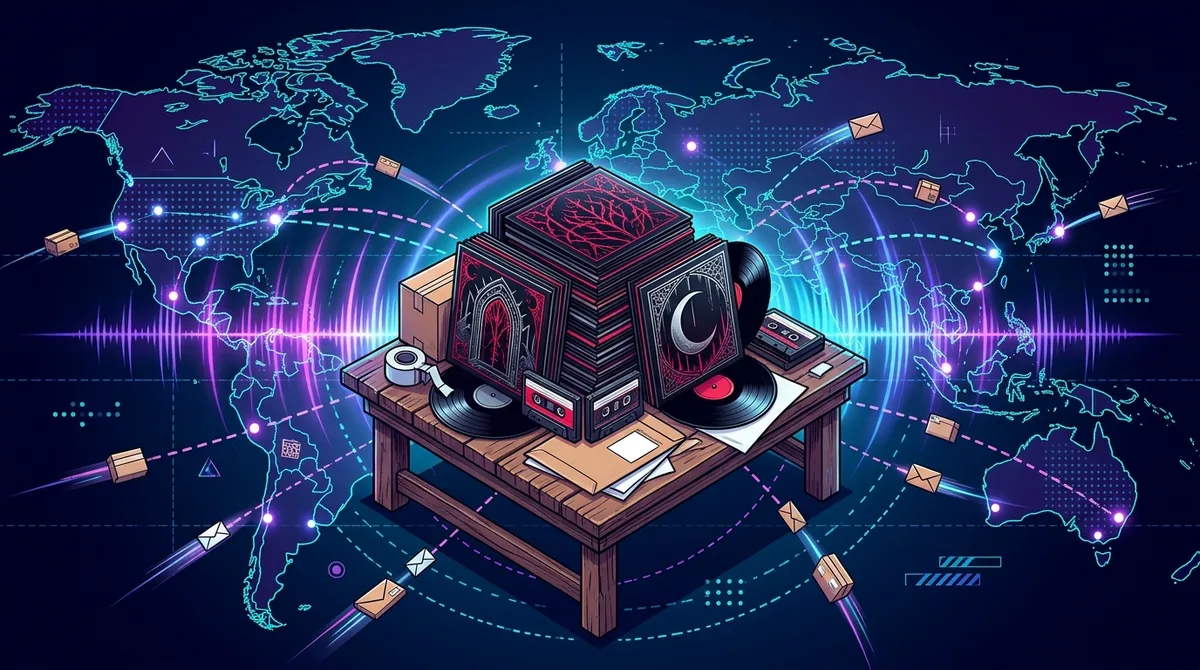
Projekt Records started in 1983 for a very practical reason: Sam Rosenthal wanted a way to release his own music. That scrappy start grew into one of the scene’s most important homes. In a Bandcamp Daily interview, Rosenthal said most of the label’s music from the late 1980s into the early 1990s was what he called darkwave, with some releases leaning more goth and others more industrial.
The 1990s is when Projekt gave darkwave its own mail-order and label presence. Fans who could not find records in local shops could order by post, so the sound felt like a secret club with a catalog. The label also distributed music from other independent labels, which meant one order could bring home tracks from a whole network of small outfits. Picture a padded envelope full of cassettes landing on your doormat like a message from a foggy alternate universe.
Over on 4AD, Clan of Xymox released its self-titled full-length debut in 1985, and that record helped turn the Dutch band into a label favorite. It showed how a small, dedicated label could carry a moody sound to listeners far beyond its home city.
In the 1990s, darkwave mixed goth rock with synth-pop and dream pop, and later revivals brought the sound to a whole new crowd. Gothic guitars met glossy synths, and the result felt a little brighter and dreamier while staying wrapped in fog.
Late in the decade, Switchblade Symphony and Black Tape for a Blue Girl pushed the sound into more ears. They turned up the volume on the scene’s shadowy side and gave curious listeners a clearer doorway in.
The scene also split into branches. Dead Can Dance and In the Nursery favored classical song structures and medieval instruments, so their tracks sound like candlelit hymns with a synth hiding in the corner. Die Form and Lycia went further into avant-garde and ambient territory, where a song might drift for minutes without a single chorus.
Later revivals sent these branches around the world. Streaming made older catalogs easy to find, and social media let fans share a favorite track in seconds. Festivals and regional scenes gave local bands a stage and gave listeners a reason to look beyond their own city. A search that once meant hunting through mail-order lists now takes one tap and a good pair of headphones.
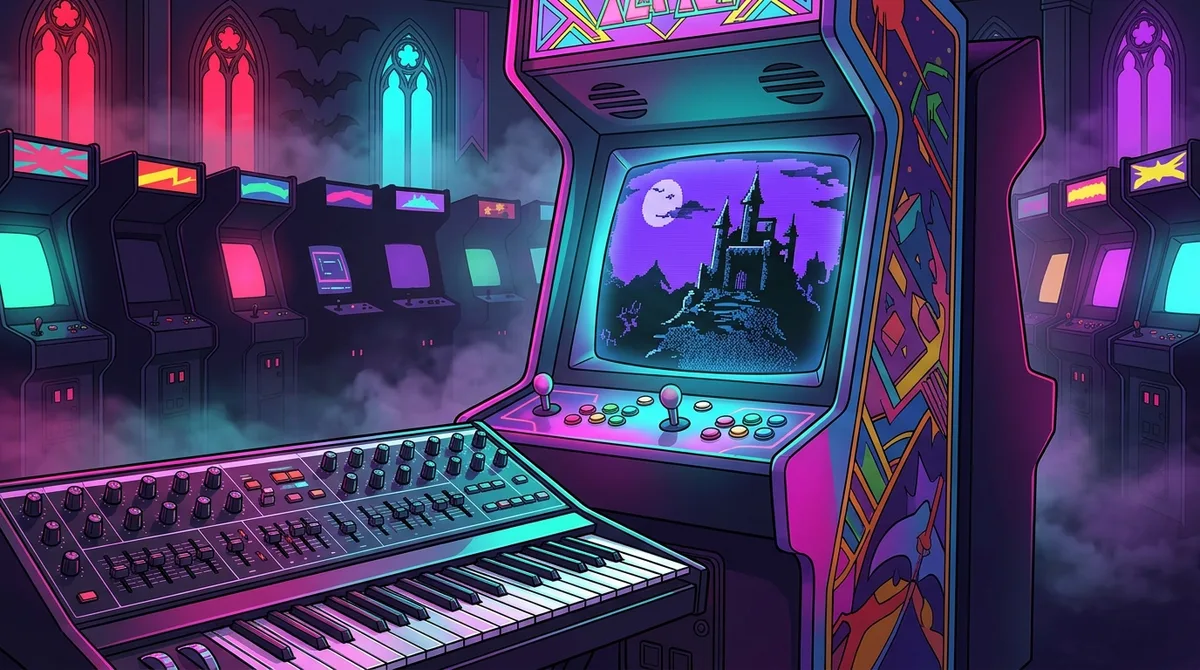
Darkwave keeps showing up in retro gaming because both worlds run on the same moody ingredients: minor-key synths, a heavy bass line, and drum-machine beats that loop like a level theme. Those repeating drum figures do the same job as a chiptune melody, keeping you locked in one shadowy mood while you explore the map.
Synthwave borrowed a lot of its DNA from this scene. Its chilly synth textures and glowing pads sound like they came from the same cabinet of 80s keyboards, just aimed at neon skylines instead of foggy warehouses.
Picture a late-night gaming session with the lights off and the screen glowing. Dark synths and echoing vocals make the room feel like a final boss is waiting around the next corner, and that is exactly the atmosphere many players chase.
Fans of retro gaming often enjoy both genres for the same reason: they want a nostalgic mood, not one specific tune. A single playlist can carry you from a synthwave cruise to a darkwave slow burn without breaking the spell, and your controller just keeps going.
Start with three tracks: one synth-driven dance number, one slow atmospheric piece, and one post-punk song with a bass line that won’t quit. Add a couple of synthwave picks for gaming nights, and your playlist will carry you from neon cruising to dark, foggy corners.
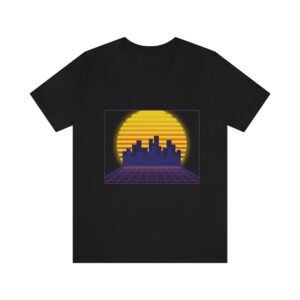
Next, the shirt stash. Standard unisex graphic tees are an easy pick, so grab a few and let the neon do the talking. For a head-to-toe look, our All-Over-Print tees are listed at $32.00 and often drop to $27.20.
Standard unisex tees are 100% Airlume combed and ringspun cotton, and they run true to size. Each product page has a size chart, so check it before you order.
Once you place an order, you will get a confirmation email. Need to change or cancel? Contact customer service quickly, since changes are only possible within a short window and may not be possible once the order is processed. Custom orders may take longer to ship, so plan ahead for gifts. Most items can be returned within 30 days of receipt if they are in new condition.
We ship to most countries, though costs and delivery times vary by destination. Pay with Visa, MasterCard, American Express, PayPal, or other digital payment platforms.