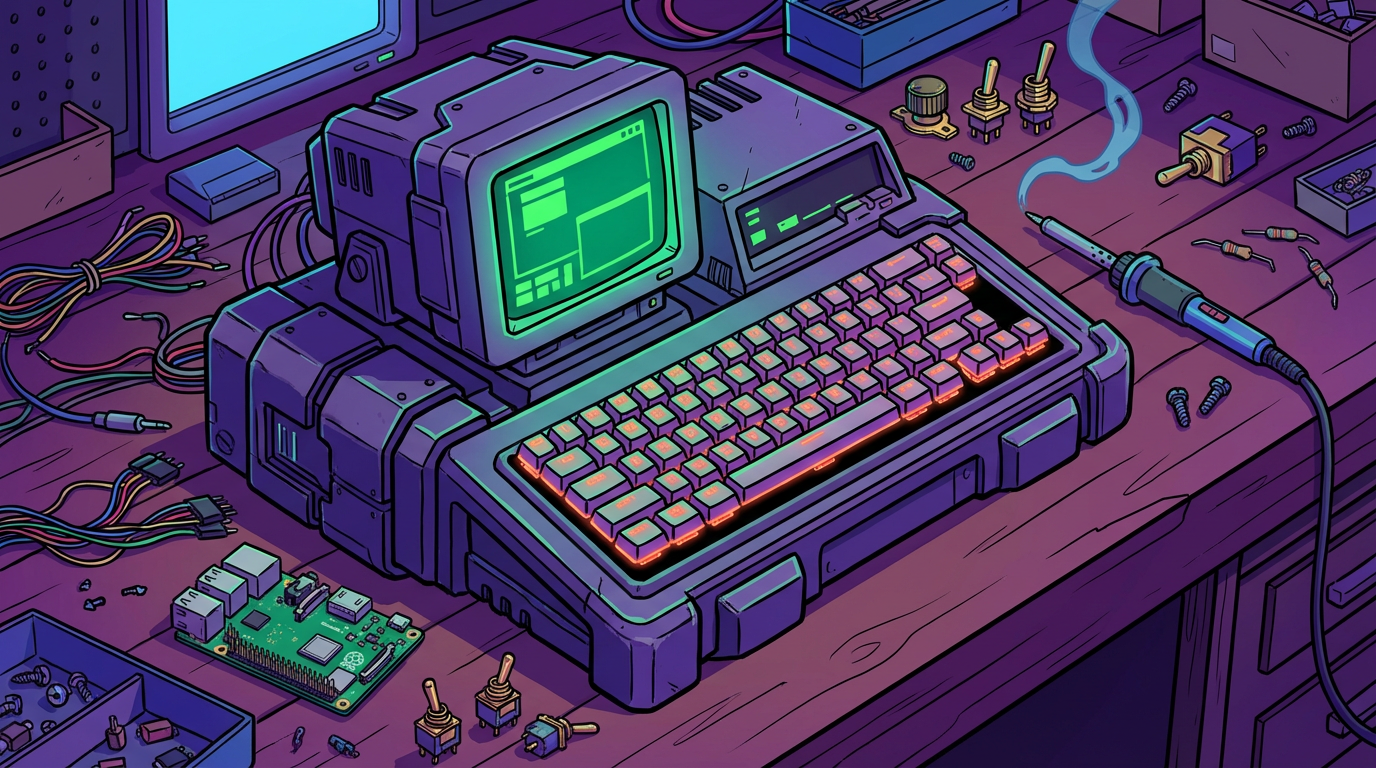
Ever feel like the future promised us neon-soaked streets and cool hacking rigs, but all we got were boring gray laptops? It is time to fix that timeline with your very own diy cyberdeck build that looks straight out of a 1980s sci-fi flick. Whether you want to tap into the Matrix at a coffee shop or just want a computer that does not look like a toaster, building your own deck is the ultimate power move. We are moving past basic gadgets and leveling up to high-performance machines that can actually handle your daily grind.
Forget those underpowered hobby boards that struggle to load a single cat meme. The newest wave of builds uses serious hardware that lets you swap parts like a futuristic street samurai upgrading their chrome. You can now tuck a full-sized computer brain into a rugged waterproof case or a 3D-printed masterpiece without breaking a sweat. It is all about that sweet spot where retro-cool aesthetics meet modern-day muscle. Your desk is about to get a serious glow-up.
Choosing the brain of your beast is the first step toward living out your ultimate 80s hacker fantasies. If you want that classic retro feel without breaking the bank, the Raspberry Pi 5 is your best friend for a mid range build. It is small enough to fit inside a chunky plastic case but powerful enough to run your favorite terminal apps under a neon glow. You can even hook up an NVMe drive to make it feel snappy while you pretend to jack into the matrix. This little board is the gold standard for anyone who wants to balance portability with that sweet DIY charm.
Sometimes you need a little more muscle under the hood if you plan on using your deck as a daily driver. If you want to run full Windows or heavy Linux distros, you might want to look into beefy x86 boards or even repurposing a modular laptop mainboard. These high performance brains allow you to play modern games or edit video while sitting at a rainy bus stop in your leather trench coat. It turns your prop from a cool glowing toy into a legitimate workstation that can handle anything the digital wasteland throws at you. Just make sure your battery can keep up with all those extra gigahertz.
The decision really comes down to whether you want a lean hacking machine or a portable powerhouse that can do it all. A Raspberry Pi keeps things lightweight and stays true to the low life, high tech spirit of the original cyberpunk genre. On the other hand, going with a more advanced board means you never have to worry about your hardware lagging when you are trying to impress your friends at the local arcade. No matter which path you take, you are building something far cooler than anything you can buy off a shelf. Just pick a board, grab your soldering iron, and get ready to create some digital magic.
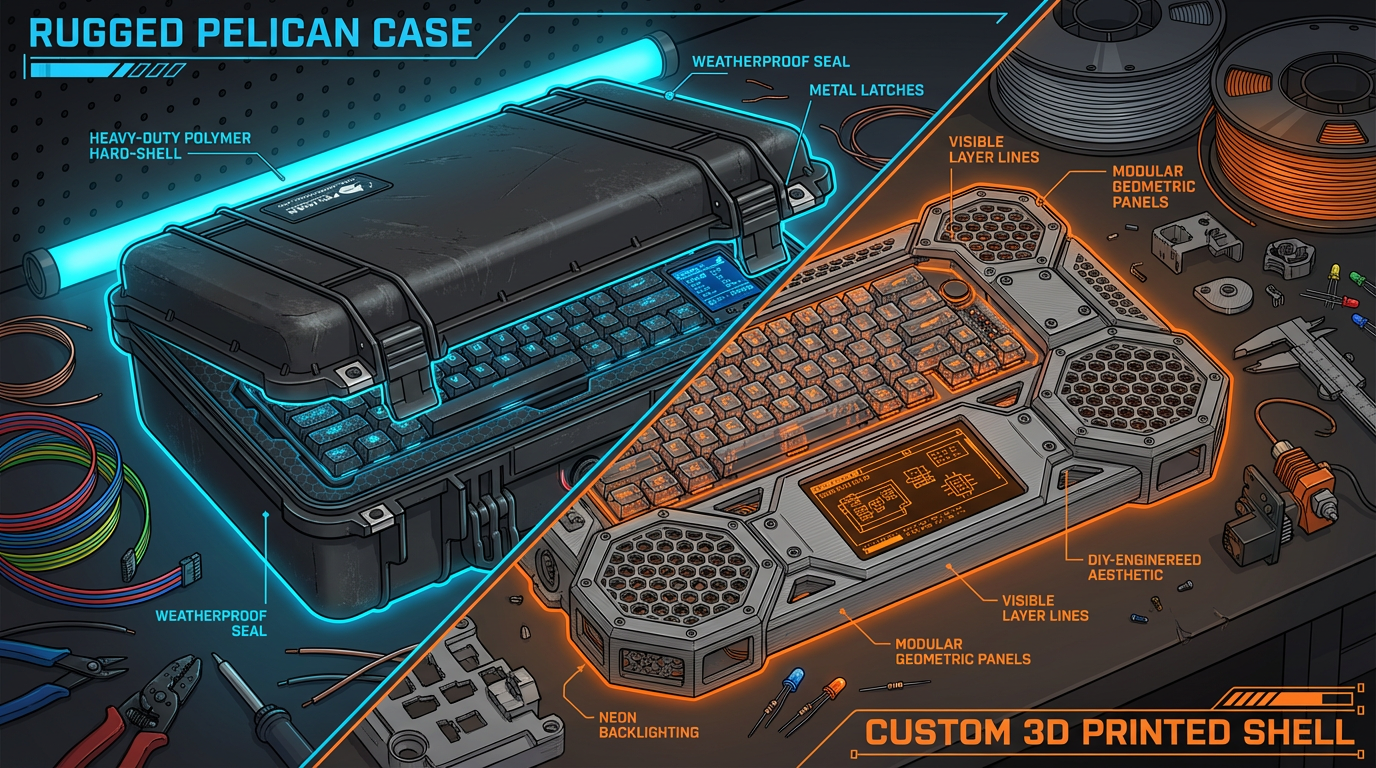
Deciding on the outer shell of your cyberdeck is the ultimate vibe check that defines your entire build. If you want that tactical, secret agent look, a rugged waterproof case is your best friend. These chunky plastic tanks make it look like you are carrying around top secret launch codes or a high tech hacking tool from a 1980s action flick. They are practically indestructible, which is perfect for when you accidentally drop your masterpiece while rushing to a neon lit coffee shop. Plus, there is something incredibly satisfying about the heavy click of those industrial latches.
On the flip side, 3D printing your own frame lets you go full retro tech with custom shapes that scream sci-fi prop. You can design a chassis with weird angles, built in handles, and glowing neon accents that would make any synthwave fan weep with joy. This path is perfect for makers who want to perfectly fit a specific mechanical keyboard or a weirdly shaped screen into their setup. While a printed shell might not survive a drop from a skyscraper, it gives you total creative freedom to build the chunky, beige computer of your dreams.
Whether you go for the armored tank aesthetic or the custom plastic masterpiece, your choice sets the stage for all those internal components. Hard cases offer a plug and play convenience that saves you hours of sanding and painting. Custom printed shells require more patience and a bit of trial and error with your printer settings, but the results are uniquely yours. You can even mix both worlds by printing custom internal brackets to mount your Raspberry Pi 5 inside a rugged exterior. As long as it looks like it belongs in a grainy VHS tape from 1984, you are doing it right.
Building a cyberdeck without a mechanical keyboard is like trying to win a street race in a minivan, it just does not feel right. You want those chunky, clicky keys that sound like a hail of gunfire every time you type a simple terminal command. For that authentic 80s hacker vibe, look for custom retro keycaps with neon legends or translucent housings that let your RGB lighting glow like a radioactive sunset. Whether you are using a compact 40 percent layout or a custom split board, the goal is to make every keystroke feel like you are cracking into a high security mainframe.
Once your fingers are happy, you need a screen that screams high stakes data heist. Ultrawide touchscreens are the gold standard for modern builds because they provide that cinematic 1980s cyberpunk look while fitting perfectly into slim, rugged cases. These displays turn your Raspberry Pi 5 or modular mainboard into a futuristic command center that looks ready for a trek through a neon drenched alleyway. A wide aspect ratio gives you plenty of room to monitor your system vitals while simultaneously keeping an eye on your favorite synthwave playlists.
The real magic happens when you mount these components into a weathered hard case or a custom 3D printed shell. You are not just building a computer, you are crafting a prop from a movie that never existed. Wiring up a bright, bar shaped display alongside a glowing mechanical deck creates a silhouette that will make every retro tech fan at the local cafe stare in awe. It is all about that perfect blend of lo-fi analog technology and digital flash that makes your DIY project feel like a piece of legendary loot.
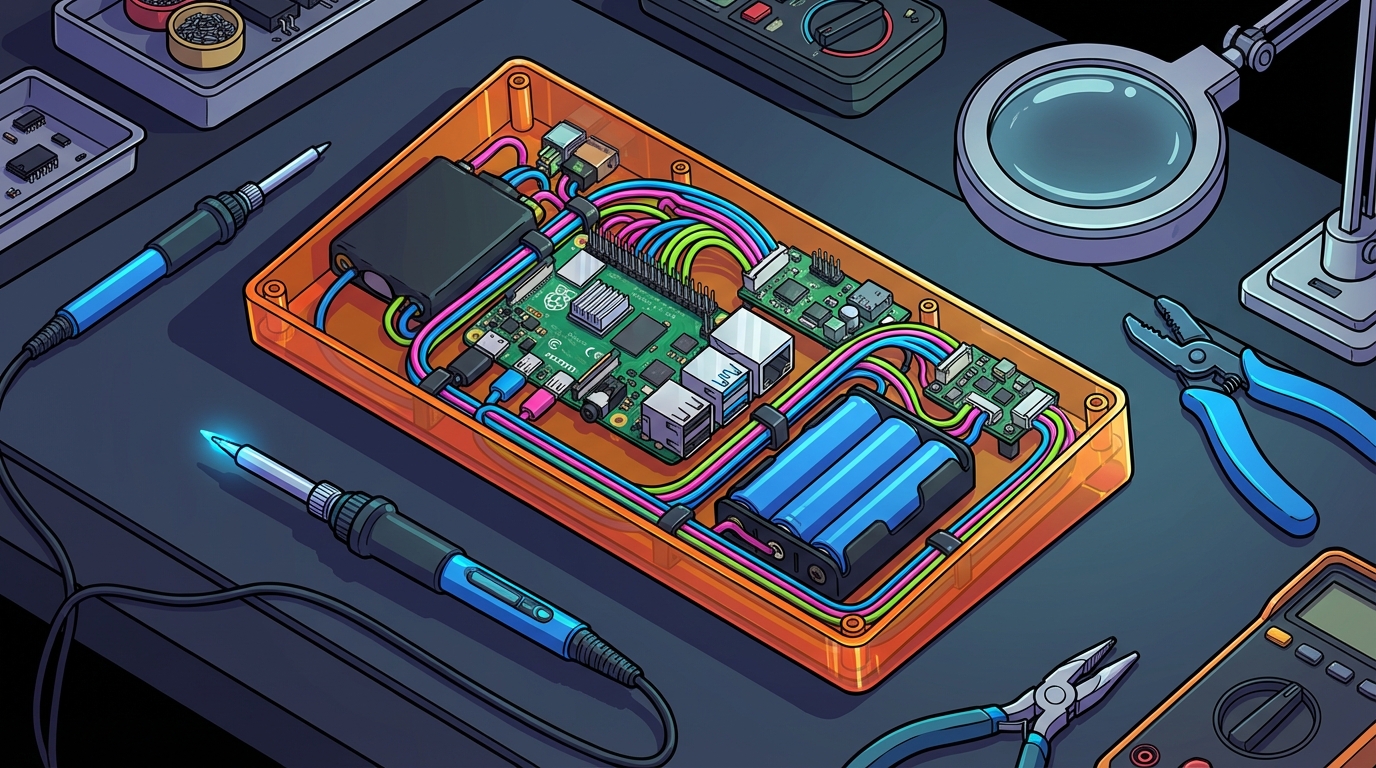
Configuring your power supply is the moment your cyberdeck transforms from a pile of plastic into a living piece of sci-fi hardware. You want to aim for a setup that provides enough juice for your Raspberry Pi 5 without turning your custom case into a literal toaster. Most makers rely on high capacity lithium polymer batteries paired with a reliable power management board to keep the neon dreams alive. Make sure your wiring is thick enough to handle the current so you do not experience those dreaded low voltage warnings while hacking the planet. Proper cable management here is not just about looking cool, it is about making sure your portable rig does not short out the second you step into the sunlight.
Arranging your components inside the chassis is like playing a high stakes game of Tetris where the prize is a functional computer. You should place your heaviest items like the battery pack near the center to keep the device balanced in your hands. Use short, flexible ribbon cables to connect your screen and keyboard to save precious millimeters of space. If you are using a beefy x86 board or a modular mainboard, position the fans near your vents to ensure that sweet synthwave breeze keeps everything chilled. Tucking away excess wires with tiny zip ties or 3D printed clips will prevent your build from looking like a spaghetti monster.
Once your layout is locked in, you can finally close the lid and admire your handiwork. A clean interior means you have more room for extra mods like mechanical macro pads or glowing LED strips that pulse to your favorite retrowave tracks. Double check every connection one last time because chasing a loose wire after you have bolted the case shut is a total buzzkill. With everything secured and the power flowing, you are officially ready to take your custom deck to the local arcade or coffee shop. Your machine is now a portable statement piece that looks like it was pulled straight out of a 1980s fever dream.
Building your own DIY cyberdeck is the ultimate way to prove you are living in the year 20XX while everyone else is stuck in the boring present. You have done the research and picked out the perfect mechanical switches, so now it is time to stop scrolling and start soldering. Whether you are stuffing a Raspberry Pi 5 into an old waterproof case or mounting a screen to a discarded guitar amp, the goal is to make something that looks like it survived a neon-drenched street fight. Do not worry if your cable management looks like a plate of techno-spaghetti at first. Every stray wire and slightly crooked 3D printed bracket just adds to that gritty, high-tech low-life charm we all crave.
The modular revolution means your custom rig does not have to be a static prop gathering dust on a shelf. Much like building your own high performance sleeper PC, you can swap out your mainboard for something beefier or add a chunky battery pack to keep your terminal glowing during your next late-night coffee shop infiltration. Modern boards are powerful enough to handle everything from retro gaming to actual work, so your deck can be your daily driver for hacking the planet or just watching synthwave music videos. This project is your chance to reject the sleek, boring slabs of glass sold by big tech and embrace the clunky, tactile glory of the retro future. Grab your flux and your favorite playlist because your custom piece of the dark future is finally ready to boot up.
A cyberdeck is a custom built, portable computer that looks like it was ripped straight out of a retro sci-fi movie. You need one because standard laptops are boring, and nothing says cool like jacking into the web with a neon-lit rig you built yourself.
The Raspberry Pi 5 is the gold standard for mid-range builds because it is tiny but packs plenty of punch. It can handle your terminal apps and even speedy NVMe drives, making it perfect for that classic hacker aesthetic without the lag.
If you want to run heavy software or modern games, you should skip the hobby boards and go for a modular x86 mainboard. These beefy brains give you the high-performance muscle needed to handle a full Windows or Linux setup inside your custom shell.
You do not need to be a genius to get started since many builds use plug and play parts and simple 3D-printed cases. As long as you can follow a basic guide and handle a screwdriver, you can build a rig that would make a street samurai jealous.
Customization is the whole point of the deck life, so feel free to go wild with rugged waterproof cases or glowing mechanical keyboards. You can swap parts and upgrade your hardware whenever you want, ensuring your rig always stays ahead of the curve.
Focus on the sweet spot of retro-cool visuals by adding mechanical switches and chunky plastic housing. Toss in some neon lights and a small, high-contrast screen to complete that ultimate cyberpunk vibe while you work at your favorite coffee shop.