Picture yourself sitting cross-legged on a shag carpet, bowl of sugary cereal in hand, while the neon glow of the Saturday morning sun hits your TV screen. This was the era where 80s cartoon villains were not just bad guys; they were absolute fashion icons with gravelly voices and egos the size of a Death Star. Whether they were screaming insults from a skull-faced mountain or transforming into a literal handgun, these antagonists were designed to be so cool you would beg your parents for the action figure version by lunchtime.
The 1980s gave us a masterclass in beautiful, over-the-top chaos led by sorcerers who could not stop roasting their own henchmen and giant robots with serious boundary issues. You are here because you remember the thrill of a synth-heavy intro theme and the ridiculous schemes that defied all logic but captured your imagination. It is time to revisit the legends who made being bad look like the ultimate career choice, complete with the best one-liners in animation history.
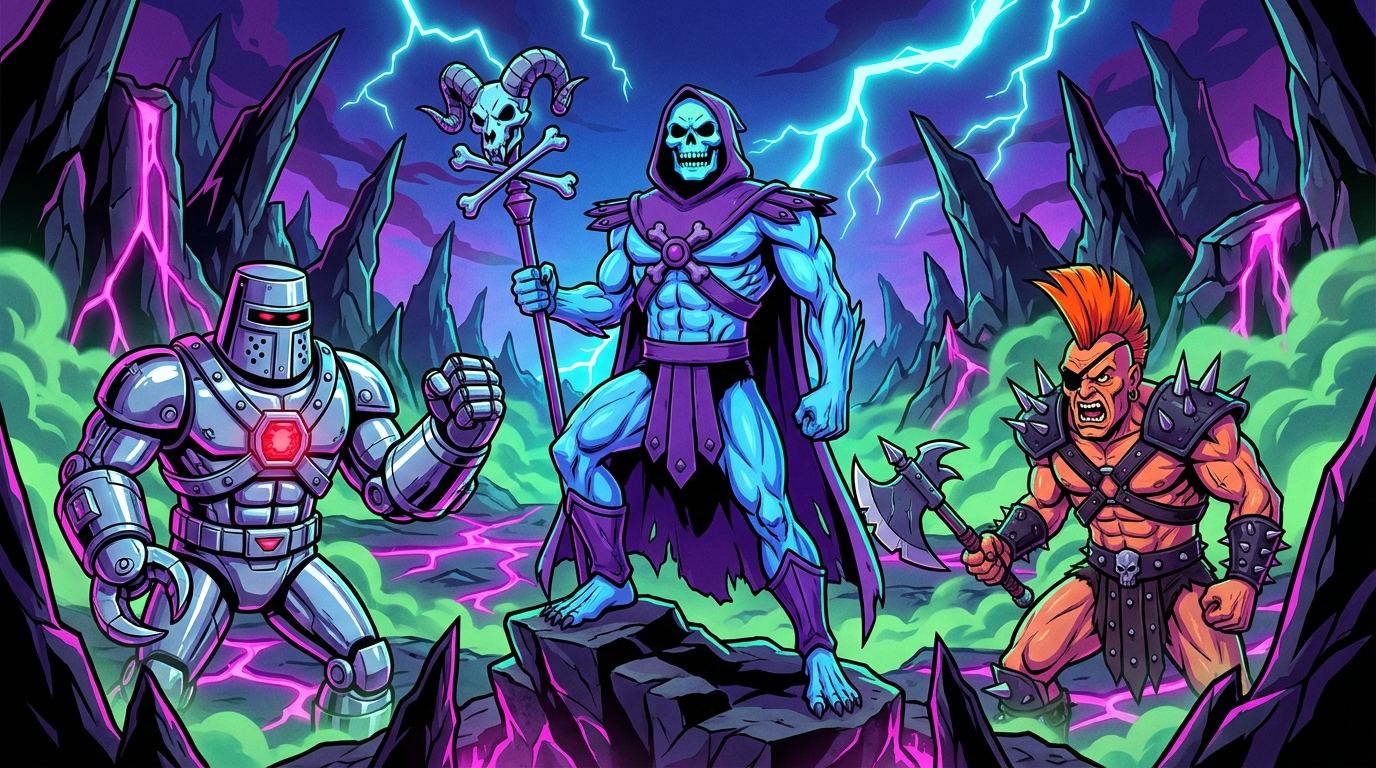
If you grew up with a bowl of sugary cereal and a glowing tube TV, you know that the 80s belonged to the bad guys. This legendary quartet did not just want to win, they wanted to look fabulous in neon purple while doing it. You probably remember Skeletor mostly for his high-pitched insults and his strange obsession with a gym rat in furry boots. Even though he was a literal skeleton, he had enough personality to fill a dozen Saturday morning slots. He paved the way for the lovable losers we celebrate in meme culture today, proving that being evil is mostly about having the best one-liners.
While Skeletor handled the magic, Megatron and Cobra Commander brought the heavy metal and high-tech chaos to your living room. Megatron was the ultimate grumpy boss who constantly had to deal with a team of robots that could not hit a target to save their lives. Then you had Cobra Commander, a man who clearly loved his dramatic capes as much as his elaborate world domination schemes. These guys were the reason your parents spent way too much money at the toy store during the holidays. They turned every afternoon into an epic battle of plastic figures across your bedroom floor.
No list of heavy hitters is complete without the terrifying, bandage-wrapped nightmare known as Mumm-Ra the Ever-Living. He took the classic scary mummy trope and dialed it up to eleven with a magical transformation that would make any synthwave fan proud. Watching him go from a shriveled old man to a giant muscular beast was a total core memory for every kid in the neighborhood. These four 80s cartoon villains defined an era where the stakes were high, the colors were bright, and the evil laughs were always echoing. Their legacy lives on through internet jokes and retro nostalgia that keeps the 80s spirit alive forever.
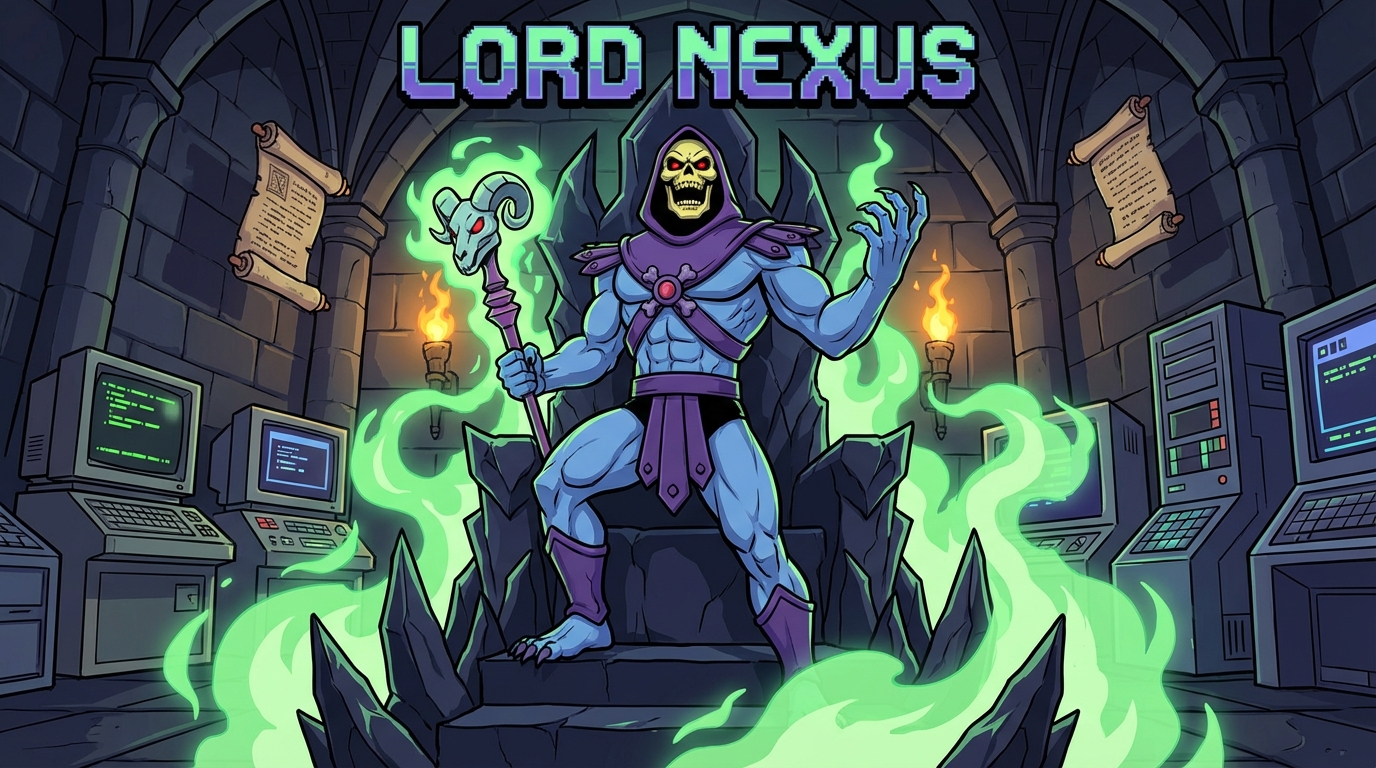
If you ever find yourself wondering why Skeletor or Megatron spent more time talking than actually winning, you are not alone. These neon-era icons were the undisputed kings of the dramatic pause, often halting their most brilliant world-ending schemes just to deliver a spicy monologue. In the world of 80s cartoons, a villain was only as good as their ability to roast the hero before the final commercial break. Whether they were standing on a floating fortress or a secret volcano base, these bad guys lived for the spotlight and the chance to hear their own raspy voices. It was never just about the conquest, it was about making sure everyone knew exactly how much of a “royal boob” the hero really was.
The insults from this era have aged like fine wine and remain the backbone of some of your favorite internet memes today. You have to appreciate a sorcerer with a skull face who takes the time to call his henchmen “imbeciles” with the passion of a Shakespearean actor. These over-the-top verbal assaults were designed to sell action figures, but they ended up giving us a masterclass in petty energy. Every failed plan was an opportunity for a legendary comeback that usually involved calling He-Man a “muscle-bound buffoon” or mocking a robot for having a glitchy spark. This flair for the dramatic is exactly why we still celebrate these colorful tyrants decades after their Saturday morning glory days.
Behind every convoluted plot to steal a magical crystal or enslave a planet was a villain who just wanted to be seen and heard. Their monologues were not just tactical errors, they were a vibe that defined an entire generation of synth-heavy entertainment. You can almost hear the retro digital sound effects kicking in as a villain explains their entire master plan to a captured hero who is obviously going to escape in five minutes. It is this specific brand of theatrical confidence that makes 80s antagonists so much more memorable than the gritty, silent villains of modern movies. They did not just want to rule the world, they wanted to look fabulous and sound absolutely savage while doing it.
If you grew up glued to a heavy tube television, you know that the 1980s were less about subtle storytelling and more about neon-soaked chaos designed to make you bug your parents for a trip to the toy aisle. These villains were not just bad guys, they were masterfully crafted marketing tools with the most radical color palettes and spiked armor ever seen. You could almost feel the cold plastic of a new action figure just by looking at Skeletor’s glowing skull or Megatron’s metallic scowl. Everything about their design was meant to pop against a synthwave sunset, making them look totally tubular on a shag carpet or a bedroom shelf. They were the ultimate boardroom creations, blending pure menace with a look that screamed “buy me now.”
The beauty of these baddies lies in their glorious commitment to being over-the-top, often fluctuating between genuine threats and walking memes. You probably remember Skeletor less for his dark magic and more for his high-pitched insults and the way he would run away while screaming like a frustrated drama teacher. These characters had to be formidable enough to challenge the heroes, but they also needed a distinct silhouette that translated perfectly into a five-inch plastic mold. Whether they were transforming into handguns or plotting from a skull-faced mountain, they provided the perfect fuel for your imagination and your local toy store’s bottom line. Their legacy lives on today through endless internet jokes and that sweet, nostalgic itch for a simpler time of Saturday morning mayhem.
Looking back, it is clear that these neon-soaked baddies were way more than just obstacles for our favorite heroes. They were the true architects of our childhood imaginations, blending high-stakes drama with the kind of unintentional comedy that fuels today’s best internet memes. Whether it was Skeletor’s high-pitched insults or Megatron’s constant dramatic exits, these characters brought a unique flavor to Saturday mornings. You probably did not realize back then that you were watching marketing masterpieces designed to sell plastic figures, but their over-the-top personalities made them legendary in their own right. They taught us that being a villain did not mean you could not have a little flair and a lot of confidence.
The enduring power of the 80s aesthetic keeps these icons relevant in a world obsessed with synthwave beats and retro pixels. You can still see their influence in every glowing grid and purple sunset found in modern gaming and digital art. Their sharp angles and vibrant color palettes perfectly capture a vibe that feels both nostalgic and futuristic at the same time. Even decades later, the sight of a skull face or a transforming jet brings back that specific feeling of pure, unfiltered fun. These villains may have failed at taking over the world, but they definitely succeeded in conquering pop culture forever.
Being a legendary bad guy is 10% world domination and 90% having the sickest burns in the room. When your minions are as incompetent as a bucket of rusty bolts, your only choice is to lean into that sassy, gravelly voice and deliver some top-tier insults.
It was all about that glorious mix of neon purple spandex, skull-shaped fortresses, and synthwave soundtracks that slapped. These villains were designed to be fashion icons first and galactic threats second, making sure they looked fresh while hatching their ridiculous schemes.
The Mount Rushmore of Saturday morning chaos consists of Skeletor, Megatron, Cobra Commander, and Mumm-Ra. This quartet defined the era by combining high-tech weaponry with ancient sorcery and enough ego to fill a Death Star.
Skeletor was the ultimate relatable boss who spent most of his time screaming at his coworkers while looking fabulous in a hood. While his win-loss record is pretty questionable, his status as a meme king is undisputed because he made being a lovable loser look like a career goal.
Logic took a backseat to pure 80s coolness when it came to transforming robots. Even though he was a giant metal tyrant, turning into a tiny pistol for his subordinates to hold was the ultimate power move that sold a mountain of action figures.
The status quo was king in 80s cartoons, meaning the bad guys almost always retreated to fight another day. Their true victory was not conquering the world, it was capturing your imagination and convincing your parents to buy you the coolest toys on the shelf. If you enjoy this aggressive retro energy, check out ridiculous schemes and your guide to the Cyberpunk Overlords of Darksynth for more “final boss” vibes.