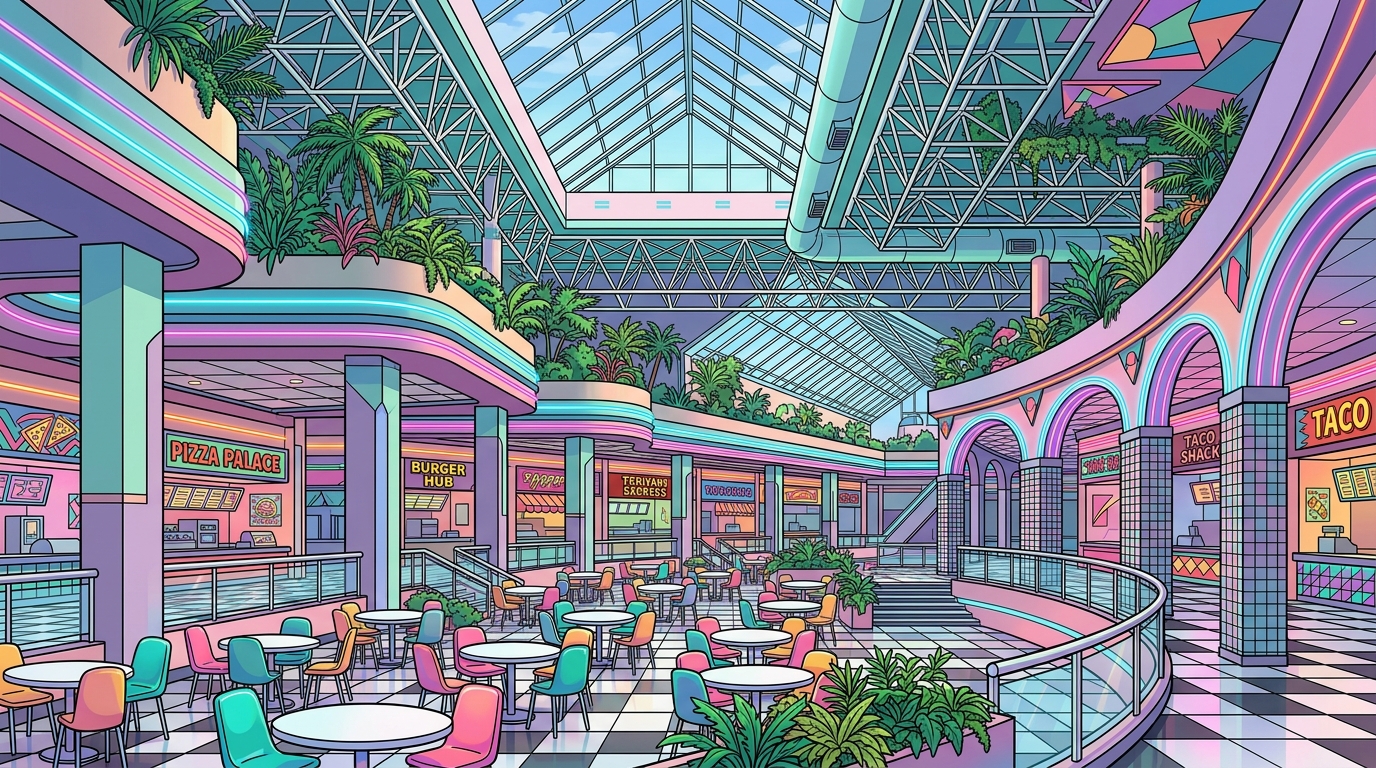
Remember when grabbing a slice of pizza meant sitting under buzzing neon lights on a plastic chair that felt like it was made for a dollhouse? That classic mall food court architecture was a total vibe, but let’s be real, it sounded like a jet engine and looked like a sterile hospital cafeteria from a glitchy simulation. You were basically there to fuel up and flee before the fluorescent glare gave you a literal headache.
Now, the Final Boss of the mall is getting a massive glow-up that feels more like a chill synthwave lounge than a frantic pit stop. We’re talking lush plants, wood finishes that actually look like real trees, and acoustic tech that lets you hear your squad over the sound of sizzling stir-fry. It’s no longer just a place to speed-run a burger; it’s an immersive, Instagram-ready hangout designed for maximum cozy points and zero lag.
Imagine walking through a portal where the year 2099 is already happening, right between a shoe store and a fountain. You look up and see a transparent lift capsule gliding silently toward the skylight, looking like something straight out of a high budget sci-fi movie. These glass elevators were the ultimate flex of mall architecture, giving you a panoramic view of the neon kingdom while you clutched a greasy paper bag. You felt like a high flying executive in a cyberpunk dystopia, even if you were actually just headed to the second floor to find a new pair of acid-washed jeans. The slow, smooth ascent made every mundane shopping trip feel like an epic mission into the heart of a futuristic space station.
While you wait for your pepperoni slice to cool down, your eyes are probably glued to a massive kinetic sculpture spinning nearby. These bizarre masterpieces featured humming neon tubes and rotating metal gears that served no purpose other than looking incredibly cool. It was peak vaporwave aesthetic before that was even a thing, blending bright pinks and electric blues into a hypnotic dance of light. You could sit for an hour watching the glowing shapes shift and reset, feeling the synthwave vibes wash over you in the middle of a crowded Tuesday afternoon. These structures turned a simple lunch break into a sensory experience that made the real world feel a lot more colorful and exciting.
The genius of this design was how it convinced your brain that the future was bright, shiny, and filled with endless possibilities. Every glowing tube and hydraulic hiss from the elevator doors reinforced the idea that you were living in a high tech wonderland. Even the most basic food court became a stage for these retro futurist dreams, blending functional architecture with pure, unadulterated spectacle. You were not just a kid eating a cinnamon roll, you were a protagonist in a digital world where gravity was optional and neon was a lifestyle. It was a glorious era of design that prioritized vibes over everything else, leaving us with a permanent sense of nostalgia for those glowing glass towers.
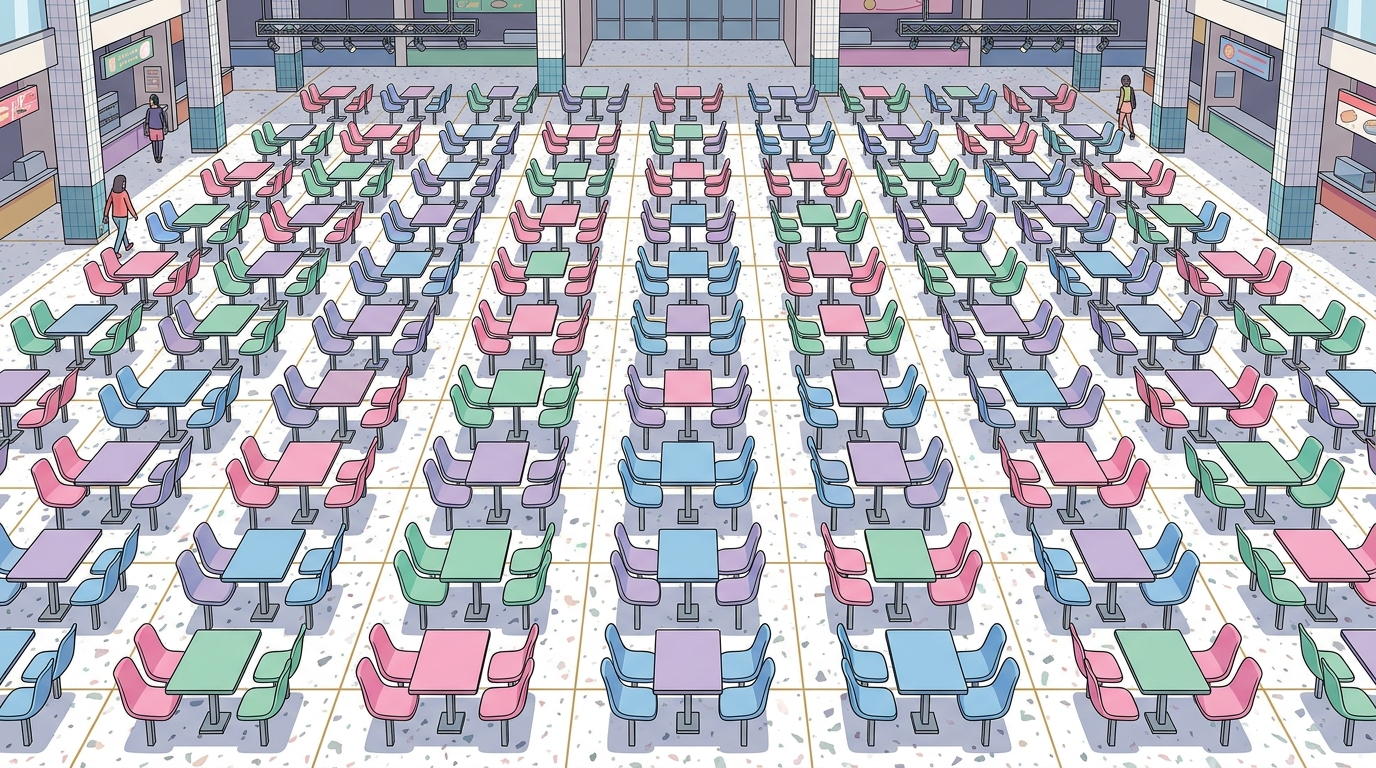
Step into a world where the floor is a grid of salmon-colored tiles and the furniture is literally bolted to the ground. You remember those fiberglass chairs that were molded into a single, unyielding unit with the table, forcing you into a specific social distance with your friends. These seating clusters were designed with a weird kind of retro-futurist logic, creating a jagged environment of pastel pinks and teals that looked like a low-resolution video game level. It was the ultimate spawn point for mall rats, where the geometry of the room dictated exactly how you hung out while sipping a giant soda.
The layout was not just about sitting, it was about creating a specific vibe using strategically placed concrete planters filled with dusty silk ferns. These green barriers acted like the walls of a dungeon crawl, guiding you past the glowing neon tubes of the pizza place and toward the sanctuary of the glass elevators. Everything felt like a physical manifestation of a synthwave album cover, where the sharp angles of the furniture meet the soft glow of overhead skylights. Even though the plastic seats were famously uncomfortable, they were the throne rooms of the 1980s social scene.
Today, these empty food halls feel like glitchy relics of a forgotten digital world, especially when you see them in their abandoned, dead mall state. The way the light hits the dusty surfaces of those bolted-down tables creates a lonely, vaporwave aesthetic that feels both futuristic and ancient. You can almost hear the muffled echoes of pop hits bouncing off the hard surfaces and the hum of the nearby arcade cabinets. It was a masterpiece of weird design that focused on flow and durability over comfort, leaving us with memories of a perfectly gridded, plastic paradise.
Imagine you are standing under a massive glass pyramid, clutching a lukewarm slice of pepperoni pizza while the midday sun hits your eyes. Architects in the eighties weren’t just building lunch spots, they were constructing retro-futurist cathedrals designed to make you feel like you were inside a high-end video game. These massive atrium skylights acted as a bridge between the real world and a neon-soaked dreamscape, flooding the terrazzo floors with natural light. The goal was to blur the lines between the outdoors and a controlled, synthetic paradise where time still stood. You could sit by a fake palm tree and watch the clouds pass while feeling like the protagonist of a lo-fi hip hop radio stream.
As the sun began to set, the real magic happened when those jagged neon tubes flickered to life in shades of electric pink and cyan. These glowing geometric shapes weren’t just for lighting, they were the visual heart of the mall’s aesthetic, carving out a digital horizon against the darkening sky. This specific blend of natural sunlight and artificial glow created a vibe that felt both cozy and strangely alien. It was the ultimate backdrop for your teenage adventures, turning a simple trip for fries into a cinematic experience. You were essentially living in a vaporwave album cover, surrounded by glass elevators and the hum of a nearby arcade.
The structural design of these spaces was all about creating a sense of infinite scale and technological optimism. By using heavy glass ceilings and sharp metal frames, designers made the food court feel like a space station landing pad rather than just a place to eat. Every corner was an Instagrammable moment decades before the app even existed, filled with mirrors and bright colors that popped against the greenery. Even though these malls are now relics of a different era, that specific mix of light and glass still hits a nostalgic nerve for anyone who grew up in the glow. You can almost hear the muffled echoes of a synthesizer playing in the distance as you look up at those towering skylights.
The neon glow of a 1980s food court lives on as the ultimate vaporwave fever dream in our collective memory. You probably remember staring up at those massive glass elevators that looked like spaceships while sipping a sugary soda near a bubbling fountain. These spaces weren’t just for eating, they were retro-futurist cathedrals filled with chrome accents and zig-zagging neon tubes that made you feel like you were living in a sci-fi movie. Even if those malls are quiet now, the aesthetic remains a permanent vibe for anyone who loves synthwave beats and pixelated sunsets. This unique blend of plastic plants and geometric skylights created a cozy digital oasis that modern minimalism just can’t replicate.
While today’s food halls focus on fancy wood and quiet acoustics, they often miss the chaotic energy of a classic mall atrium. You can still see the ghosts of these architectural masterpieces in dead mall documentaries and internet memes that celebrate the liminal space aesthetic. There is something deeply comforting about those teal tiled pillars and the way the light bounced off polished brass railings. It was a time when architects weren’t afraid to be bold, colorful, and a little bit weird with their designs. As you scroll through nostalgic photo galleries, you are really just looking for Neon Lights And Toothpick Bites and that feeling of endless summer under a giant glass pyramid.
Keeping the spirit of the old-school food court alive is all about embracing that unapologetic, over-the-top style. You don’t need a time machine to appreciate how those multi-level seating areas felt like a high-stakes level in a classic platformer game. Whether it is the obsession with glass blocks or the strange fascination with indoor palm trees, these design choices defined an era of pure optimism. Even as we move toward more natural materials and biophilic design, the neon-soaked memories of the food court will always be the final boss of retail architecture. Grab your headphones and put on some lo-fi beats because these structural icons are never truly going out of style.
Vintage food courts were built for speed and high traffic, using harsh fluorescent lights and tiny plastic chairs to keep you moving. The goal was to fuel your human avatar and get you back into the shopping simulation as fast as possible.
Modern food courts have leveled up into chill synthwave lounges with wood finishes and lush greenery. They use advanced acoustic tech to cancel out the jet engine noise, making it the perfect spot to hang with your squad without getting a headache.
Those transparent lift capsules were the ultimate architectural flex, designed to give you a high-flying panoramic view of the neon kingdom. They turned a boring trip for jeans into a cinematic mission, making you feel like a cyberpunk executive in a sci-fi movie.
Kinetic sculptures are basically the loading icons of the real world, featuring humming neon tubes and rotating gears just for the aesthetic. They serve no functional purpose other than looking incredibly cool while you wait for your pepperoni slice to cool down.
Architects are now using smart acoustic materials and strategic layouts to dampen the sound of sizzling stir-fry and shouting crowds. This tech ensures you can actually hear your friends’ voices instead of feeling like you are standing behind a roaring rocket booster.
Absolutely, because the new design meta is all about being Instagram ready and gaining maximum cozy points. With better lighting and immersive decor, the food court has evolved from a frantic pit stop into the final boss of aesthetic hangouts. Relive the mall kiosk experience and discover how neon schemes and high-tech automation is transforming the classic food court experience into a synthwave dream. You can also learn about the acoustic comfort of these environments and how noise levels impact the overall experience.