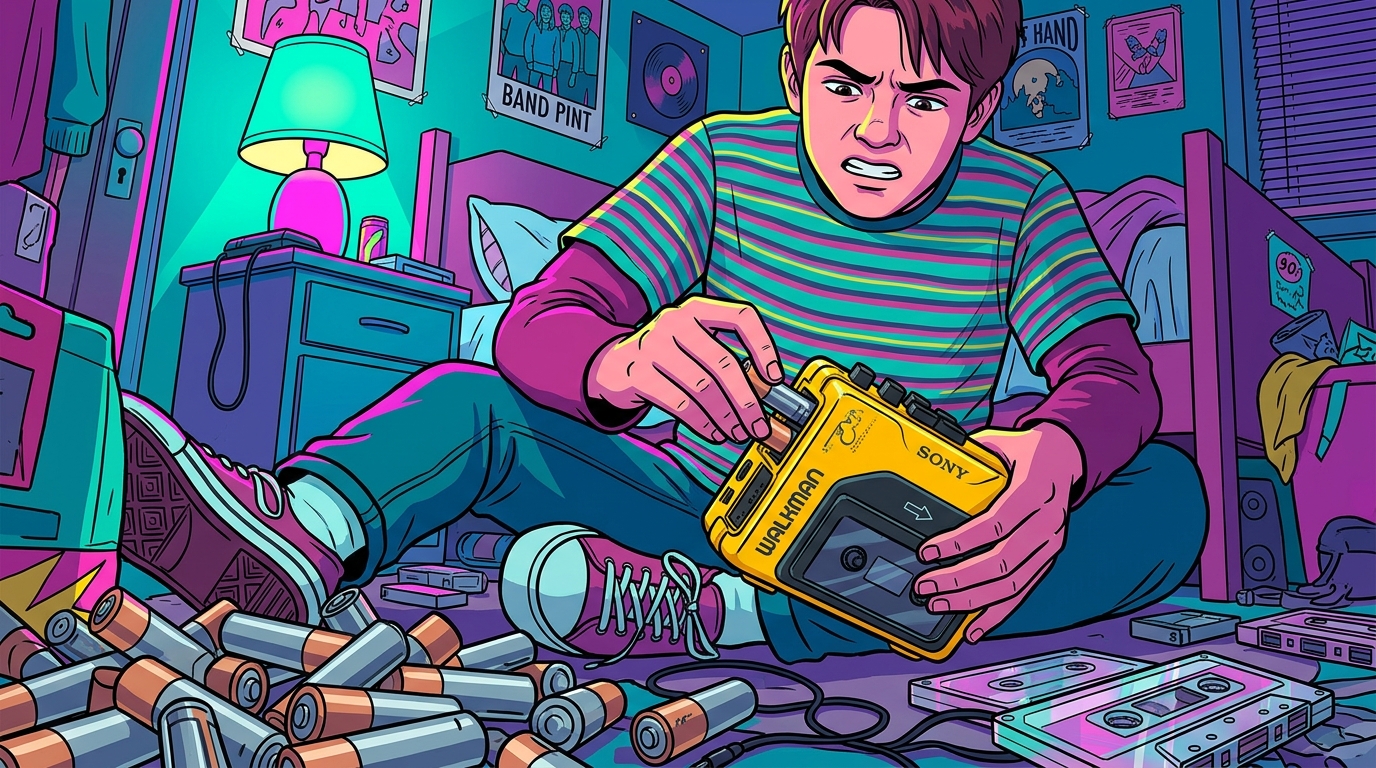
You’ve finally traded those tangled cassette tapes for a sleek new rig, but now you’re staring at that glowing screen wondering if your walkman battery life can actually survive a full synthwave marathon. It’s a total vibe killer when your high-res jams cut out right as the bass drops, leaving you in a silent void. Whether you’re rocking a compact model or an absolute unit of a flagship player, knowing how much juice you have left is the ultimate power move.
The struggle is real when you’re balancing crystal-clear FLAC files against the battery-draining hunger of your favorite streaming apps. You want those neon-soaked melodies to last from your morning commute until the late-night pixel art sessions, but high-gain settings are out here acting like final bosses. Understanding the gap between those optimistic box stats and your actual daily grind is the key to keeping the music playing without hitting a “Game Over” screen.
Back in the day, a long road trip meant you weren’t just packing your clothes, you were essentially hauling a heavy cargo of copper-topped AA batteries. You knew the drill of feeling that sudden, tragic dip in pitch during your favorite tracks, which signaled your power levels were hitting the danger zone. It was a race against time as the gears struggled to turn, making the vocals sound like they were coming from the bottom of a deep, dark well. You likely had a dedicated pocket in your denim jacket just for spare packs because running out of juice meant silence was your only companion.
The struggle was real when your portable player started eating through those disposables faster than a hungry arcade cabinet. Every time you pressed the rewind button, you could almost hear the batteries screaming in agony as they drained their remaining life force just to get you back to your favorite track. You had to develop a sixth sense for that specific mechanical whine that meant your music was about to transform into a slow-motion nightmare. If you didn’t have a fresh four-pack ready to go, your neon-soaked dreams were officially over for the night.
Thankfully, the modern era of portable audio has traded those bulky suitcases of alkaline for sleek, high-resolution internal power. Today, you can cruise through thirty or forty hours of high-fidelity FLAC files without ever needing to scrounge for a spare cylinder under the car seat. While the nostalgia of that clicking battery door is fun to remember, your shoulders definitely appreciate not carrying ten pounds of extra weight just to finish an album. You can finally keep the synthwave vibes flowing all night long without worrying about your music slowing down to a glacial crawl.
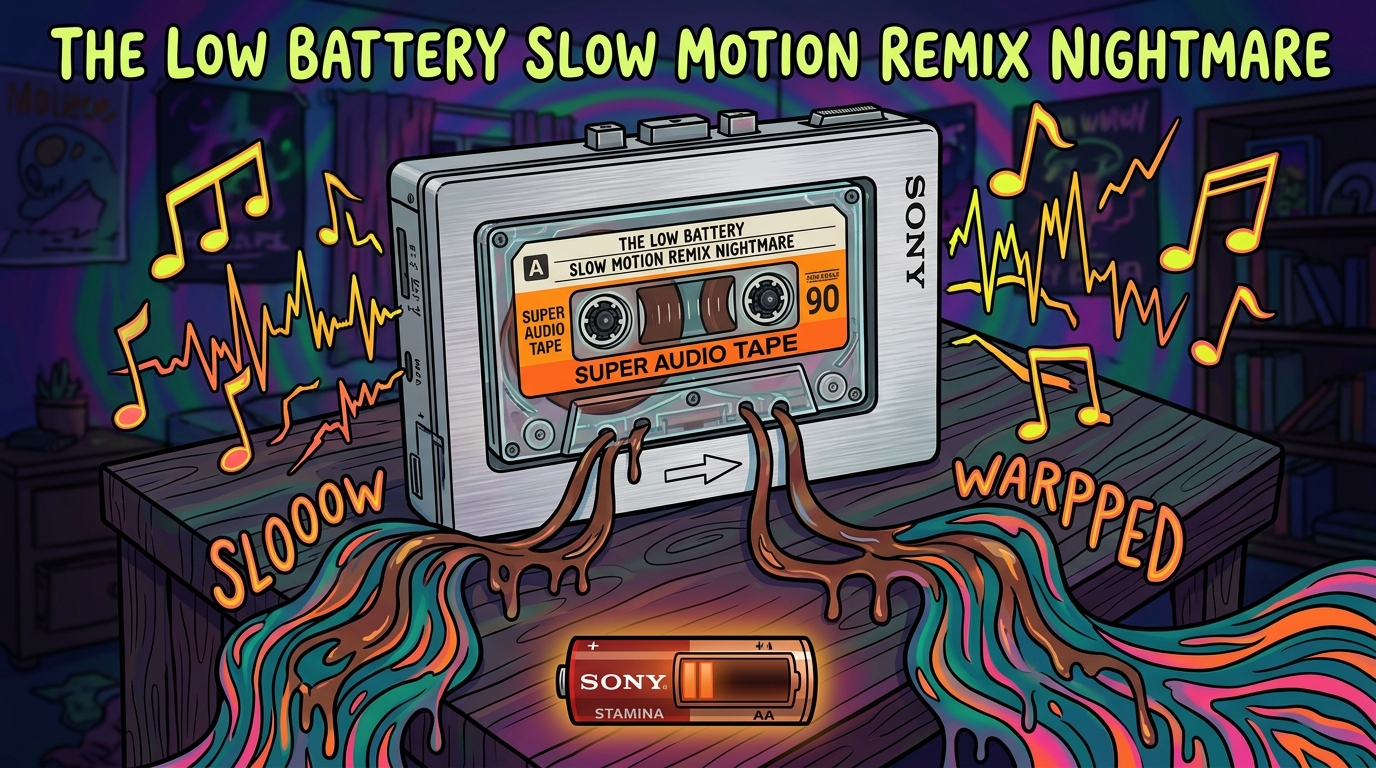
Imagine you are vibing to a high energy synth-pop anthem while walking down the street, feeling like the main character of a neon-soaked 80s movie. Suddenly, the upbeat tempo begins to sag and the pitch drops into a deep, demonic growl that sounds like a cassette tape crying for help. This is the tragic moment your AA batteries decide they have had enough, transforming your favorite dance track into a dragging sludge of distorted noise. You frantically shake the player as if that will magically conjure more juice, but the music only gets slower and weirder. It is a slow-motion remix nightmare that turns a catchy melody into a haunted soundtrack for a glitchy VHS tape.
Back in the day, the struggle was real when you did not have a fresh pack of batteries tucked into your denim jacket pocket. You would try the classic trick of taking the batteries out and rubbing them together to generate a tiny bit of heat for one last chorus. If you were really desperate, you might even try to wind the tape manually with a pencil to save what little power was left for the actual playback. Modern listeners with their high-resolution digital players might get twenty or thirty hours of crisp audio, but they will never know the specific panic of a pop star sounding like a tired grizzly bear. Carrying spare batteries was not just a chore, it was a survival skill for anyone who wanted to keep the retro vibes flowing without a mechanical meltdown.
If you want to survive a long car ride without your music turning into a slow, demonic growl, you have to master the art of the manual rewind. Back in the day, using the actual buttons on your device was a luxury that cost you precious juice you simply couldn’t afford to lose. Every time you pressed that rewind or fast-forward button, the motor drained your AA batteries faster than a speedster in a neon-lit arcade. You could practically hear the life fading away as the gears whirred, leaving you stranded with a silent plastic brick. To keep the vibes going, you needed a low-tech solution for a high-tech problem.
The humble yellow No. 2 pencil was the ultimate power-saving tool for any cassette enthusiast trying to stretch their battery life. By inserting the pencil into the gear of the tape spool, you could spin that plastic ribbon back to the beginning using nothing but pure muscle memory and determination. It was a rhythmic, satisfying motion that saved your motor from doing the heavy lifting while you waited for the bus. This move was the original life-hack, ensuring that every drop of battery power went toward actually playing the music. You looked like a wizard performing a lo-fi ritual, but your playlist stayed alive for the entire journey.
Managing your energy levels meant being smart about when to let the machine take over and when to intervene manually. If you noticed the red power light getting dim, it was time to pull out the stationery and get to work. Saving your batteries for the actual playback meant you could enjoy those synth-heavy beats for an extra hour or two before the sound started to warp and drag. It was a constant battle against the limitations of portable tech, but with a pencil in your pocket, you were always prepared. Keeping your music portable required a bit of physical effort, but the payoff was a soundtrack that never skipped a beat.
Looking back at the history of portable music is like watching a neon-soaked action movie where the hero is constantly running out of ammo. We have come a long way from the days when your favorite synthwave track would slowly melt into a demonic, low-pitched crawl because your AA batteries were screaming for mercy. While today’s high-end models can pump out high-resolution audio for twenty or thirty hours on a single charge, the struggle used to be much more physical. You basically needed a black belt in logistics just to make it through a bus ride without your tape deck dying. It is a true testament to our dedication that we ever managed to finish an entire album while on the go.
We really have to salute the brave soldiers of the eighties and nineties who treated their fanny packs like mobile refueling stations. Carrying a brick-sized plastic case filled with spare batteries was the ultimate power move for any serious music lover. There was a specific kind of panic that set in when the red power light started to dim, signaling that your batteries were about to go the way of the dinosaurs. You had to be ready to swap those copper-topped cylinders in total darkness, all while pretending you weren’t carrying five pounds of extra weight around your waist. It was a lifestyle of pure commitment and very heavy pockets.
While we bask in the glow of our modern rechargeable lives, let’s never forget the grit it took to be a mobile listener in the analog era. You can now stream lossless files for a dozen hours straight without breaking a sweat or checking your backpack for spares. The evolution from the chunky retro cassette players to the sleek, high-tech powerhouses of today is a miracle for our ears and our spines. So next time you plug in your flagship player, take a moment to appreciate that you no longer have to carry a literal bag of lightning just to hear your tunes. Enjoy the high-fidelity vibes and the peace of mind that comes with a battery that actually lasts.
Whether you are rocking a vintage cassette deck or a shiny new high-res digital player, managing your power levels is a true vibe. Back in the day, you had to pray your AA batteries didn’t give up during the best part of a synthwave solo, causing the music to warp into a slow, demonic crawl. Today, you are dealing with bright screens and high-fidelity FLAC files that can gobble up juice faster than a hungry ghost in a maze. It is all about finding that sweet spot between maximum volume and making sure your device actually survives the bus ride home. Keep those spare batteries tucked in your denim jacket or your USB cable handy to ensure the retro sci-fi vibe never stops.
Modern tech might give us fancy stats like forty hours of playback, but real life always has its own neon-soaked plans. If you are constantly streaming over Wi-Fi or cranking the gain to feel those heavy bass lines, your battery is going to drain quicker than a high-score timer. Even the most premium flagship models have their limits when you are pushing them to the max with high-resolution audio. It is a hilarious trade-off where we traded the physical struggle of carrying a bag of batteries for the digital struggle of hunting for a charging port. Just as vintage boombox radios were the ultimate status symbols of the street, your modern player is your personal gateway to high-fidelity sound. Just remember to dim that screen brightness and enjoy the nostalgic journey through your favorite playlists.
Streaming those massive FLAC files is like fighting a high-level boss without any armor. Your player has to work overtime to process all that crystal-clear data, which drains your juice way faster than a standard MP3 would.
Those optimistic box stats are usually based on perfect conditions with all the cool features turned off. In the real world, your screen brightness and high-gain settings will eat into those optimistic numbers faster than a hungry arcade cabinet.
To keep the neon vibes flowing, try lowering your screen brightness and turning off Wi-Fi when you aren’t streaming. You should also avoid using the rewind and fast-forward buttons too much, as those extra actions act like a drain on your power levels.
Thankfully, those days of hauling a cargo of copper-topped disposables in your denim jacket are over. Modern rigs use built-in rechargeable batteries, so you won’t have to deal with your music sounding like it’s coming from the bottom of a well when the power gets low.
High-gain settings are the ultimate power-hungry villains for your portable player. While they make your headphones sound epic, they demand a lot of energy, so use them sparingly if you’re far from a charging cable.
Stick to downloaded tracks instead of streaming over Wi-Fi to keep your battery from hitting a Game Over screen. Keeping your device in a dedicated power-saving mode will ensure your pixel art sessions have a constant soundtrack.