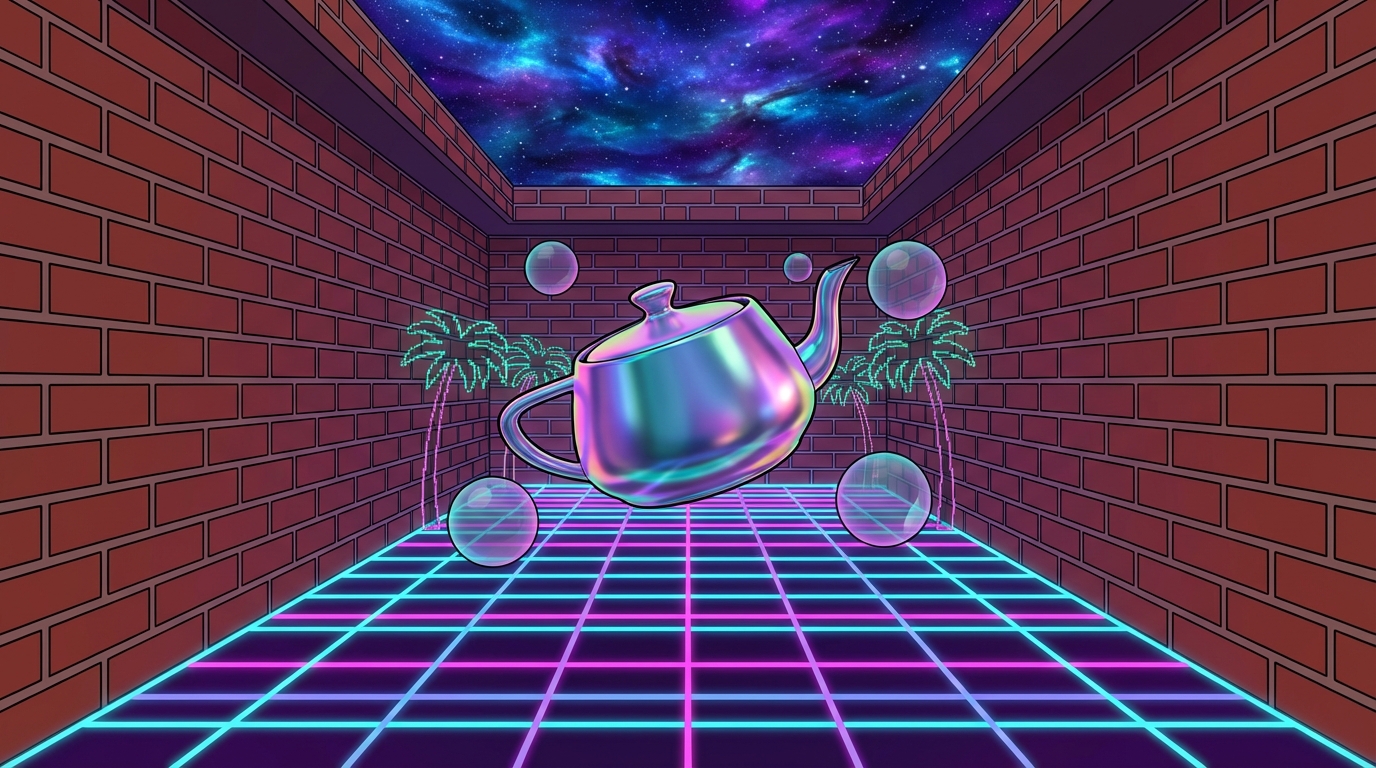
Picture it: your beige brick of a PC is humming like a jet engine, and you are absolutely mesmerized by an endless, looping labyrinth of brick walls. Before the internet gave us an infinite feed of memes to scroll, the legendary 90s OS screensavers were the ultimate digital trip. Originally built just to stop your chunky CRT monitor from burning out, these pixelated fever dreams accidentally became a whole generation’s first taste of 3D gaming. Those twisting neon pipes and infinite mazes weren’t just random magic, either. They were actually born from a secret contest among code jockeys trying to flex their graphics skills without nuking the operating system.
You probably spent way too many hours watching those 3D teapots float through the void, totally unaware you were staring at a pure, unfiltered liminal space. Legend has it that a marketing suit stumbled upon these trippy tech demos right before launch and knew they had to be unleashed on the masses. Whether you were hunting for the fabled giant pixelated rat or just zoning out to the hypnotic geometry, those beautifully weird digital realms permanently burned themselves into our collective memory.
Picture yourself staring into the glowing abyss of a chunky desktop monitor while a neon-soaked vaporwave track plays in the background. Those hypnotic 3D pipes and endless brick mazes were not actually born from a massive corporate master plan. They started as a super nerdy internal coding contest among the OS graphics team. Engineers were challenged to create the raddest real-time 3D rendering programs possible without completely crashing the entire operating system. They ended up building the ultimate digital nostalgia trip that would soon take over every office cubicle and basement gaming rig on the planet.
The legend goes that these trippy visual masterpieces almost stayed hidden forever as a secret developer joke. Thankfully, a sneaky marketing guy stumbled upon these hypnotic beauties right before a massive magazine demonstration. He took one look at those infinite teapots and morphing geometric shapes and instantly knew they were absolute gold. He practically forced the developers to include the glorious OpenGL screensavers into the final retail release of the classic 90s OS. Because of that wild last-minute decision, you got to experience the peak aesthetic of early computer magic every time you walked away from your keyboard.
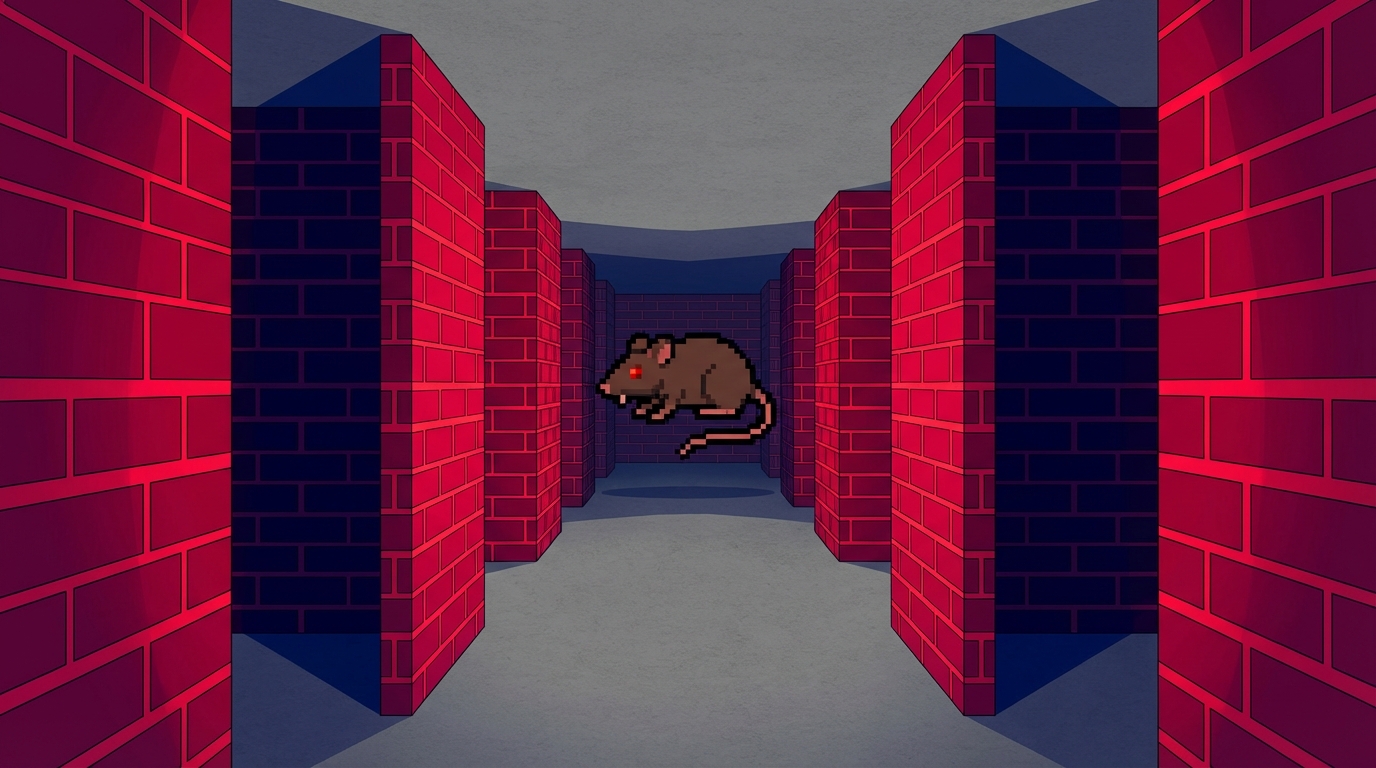
You probably remember staring at your chunky desktop monitor while your computer took you on an endless journey through a brick-textured digital purgatory. This iconic liminal space was actually born from an internal contest where engineers tried to show off real-time 3D graphics without totally crashing the operating system. Instead of a neon-soaked synthwave paradise, you got trapped in a weirdly silent labyrinth that felt like a backrooms meme before the internet even had a name for it. Your only strategy for survival was helplessly watching as the camera hugged the right wall and praying it would eventually find the exit. The whole experience felt like a retro fever dream wrapped in old-school software magic.
Just when you thought you understood the layout of this digital dungeon, you would inevitably bump into that bizarre floating gray rock. Touching this polygon nightmare instantly flipped your entire screen upside down and completely scrambled the logic of the maze. Watching the floor become the ceiling totally messed with your head and turned a simple screen protector into a psychological thriller. Today, this gloriously pixelated chaos is an absolute goldmine for vaporwave fans looking to aestheticize their boring modern computer setups. You can easily recapture that ultimate nostalgia trip by bringing those chunky retro graphics back to life on your sleek new screens.
Step back into the glowing neon light of your chunky desktop monitor and remember the ultimate digital nostalgia trip. Before you had endless scrolling on your phone, you probably spent hours staring blankly at an infinite maze of digital plumbing. The original OS engineers built these mesmerizing 3D pipes as a fun internal contest to show off cool graphics without crashing the system. A clever marketing person spotted the colorful tubes just in time, and they quickly became the ultimate visual magic to save your screen from permanent burn-in. Today, vaporwave fans are completely obsessed with bringing this retro liminal space back to aestheticize their boring modern computer setups.
If you watched those twisting pipes long enough, you might have caught a legendary glitch in the matrix. Every once in a while, a standard pipe elbow would magically transform into a literal teapot right before your eyes. This rare hidden secret is known as the Utah Teapot, and it is basically the holy grail for old-school software nerds. Spotting this random piece of kitchenware floating in your neon plumbing felt like unlocking a secret level in a classic arcade game. You could totally brag to your friends that your computer had a mind of its own, serving up virtual tea while you took a break from playing retro mine-clearing games.
Look at your sleek gaming rig with its ultra-high-definition wallpaper and ask yourself if it really sparks joy. You can ditch that boring modern look and transform your expensive setup into a glowing shrine of retro-futuristic vaporwave drip. Tap into the ultimate digital nostalgia trip by bringing back the days when chunky desktop monitors ruled the earth. Those pixelated flying toasters and endless 3D brick mazes are an absolute goldmine for anyone wanting to inject some serious synthwave vibes into their space. It is time to resurrect this old-school software magic and give your current desktop the neon-soaked aesthetic it deserves.
You might be surprised to learn that these iconic liminal spaces actually started as an internal contest among bored software engineers. The developers were challenged to create real-time 3D graphics that would not completely crash the entire operating system. A lucky marketing team member spotted these trippy visuals right before a major demo and demanded they be included in the final release. Now you can experience the exact same digital magic that blew minds decades ago. Just fire up that legendary 3D maze and watch as the invisible player relentlessly follows the right-hand wall to find the pixelated exit.
Getting these vintage masterpieces running on your modern machine is actually incredibly easy to do. You will instantly become the coolest person in your voice chat server once your friends see those endless twisting pipes crawling across your screen. Turn down your room lights, put on your favorite synthwave playlist, and let the glowing graphics wash over you. These gloriously low-poly animations were originally designed to stop phosphor burn on ancient screens, but today they just look incredibly awesome. Welcome to the ultimate vaporwave aesthetic, where the past and future collide right on your desktop.
As you power down your modern rig, it is time to appreciate the ultimate digital nostalgia trip. Back in the day, those chunky desktop monitors needed protection from screen burn, but they ended up giving us legendary meme material instead. You can still feel the vaporwave energy radiating from those endless 3D brick mazes and flying toasters. These iconic bits of early computing history have completely transcended their original practical purpose. Now, they serve as the perfect aesthetic upgrade for anyone looking to inject some neon-soaked retro magic into a boring modern setup.
It is wild to think that some of our favorite liminal spaces started as an internal coding contest to test basic graphical limits. You really do not need top-tier gaming hardware to appreciate the simple joy of watching a digital brick wall endlessly render itself into oblivion. Embracing those retro vibes is the absolute best way to keep your battlestation looking completely rad. Next time you step away from your keyboard, let those twisting pipes and neon polygons take over your display. You will quickly realize why this old-school software magic remains the undisputed king of internet aesthetics.
You might think it was some massive corporate master plan, but they actually started as a secret coding contest. The original OS engineers were just trying to flex their graphics skills and make the raddest 3D visuals without nuking your chunky PC. It was basically a giant nerd battle that gave us pure digital gold.
They absolutely did. Back in the day, your big beige monitor would permanently burn an image into the glass if you left it sitting on the same screen for too long. These pixelated fever dreams kept the colors moving so your hardware did not get permanently ruined.
You bet there was. If you stared at that endless looping labyrinth of brick walls long enough, you could sometimes spot a mythical 2D rat chilling in the maze. It is the ultimate retro gaming easter egg that permanently burned itself into our collective memory.
Those twisting neon tubes were just pure vaporwave aesthetic before vaporwave was even a thing. The graphics team used them to show off real-time 3D rendering, creating an infinite plumbing system right on your desktop. You probably spent way too many hours zoning out to that hypnotic geometry.
Staring at a 3D teapot floating through the void was your very first taste of a pure liminal space. The teapot is actually a famous inside joke among graphics nerds, used as a standard testing model for rendering light and shadows. The developers naturally threw it into the mix to flex their tech muscles.
Legend has it that a marketing suit stumbled upon these trippy internal tech demos right before launch. They instantly knew these rad visuals had to be unleashed on the masses. Thanks to that one suit, these hypnotic screensavers took over every office cubicle and basement gaming rig on the planet.
You absolutely can still experience this legendary digital nostalgia trip. Plenty of awesome developers have recreated these classic screensavers for modern machines, so you do not need a beige brick PC to enjoy them. Just do a quick web search and prepare to vibe with those neon pipes all over again.