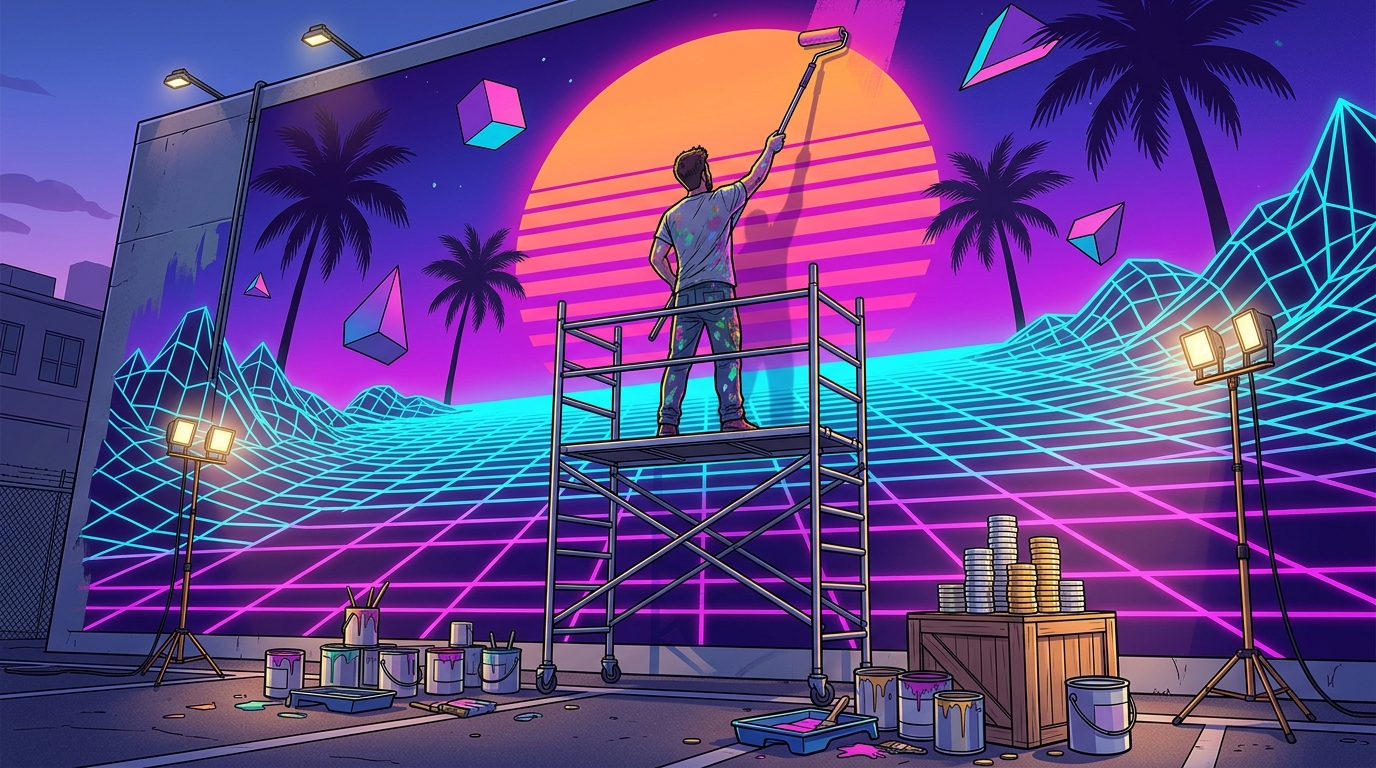
Vaporwave mural artists do not have a published, style-specific rate schedule, so use general mural prices as a guide: medium-detail work runs $20–$40 per square foot, and design sketches typically cost $500–$1,500, according to Fixr’s mural cost guide. Ask for a project-specific quote. A glowing sunset grid and a giant marble bust are not the same brief, even if both look ready to haunt an arcade.
Published estimates vary widely. ProMatcher’s U.S. report gives a range of $20–$72 per square foot. Your wall’s surface, design scope, equipment, travel, licensing, and access can all affect the final quote, so compare artists using the same dimensions and wish list. Bring the neon and nostalgia, but keep your budget out of the pixelated danger zone.
There is no published rate card for vaporwave murals, so start with custom-mural benchmarks, not a standard price for neon grids and marble busts. A per-square-foot rate is multiplied by the area being painted, but published estimates leave plenty of room for surprises. One U.S. benchmark lists an average project cost of $4,800 and a typical range of $4,000–$6,000, while another reports $23–$31 per square foot in Tempe and $32–$44 in Torrance.
The same square-foot rate can lead to very different totals. Wall conditions matter: published estimates put drywall at $10–$25 per square foot and brick at $20–$35. A detailed scene with glowing gradients, chrome effects, and tiny background elements may also take more work than a simple geometric design, even if both cover the same area.
Check what the quote includes before comparing prices. Some muralists charge separately for equipment, travel, or art licensing, while others may include design revisions in the project price. A quote that covers sketch rounds and wall preparation is not directly comparable to one that charges for those items separately. Same wall, same scope, same pixel-perfect expectations. That’s how you keep the budget comparison from turning into a boss battle.

Your final quote can change with wall size and texture, design complexity, preparation, equipment, travel, and how easily the artist can reach the site. A square-foot rate is only one part of the budget. The same vaporwave design can cost more to paint on a rough brick wall than on smooth drywall. Typical benchmarks put painting on drywall at $10–$25 per square foot and on brick at $20–$35. A bigger wall means more painted area, while a textured surface can take extra work to cover evenly. Repairs, cleaning, or priming may also add preparation time before the neon sunset gets its moment. Design development may be priced separately from painting. A mural sketch typically costs $500–$1,500, depending on the design. A simple grid and sun may need less planning than a detailed scene packed with gradients, chrome effects, and tiny background details.
Ask for an itemized estimate that lists the wall dimensions and says whether design, preparation, equipment, and travel are included. It should also explain what could trigger an extra charge, such as a newly discovered surface problem or a change to the approved design. That way, your budget is less likely to get ambushed by a surprise level boss.
Compare vaporwave mural quotes by matching portfolios to your wall and sending every artist the same project brief. Then weigh the full scope instead of chasing the flashiest rate. Look for work close to your desired scale, wall type, and visual style. A portfolio full of small indoor designs may not tell you much about a large exterior brick wall. Published market examples start at $20–$35 per square foot, while other quoted ranges reach $55. Project minimums and included sketch revisions also differ, so a low per-square-foot rate may not mean the lowest total. Some quotes charge for equipment, travel, or art licensing separately. Design changes or extra rendering work may also add charges, because even a neon dreamscape can come with a paperwork level. A fair comparison starts with one consistent brief. Send each artist the same information:
Then compare what each quote covers: design work, painting, preparation, and any separate charges. Check how many sketch rounds are included, what counts as a billable design change, and whether extra rendering is priced separately. Compare the proposed schedule and payment terms, too. The quote with the best-looking number is not always the best deal if its scope is missing a few important pixels.
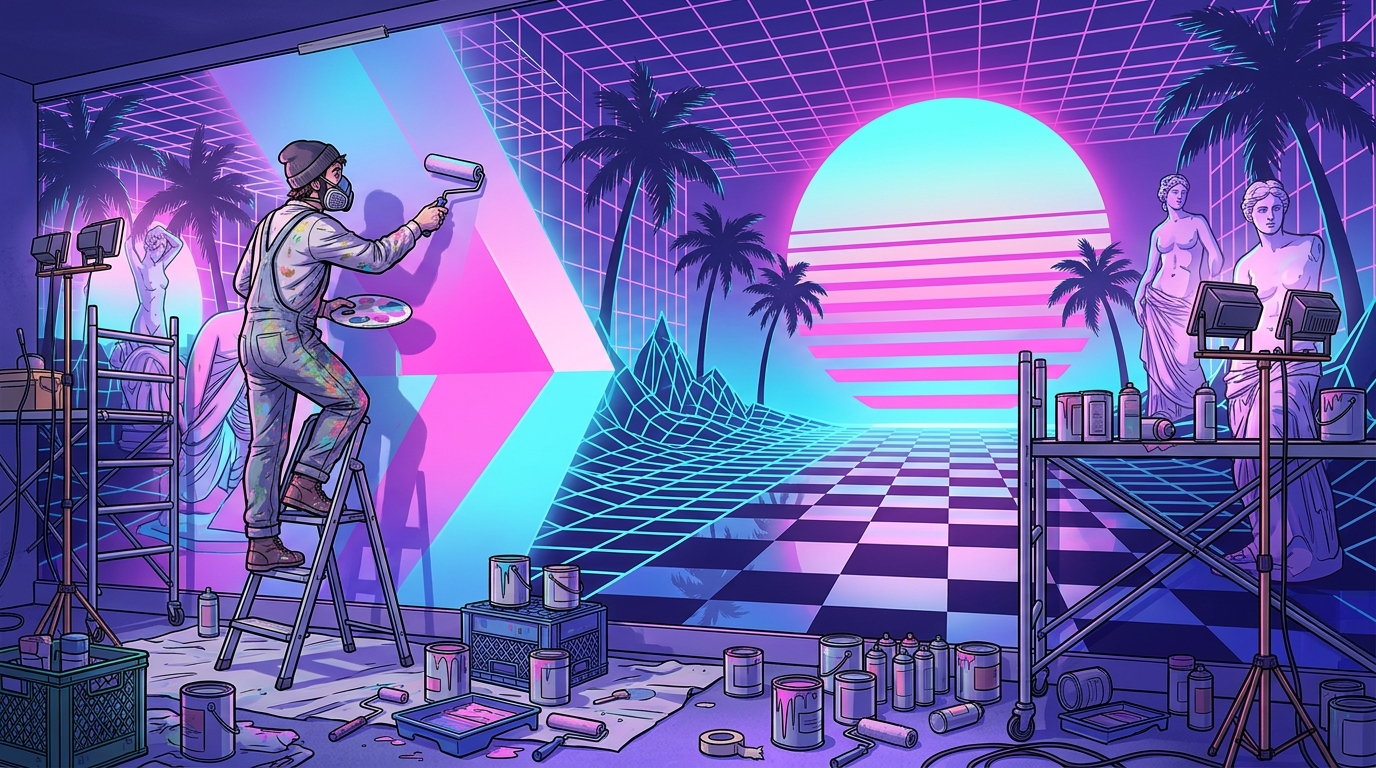
A clear vaporwave brief helps an artist estimate design time and price the work more accurately. It shows what needs to be invented, refined, and approved. Neon colors and a sunset grid might make a clean focal point. Add chrome details, a classical sculpture, and retro electronics, and the artist has more elements to arrange. The balance between busy detail and open wall space matters, too. A packed arcade-style scene takes a different design approach from a few bold shapes floating across a mostly open wall.
Vaporwave’s visual language draws on 1980s consumer-electronics imagery and the nostalgia surrounding it, as an ASAP/Journal article hosted by the University of Cambridge Repository explains. Share references that communicate the mood, palette, and motifs you like, such as a glowing sunset, a marble bust, or a vintage game console. Treat those images as inspiration, not a ready-made mural to reproduce. An artist can use them to create an original composition that fits your wall instead of tracing someone else’s design like a graphics-card-powered photocopier.
Be clear about how you want the finished scene to feel and what it must include. For example, you might ask for a pink-and-purple sunset, a receding grid, one classical sculpture, and a small cluster of retro electronics, with open space around the main subject. That gives the artist room to create a fresh layout while making the scope easier to estimate.
Put the design process in writing before work begins. Agree on how many sketch rounds are included, when you’ll approve the concept and final layout, and what counts as a substantial redesign rather than a small adjustment. Changing a color accent is not the same creative quest as replacing the whole scene after approval.
Mural painting typically takes 1–5 days, but permits and scheduling can stretch the full project lead time well beyond the days spent on the wall. The painting schedule depends on the location, wall texture, weather, and requested timeframe.
Portland, Oregon, gives a very different permit timeline. Its Original Art Mural Permit process takes approximately 30–40 days from application to issuance, and mural work cannot start before the permit is issued, according to Portland Permitting & Development’s permit guidance. So a quick painting schedule does not mean you can book a crew for next week and hit start.
Portland’s Title 4 rules define an Original Art Mural as hand-produced visual art painted, tiled, or affixed directly to an exterior building wall. The rules also include local conditions, such as a maintenance requirement of at least two years and a ban on compensation for displaying the mural. Permit definitions and requirements depend on where your wall is located, so check your local rules instead of assuming Portland’s process applies everywhere.
Before setting a start date, confirm who will check whether permits are needed, who will handle any application, and who will coordinate access to the wall. A locked gate, limited work hours, or a permit still in the approval queue can leave your artist waiting in the loading screen.
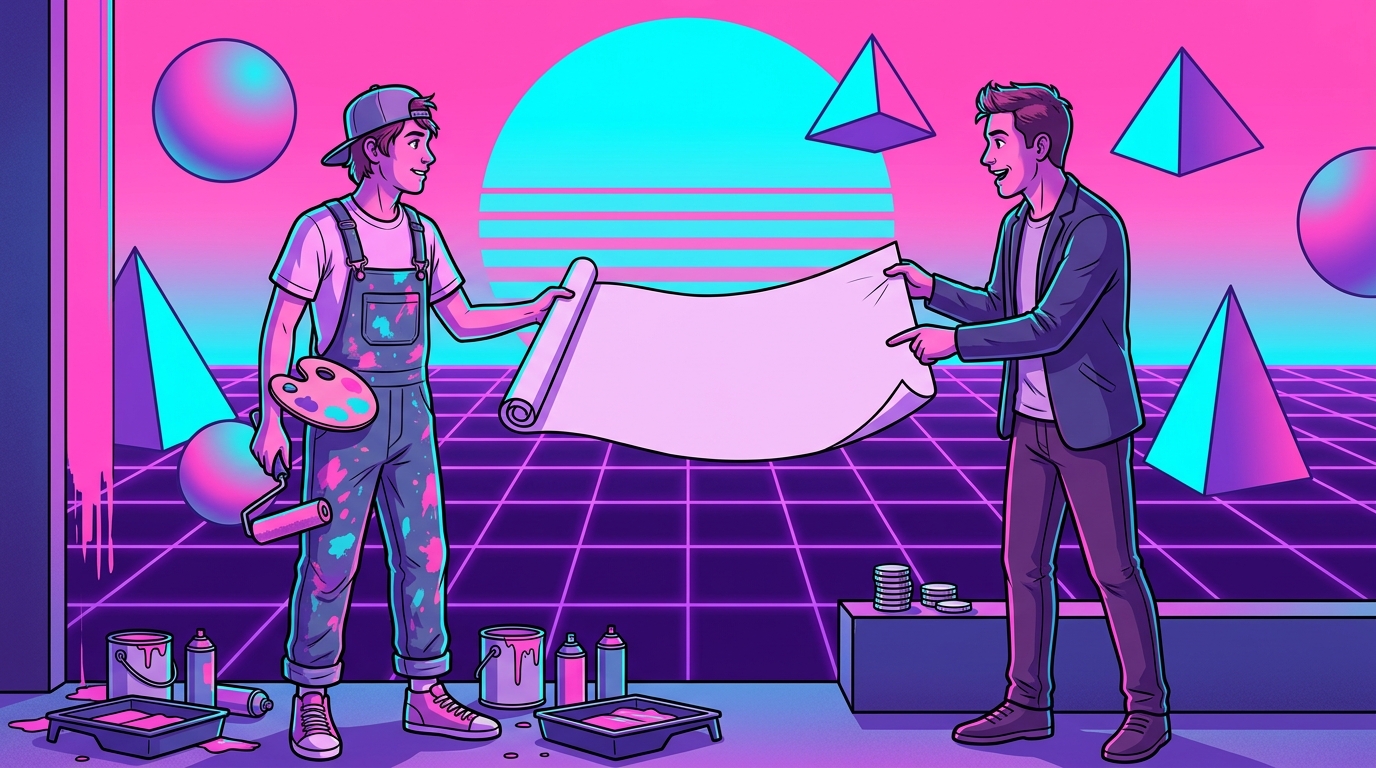
The artist generally owns the mural design’s copyright at first, even after you pay for the painting, unless a qualifying work-made-for-hire agreement applies. The U.S. Copyright Office says protection begins when original visual art is fixed in tangible form, which can include a design sketch as well as the finished mural. U.S. Copyright Office guidance explains the starting point. Your agreement should spell out any permissions you need. Ask for clear written terms covering whether you can photograph the mural, reproduce the design, put it on merchandise, or adapt it for another use. Spell out the uses you want, such as printing the image on event posters or turning its neon sunset into a social media graphic. Otherwise, your dream of putting the design on a T-shirt could hit a copyright boss fight. The agreement should also say whether the artist can photograph the finished mural and show it in a portfolio. Most importantly, treat the mural painting fee and permission to reuse the design as separate questions, and settle both before work begins. A price for painting the wall does not automatically answer who can reuse the artwork.
Before you contact artists, set an all-in budget ceiling and make a one-page brief. If your mural is in Portland, add permit costs to your planning sheet: the city lists a $75 basic permit fee and a $217 structural-plan-review fee when the stated weight or attachment criteria apply. Fees may change, so check the permit application.
Use this request brief: Commission an original vaporwave mural for an interior or exterior wall in your area. Provide the wall dimensions, surface and condition, access details, must-have motifs, and elements to avoid. Ask artists to separate design, painting, preparation, equipment, travel, and licensing costs, and to list the project minimum, included sketch rounds, extra-design charges, schedule, payment terms, costs that could change after approval, and permissions needed for artwork use.
Use the replies to check the real floor price, not just the square-foot rate. Published market examples include minimums of $1,000 for interior murals and $2,000 for exterior murals, while some project bases start at $3,500. Ask how many sketch rounds fit your brief. Full renderings or a restarted design process may be billed at $50 per hour. Save each answer beside the matching quote, so the budget comparison doesn’t turn into a neon-colored spreadsheet boss fight.