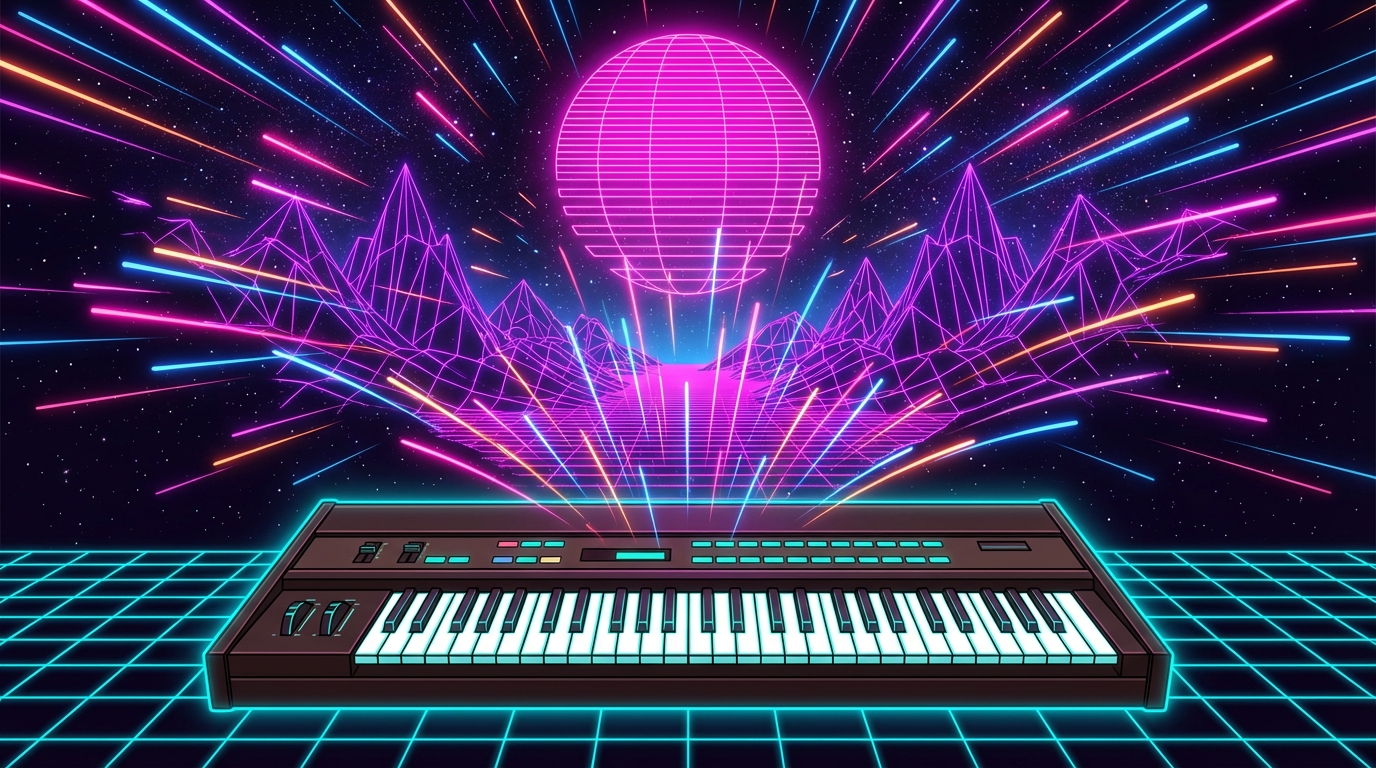
Picture it: you are cruising down a neon-grid highway into a digital sunset, blasting the most iconic sounds of the 1980s. If you want to understand exactly where all those glassy electric pianos and punchy basslines came from, you have to look into DX7 synth history. Released in 1983, this sleek keyboard dropped into the music scene like a final boss, replacing massive, out-of-tune room-sized machines with crisp digital perfection.
Before this absolute unit arrived, making electronic music meant wrestling with giant, expensive boxes that could not even stay in tune long enough to finish a boss battle. The DX7 used literal math magic to create completely new sounds. Suddenly, everyone from top-tier pop stars to basement hobbyists could afford to unlock the ultimate cheat code for their tracks. It was not just a keyboard. It was the shiny new hardware drop that permanently changed the meta of modern music.
Picture a nerdy guy named John Chowning messing around in a university lab during the late 1960s. He accidentally stumbled onto Frequency Modulation synthesis, which is basically a fancy way of saying he made sine waves crash into each other to create wild new sounds. Fast forward to 1983, and this crazy academic experiment was suddenly packed into the sleek DX7. Instead of needing a massive wall of expensive analog gear to play a simple chord, you suddenly had a futuristic digital deck with a massive 16-note polyphony. It was finally affordable enough that you did not have to sell a kidney just to lay down some rad cyberpunk basslines in your bedroom.
Getting those iconic 80s bell tones out of this machine was a totally different beast entirely. If you thought beating the water level in a retro video game was frustrating, you clearly never tried programming a DX7 from scratch. Instead of twisting satisfying knobs, you had to navigate a tiny green screen that felt exactly like hacking a mainframe in a cheesy sci-fi movie. You were literally punching in numbers blindly while hoping your custom patch did not end up sounding like a dial-up modem having a panic attack. Most musicians just threw their hands up in defeat and stuck to the factory presets. That shared rage quit is exactly why every pop ballad from that decade sounds suspiciously identical.
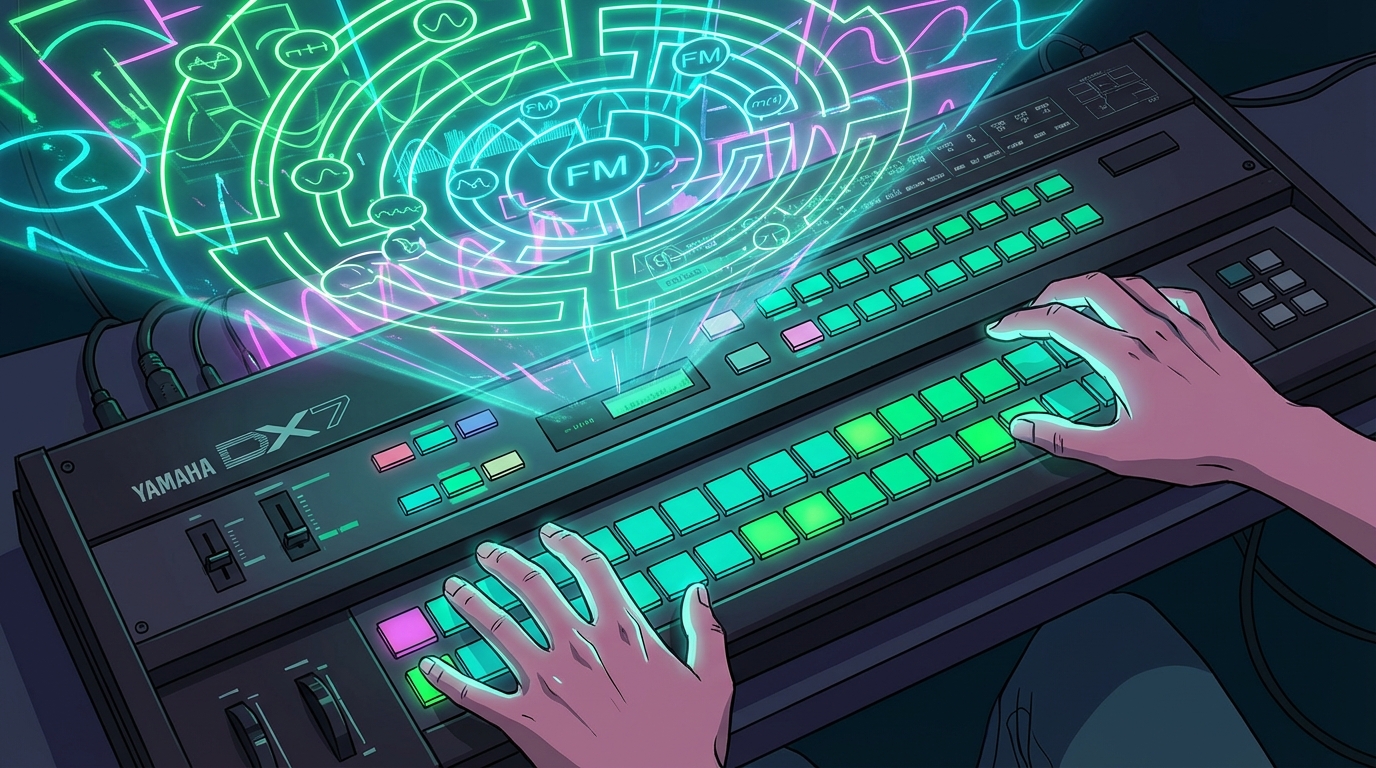
Stepping up to program this digital beast feels exactly like facing the final boss in a retro arcade game without any extra lives. You are immediately confronted by a tiny green LCD screen that looks like a basic calculator from middle school math class. Below that miserable little window sits a massive grid of flat membrane buttons that offer absolutely zero physical feedback when you press them. Trying to craft your perfect neon-drenched cyberpunk bassline requires you to navigate through endless hidden menus that make absolutely no logical sense. It is a pure test of endurance that will quickly drain your sanity and leave you mashing buttons in total frustration.
Instead of turning satisfying physical knobs to shape your sound, you have to punch in random numbers and hope for the best. The digital brain inside this machine uses a complex mathematical system that feels closer to hacking a government mainframe than making music. You might spend three hours tweaking a single setting just to accidentally delete your custom sound and replace it with a deafening screech. Your dreams of becoming a synthwave legend instantly vanish as you stare blankly at the cryptic text mocking you from the screen. Most musicians simply threw their hands up in defeat after realizing they needed a computer science degree to change a basic digital tone.
This legendary difficulty spike is exactly why almost everyone just gave up and embraced the factory default settings. You can literally hear these same built-in presets dominating the biggest pop hits and power ballads of the entire decade. Why suffer through the menu screen of doom when the stock electric piano sound is already pure retro perfection? You just power on the keyboard, select preset number eleven, and instantly channel that magical action movie montage energy. In the end, the sheer terror of programming this instrument accidentally united an entire generation of artists under one iconic sonic aesthetic.
When you power up a vintage DX7, you are instantly transported to a neon-soaked cyberpunk dystopia where the E. PIANO 1 patch rules supreme. This legendary built-in sound single-handedly murdered the bulky analog synthesizers of the past and became the ultimate cheat code for 80s pop music. Instead of dealing with massive keyboards that constantly went out of tune, you suddenly had a sleek digital weapon that pumped out crystal-clear bells and synthetic brass. Every retro movie montage and arcade game soundtrack you love probably owes its entire vibe to these iconic factory presets. You simply could not escape that icy, metallic chime if you turned on a radio anytime between 1983 and the end of the decade.
The real joke behind all these famous presets is that almost nobody actually knew how to program the synthesizer themselves. If you tried to create your own custom patch, you were immediately greeted by a tiny green screen and a baffling menu of algorithms that required a math degree to understand. Frequency modulation synthesis was a brilliant scientific discovery, but it made tweaking a simple bass sound feel like you were hacking into a government mainframe. Most musicians just threw their hands up in defeat and stuck exclusively to the factory cartridges that came in the box. Thanks to this shared confusion, you ended up hearing the exact same digital basslines and marimbas across thousands of different hit records.
Today, you can easily pull up these exact same sounds using a modern software plugin, but nothing beats the sheer retro flex of owning the original hardware. Hitting a chord on that classic keybed instantly makes you feel like a trenchcoat-wearing detective driving a sports car through the rain. Those notoriously difficult menus are now just part of the charm for synthwave nerds hunting down the authentic sound of the 1980s. Even if you never figure out how to program a single new sound, the factory presets alone give you enough nostalgic firepower to score your own retro video game. Just remember to keep your mirrored shades on and your neon lights glowing while you jam out to that glorious digital cheese.
The DX7 did not just participate in the 1980s music scene. It basically built the entire neon-soaked decade from scratch. Whenever you picture a retro arcade glowing in the dark or hear a montage theme from a vintage action movie, you are hearing the glassy digital magic of this legendary keyboard. It traded the warm fuzz of older gear for a sharp, metallic bite that cut through a mix like a glowing laser sword. You simply cannot separate the cultural memory of mall fountains and pixelated sunsets from the signature bell tones of this iconic machine. Even decades later, its cultural footprint remains absolutely massive in the modern synthwave community.
Of course, trying to actually program your own sounds on this beast was a completely different adventure. Navigating the tiny green screen felt like trying to beat a final boss level blindfolded using only a single button and a prayer. Most musicians took one look at the cryptic menu system and instantly decided to just stick with the factory presets. Honestly, you cannot blame them when those built-in bass patches and electric pianos sounded so incredibly good right out of the box. The terrifying interface has become a legendary internet meme, but that shared trauma just brings retro producers closer together.
Today, you still desperately need those icy digital tones to give your modern synthwave tracks that authentic retro flavor. Dropping a classic DX7 bassline into your mix instantly grants you maximum nostalgia points and makes your listeners feel like they are cruising down a neon highway. You do not even have to suffer through the original hardware menus anymore, since modern software versions give you all the vibe with none of the headaches. Just dial in that famous metallic chime, crank up the chorus effect, and watch your cyberpunk dreams come to life. The undisputed king of the 1980s is still waiting to power up your next big hit.
Picture the ultimate unlockable item for any 80s musician. Released in 1983, it is a sleek digital keyboard that completely changed the music meta. It replaced massive analog clunkers with crisp digital perfection and gave you those iconic glassy electric piano sounds.
That would be John Chowning, a totally rad academic who was messing around in a university lab back in the late 1960s. He accidentally figured out how to smash sine waves together to make crazy new noises. The creators took his wild experiment and packed it into the ultimate synth deck.
Before this absolute unit dropped, you had to wrestle with giant, expensive boxes that could not stay in tune to save your life. The DX7 gave you massive 16-note polyphony at a totally affordable price point. You no longer had to sell a kidney to unlock top-tier cyberpunk basslines for your bedroom studio.
If you think beating the water level in a retro game is tough, just wait until you try programming this beast. Instead of twisting satisfying knobs, you have to navigate a tiny green screen that feels like hacking a mainframe. Most players just stick to the factory presets to avoid a massive headache.
Frequency Modulation synthesis is basically a fancy way of saying you use math to make sound waves crash into each other. It creates wild, glassy, and metallic tones that older analog synths simply could not pull off. It is the literal cheat code behind almost every major pop hit from the neon era.
You absolutely can, and it will instantly give your tracks that authentic neon-grid highway vibe. Those punchy basslines and crystal-clear bell tones are exactly what you need to level up your retro sound. It is basically the final boss of adding pure 1980s nostalgia to your music.
Oh, absolutely. Everyone from top-tier pop stars to basement hobbyists spammed the DX7 presets on their tracks back in the day. It was the shiny new hardware drop that permanently took over the 80s music scene.