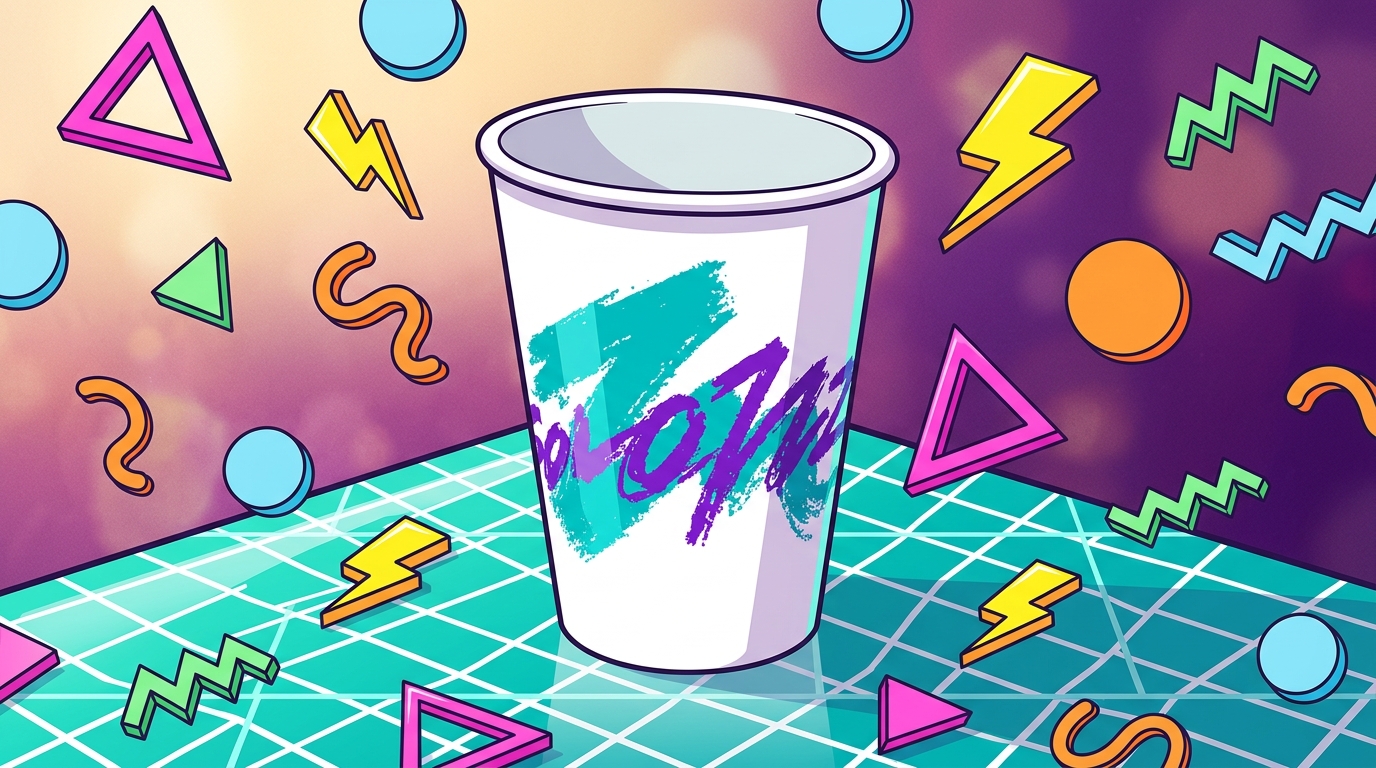
Close your eyes and imagine the ultimate 90s mall food court vibe, complete with neon lights and the smell of buttery pretzels. You’re probably holding a wax-coated paper cup sporting those legendary teal and purple zig-zags known as the jazz cup pattern. It’s the unofficial mascot of late-night bowling alleys and arcade high-score screens, looking like a synthwave dream captured on a piece of trash.
This “Solo-cup-core” aesthetic didn’t just happen by accident; it was actually born from a design contest meant to hide printing mistakes. Now, it’s a full-blown internet meme that feels like a warm hug from your childhood VCR. Whether you’re a vaporwave fanatic or just a fan of peak retro styling, this squiggle is the undisputed king of disposable art.
Think back to 1989, a time when neon was king and corporate art was about to peak in the most unexpected place imaginable. Gina Ekiss, a designer at a paper goods manufacturer, entered an internal design contest to create a fresh look for disposable paper products. She traded complex graphics for a simple, hand drawn charcoal sketch she called Razzi. This scribble was born out of pure necessity because it needed to look good even if the high speed printing presses messed up the alignment. Little did she know that her teal and purple brushstroke would eventually become the ultimate symbol of the decade.
The colors Gina chose were not some random picks, they were her personal favorites that perfectly captured the emerging vaporwave spirit. This design was a masterclass in functional aesthetics, hiding production errors while looking like a piece of abstract art from a futuristic mall food court. You have likely held this piece of history while sipping a soda at a bowling alley or a local arcade. It eventually transcended its utilitarian roots to become a legendary internet meme and a staple of retro gaming culture. Today, that single squiggle represents a nostalgic portal back to a simpler time of synthwave beats and pixelated adventures.
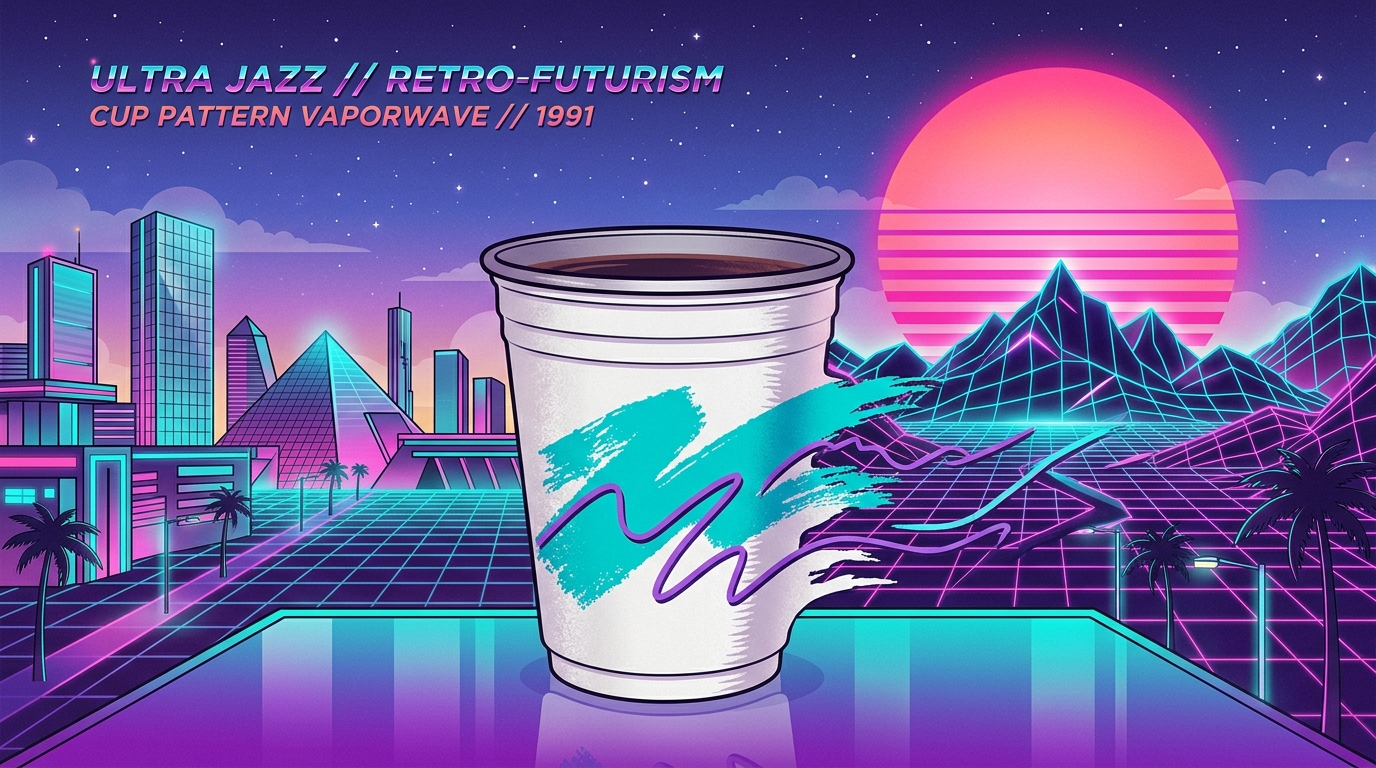
You probably remember staring at that wild teal and purple squiggle while sipping a lukewarm soda at the food court, never realizing you were looking at the future of the internet. This legendary design, born from a corporate contest to find a pattern that looked good even when the printing press messed up, accidentally captured the peak energy of 90s mall culture. Those jagged brushstrokes and vibrant neon hues became the ultimate symbol for a generation that misses the glow of old CRT monitors and the smell of fresh plastic. It is the perfect mascot for the vaporwave community because it represents a weirdly beautiful version of corporate art that was never meant to be a masterpiece.
When you explore the world of synthwave and lo-fi beats, these colors serve as a visual shorthand for a cozy, digital nostalgia that feels like a dream. The genius of the palette lies in how those specific shades of purple and teal pop against a crisp white background, creating a vibe that is both relaxing and strangely futuristic. Fans of the aesthetic have turned this simple cup pattern into a cult favorite, slapping it on everything from hoodies to custom car wraps. It works so well because it reminds you of a simpler time when the biggest worry in your life was whether your local arcade had the newest fighting game.
Today, this iconic squiggle is more than just a piece of disposable trash, it is a legendary meme that anchors the entire neon aesthetic. You can find its DNA in every glitchy video and lo-fi playlist thumbnail because it perfectly captures that retro-futuristic feeling we all crave. This pattern proved that great design does not always need to be complicated to leave a permanent mark on pop culture history. Whether you are hardcore gamer or just someone who loves a good throwback, the jazz cup pattern is the ultimate badge of honor for anyone who appreciates the glorious weirdness of the nineties.
You probably remember grabbing a drink at the local mall or a school dance and seeing that legendary teal and purple squiggle staring back at you. What started as a simple way to hide printing mistakes on disposable paper products quickly became the unofficial mascot of the nineties. This design, famously known as the Jazz pattern, was born from a charcoal sketch and a dream of neon aesthetics that perfectly captured the decade’s vibe. It was never meant to be a high-fashion icon, but its messy brushstrokes and vibrant colors turned every water cooler trip into a miniature Vaporwave Aesthetic experience.
Fast forward to the internet age, and you will find this pattern living its best life as a cornerstone of meme royalty. It has jumped off the wax-coated paper and landed onto everything from hoodies and sneakers to custom car wraps and gaming setups. For fans of synthwave and retro-futurism, the pattern is a visual shortcut to a simpler time of arcade noises and VHS tapes. You cannot scroll through a social media feed without seeing this squiggle used as a badge of honor for anyone who misses the glory days of mall culture.
The beauty of the Jazz design is that it belongs to everyone now, serving as a pixelated bridge between corporate utility and total internet chaos. You do not need to be a graphic design expert to appreciate how those two specific shades of purple and teal make you feel like you are standing in a laser tag arena. It is the ultimate example of how a “throwaway” item can become a permanent piece of our digital DNA. Whether you are rocking it on a t-shirt or using it as your desktop wallpaper, you are keeping the dream of the nineties alive one squiggle at a time.
The Jazz cup pattern is more than just a random squiggle on a piece of wax paper; it is the undisputed soul of 1990s corporate aesthetics. You can probably still feel the texture of that cold, sweating cup in your hand as you sat in a neon-lit food court or a bowling alley arcade. That iconic splash of teal and purple was never meant to be a masterpiece, yet it somehow captured the spirit of an entire decade. It represents a time when design was loud, messy, and unapologetically vibrant. Today, this scribble has ascended to legendary status, serving as the ultimate calling card for anyone who misses the glory days of synthwave and dial-up internet.
Looking back at Gina Ekiss’s accidental masterpiece reminds you that the best design often comes from simplicity and a bit of creative chaos. Whether you are rocking the pattern on a windbreaker or seeing it pop up in your favorite vaporwave playlist, the “Jazz” look remains the king of retro vibes. Much like the 80s pattern revolution that preceded it, this look redefined what we consider stylish. It proved that a utilitarian solution for hiding printing errors could become a cultural icon loved by gamers and nostalgia seekers alike. You do not need a time machine to visit the nineties when you have this legendary brushstroke to lead the way. It is a permanent reminder that even a disposable cup can hold a lifetime of memories and a whole lot of style.
It is that iconic teal and purple zig-zag design you remember from every mall food court and bowling alley in the nineties. Originally named Razzi, this hand drawn scribble became the unofficial mascot of retro culture and disposable art.
A designer named Gina Ekiss created the look in 1989 while working for a paper goods company. She won an internal contest by sketching the design with charcoal, never knowing it would eventually become a global internet meme.
The teal and purple combo came straight from Gina’s personal palette of favorite colors. These shades perfectly captured the neon aesthetic of the era and now serve as the ultimate visual shorthand for synthwave fans everywhere.
The design was actually a clever hack to hide printing errors on high speed presses. Because the pattern is so abstract and wild, it still looks totally tubular even if the machine alignment is slightly off during production.
It feels like a warm, pixelated hug from your childhood VCR and reminds everyone of peak arcade vibes. The pattern has transitioned from being just a cup design to become a symbol of nostalgia, appearing on everything from hoodies to car wraps. Much like bowling alley carpet, it is the ultimate aesthetic for those who love neon chaos.
While it peaked in the nineties, the jazz stroke is a survivor that still pops up in local arcades and independent snack bars. It has achieved legendary status, meaning this piece of history is basically the immortal king of the paper cup world.