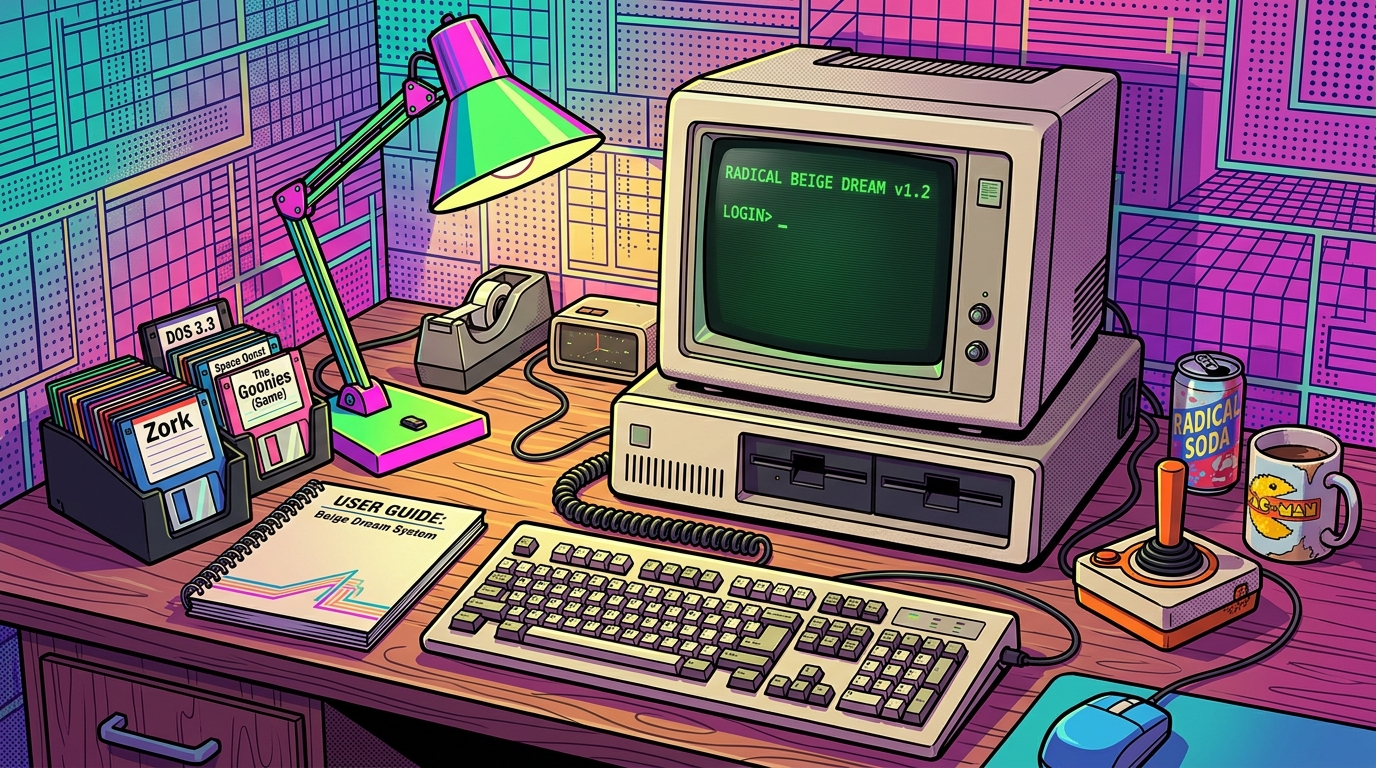
Picture yourself sitting in a glow of neon pink and teal, surrounded by the glorious hum of a machine that takes ten minutes just to think. Back in the day, 1980s computer desk setups weren’t just workspaces; they were command centers for the digital revolution, complete with beige towers that weighed as much as a small car. You probably had a stack of floppy disks taller than your hair and a mechanical keyboard that sounded like a hail storm on a tin roof. It was a vibe so thick you could practically taste the synthwave music playing in the background.
You’re likely here because you miss that satisfying “chunk” of a disk drive or you’re trying to recreate that retro aesthetic for your modern battle station. Whether you’re a hardcore gamer looking for that vintage click or just a fan of the “Stranger Things” look, there’s something magical about those bulky CRT monitors and tangled phone cords. It’s time to embrace the clunky charm of a decade where the internet was a dream and your Rolodex was your best friend. Your desk is about to go back to the future in the most radical way possible.
Stepping into an 80s computer nook felt like entering the cockpit of a starship made entirely of beige plastic and heavy metal. Your desk was likely a sturdy wooden beast or a specialized workstation with a sliding keyboard tray that rattled every time you typed. These setups were not just about the tech, as they were crowded hubs where digital dreams met physical clutter. You probably had a corded telephone with a tangled mess of a wire sitting right next to your massive floppy disk organizer. It was a glorious era of maximalism where every square inch of your workspace was occupied by something essential or just plain cool.
The center of your universe was that iconic off-white computer tower, a literal tank of a machine that hummed with the power of a thousand cooling fans. Perched on top was a CRT monitor so heavy it could probably crush a small car, glowing with that soft green or amber hue we all remember. You did not just type on those mechanical keyboards, because you announced your presence to the entire neighborhood with every clack of the keys. Between the screeching dot matrix printer and the neon desk lamp, your room felt like a scene straight out of a synthwave music video.
Living the high-tech life back then meant balancing your digital hobby with a mountain of analog tools. You likely had a Rolodex for your contacts and a stack of thick reference manuals that served as your only help menu. There was something magical about the glow of the screen reflecting off your wood-paneled walls while you waited ten minutes for a single image to load. It was a time of transition where the future was arriving in a boxy, beige towers package, and your bedroom was the front line of the revolution. Your setup was a masterpiece of retro charm that defined the aesthetic of a generation.
Walking into an 80s home office was like stepping into a neon-soaked obstacle course where every square inch of wood grain laminate was claimed by something analog. You didn’t just have a computer, you had a sprawling command center filled with physical objects that would make a modern minimalist faint. Your desk was likely anchored by a massive corded telephone with a curly wire that got tangled in everything, sitting right next to a spinning Rolodex that held your entire social life on tiny paper cards. It was a glorious mess of tactile tools, from chunky highlighters to reference manuals thick enough to use as doorstops. This was the era of peak desk clutter, where the digital world was still shaking hands with the physical one.
The soundtrack of your productivity wasn’t a lo-fi hip hop stream, but the aggressive, rhythmic screeching of a dot-matrix printer. These beasts were so loud and heavy they usually lived on their own dedicated metal stands, churning out endless reams of perforated paper with those satisfying tear-off side strips. You probably spent half your time untangling the zig-zagging paper stacks or fishing a stray paperclip out of the tractor feed. When you weren’t wrestling with the printer, you were likely digging through a plastic flip-top box to find the right 5.25-inch floppy disks for your favorite pixelated game. It was a loud, clunky, and wonderfully tactile experience that felt much more like operating a spaceship than typing on a laptop.
Everything about your setup was designed to be felt, clicked, and flipped, creating a workspace vibe that was pure synthwave aesthetic before that was even a thing. Your heavy mechanical keyboard provided a clicky backing track to your day while a bright desk lamp cast a warm glow over your collection of reference books and coffee mugs. There was no such thing as a “clean” desk when you had to fit a fax machine, a calculator, and a stack of floppy disks all within arm’s reach. It was a beautiful chaos that defined the decade, turning every simple task into a hands-on adventure. Living in this pre-digital bubble meant you were always surrounded by the comforting weight of your gear, making every late-night gaming session feel like a high-tech event.
You probably remember the massive wood grain hutch that dominated your childhood living room like a suburban fortress. These towering units were built from heavy particle board and finished with that iconic faux-oak laminate that seemed to define the entire decade. They weren’t just for show, as they had to support the sheer weight of a fifty-pound CRT monitor without collapsing into a pile of splinters. You had dedicated cubbies for every single piece of tech, from your chunky floppy disk organizers to that stack of dot matrix printer paper with the satisfying tear-off edges. It was a vertical playground of beige plastic and dark wood that turned your bedroom into a high-tech command center.
The birth of ergonomic innovations during this era was a bit of a wild west experiment for your posture and wrists. Engineers realized that typing on a desk designed for handwriting was a recipe for disaster, so they gifted us the glorious pull-out keyboard tray. This sliding wooden shelf allowed you to tuck your mechanical keyboard away like a secret weapon when you weren’t busy coding or playing text adventures. It was a major upgrade for comfort, even if the tray sometimes wobbled or pinched your fingers during an intense gaming session. These desks were the first real attempt to bridge the gap between old-school furniture and the digital future we were all rushing toward.
Navigating your 80s workspace meant dodging a tangled jungle of gray power cords and telephone lines while reaching for your Rolodex. Your desk was a crowded ecosystem where a corded phone sat right next to a massive external disk drive, creating a vibe that felt equal parts professional and cozy. Everything had its own little shelf or slot, keeping your joystick and reference manuals within arm’s reach for those late-night sessions. You probably had a neon desk lamp casting a soft glow over the whole setup, making the wood grain shine while you waited for a program to load. It was a clunky, beautiful mess that paved the way for the sleek vintage computer hardware gaming setups we obsess over today.
The 1980s computer desk was a glorious, beige-tinted mess of heavy wood and tangled cords that somehow paved the way for our sleek modern battle stations. You probably remember the satisfying click of a mechanical keyboard and the high-pitched whine of a CRT monitor warming up while you waited for a floppy disk to load. It was a time when your workspace was a physical hub filled with a clunky Rolodex, a corded phone, and enough reference books to fill a library shelf. Even though the technology was primitive compared to your current rig, there was an undeniable charm in that cluttered, analog-meets-digital environment. These setups represented the first time we truly let technology move into our homes and change the way we lived our daily lives.
Now, that retro aesthetic is roaring back into style through the neon-soaked world of synthwave and modern gaming decor. You can see the influence of the eighties in every glowing RGB strip and custom mechanical keyboard that mimics those old-school tactile switches. Gamers are ditching the minimalist look to embrace “nowstalgia” by mixing modern hardware with vintage vibes like vaporwave posters and chunky desk accessories. It is all about capturing that cozy, lo-fi feeling of a midnight coding session or a marathon gaming stint on a pixelated screen. Whether you are rocking a vintage computer or just a retro-themed skin on your PC, you are keeping the spirit of the original home office alive and well.
Back then, beige was the official color of the future because it looked professional and didn’t show dust as much as black plastic. It was the ultimate ‘office chic’ look that turned your bedroom into a high-tech command center. Think of it as the vintage version of space gray, just with a lot more personality and weight.
You need to lean hard into the neon pink and teal aesthetic to capture those synthwave vibes. Grab some LED strips or a neon sign to mimic the radioactive hum of a vintage CRT monitor. It is all about creating a mood that makes you feel like you are hacking into a mainframe in a classic sci-fi movie.
Those keyboards were built like tanks and sounded like a literal hailstorm on a tin roof every time you typed. Each keypress gave you a satisfying click that let everyone in the house know you were busy being a digital wizard. They are the holy grail for gamers who want that tactile, clicky feedback that modern membrane boards just can’t match.
You absolutely need a physical Rolodex for your contacts and a massive plastic organizer for your stack of floppy disks. Don’t forget a corded telephone with a tangled mess of wires to really sell the look. It is all about embracing the beautiful clutter of a decade where everything was physical and delightfully chunky. If you want to go all out, you can find retro futuristic office gear to complete your transformation.
While they weigh as much as a small car, nothing beats the warm glow and fuzzy scanlines of a classic glass monitor. They are the centerpiece of any radical 80s setup and provide a nostalgic flicker that flat screens can’t replicate. Just make sure your desk is sturdy enough to handle the heavy metal hardware without collapsing.
You can totally cheat the system by using retro-style keycaps and synthwave wallpapers on your modern rig. Add some 80s pop culture touches like action figures or a Rubik’s cube to complete the transformation. You don’t need a time machine to make your battle station look like it belongs in a neon-soaked dream.